
William Shakespeare: Amazing Life, Plays, Poetry & Lasting Legacy
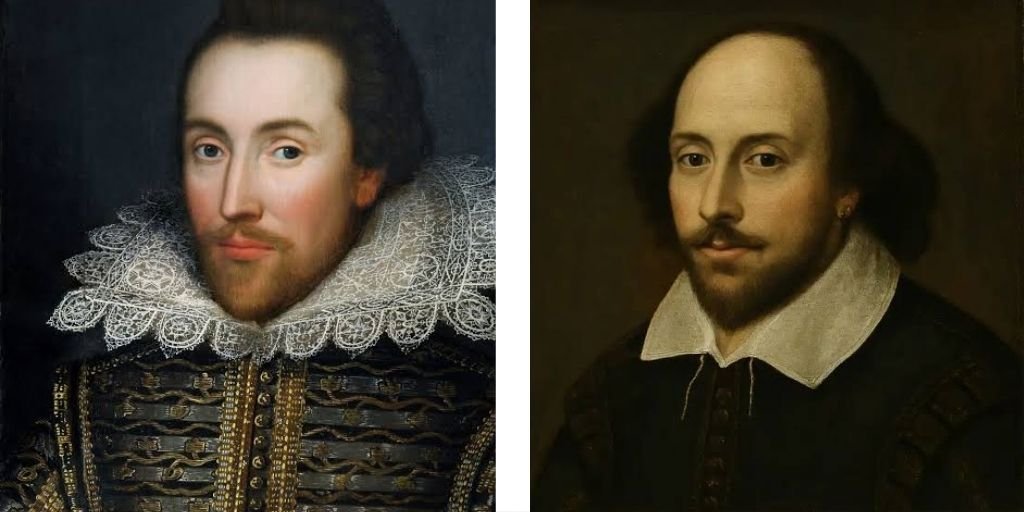
William Shakespeare remains one of the most recognized writers in history. More than four centuries after his death, his plays are still performed, his poems are still read, and his characters continue to appear in films, television, classrooms, and popular culture. But what made this English writer so special?
Shakespeare lived during a fascinating period of English history, when London was growing rapidly and theater was becoming an important form of entertainment. From his early years in Stratford-upon-Avon to his successful career in London, his life was closely connected with the world of drama.
His stories explored love, ambition, jealousy, friendship, betrayal, power, grief, and human weakness. In many ways, Shakespeare held up a mirror to people. His characters may have lived hundreds of years ago, but their emotions still feel surprisingly familiar today.
1. Who Was William Shakespeare?
William Shakespeare was an English playwright, poet, and actor associated with the Elizabethan and Jacobean eras. He was born in Stratford-upon-Avon in 1564 and became one of the leading figures of the London theater world.
Although much about his private life remains uncertain, historical records give us a basic picture of his career. He worked as a writer and performer, became associated with the acting company known as the Lord Chamberlain’s Men, and later became a shareholder in the King’s Men.
His writing included tragedies, comedies, histories, and poetry. Famous works such as Hamlet, Macbeth, Romeo and Juliet, Othello, King Lear, The Tempest, and A Midsummer Night’s Dream have become part of world literature.
What makes his work remarkable is its range. Shakespeare could write a funny scene about ordinary people and then move into a serious exploration of death or betrayal. His writing was like a large theater with many doors—every reader can enter through a different one.
2. Shakespeare’s Early Life in Stratford-upon-Avon
Shakespeare was born in Stratford-upon-Avon, a market town in Warwickshire, England. His exact birth date is not recorded, but tradition celebrates it on April 23, while church records show that he was baptized on April 26, 1564.
His father, John Shakespeare, was a glove maker and businessman who also became involved in local government. His mother, Mary Arden, came from a family with landholding connections.
William was probably educated at the local grammar school, where he may have studied Latin, literature, rhetoric, history, and classical works. There is no surviving university record for him, and he did not attend Oxford or Cambridge.
This fact has sometimes led people to question how someone without a university education could produce such sophisticated writing. Yet education does not happen only inside universities. Shakespeare lived in a culture filled with stories, performances, religious traditions, public events, books, and conversation.
His early environment likely gave him plenty of material to observe human behavior.
3. Marriage, Family, and the Lost Years
In 1582, Shakespeare married Anne Hathaway. He was 18, while Anne was 26. Their first child, Susanna, was baptized in 1583. Twins, Hamnet and Judith, followed in 1585.
Hamnet died at the age of 11, a tragedy that occurred during Shakespeare’s lifetime. Some readers have wondered whether the loss influenced his later writing, particularly his treatment of grief and death. However, there is no definite evidence connecting Hamnet’s death to any particular play.
One of the most mysterious periods of Shakespeare’s biography is the years between the birth of his twins and his emergence as a London playwright. These years are sometimes called his “lost years.”
We do not know exactly what he did during this period. He may have worked in different occupations, traveled, taught, acted, or developed connections with theater groups. Many theories have been suggested, but historians cannot confirm most of them.
This uncertainty has actually added another layer to his story. We know Shakespeare’s words far better than we know the details of his everyday life.
4. Shakespeare’s Journey to the London Theater
By the early 1590s, Shakespeare was working in London. The city had become an important center for theater, and public playhouses attracted audiences from many backgrounds.
Shakespeare did not simply sit alone and write. He was part of a working theater industry. He acted, wrote plays, collaborated with other performers, and eventually became financially involved in his company.
His association with the Lord Chamberlain’s Men was particularly important. When King James I came to the English throne in 1603, the company received royal patronage and became known as the King’s Men.
This was a major achievement. Shakespeare was no longer simply an unknown provincial writer. He had become part of one of the most important theatrical companies in England.
His success also gave him greater financial security and social standing.
5. The Globe Theatre and Shakespeare’s Stage
The Globe Theatre is closely associated with Shakespeare’s career. The original Globe was built in 1599 by the Lord Chamberlain’s Men, and Shakespeare was a shareholder in the theater.
The theater was very different from a modern cinema. Performances took place during daylight hours, scenery was relatively limited, and audiences stood or sat around the stage.
The relationship between actors and spectators was direct. The audience could laugh, shout, react, and sometimes make noise throughout a performance.
This environment influenced the way Shakespeare wrote. His plays needed memorable dialogue, strong characters, dramatic action, humor, suspense, and emotional moments.
The Globe became one of the great symbols of Shakespeare’s career. Even today, the reconstructed Shakespeare’s Globe in London helps modern audiences experience performances inspired by the traditions of the original theater.
6. His Greatest Plays and What They Teach Us
Shakespeare’s plays cover an extraordinary range of subjects.
Romeo and Juliet
Perhaps the world’s most famous tragic love story, Romeo and Juliet follows two young people whose families are bitter enemies. Their love develops quickly, but family conflict and poor decisions lead to disaster.
The play explores love, youth, violence, family expectations, and the consequences of hatred.
Hamlet
Hamlet follows a prince struggling with grief, uncertainty, revenge, and questions about life and death. Hamlet is thoughtful and complicated, which makes him one of literature’s most discussed characters.
The play asks difficult questions: How should we respond to betrayal? Can revenge ever bring peace? And what happens when thinking becomes an obstacle to action?
Macbeth
Macbeth is a dark story about ambition and its consequences. Macbeth receives a prophecy suggesting that he may become king. Encouraged by Lady Macbeth, he chooses murder as a path toward power.
The tragedy demonstrates how ambition can grow into obsession. Once Macbeth crosses one moral boundary, he finds himself willing to cross many more.
Othello
Othello examines jealousy, manipulation, trust, and prejudice. The central character is persuaded to doubt his wife’s loyalty, and suspicion gradually destroys his judgment.
The story remains powerful because jealousy is not simply presented as an emotion. Shakespeare shows how it can be manipulated by another person.
King Lear
King Lear explores family relationships, power, pride, aging, and betrayal. The aging king divides his kingdom among his daughters based on how much affection they show him.
His decision creates chaos.
The tragedy asks an uncomfortable question: What happens when pride prevents us from recognizing the truth?
7. Shakespeare’s Comedies and Histories
Shakespeare was not only a writer of tragedies. His comedies demonstrate his ability to create humor from misunderstandings, mistaken identities, romance, and social confusion.
Works such as A Midsummer Night’s Dream, Twelfth Night, Much Ado About Nothing, and As You Like It remain popular because their humor often comes from situations that still feel recognizable.
In Twelfth Night, for example, mistaken identity creates a complicated chain of romantic confusion. In A Midsummer Night’s Dream, magical interference turns ordinary relationships upside down.
His history plays, meanwhile, dramatized English kings and political struggles. Richard III, Henry IV, Henry V, and other plays combined historical material with dramatic storytelling.
These works were not modern history textbooks. Shakespeare shaped historical events for the stage, focusing on personality, conflict, leadership, and political drama.
8. Shakespeare as a Poet
Shakespeare’s reputation rests heavily on his plays, but his poetry is equally important.
He wrote two major narrative poems, Venus and Adonis and The Rape of Lucrece, as well as a collection of 154 sonnets.
His sonnets explore love, beauty, aging, time, desire, jealousy, friendship, and mortality.
One reason they continue to attract readers is their emotional honesty. Shakespeare understood that people can experience several conflicting feelings at the same time. Someone can love and doubt. They can admire and envy. They can desire something while knowing it may not last.
His poetry also demonstrates remarkable control over rhythm and language.
The sonnets frequently return to the idea of time. Beauty fades, youth disappears, and human life eventually ends. Shakespeare repeatedly asks whether art can preserve something that time cannot.
For him, writing itself could become a kind of monument.
9. Shakespeare’s Language and Influence
Shakespeare’s language is one of the most important parts of his legacy. Many expressions associated with English literature are connected with his works.
He used metaphors, wordplay, irony, dramatic contrasts, and memorable images to give his characters distinctive voices.
However, it is important not to imagine Shakespeare as someone who invented every unusual word or phrase traditionally attributed to him. Some expressions existed before his works but became widely known because of his writing.
His influence on English literature has been enormous. Writers, poets, filmmakers, teachers, and performers continue to borrow from his themes and characters.
His works have also been translated into many languages. This is remarkable because Shakespeare wrote for audiences in a specific time and place, yet his central concerns have crossed cultural boundaries.
10. Shakespeare’s Final Years and Death
Shakespeare eventually returned to Stratford-upon-Avon after spending much of his professional life connected with London.
He owned property and had achieved a level of financial success that was unusual for a playwright of his period. He also remained connected to his family and local community.
Shakespeare died in 1616 at the age of 52. He was buried at Holy Trinity Church in Stratford-upon-Avon.
His will is an important historical document because it provides evidence about his possessions and family arrangements. One of its most famous details is the bequest of his “second best bed” to Anne Hathaway.
The meaning of this gift has been debated. Some people have interpreted it negatively, while others point out that beds could have particular household and marital significance in the period. We should be cautious about turning one line in a will into a complete picture of their marriage.
11. Why Shakespeare Still Matters Today
Why are people still reading Shakespeare after more than 400 years?
The simplest answer is that his characters feel human.
We recognize ambition in Macbeth, uncertainty in Hamlet, jealousy in Othello, pride in King Lear, youthful passion in Romeo and Juliet, and comic confusion throughout his lighter works.
His stories also adapt remarkably well. Shakespeare’s plots have been transformed into modern films, novels, television dramas, school productions, musicals, and other forms of entertainment.
His influence is not limited to English-speaking countries. Students around the world encounter his work, and international theater companies regularly perform his plays.
Perhaps the greatest reason for his survival is that Shakespeare did not write only about his own century. He wrote about people.
Human technology has changed. Cities have changed. Fashion has changed. Political systems have changed. But people still fall in love, become jealous, seek power, lose loved ones, make mistakes, and struggle to understand themselves.
That is why his work continues to feel alive.
12. William Shakespeare’s Lasting Legacy
Shakespeare’s legacy reaches far beyond a list of famous plays. He changed expectations about what drama and poetry could accomplish.
His characters were rarely simple heroes or villains. They often contained contradictions. A good person could make terrible choices, while a flawed character could sometimes show compassion.
That complexity is one reason actors continue to enjoy performing his roles.
His works also remain valuable because they can be interpreted differently by different generations. A production of Macbeth today may emphasize political ambition, while another may focus on psychological fear. A modern Romeo and Juliet can explore family conflict through the lens of contemporary society.
Shakespeare’s work is therefore not frozen in the past. It continues to be recreated.
His name has become almost synonymous with English drama, but his greatest achievement may be simpler: he created stories that continue to make people feel something.
Conclusion
William Shakespeare’s life contains both remarkable achievements and unanswered questions. We know that he came from Stratford-upon-Avon, built a career in London’s theater world, wrote extraordinary plays and poetry, became financially successful, and returned to Stratford before his death in 1616.
Yet perhaps the most interesting part of his story is not what we know about his daily life. It is what he left behind.
His plays continue to make audiences laugh, cry, question, and think. His characters still speak to modern experiences, even though they were created centuries ago. Shakespeare’s work has survived because human nature has not changed as much as we sometimes imagine.
His words remain on stages, in classrooms, books, films, and conversations around the world. That is a remarkable legacy for a writer who lived in the 16th and early 17th centuries.
Frequently Asked Questions
1. Who was William Shakespeare?
William Shakespeare was an English playwright, poet, and actor born in Stratford-upon-Avon in 1564. He became one of the most important writers associated with English theater.
2. What are William Shakespeare’s most famous plays?
Some of his best-known plays include Hamlet, Macbeth, Romeo and Juliet, Othello, King Lear, The Tempest, A Midsummer Night’s Dream, and Twelfth Night.
3. Was Shakespeare married?
Yes. Shakespeare married Anne Hathaway in 1582. They had three children: Susanna, Hamnet, and Judith.
4. Where did Shakespeare perform his plays?
His acting company performed at several London theaters, including the Globe Theatre. Shakespeare was also a shareholder in the original Globe.
5. Why is Shakespeare still famous today?
Shakespeare remains famous because his stories explore universal subjects such as love, ambition, jealousy, betrayal, family, power, grief, and human relationships. His works continue to be performed, studied, adapted, and translated around the world.