Abraham Lincoln: Life, Leadership, Presidency & Lasting Legacy
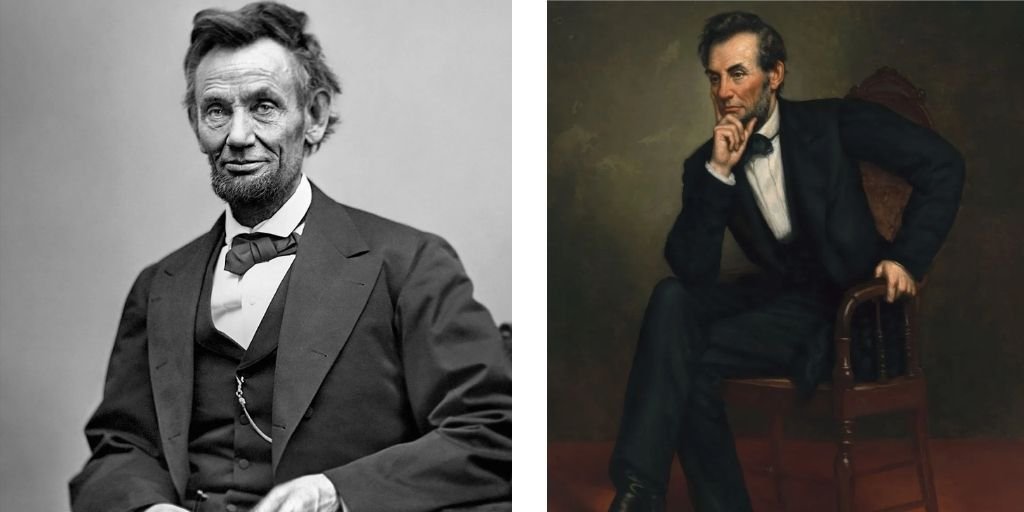
Abraham Lincoln remains one of the most remembered presidents in American history. His life was shaped by hardship, self-education, political struggle, war, and a deep belief that the United States should remain one nation. Born into a poor frontier family, he eventually became the 16th president of the United States and led the country through its greatest internal crisis, the American Civil War.
What makes his story so powerful? Lincoln did not begin life with wealth, privilege, or an impressive education. Instead, he built his career through reading, hard work, public speaking, and persistence. His journey from a rural childhood to the White House is a remarkable example of how determination can change the course of a person’s life.
Early Life and Family Background
Abraham Lincoln was born on February 12, 1809, near Hodgenville, Kentucky. His parents, Thomas Lincoln and Nancy Hanks Lincoln, came from modest backgrounds. The family lived a simple frontier life, where farming and physical labor were central to everyday survival.
Lincoln’s childhood was not easy. His family moved several times, eventually settling in Indiana and later Illinois. Frontier life demanded constant work. Young Abraham helped with farming, chopping wood, building fences, and other demanding tasks.
His mother died when he was only nine years old. This was a painful loss that affected him deeply. His father later married Sarah Bush Johnston, who became an important influence in Lincoln’s childhood. She encouraged his interest in reading and learning.
Formal education was limited. Lincoln attended school only for short periods, amounting to roughly a year in total. Yet he developed a strong desire to educate himself. Books became his teachers, and reading became one of the most important habits of his life.
He studied subjects ranging from literature and history to mathematics and law. He also practiced writing and public speaking whenever possible. His early experiences taught him an important lesson: education does not always begin inside a classroom.
Lincoln’s Journey Toward Education and Law
Lincoln’s education was largely self-directed. He read whatever books he could find or borrow. Works by William Shakespeare, the Bible, Aesop’s Fables, and other writers helped shape his language and thinking.
He was also fascinated by practical knowledge. Mathematics, grammar, surveying, and legal principles became part of his self-study. Rather than simply memorizing information, he tried to understand ideas deeply.
As a young man, Lincoln worked several different jobs. He was a store clerk, laborer, surveyor, postmaster, and rail-splitter. These experiences brought him into contact with many different kinds of people.
In 1830, his family moved to Illinois. Lincoln eventually settled in New Salem, where he became increasingly interested in public affairs. His reputation for honesty and his ability to communicate clearly helped him gain the respect of local residents.
Lincoln began studying law on his own and eventually became a lawyer. In 1836, he received his law license. He later moved to Springfield, Illinois, where he built a successful legal career.
A Lawyer Who Listened
Lincoln’s legal career helped him develop skills that would later become valuable in politics. He learned how to examine evidence, understand opposing arguments, explain complicated issues, and persuade people.
He was known for being thoughtful rather than aggressive. Instead of trying to overwhelm an opponent, he often relied on clear reasoning and simple language.
His reputation for honesty became particularly important. The nickname “Honest Abe” followed him throughout his career.
Lincoln Enters Politics
Lincoln’s political career began in Illinois. In 1834, he was elected to the Illinois House of Representatives as a member of the Whig Party. He served several terms and became increasingly interested in national issues.
He supported economic development, infrastructure, and improvements that could help communities grow. He also believed government could play a role in building roads, canals, and other public projects.
In 1846, Lincoln was elected to the U.S. House of Representatives. His time in Congress was relatively brief, but it gave him experience with national politics.
One of the most important issues of the era was slavery and its expansion into new American territories. The country was deeply divided over whether slavery should be allowed to spread westward.
Lincoln’s views developed over time, but he increasingly opposed the expansion of slavery. He argued that the nation could not indefinitely tolerate a system that contradicted the principle of human equality.
The Lincoln-Douglas Debates
Lincoln became nationally famous during his debates with Senator Stephen A. Douglas in 1858.
The debates took place during Lincoln’s campaign for the U.S. Senate from Illinois. Although Lincoln lost the Senate election, the debates gave him national attention.
The central issue was slavery, particularly whether it should be allowed to expand into new territories.
Lincoln challenged Douglas’s position and emphasized the conflict between slavery and the nation’s founding ideals. His arguments were not always simple, but he often expressed them in language ordinary citizens could understand.
One of the most important themes in his speeches was the idea that a nation divided between freedom and slavery could not remain permanently stable.
Why These Debates Mattered
The debates showed Lincoln as a serious political thinker. He was not simply an opponent of slavery; he was attempting to answer a larger question: What kind of nation would the United States become?
His performance helped establish him as a potential national leader.
The Election of 1860
In 1860, Lincoln became the Republican Party’s presidential candidate. The political atmosphere was extremely tense.
The Republican Party opposed the expansion of slavery into the territories. Lincoln’s election victory alarmed many Southern leaders who believed his presidency threatened their political and economic interests.
Lincoln won the presidential election in November 1860. He did not win every region of the country, and his name was absent from the ballot in several Southern states.
His victory quickly became connected with a growing crisis.
Before Lincoln even took office, several Southern states began leaving the Union. They formed the Confederate States of America.
The United States was heading toward war.
The Civil War and Lincoln’s Presidency
Lincoln became president on March 4, 1861. His main challenge was unlike anything previous presidents had faced.
The country was breaking apart.
Lincoln’s first priority was preserving the Union. He believed the United States was not simply a collection of independent states that could separate whenever disagreements became severe. To him, the Union was a national commitment.
In April 1861, Confederate forces attacked Fort Sumter in South Carolina. The Civil War had begun.
Lincoln called for troops to suppress the rebellion. The conflict eventually became the deadliest war in American history.
Leading During a National Disaster
Lincoln faced enormous pressure from every direction. Military commanders sometimes disappointed him. Political opponents criticized his decisions. Newspapers attacked his administration. Families across the country suffered terrible losses.
Yet Lincoln continued working.
He spent long hours reading military reports and meeting advisers. He listened to different opinions before making major decisions.
Leadership during the war required more than making speeches. Lincoln had to deal with military strategy, foreign relations, Congress, elections, civil liberties, and the enormous human cost of the conflict.
In many ways, the presidency became a test of his character.
The Emancipation Proclamation
One of the most important actions of Lincoln’s presidency was the Emancipation Proclamation.
Lincoln issued the preliminary proclamation on September 22, 1862, following the Union victory at Antietam. It took effect on January 1, 1863.
The proclamation declared that enslaved people in areas still in rebellion against the United States would be considered free.
Its immediate legal reach was limited because it applied to Confederate-controlled territory rather than the loyal slave states. Nevertheless, its historical importance was enormous.
It transformed the meaning of the war.
The conflict was increasingly understood not only as a struggle to preserve the Union but also as a war against slavery.
Freedom and Military Service
The proclamation also opened the door for Black men to serve in the Union armed forces. By the end of the war, approximately 180,000 Black soldiers had served in the Union Army, along with thousands more in the Union Navy.
Their service demonstrated an important truth: African Americans were not simply waiting for freedom to arrive. Many actively fought for it.
Lincoln’s views on emancipation also continued to develop as the war progressed. His actions helped move the country toward a broader understanding of freedom.
The Gettysburg Address
On November 19, 1863, Lincoln delivered one of the most famous speeches in American history at the dedication of the Soldiers’ National Cemetery in Gettysburg, Pennsylvania.
The speech was remarkably short. Yet its message was powerful.
Lincoln connected the Civil War to the nation’s founding principles. He spoke about equality, democracy, sacrifice, and the future of the Union.
Rather than focusing only on victory, he asked Americans to think about what the sacrifices of the dead should mean for the living.
His vision was of a nation where government was based on the people and where democratic principles could survive a terrible internal conflict.
Why the Speech Still Matters
The Gettysburg Address remains influential because Lincoln expressed enormous ideas using simple language.
He did not need a long speech to make his point.
It was almost like a small key opening a very large door: a few carefully chosen words unlocked questions about democracy, equality, citizenship, and national purpose.
The speech continues to be studied in schools, quoted by political leaders, and remembered around the world.
Lincoln’s Struggle With War, Politics, and Public Opinion
Lincoln’s presidency was far from perfect or universally admired.
He faced criticism from political opponents, newspapers, abolitionists, military leaders, and even members of his own political party.
Some believed he was moving too slowly against slavery. Others believed he was going too far.
The war also forced Lincoln to make difficult decisions involving civil liberties and military necessity. His administration suspended habeas corpus in certain circumstances, a controversial step that remains part of historical debate.
Lincoln understood that leadership sometimes meant making decisions without knowing exactly how history would judge them.
He also experienced deep personal sadness. The death of his son Willie in 1862 was devastating for Lincoln and his family.
Despite personal grief, political opposition, and the pressure of war, he continued performing his presidential duties.
Lincoln’s Re-Election and Final Vision
By 1864, the Civil War had lasted several years. Many Americans were exhausted.
Lincoln himself feared he might lose the presidential election. However, the military situation began improving for the Union. Major victories helped strengthen public confidence.
Lincoln won re-election in November 1864.
His second inaugural address, delivered in March 1865, was remarkably different from a typical victory speech. Instead of celebrating triumph over the Confederacy, Lincoln spoke about reconciliation.
He described the war as a national tragedy and reflected on slavery as a profound wrong.
His message emphasized healing rather than revenge.
A Nation That Needed Healing
Lincoln understood that winning the war would not automatically solve the country’s problems.
Imagine breaking a bone. Stopping the injury is only the first step; the bone still needs time and care to heal.
Lincoln recognized that the United States would face an enormous rebuilding process after the fighting ended.
He wanted the country to reunite and move forward, though exactly how Reconstruction should work remained a major question.
The End of the Civil War
In April 1865, Union forces achieved decisive victories. Confederate General Robert E. Lee surrendered to General Ulysses S. Grant at Appomattox Court House on April 9.
The surrender effectively marked the collapse of the Confederacy’s major military resistance.
For Lincoln, the end of the war offered hope.
But he did not have much time to shape the peace.
He continued thinking about Reconstruction and the future relationship between the former Confederate states and the federal government.
He also supported efforts toward greater freedom for formerly enslaved people.
The country was beginning a new chapter.
Lincoln’s Assassination
On April 14, 1865, Lincoln attended a performance at Ford’s Theatre in Washington, D.C.
During the evening, actor and Confederate sympathizer John Wilkes Booth entered the presidential box and shot Lincoln.
Lincoln was taken across the street to a boarding house, where doctors attempted to help him. His wound was fatal.
He died on April 15, 1865, at the age of 56.
His assassination shocked the nation.
The country had survived the Civil War, but the president who had guided it through the crisis was gone.
Lincoln’s death created a huge sense of uncertainty. The challenge now was to rebuild a divided country without the leader who had carried it through the war.
Lincoln’s Personality and Character
What kind of person was Abraham Lincoln away from political speeches?
Historical accounts describe him as thoughtful, humorous, compassionate, melancholy, and deeply reflective.
He enjoyed telling stories and jokes. His storytelling ability helped him connect with ordinary people.
At the same time, he experienced periods of sadness. His life contained repeated personal and professional disappointments.
He lost elections before winning the presidency. He experienced family tragedy. He lived through one of the most violent periods in American history.
Yet he continued moving forward.
The Power of Persistence
Lincoln’s life demonstrates the value of persistence.
He did not have the advantages that many successful politicians possessed. He had limited formal education, little wealth, and no famous family name behind him.
His success came gradually.
He read. He practiced. He failed. He tried again.
That makes his story relatable. Most people will never become presidents, but many will experience setbacks. Lincoln’s example suggests that failure does not have to become the final chapter.
Lincoln’s Views on Slavery and Equality
Lincoln’s relationship with the issue of slavery developed throughout his political life.
He personally opposed slavery and increasingly argued against its expansion. However, his views about racial equality and the practical process of emancipation were shaped by the politics and circumstances of his time.
It is important to study historical figures honestly rather than turning them into perfect heroes.
Lincoln’s presidency played a central role in ending slavery in the United States, particularly through the Emancipation Proclamation and his support for the constitutional abolition of slavery.
The 13th Amendment was passed by Congress in January 1865 and ratified later that year, after Lincoln’s death. It abolished slavery throughout the United States, with an exception for punishment for crime.
Lincoln’s administration and political leadership helped create the conditions for this historic change.
Lincoln’s Legacy in American History
Lincoln’s influence reaches far beyond the years of his presidency.
He is remembered as the president who preserved the Union during the Civil War and helped move the nation toward emancipation.
His speeches remain central to American political culture. His words about democracy, equality, responsibility, and national unity continue to be studied.
Schools teach his life because it connects many important themes: leadership, civil rights, war, democracy, political disagreement, and personal perseverance.
His image also became part of American culture. The Lincoln Memorial in Washington, D.C., stands as one of the country’s most recognizable monuments.
His face appears on the U.S. five-dollar bill and the one-cent coin.
But perhaps his greatest legacy is not a monument or a banknote.
It is the idea that leadership can be measured by how someone responds when a nation faces its darkest hour.
What We Can Learn From Abraham Lincoln Today
Lincoln’s life offers lessons that remain relevant.
First, education can be self-driven.
Lincoln had little formal schooling, but he never stopped learning. His example reminds us that curiosity can become a lifelong source of strength.
Second, communication matters.
Lincoln could explain difficult ideas using everyday language. Good leadership is not only about knowing what you believe; it is also about helping others understand it.
Third, disagreement does not always require hatred.
Lincoln disagreed sharply with political opponents, yet he often tried to understand their arguments. In today’s divided world, that lesson is especially valuable.
Fourth, persistence matters.
His road to the presidency included professional and political setbacks. He continued working despite them.
Finally, power carries responsibility.
Lincoln understood that presidential decisions affected millions of lives. His leadership was shaped by the enormous responsibility of keeping the country together and addressing slavery.
Conclusion
Abraham Lincoln’s story is much more than the story of a president. It is the story of a poor frontier boy who educated himself, became a lawyer, entered politics, and eventually guided the United States through civil war.
His presidency was filled with difficult choices, personal grief, political conflict, and enormous responsibility. Yet his words and actions helped shape the future of the country.
Lincoln’s legacy remains powerful because his life raises questions that still matter. How should a nation respond to injustice? How can divided people rebuild trust? What does freedom truly mean? And what should a leader do when every available choice carries a cost?
His answers were not always perfect, but his determination to preserve the Union and move the nation toward freedom made him one of the most consequential figures in American history.
Frequently Asked Questions
1. Who was Abraham Lincoln?
Abraham Lincoln was the 16th president of the United States. He served from 1861 until his assassination in 1865 and led the country through the American Civil War.
2. When was Abraham Lincoln born?
Abraham Lincoln was born on February 12, 1809, near Hodgenville, Kentucky.
3. What was Abraham Lincoln famous for?
He is best known for preserving the Union during the Civil War, issuing the Emancipation Proclamation, supporting the abolition of slavery, and delivering the Gettysburg Address.
4. How did Abraham Lincoln die?
Lincoln was shot by John Wilkes Booth at Ford’s Theatre in Washington, D.C., on April 14, 1865. He died the following morning, April 15.
5. Why is Abraham Lincoln still important today?
Lincoln remains important because his presidency shaped the United States during the Civil War and contributed to the nation’s movement toward ending slavery. His speeches and ideas about democracy, unity, and freedom continue to influence Americans.