Martin Luther King Jr.: Life, Leadership, Civil Rights & Lasting Legacy
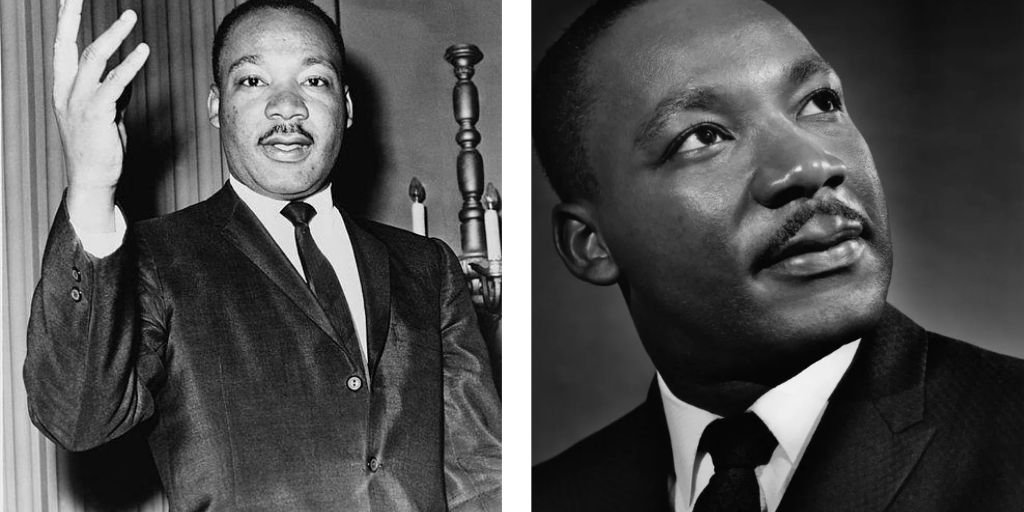
Martin Luther King Jr. remains one of the most recognized figures in modern American history. His name is closely connected with the struggle for racial equality, peaceful protest, and the belief that ordinary people can help create extraordinary change. But who was the man behind the famous speeches and historic marches? What shaped his ideas, and why does his message still matter today?
Born into a religious family in Atlanta, Georgia, King became a Baptist minister and eventually one of the leading voices of the American civil rights movement. He challenged racial segregation and discrimination through nonviolent action, public speaking, organizing, and moral leadership. His journey was filled with remarkable victories, but it also involved arrests, threats, criticism, and personal sacrifice.
His story is not simply about one great speaker. It is about communities, courage, faith, persistence, and people who refused to accept an unfair system as permanent.
Early Life and Family Background
Martin Luther King Jr. was born on January 15, 1929, in Atlanta, Georgia. His birth name was Michael King Jr., but his father later changed both his own name and his son’s name to Martin Luther King, inspired by the German religious reformer Martin Luther.
King grew up in a close-knit African American family. His father, Martin Luther King Sr., was a respected Baptist minister, while his mother, Alberta Williams King, was an accomplished and deeply religious woman. The family lived in a society where racial separation was built into everyday life.
As a child, King experienced racism personally. African Americans faced restrictions in schools, transportation, restaurants, neighborhoods, and many other parts of public life. These experiences helped him understand that discrimination was not merely an abstract political issue. It affected real families and real opportunities.
His childhood home also gave him a strong foundation in religion, education, discipline, and public service. The church played a major role in his development, giving him both a spiritual framework and experience speaking before large audiences.
Education and the Development of His Ideas
Education became one of the most important parts of King’s early life. He was an exceptionally capable student and entered college at a young age.
He attended Morehouse College in Atlanta, where he studied sociology. The college exposed him to different ideas about society, justice, religion, and human responsibility. His studies encouraged him to think beyond individual problems and consider the larger structures that shaped people’s lives.
King later attended Crozer Theological Seminary in Pennsylvania. There, he studied Christian theology and developed his abilities as a preacher. He also encountered philosophical ideas that influenced his approach to social change.
One especially important influence was the philosophy of nonviolent resistance associated with Mahatma Gandhi. King became convinced that peaceful resistance could challenge injustice without creating a cycle of revenge and violence.
He later earned a doctorate in systematic theology from Boston University.
His education did not simply prepare him for a career in the church. It helped him develop a philosophy of leadership. He wanted faith to have a practical purpose: helping people confront injustice while maintaining human dignity.
Becoming a Baptist Minister
In 1951, King graduated from Crozer Theological Seminary and continued his education at Boston University. After completing his doctorate, he became pastor of Dexter Avenue Baptist Church in Montgomery, Alabama, in 1954.
Montgomery was already experiencing serious racial tensions. Segregation laws separated Black and white citizens in many areas of public life. Public transportation was one of the most visible examples.
King was still a young minister when he entered the national civil rights struggle. He did not initially set out to become a national leader. Events around him pushed him into a much larger role.
His strength as a speaker quickly became clear. He could communicate complicated moral questions in language that ordinary people understood. Instead of speaking only to politicians or academics, he spoke directly to workers, parents, students, religious communities, and people who had been denied equal treatment.
That ability would become one of his greatest strengths.
The Montgomery Bus Boycott
A major turning point came in December 1955, when Rosa Parks was arrested after refusing to give up her seat to a white passenger on a segregated Montgomery bus.
Her arrest helped spark the Montgomery Bus Boycott. African American residents organized a mass refusal to use the city’s buses, demanding an end to discriminatory seating practices.
King was chosen to lead the Montgomery Improvement Association, the organization coordinating the boycott. He was only 26 years old.
The boycott lasted more than a year. It required extraordinary patience from the community. People walked long distances, shared rides, and found other ways to travel rather than depend on the segregated bus system.
King encouraged participants to remain peaceful even when they faced intimidation and violence.
The boycott eventually contributed to a legal victory against bus segregation. More importantly, it demonstrated the power of organized, nonviolent collective action.
For King, Montgomery was like the first major test of an idea he would spend the rest of his life developing: when people stand together with discipline and courage, even powerful institutions can be challenged.
Building a National Civil Rights Movement
Following the Montgomery campaign, King became a national figure. In 1957, he helped establish the Southern Christian Leadership Conference, commonly known as the SCLC.
The organization brought religious leaders and activists together to fight racial segregation through nonviolent protest.
King traveled extensively, giving speeches and encouraging communities to organize. He understood that legal change alone was not enough. Laws could be changed, but attitudes and social practices also had to change.
During this period, civil rights campaigns expanded across the American South. Protesters challenged segregated restaurants, stores, transportation systems, schools, and public facilities.
Students also played a crucial role. Young activists participated in sit-ins and freedom campaigns, often placing themselves in dangerous situations.
King’s leadership gave the movement a recognizable national voice, but the movement was never the work of one person. Thousands of people participated in marches, boycotts, voter-registration campaigns, community meetings, and demonstrations.
This is an important part of his story. The civil rights movement was a broad human effort, and King often stood at its front rather than acting alone.
Birmingham Campaign and the Fight Against Segregation
One of the most significant campaigns of the early 1960s took place in Birmingham, Alabama.
Birmingham had a reputation for severe racial segregation. Civil rights activists organized demonstrations against discriminatory practices, and authorities responded with arrests and force.
King was arrested during the campaign. While imprisoned, he wrote a powerful defense of nonviolent civil disobedience that became known as “Letter from Birmingham Jail.”
In the letter, King explained why waiting for a more convenient time to challenge injustice was not acceptable. He argued that peaceful direct action could create the pressure necessary to force communities to confront problems they had ignored.
The Birmingham campaign attracted national attention, particularly because television images showed authorities using police dogs and high-pressure water hoses against protesters, including young people.
The images shocked many Americans.
The campaign helped increase pressure for federal civil rights legislation and demonstrated the importance of national public opinion.
The March on Washington and “I Have a Dream”
On August 28, 1963, hundreds of thousands of people gathered in Washington, D.C., for the March on Washington for Jobs and Freedom.
King delivered the speech that would become the most famous address of his career: “I Have a Dream.”
Standing before the Lincoln Memorial, he spoke about racial injustice while expressing hope for a future in which people would be judged by their character rather than the color of their skin.
The speech connected historical struggles with a vision of equality. It was emotional, memorable, and accessible to a huge audience.
But it is important to understand that King’s message was not simply a pleasant dream of harmony. He was speaking during a period of serious inequality. His words were a demand for action and justice.
The March on Washington became a defining moment in the civil rights movement and strengthened support for federal civil rights legislation.
King’s ability to combine moral urgency with hope helped make the speech one of the most influential pieces of American public speaking.
Civil Rights Act, Voting Rights and Major Achievements
The pressure created by years of activism contributed to major legislative changes.
The Civil Rights Act of 1964 became one of the most important civil rights laws in American history. It addressed discrimination and segregation in several areas of public life and employment.
The Voting Rights Act of 1965 was another major achievement. It sought to protect African Americans’ constitutional right to vote and confront discriminatory practices that had prevented many Black citizens from participating fully in elections.
King’s leadership was part of a much larger movement that pushed these changes forward.
In 1964, he received the Nobel Peace Prize for his commitment to nonviolent resistance to racial injustice. At 35, he became one of the youngest recipients of the prize at that time.
King donated the prize money to support the civil rights movement.
These achievements showed that peaceful protest could produce major political and legal change. Yet King understood that passing laws was only one stage of the struggle.
Beyond Racial Equality: Poverty and War
As the 1960s continued, King’s concerns expanded.
He increasingly focused on poverty, economic inequality, workers’ rights, and the Vietnam War. He believed that racial justice could not be separated from economic opportunity.
In his later years, King supported the Poor People’s Campaign, which aimed to bring together disadvantaged Americans from different racial and social backgrounds.
He argued that a society could not claim true equality while large numbers of people lacked decent housing, employment, education, and economic security.
King also became a strong critic of the Vietnam War. His position was controversial, especially among people who believed the civil rights movement should concentrate exclusively on domestic racial issues.
Nevertheless, King believed his principles required him to speak against suffering wherever he saw it.
His later work showed that his vision of justice was becoming broader. Equality, in his view, involved not only legal rights but also human dignity and economic opportunity.
Personal Life, Challenges and Sacrifice
King’s public image often makes his life seem almost larger than reality, but he was also a husband, father, pastor, and human being.
He married Coretta Scott in 1953. Together they had four children: Yolanda, Martin Luther King III, Dexter Scott King, and Bernice King.
Coretta Scott King was an important figure in her own right. She supported her husband’s work and later became a prominent advocate for civil rights and peace.
King’s leadership came with enormous personal costs. He was arrested numerous times, received threats, and faced physical attacks. His home was bombed in 1956, although he and his family survived.
He lived under intense public scrutiny and pressure.
Imagine trying to lead a national movement while knowing that your family could also be targeted. That gives us a clearer understanding of the courage required.
King also faced criticism from people who believed his approach was too cautious and from others who believed his activism was too disruptive. He was criticized by segregationists, political opponents, and even some activists who wanted faster or more radical change.
Yet he continued to advocate nonviolent resistance.
The Final Years and Memphis
By 1968, King had moved further into campaigns focused on economic justice.
He traveled to Memphis, Tennessee, to support sanitation workers who were demanding better working conditions and recognition of their rights.
On April 3, 1968, King delivered what became known as the “I’ve Been to the Mountaintop” speech at Mason Temple.
The following day, April 4, 1968, King was assassinated while standing on the balcony of the Lorraine Motel in Memphis. He was 39 years old.
His death shocked the United States and the world.
The assassination led to grief, protests, and unrest in many American cities. It also intensified national attention on the causes King had spent his life supporting.
Although his life ended suddenly, his ideas continued to influence civil rights organizations, political leaders, educators, religious communities, and activists around the world.
Martin Luther King Jr.’s Lasting Legacy
King’s legacy is much larger than a single speech or holiday.
His approach demonstrated how nonviolent protest could become a powerful tool for social change. He showed that marches, boycotts, speeches, community organizing, and peaceful civil disobedience could place pressure on institutions while keeping attention focused on moral questions.
His influence can be seen in later movements for racial equality, voting rights, workers’ rights, peace, and social justice.
In 1983, President Ronald Reagan signed legislation creating Martin Luther King Jr. Day as a federal holiday. The holiday was first officially observed in 1986.
Today, people around the world continue to study King’s speeches and writings.
But perhaps the most important way to understand his legacy is not simply to memorize famous quotations. It is to examine the principles behind his work.
He believed that injustice should be confronted rather than ignored. He believed ordinary people could organize for change. He believed courage did not require hatred. And he believed hope could exist alongside struggle.
His legacy therefore remains a challenge as much as an inspiration.
What do we do when we see unfairness? Do we remain silent because change seems difficult, or do we find a peaceful way to make our voices heard?
Conclusion
Martin Luther King Jr. transformed the American civil rights struggle through his powerful combination of faith, leadership, organization, and nonviolent resistance. From his early years in Atlanta to the Montgomery Bus Boycott, the March on Washington, the fight for voting rights, and his later campaign against poverty, his life was devoted to the pursuit of justice.
He did not create change alone. Thousands of activists worked beside him, often without recognition. But King became a powerful symbol of their broader struggle.
His life reminds us that progress rarely happens overnight. It is more like planting a tree: one person may place the seed, but generations help it grow.
King’s story continues to matter because the questions he raised about equality, dignity, courage, and justice remain relevant. His dream was not simply a historical statement. It was an invitation to future generations to continue building a fairer society.
FAQs
1. Who was Martin Luther King Jr.?
Martin Luther King Jr. was an American Baptist minister and civil rights leader who became one of the most important figures in the struggle against racial segregation and discrimination in the United States.
2. What was Martin Luther King Jr. famous for?
He was famous for leading nonviolent civil rights campaigns, including the Montgomery Bus Boycott and the March on Washington. He is also widely remembered for his “I Have a Dream” speech.
3. When did Martin Luther King Jr. receive the Nobel Peace Prize?
King received the Nobel Peace Prize in 1964 for his commitment to nonviolent resistance against racial injustice.
4. How did Martin Luther King Jr. die?
King was assassinated on April 4, 1968, in Memphis, Tennessee, while supporting striking sanitation workers.
5. Why is Martin Luther King Jr. still important today?
His commitment to equality, peaceful protest, civil rights, and social justice continues to influence people and movements around the world.