
Dr. Seuss: The Amazing Life, Books, Characters & Lasting Legacy
Introduction
Few children’s authors have made reading feel as playful, strange, and exciting as Dr. Seuss. With unusual creatures, colorful illustrations, funny names, and memorable rhymes, his books turned simple stories into adventures that generations of readers could enjoy.
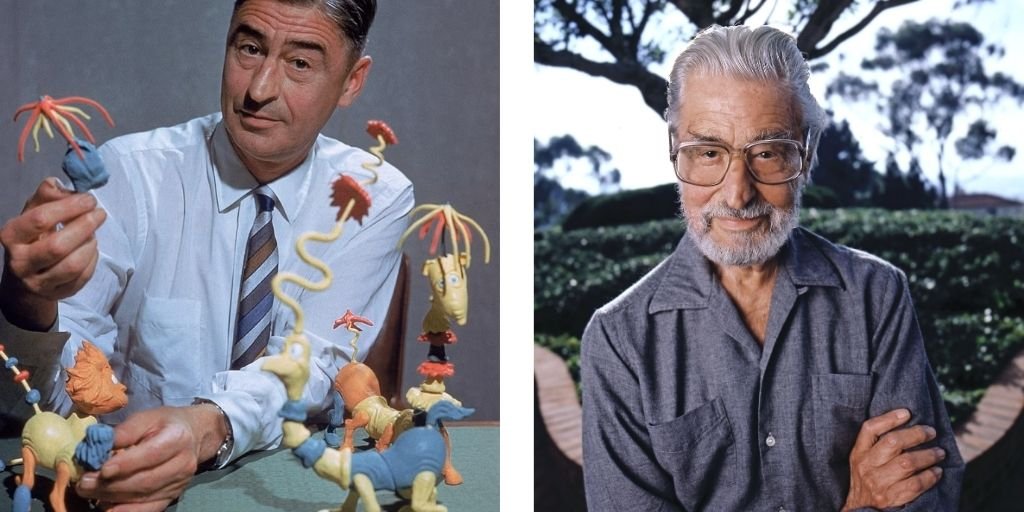
But who was the man behind the famous name? Dr. Seuss was actually Theodor Seuss Geisel, an American writer and illustrator whose career stretched far beyond children’s books. He worked in advertising, created political cartoons, contributed to wartime films, and eventually became one of the best-known names in children’s literature. The Library of Congress identifies The Cat in the Hat as a defining work of his career and notes that more than 200 million Dr. Seuss books had been sold worldwide.
His stories may look simple, but many contain ideas about kindness, responsibility, individuality, environmental care, and the importance of using your voice. That combination helped his work remain part of childhood reading long after his death.
Early Life of Theodor Seuss Geisel
Theodor Seuss Geisel was born on March 2, 1904, in Springfield, Massachusetts. His childhood environment would later become part of the foundation for his creative imagination.
Growing up, Geisel developed an interest in drawing and writing. He eventually attended Dartmouth College, where he became involved with the college humor magazine. During his time there, he was removed from his editorial position after violating college rules during Prohibition.
Rather than giving up his creative work, he continued contributing under a pseudonym. The name “Seuss” became associated with his writing and eventually developed into the much more famous Dr. Seuss. The Library of Congress records this period as an important stage in the development of his professional identity.
Interestingly, the “Dr.” in Dr. Seuss was not simply the result of a medical degree. It became part of the pen name that audiences would eventually recognize around the world.
His journey is a reminder that a difficult moment does not necessarily define a person’s entire future. Sometimes, a closed door simply pushes creativity in another direction.
From Advertising to Illustration
Before becoming famous for children’s literature, Geisel worked as an illustrator and advertising artist.
His distinctive drawing style helped him attract attention. He created humorous images and advertisements that demonstrated the imaginative visual approach that would later become one of his trademarks.
This period was important because it gave him experience combining words and pictures. That combination became central to his later books.
Think of his illustrations and writing as two wheels on the same bicycle. The words helped move the story forward, while the pictures gave readers another way to experience the world.
His early professional work also helped him understand how to communicate quickly with an audience. That ability became especially useful when he began producing books for young readers.
Dr. Seuss During World War II
Geisel’s career was not limited to children’s publishing. During World War II, he worked in animation and contributed to military training films.
The Library of Congress notes that his wartime work included military training films and the development of the character Private Snafu.
This period exposed him to a very different form of storytelling. Instead of creating only still illustrations on a page, he was working with animation, movement, sound, and short-form communication.
The experience also demonstrated how flexible his creative skills were. He could write, draw, create characters, and communicate ideas through visual storytelling.
After the war, his attention increasingly turned toward books for children. The unusual creatures and playful worlds that would later become his trademark were already developing in his creative style.
The Breakthrough of The Cat in the Hat
One of the biggest turning points in Geisel’s career came in 1957 with The Cat in the Hat.
The book became enormously influential in children’s reading. It presented beginning readers with a story that was entertaining while using controlled vocabulary and rhythmic language.
The central character, the Cat in the Hat, arrives unexpectedly and transforms an ordinary day into complete chaos. Two children watch as the situation becomes increasingly ridiculous, creating a story filled with movement, humor, and suspense.
The Library of Congress includes The Cat in the Hat among the books that shaped American reading culture and identifies it as a defining work in Geisel’s career.
Why did it work so well?
The answer is partly its rhythm. Children can hear the language almost like music. The illustrations provide another layer of entertainment, while the story gives young readers a reason to keep turning the pages.
Instead of treating reading like homework, the book made reading feel like play.
Famous Books That Became Classics
After the success of The Cat in the Hat, Geisel produced many books that became household favorites.
Among his best-known works are:
- Green Eggs and Ham
- How the Grinch Stole Christmas!
- Horton Hears a Who!
- The Lorax
- One Fish Two Fish Red Fish Blue Fish
- Yertle the Turtle
- The Sneetches
- Oh, the Places You’ll Go!
- The Cat in the Hat Comes Back
- The Butter Battle Book
Each story has its own setting and characters, but they share several recognizable qualities: rhyme, repetition, imagination, humor, and strong visual storytelling.
Green Eggs and Ham, for example, turns a simple refusal into a humorous lesson about trying something unfamiliar. Horton Hears a Who! explores the idea that even a very small person or creature can matter. The Lorax brings environmental responsibility into a children’s story.
These books show why his work could be enjoyed at different ages. A young child might enjoy the funny characters, while an older reader may notice the deeper message.
Memorable Characters and Imaginary Worlds
What would a Dr. Seuss book be without its strange creatures?
His stories introduced readers to characters and places that did not behave like the ordinary world.
The Grinch, for example, became one of the most recognizable characters associated with Christmas literature. The Library of Congress even preserves a photograph of Geisel working on a drawing of the Grinch in 1957.
Then there is Horton, whose personality is built around loyalty and determination. The Cat in the Hat represents chaos and playful energy. The Lorax acts as a voice for the natural world.
These characters are memorable because they are more than drawings. They often represent recognizable human behaviors.
Someone can be stubborn like one character, curious like another, or worried about the world around them like another.
That is one reason the stories continue to feel familiar even when the creatures themselves are completely imaginary.
The Messages Behind the Humor
It is easy to focus on the funny words and colorful pictures, but many of the stories contain serious ideas.
Horton Hears a Who! is often associated with the importance of recognizing the value of every individual. The Library of Congress has highlighted the book’s enduring message that every voice matters, regardless of how small it may seem.
The Lorax addresses environmental responsibility through a fictional world filled with trees, animals, and industrial development.
The Sneetches explores ideas surrounding difference, acceptance, and social division.
Yertle the Turtle can be read as a story about power, ambition, and the consequences of trying to place oneself above everyone else.
What makes these lessons effective is that they are rarely presented like a textbook lecture. Instead, the reader experiences them through characters and consequences.
That is a powerful storytelling technique. Children can enjoy the adventure first and discover the deeper idea along the way.
His Unique Writing and Artistic Style
Dr. Seuss developed a writing style that was immediately recognizable.
Rhyming was one of his most important tools. His lines often move quickly, creating a rhythm that encourages children to read aloud.
He also invented words and names that sound amusing even when readers do not know what they mean. This made his books feel different from ordinary children’s stories.
His illustrations were equally distinctive. Long noses, unusual bodies, exaggerated expressions, strange animals, and impossible landscapes filled his pages.
There was almost no limit to what could exist in a Seuss story.
This freedom is part of the appeal. A tree does not have to look like a real tree. An animal does not have to behave like a real animal. A word does not even have to exist in a dictionary.
His imagination worked like an open playground. Readers could enter, explore, and discover something unexpected on every page.
Controversy and Changing Discussions Around His Work
Like many major creators from earlier generations, Geisel’s work is also discussed in the context of changing cultural standards.
Some of his earlier illustrations and commercial work have been criticized for stereotypical portrayals and imagery that modern audiences may find offensive. In 2021, Dr. Seuss Enterprises announced that six books would no longer be published because they contained imagery it considered inappropriate and hurtful.
This part of his legacy is important to discuss honestly because literary history is not always simple.
A person can have a major influence on children’s literature while some elements of their earlier work remain controversial.
For readers, this creates an opportunity to think critically. We can appreciate the creativity and influence of an author’s work while also examining historical material through contemporary perspectives.
That does not require ignoring either side of the conversation.
Dr. Seuss and Children’s Reading
One of Geisel’s most important contributions was helping make early reading entertaining.
Children who are learning to read need more than vocabulary practice. They also need motivation.
A funny character can make them want to turn the page. A rhyme can help them anticipate the next word. A colorful illustration can make a difficult sentence feel less intimidating.
This is where his books became especially useful.
The Library of Congress has included The Cat in the Hat in its exhibitions about books that shaped American culture, reflecting the work’s lasting place in American reading history.
The basic idea is easy to understand: if reading feels enjoyable, a child may be more willing to keep reading.
And once reading becomes a habit, the possibilities become much bigger.
The Legacy of Dr. Seuss
Theodor Geisel died on September 24, 1991, but his books continued to reach new generations.
His influence can be seen in schools, libraries, family bookshelves, adaptations, merchandise, stage productions, and educational programs.
His work has also remained visible through reading initiatives. The Library of Congress documented celebrations connected with Read Across America, including a 2010 event marking what would have been Geisel’s 106th birthday.
His legacy also extends beyond the books he personally completed. Some unfinished material and illustrations were discovered after his death and later developed into publications. The Library of Congress, for example, lists Dr. Seuss’s Horse Museum as a work based on an unfinished manuscript and sketches discovered after his death.
That is a remarkable continuation for an author whose career began decades earlier.
Why Dr. Seuss Still Matters Today
Why do these books continue to attract readers?
Perhaps the simplest answer is that they respect children’s imagination.
The stories do not always explain everything. They invite readers to participate.
You hear a strange rhyme and wonder what comes next. You see a bizarre creature and want to know what it will do. You encounter a made-up word and somehow understand its meaning from the surrounding story.
That is part of the magic.
Dr. Seuss understood that children do not need every story to look like everyday life. Sometimes they need something completely different.
His work also reminds adults that children’s literature can contain serious ideas without becoming boring.
A book can make a child laugh and think at the same time.
That may be one of his greatest achievements.
Conclusion
Dr. Seuss, born Theodor Seuss Geisel, created a literary world filled with rhyme, imagination, humor, memorable characters, and meaningful lessons. From his early work in humor and advertising to his wartime animation career and his breakthrough with The Cat in the Hat, his path was anything but ordinary.
His books introduced millions of readers to the joy of reading while exploring themes such as individuality, responsibility, kindness, environmental awareness, and the importance of speaking up.
His legacy is also complicated, and some parts of his earlier work have been reconsidered in light of modern standards. Yet his influence on children’s literature remains an important part of American publishing history.
Perhaps that is why his stories continue to feel alive. They remind us that reading does not always have to be serious to be meaningful. Sometimes, a strange creature, a silly rhyme, and a wild adventure can open the door to a lifelong love of books.
Frequently Asked Questions
1. Who was Dr. Seuss?
Dr. Seuss was the pen name of Theodor Seuss Geisel, an American author and illustrator best known for children’s books such as The Cat in the Hat, Green Eggs and Ham, Horton Hears a Who!, and How the Grinch Stole Christmas!
2. What is Dr. Seuss’s real name?
His real name was Theodor Seuss Geisel. The name Dr. Seuss became his famous professional identity and is now closely associated with children’s literature.
3. What was Dr. Seuss’s most famous book?
The Cat in the Hat, published in 1957, is widely regarded as one of his defining works. The Library of Congress includes it among influential American books.
4. What lessons are found in Dr. Seuss books?
His stories explore ideas such as individuality, kindness, responsibility, environmental care, courage, acceptance, and the importance of trying new things.
5. When did Dr. Seuss die?
Theodor Seuss Geisel died on September 24, 1991, at the age of 87. His books and characters continued to influence children’s reading and popular culture after his death.