
Ray Charles: The Incredible Life, Music, Career & Legacy of a Soul Legend
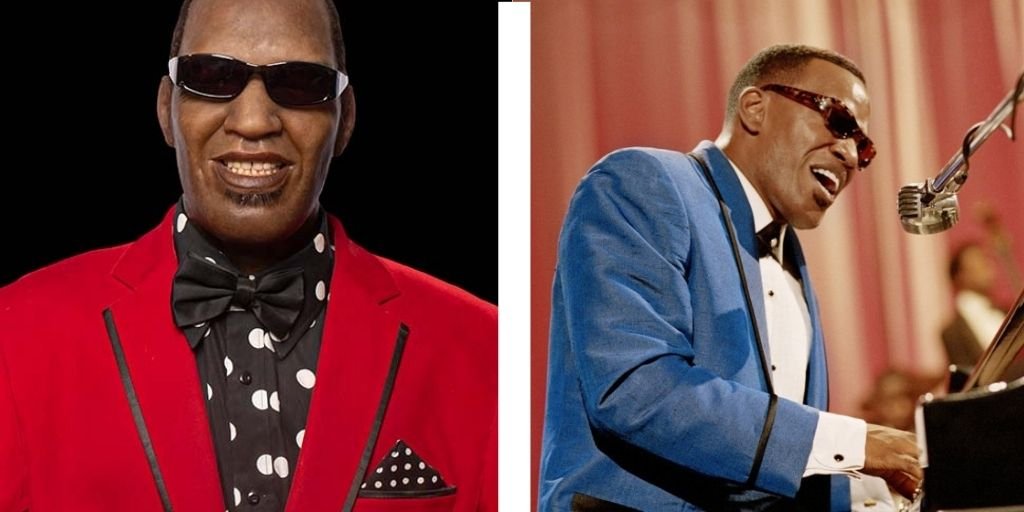
Ray Charles was far more than a famous singer and pianist. He was a musician who helped reshape American popular music by bringing together gospel, blues, jazz, country, and rhythm and blues in ways that felt fresh and deeply personal. His warm voice, expressive piano playing, and emotional performances made his songs unforgettable.
But how did a boy who lost his sight at a young age become one of the most influential musicians of the 20th century? His story is filled with determination, difficult choices, remarkable success, personal struggles, and an extraordinary love for music.
From his childhood in Georgia to worldwide fame, his journey shows how talent can grow through hardship when combined with discipline, creativity, and courage.
Early Life and Childhood
Ray Charles Robinson was born on September 23, 1930, in Albany, Georgia. He grew up in Greenville, Florida, during a period when racial segregation shaped everyday life in the American South.
His family did not have great wealth, and his childhood was marked by hardship. Music, however, quickly became an important part of his world.
As a young child, Charles began showing an unusual interest in sound. He listened carefully to music around him and developed a fascination with instruments. The piano became especially important.
When he was around five years old, Charles began losing his eyesight. By approximately the age of seven, he was completely blind.
For many people, such a loss might have felt like the end of a dream. For Charles, it became one of the circumstances he learned to live with.
He attended the Florida School for the Deaf and Blind in St. Augustine, where he received formal musical education. He learned to read music in Braille and studied piano and other instruments.
His teachers helped him develop skills that would later become essential to his professional career.
Learning to Listen
Because Charles could not rely on sight, his ears became his greatest musical tool. He developed a remarkable ability to recognize melodies, harmonies, rhythms, and changes in musical arrangements.
Music was not simply something he heard. It became the language through which he understood the world.
Discovering a Life in Music
Charles lost both parents while he was still young. These experiences forced him to become independent earlier than many children.
After leaving school as a teenager, he began working as a musician. He traveled and performed with different groups, gradually gaining experience.
During his early career, he played piano and other instruments while learning how professional musicians worked. He absorbed ideas from jazz, blues, gospel, and swing.
At this stage, he was not yet the international star people would eventually know.
He was simply a young musician trying to find his sound.
That search mattered. Instead of copying one particular style, Charles listened widely. He took pieces from different musical traditions and eventually began combining them.
This approach would become one of his defining characteristics.
A Musical Sponge
Charles seemed almost like a musical sponge. He absorbed sounds from everywhere and transformed them into something of his own.
Gospel gave him emotional intensity. Blues gave him honesty. Jazz gave him freedom. Rhythm and blues gave him energy. Country music later provided another important influence.
His genius was not merely in knowing these styles. It was in understanding how they could speak to one another.
The Rise of a Distinctive Sound
During the 1950s, Charles began establishing himself as a major recording artist.
His music stood out because he was willing to cross boundaries. At a time when musical categories were often treated as separate worlds, he moved between them naturally.
His voice could sound tender one moment and powerful the next. His piano playing was equally expressive.
Songs such as “I Got a Woman” became particularly important in establishing his reputation.
The recording blended elements of gospel and rhythm and blues, creating a sound that was exciting and controversial to some listeners because of the way sacred musical influences were adapted into secular music.
Yet audiences responded.
Charles was developing something bigger than a collection of songs. He was helping shape what would become known as soul music.
Why His Voice Felt Different
There was an unusual honesty in Charles’s performances.
He did not simply sing the words. He seemed to inhabit them.
Whether he was singing about love, loneliness, joy, regret, or heartbreak, his phrasing made listeners feel that the emotions were happening in real time.
That quality helped separate him from many other performers of his generation.
“What’d I Say” and a Major Breakthrough
One of Ray Charles’s most famous early successes was “What’d I Say,” released in 1959.
The song captured the excitement of his live performances. It featured a driving rhythm, memorable vocals, energetic piano, and a strong call-and-response quality.
It became a major hit and helped introduce his style to an even wider audience.
The song was also significant because it demonstrated how Charles could turn a live musical experience into a recording that felt spontaneous and alive.
People did not simply hear a polished studio performance. They could feel the energy.
A New Kind of Popular Music
Charles was increasingly refusing to stay inside one musical box.
He could move from blues to jazz, from gospel-inspired material to romantic ballads, and eventually into country music.
That flexibility became one of his greatest strengths.
Instead of asking, “What kind of music should I make?” he often seemed to ask, “What can I make this song feel like?”
That difference helped him build a career that lasted for decades.
Ray Charles and Country Music
Perhaps one of the most surprising chapters of his career came when Charles embraced country music.
In 1962, he released the album Modern Sounds in Country and Western Music.
At the time, the project was a bold move. Charles was already strongly associated with rhythm and blues, soul, and jazz. Country music had a different cultural identity and audience.
Yet Charles approached the material in his own way.
He did not simply imitate country singers. He transformed the songs through his voice, piano, arrangements, and emotional interpretation.
The album became enormously successful.
Songs such as “I Can’t Stop Loving You” reached audiences far beyond the musical communities that had already followed him.
Breaking Musical Walls
This project demonstrated something important about popular music: boundaries are often more flexible than people think.
A great song can travel.
Charles showed that a song rooted in one tradition could be reimagined without losing its emotional core.
His success with country material also helped expose different audiences to music they might not otherwise have explored.
His Greatest Songs and Performances
Ray Charles recorded hundreds of songs throughout his career, making it difficult to reduce his legacy to only a handful.
Still, several recordings became closely associated with his name.
Among them are:
- “Georgia on My Mind”
- “What’d I Say”
- “I Got a Woman”
- “Hit the Road Jack”
- “Unchain My Heart”
- “You Don’t Know Me”
- “I Can’t Stop Loving You”
- “Hallelujah I Love Her So”
Each song revealed a different side of his musical personality.
“Hit the Road Jack,” for example, carried a sharp, playful energy. “Georgia on My Mind” offered a much more reflective mood. “I Can’t Stop Loving You” showed his ability to turn a country ballad into a deeply emotional soul performance.
The Piano as His Second Voice
For Charles, the piano was more than an accompanying instrument.
It was almost another voice.
His playing could answer his singing, push the rhythm forward, or create emotional tension between phrases.
This relationship between voice and piano became a major part of his performance style.
Personal Struggles and Addiction
Ray Charles’s public success existed alongside serious personal struggles.
One of the most difficult periods of his life involved heroin addiction. He began using drugs while he was still young, and the problem eventually became severe.
His addiction affected his personal and professional life.
In 1965, Charles was arrested for drug possession. He subsequently entered treatment and worked toward recovery.
He later maintained sobriety.
This part of his story is important because it shows that his life was not a simple success story. Fame did not protect him from addiction, difficult decisions, or personal consequences.
Recovery and Responsibility
Charles’s experience with addiction became part of his larger life story, but it should not define everything he accomplished.
His recovery allowed him to continue building his career and creating music for many more years.
His journey also became an example of how personal problems can exist alongside professional achievement.
Ray Charles and the Civil Rights Era
Charles’s career unfolded during the American civil rights movement.
As a Black musician born in the segregated South, he experienced racial discrimination firsthand.
He also used his position to challenge segregation.
One well-known example occurred in 1961, when Charles was scheduled to perform in Augusta, Georgia. He objected to segregation at the venue and refused to perform under conditions that separated Black and white audience members.
The incident contributed to his decision to avoid returning to the state for many years.
His recording of “Georgia on My Mind” later became strongly associated with the state, creating a complicated historical connection between Charles, Georgia, and the American South.
Music and Social Change
Charles was not primarily known as a political songwriter, but his actions demonstrated that musicians could influence public conversations through what they did as well as what they sang.
His career crossed racial and cultural boundaries at a time when American society was undergoing enormous change.
His music brought different audiences together, even when the world around him remained divided.
Awards, Recognition, and Career Achievements
Over his long career, Charles received major recognition for his musical work.
He won numerous Grammy Awards and became one of the most respected figures in American music.
His achievements extended across multiple genres, including rhythm and blues, soul, jazz, pop, gospel, blues, and country.
He was also inducted into the Rock and Roll Hall of Fame in 1986.
His honors reflected something unusual: Charles was not simply successful in one musical category.
He had influenced several.
A Career Built on Reinvention
One reason Charles remained relevant for so long was his willingness to evolve.
Some musicians find one successful formula and repeat it.
Charles kept experimenting.
He explored new arrangements, different genres, new collaborators, and changing musical environments.
This ability to reinvent himself helped keep his work interesting across generations.
Family and Personal Life
Ray Charles had a large family and fathered twelve children with several women.
His personal relationships were often complicated, and his demanding career placed additional pressures on family life.
Although he spent much of his life traveling and performing, his children remained an important part of his legacy.
His family has continued to preserve and represent aspects of his musical heritage.
Charles’s life demonstrates that public success and private life can be very different experiences. A person can become an icon while still facing ordinary human challenges involving relationships, responsibility, and family.
Ray Charles in Film and Popular Culture
Charles’s influence extended well beyond the recording studio.
His life story reached a new generation through the 2004 film Ray, starring Jamie Foxx.
The movie portrayed major parts of Charles’s childhood, musical career, addiction, relationships, and rise to fame.
Foxx’s performance received widespread recognition and earned him the Academy Award for Best Actor.
The film introduced Charles’s story to people who may have known his music without knowing much about the man behind it.
An Icon Beyond Music
Ray Charles became more than a recording artist.
His image, voice, piano style, and personal story became part of American popular culture.
His songs continued appearing in films, television programs, commercials, and live performances.
Even people who could not immediately name the artist behind a recording often recognized the distinctive sound.
His Influence on Future Generations
Ray Charles influenced countless singers, pianists, producers, and composers.
His impact can be heard in soul, R&B, rock, pop, jazz, country, and gospel.
Artists who followed him inherited a musical world in which crossing genres was increasingly acceptable.
His approach helped demonstrate that an artist did not have to choose between emotional depth and commercial success.
He also showed the importance of interpretation.
A performer does not always need to write a song to make it their own. Charles could take an existing composition and reshape it through his voice and musical personality.
Why His Music Still Matters
Why do listeners continue returning to recordings made decades ago?
One answer is emotion.
Technology changes. Fashion changes. Musical trends change. Human feelings do not change nearly as quickly.
Love still hurts. People still miss one another. People still celebrate, argue, hope, and dream.
Charles understood those emotions and delivered them without hiding behind unnecessary complexity.
The Final Years of His Life
Ray Charles continued performing and recording for many years.
Even as he grew older, he remained connected to music and continued making public appearances.
His final studio album, Genius Loves Company, was released in 2004.
The album featured collaborations with several major artists and became a major commercial and critical success.
It also earned multiple Grammy Awards.
Sadly, Charles died on June 10, 2004, at the age of 73, at his home in Beverly Hills, California.
His death marked the end of an extraordinary career, but certainly not the end of his musical influence.
The Lasting Legacy of Ray Charles
Ray Charles changed American music by refusing to treat musical genres as locked doors.
He opened them.
He moved between gospel, blues, jazz, country, rhythm and blues, and popular music with remarkable confidence. His voice carried pain and joy, while his piano playing gave his performances a recognizable personality.
But perhaps his greatest achievement was more personal.
Charles showed that a difficult beginning does not necessarily determine the shape of an entire life.
He lost his sight as a child. He lost his parents while young. He struggled with addiction. He faced racial discrimination. Yet he built a career that influenced generations of musicians.
His story is therefore not simply about fame.
It is about transformation.
A song in Ray Charles’s hands could be like an old photograph suddenly brought to life. The melody might have existed before, but he gave it a new emotional meaning.
That is why his music continues to matter.
Ray Charles was a pioneer, an innovator, a complicated human being, and an extraordinary artist. His contribution to American music remains deeply woven into the sounds that came after him.
Conclusion
Ray Charles’s life was a remarkable mixture of hardship, creativity, success, struggle, and reinvention. From his childhood in Georgia and Florida to his rise as an international star, he continually pushed beyond musical boundaries.
His recordings helped shape soul music and influenced artists across several genres. His ability to make listeners feel the emotion behind a song remains one of his most enduring gifts.
Decades after his biggest hits, his music still reminds us of something simple: great art can cross boundaries that people once believed could never be crossed.
FAQs About Ray Charles
1. Who was Ray Charles?
Ray Charles was an American singer, pianist, songwriter, and musician who became one of the most influential figures in soul, rhythm and blues, jazz, blues, and country music.
2. When did Ray Charles lose his sight?
Ray Charles began losing his eyesight when he was a young child and was completely blind by approximately the age of seven.
3. What was Ray Charles’s most famous song?
“Georgia on My Mind” is among his most famous recordings, while “What’d I Say,” “Hit the Road Jack,” and “I Can’t Stop Loving You” are also closely associated with his career.
4. Did Ray Charles play country music?
Yes. His 1962 album Modern Sounds in Country and Western Music became a major success and demonstrated his ability to reinterpret country songs through his distinctive soul and R&B style.
5. When did Ray Charles die?
Ray Charles died on June 10, 2004, at the age of 73, at his home in Beverly Hills, California.