
Julia Roberts: The Remarkable Life, Career, Movies and Legacy
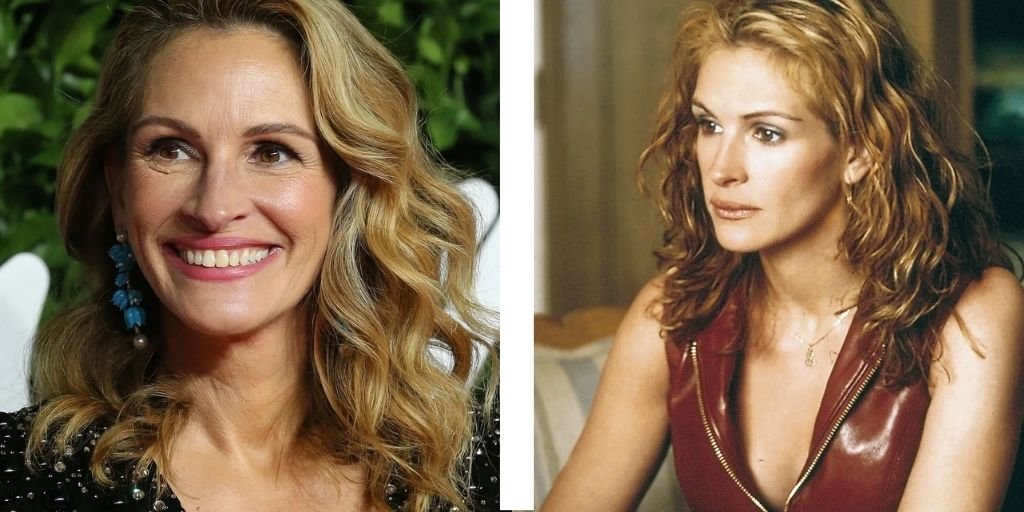
Julia Roberts is one of those Hollywood stars whose name can instantly bring a familiar smile to people’s faces. From romantic comedies to serious dramas, she has built a career that has lasted for decades while continually finding new ways to connect with audiences. Her journey from a young actress in Georgia to an Academy Award-winning performer is filled with memorable films, unexpected career choices, and characters that have remained part of popular culture.
But what makes her career so interesting? Is it her famous laugh, her natural screen presence, or the wide range of characters she has played? In truth, it is a combination of all three. Her career has been less like a straight road and more like a winding journey, with major successes, quieter periods, dramatic roles, and surprising turns along the way.
Early Life and Family Background
Julia Fiona Roberts was born on October 28, 1967, in Smyrna, Georgia. She grew up in a family connected to acting and creative work. Her parents were involved with theater and ran a workshop for aspiring writers and performers. Her older brother Eric Roberts and sister Lisa Roberts Gillan also pursued careers connected to entertainment.
Interestingly, acting was not originally Roberts’ only dream. She once considered becoming a veterinarian. After finishing high school in 1985, she moved to New York City, where she began pursuing acting more seriously.
Her early years were not an overnight success story. Like many performers, she had to audition, learn the business, and find opportunities wherever she could. A small television appearance on Crime Story in 1987 helped introduce her to audiences, while Mystic Pizza in 1988 gave her a more noticeable role.
These early experiences became the foundation for what would soon become a remarkable Hollywood career.
The Breakthrough With Steel Magnolias
Roberts’ career changed significantly with Steel Magnolias in 1989. The film featured an impressive ensemble cast and gave her the opportunity to demonstrate that she was more than a promising newcomer.
Her performance earned an Academy Award nomination for Supporting Actress. The nomination was an important milestone because it showed that the young performer could hold her own alongside established stars.
The film also helped audiences recognize something special about her acting. Roberts could portray warmth and humor while also handling emotionally demanding material.
That combination would become one of the most important features of her career.
Pretty Woman and the Birth of a Hollywood Icon
If Steel Magnolias opened the door, Pretty Woman pushed it wide open.
Released in 1990, the romantic comedy paired Roberts with Richard Gere. She played Vivian Ward, a young woman whose unexpected relationship with a wealthy businessman becomes the center of the story.
The film became a major cultural moment, and Roberts’ performance turned her into one of Hollywood’s most recognizable stars. She received an Academy Award nomination for Best Actress for the role.
Why did the movie connect so strongly with audiences?
Part of the answer was Roberts herself. She brought humor, vulnerability, confidence, and charm to the character. Her smile became almost as recognizable as the movie itself.
Pretty Woman also established an important part of her public image. She could lead a romantic comedy without losing the emotional heart of the story.
For many viewers, the film became a modern fairy tale. Roberts was not simply playing a character; she became closely associated with the kind of optimistic Hollywood storytelling that audiences could enjoy again and again.
Finding Her Way After Massive Success
Success at the level of Pretty Woman can create a difficult problem for an actor. Once audiences associate someone with a particular type of role, changing direction can be risky.
Roberts experienced both successes and disappointments during the early 1990s. Films such as Dying Young and Hook showed her continuing to work across different genres, although they did not create the same impact as Pretty Woman. Biography.com notes that this period included several career challenges before Roberts found another major breakthrough.
Rather than simply repeating the same formula, she continued exploring different characters.
That decision mattered.
An actor’s career can sometimes resemble a painter’s canvas. If the painter uses only one color, the picture may become predictable. Roberts gradually added new shades to her work, moving between romance, drama, thriller, comedy, and ensemble films.
Romantic Comedy Stardom
During the 1990s, Roberts became one of the defining stars of romantic comedy.
My Best Friend’s Wedding gave her a more complicated character. Instead of simply playing an ideal romantic heroine, she portrayed a woman whose emotions and decisions were messy and sometimes selfish.
Then came Notting Hill in 1999, where she starred opposite Hugh Grant. The movie combined humor, romance, celebrity culture, and everyday life. Roberts played Anna Scott, a famous actress who becomes involved with an ordinary man living in London.
The story worked partly because Roberts understood the strange contrast between celebrity and normal life. Her character was famous enough to attract attention everywhere, yet the film also allowed audiences to see her vulnerability.
She later reunited with Richard Gere for Runaway Bride, another romantic comedy that became part of her filmography.
By the end of the decade, Roberts had become closely associated with the genre, but she was preparing for perhaps the most important dramatic performance of her career.
Erin Brockovich and Her Academy Award
In 2000, Roberts starred in Erin Brockovich, directed by Steven Soderbergh. The movie was inspired by the real-life story of Erin Brockovich, a legal assistant who helped uncover evidence connected to a major environmental case involving residents of Hinkley, California.
Roberts played the title character with a combination of determination, humor, frustration, and vulnerability.
The role changed how many people viewed her as an actress.
At the 2001 Academy Awards, Julia Roberts won the Oscar for Best Actress for Erin Brockovich.
The real Erin Brockovich’s story involved documents uncovered while she was working at a California law firm and eventually contributed to litigation involving hundreds of residents. The film became a major commercial and critical success.
Roberts’ performance worked because she did not make the character feel like a perfect superhero. Instead, she made Erin feel human. She could be stubborn, funny, emotional, ambitious, and imperfect.
That human quality gave the performance its strength.
Winning the Academy Award also confirmed that Roberts’ success was not limited to romantic comedies. She had demonstrated that she could carry a serious dramatic film and receive the industry’s highest acting recognition.
Ocean’s Eleven and Ensemble Movies
After Erin Brockovich, Roberts continued to explore different kinds of projects.
In 2001, she joined the cast of Ocean’s Eleven, starring alongside George Clooney, Brad Pitt, Matt Damon, Andy Garcia, and others. The film combined crime, comedy, glamour, and an enormous ensemble cast.
She returned for Ocean’s Twelve in 2004.
Working in ensemble films allowed Roberts to demonstrate another skill: knowing how to remain memorable without dominating every scene.
Her presence was important, but she was also part of a larger group of performers.
This is not always easy. In a large cast, every actor has to understand the rhythm of the story. Roberts’ ability to shift between leading roles and ensemble projects helped keep her career flexible.
Dramatic Roles and New Challenges
Roberts did not abandon serious drama after winning her Oscar.
In Closer (2004), she appeared alongside Jude Law, Natalie Portman, and Clive Owen. The film was far removed from the lighthearted romantic comedies that had made her famous. It explored complicated relationships, attraction, dishonesty, and emotional conflict.
Roberts also appeared in films such as Charlie Wilson’s War and Duplicity, continuing to work across different genres.
Her choices demonstrated that she was not interested in being trapped by a single image.
That flexibility became increasingly important as Hollywood changed. The industry was moving away from the traditional star-driven system, while television and streaming were becoming increasingly important. Roberts adapted by taking opportunities in both film and television.
Later Career and Television Work
As her career progressed, Roberts became more selective about the projects she accepted.
She appeared in films including Eat Pray Love, August: Osage County, Money Monster, and Wonder.
Wonder was especially notable because it introduced her to a younger generation of viewers. The film focused on a child with a facial difference and the family and community surrounding him.
Roberts’ role demonstrated her ability to work in stories where the emotional focus was shared among several characters rather than resting entirely on one performer.
She also expanded into television. Her involvement in projects such as Homecoming showed that established movie stars could successfully move into long-form television storytelling.
This was an important shift in the entertainment industry. Television was no longer simply a secondary destination for film performers. High-quality series had become major creative opportunities.
Julia Roberts as a Producer
Roberts has also worked behind the scenes as a producer.
Producing can give an actor greater involvement in choosing stories, developing projects, and shaping the creative direction of a production.
This aspect of her career is sometimes overlooked because audiences naturally associate her most strongly with acting. Yet it shows another side of her professional development.
Instead of simply waiting for roles to arrive, she has participated in the process of bringing stories to the screen.
That is another reason her career has lasted so long. She has not remained frozen in the role of a young Hollywood star. She has grown with the industry.
Personal Life and Family
Roberts has generally maintained a relatively private approach to her family life compared with the constant public exposure surrounding many celebrities.
She married cinematographer Daniel Moder in 2002. The couple have three children.
Although public interest in celebrities can be intense, Roberts has often kept the focus of her public career on her work rather than turning every part of her personal life into entertainment.
This balance has contributed to the distinctive way audiences see her. There is a major difference between being famous and constantly being visible.
Roberts has experienced both, but she has generally maintained boundaries around her family.
Style, Screen Presence and Cultural Impact
What makes Julia Roberts instantly recognizable?
Her smile is certainly part of the answer, but her appeal goes deeper than appearance.
She has a conversational acting style that can make characters feel approachable. Even when she is playing someone wealthy, famous, angry, ambitious, or emotionally troubled, there is often something familiar in her performances.
Her laugh, expressions, timing, and ability to communicate emotion without excessive dialogue have become recognizable parts of her screen identity.
Her influence is particularly visible in romantic comedy. Movies such as Pretty Woman, My Best Friend’s Wedding, Notting Hill, and Runaway Bride helped define the genre during an important period in modern Hollywood.
Yet reducing her legacy to romance would be incomplete.
Her Academy Award for Erin Brockovich, her dramatic work, ensemble films, television projects, and producing career all show a broader professional range.
Awards and Lasting Legacy
Roberts’ career has included major awards recognition across several decades.
Her first Academy Award nomination came for Steel Magnolias. She received another nomination for Pretty Woman, and eventually won Best Actress for Erin Brockovich.
These milestones tell only part of the story.
Awards measure recognition, but cultural influence is harder to quantify. Millions of viewers know characters such as Vivian Ward and Erin Brockovich even if they have never followed Hollywood awards ceremonies.
That is perhaps the clearest sign of a lasting career: the characters remain familiar long after the original movie has ended.
Roberts’ career has also continued into newer projects. She was listed among the cast of After the Hunt, demonstrating that she remains active in major film production decades after her breakthrough.
Her journey from a young actress in Georgia to an international film star is therefore not simply a story about fame. It is a story about adaptation.
She entered Hollywood during one era and continued working through several major changes in the entertainment industry.
Why Julia Roberts Still Matters
Julia Roberts’ career matters because it illustrates how a performer can evolve without completely losing the qualities that made audiences connect with her in the first place.
She became famous through romantic comedy, proved her dramatic ability with Erin Brockovich, joined major ensemble franchises, explored challenging characters, worked in television, and took on producing responsibilities.
Perhaps that is why her career remains interesting.
We can look at Pretty Woman and remember the Hollywood star of the early 1990s. We can watch Erin Brockovich and see a serious award-winning performer. We can watch her later projects and see an actress who has continued to adapt.
Her career is like a long-running novel: each chapter has a different tone, but the central character remains recognizable.
For audiences, that may be the greatest part of Julia Roberts’ legacy. She has entertained generations while proving that long-term success does not require staying exactly the same.
Conclusion
Julia Roberts has built one of the most recognizable careers in modern American cinema. From Mystic Pizza and Steel Magnolias to Pretty Woman, Erin Brockovich, Ocean’s Eleven, Notting Hill, and her later work, she has continually expanded her range.
Her Oscar-winning performance showed that her talents extended far beyond romantic comedy, while her later projects demonstrated a willingness to explore new formats and stories.
For audiences who grew up watching her movies and for newer viewers discovering her work today, her filmography offers something unusual: familiarity without complete repetition.
Julia Roberts did not simply become a Hollywood star. She built a career that continued changing as she changed, and that is a major reason her name remains important in popular culture.
Frequently Asked Questions
1. What is Julia Roberts best known for?
Julia Roberts is best known for films including Pretty Woman, Erin Brockovich, Notting Hill, My Best Friend’s Wedding, Steel Magnolias, and Ocean’s Eleven. She is especially recognized for combining romantic comedy with dramatic performances.
2. Did Julia Roberts win an Academy Award?
Yes. Julia Roberts won the Academy Award for Best Actress for her performance in Erin Brockovich at the 2001 ceremony.
3. What was Julia Roberts’ breakthrough movie?
Steel Magnolias was one of her major early breakthroughs. Her performance earned her an Academy Award nomination for Supporting Actress. Pretty Woman the following year transformed her into an international Hollywood star.
4. Who did Julia Roberts play in Pretty Woman?
She played Vivian Ward, a young woman who develops a relationship with Edward Lewis, played by Richard Gere. The role became one of the defining performances of her career.
5. Is Julia Roberts still acting?
Yes. Roberts has continued working in film and television. Her later career includes projects such as Wonder, Homecoming, and After the Hunt, showing that she remains active across different forms of screen entertainment.