
Walt Disney: Amazing Life, Career, Creativity & Lasting Legacy
Introduction
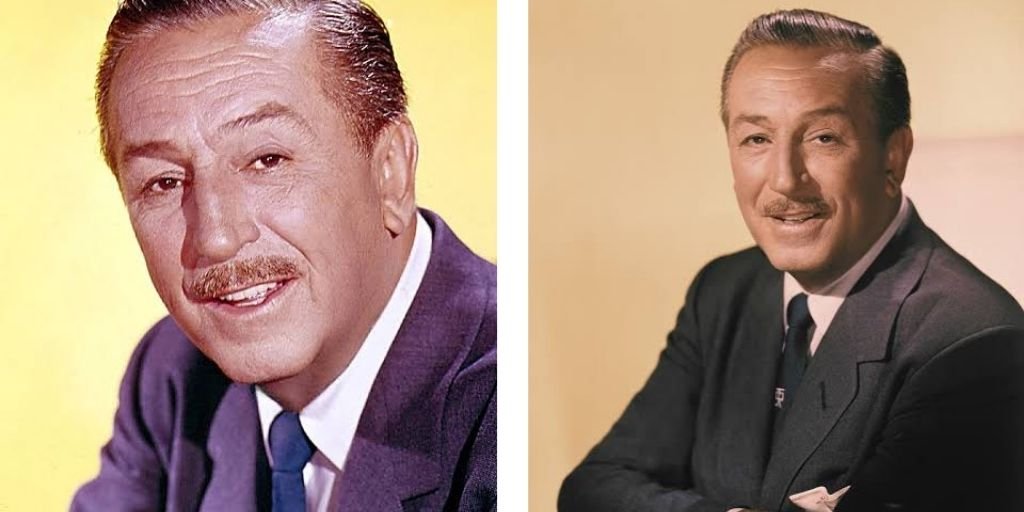
Few people have changed entertainment as dramatically as Walt Disney. His name became connected with animation, beloved characters, family movies, theme parks, and stories that continue to reach audiences around the world. But behind the famous mouse and magical castles was a man who experienced failure, financial problems, criticism, and uncertainty.
So, how did a young artist with big dreams build an entertainment empire? Walt Disney’s story is not simply about cartoons. It is about imagination, persistence, risk-taking, and the belief that an idea could become something much bigger. His journey from a modest childhood to international fame remains one of the most fascinating stories in modern entertainment.
Early Life and Childhood
Walt Disney was born on December 5, 1901, in Chicago, Illinois. His family later moved to a farm near Marceline, Missouri, where he spent part of his childhood. The rural surroundings had a lasting influence on his imagination.
A Childhood Filled With Drawing
As a boy, Disney enjoyed drawing and observing the world around him. Animals, people, buildings, and everyday scenes became subjects for his sketches. His interest in art was more than a casual hobby. It gradually became something he wanted to pursue seriously.
The small-town environment also influenced the atmosphere of many later Disney stories. The innocence, community feeling, and fascination with trains that he experienced as a child appeared in different forms throughout his career.
When you think about it, childhood experiences can become the raw material for adult creativity. For Disney, those early memories were like seeds that remained hidden for years before growing into something enormous.
Discovering a Passion for Art and Animation
During his teenage years, Disney became increasingly interested in illustration and commercial art. He attended art classes and worked on drawings for school publications.
After World War I, he began looking for opportunities in commercial art and animation. At the time, animation was still a developing form of entertainment. It was not the massive industry people know today.
Learning Through Experience
Disney’s early career involved experimentation and setbacks. He worked in commercial art and eventually became involved with animation projects in Kansas City. These experiences helped him understand how animated productions were created.
Rather than seeing early failures as the end of his career, he treated them as lessons. That attitude would become one of the defining characteristics of his professional life.
Animation required patience. Every movement had to be created carefully, and producing a short film could take considerable time and effort. Disney understood that audiences would respond to characters that felt alive rather than simply looking like drawings moving across a screen.
The Creation of Mickey Mouse
One of Disney’s greatest breakthroughs came with Mickey Mouse.
In the late 1920s, Disney and his creative team developed a new cartoon character that would become one of the most recognizable figures in popular culture. Mickey’s early success was strongly connected to the introduction of synchronized sound in animation.
Steamboat Willie and a New Era
Steamboat Willie, released in 1928, became a major milestone. The short featured Mickey Mouse and helped demonstrate the possibilities of combining animation with synchronized sound.
Mickey was not simply successful because of his appearance. He had personality, energy, humor, and an expressive style that audiences could understand.
The character quickly became an important part of Disney’s growing business. Merchandise, films, books, and other products followed.
Mickey’s success showed Disney that audiences could form emotional connections with animated characters. This was a crucial realization because it transformed animation from a novelty into a powerful storytelling medium.
Building an Animation Studio
The success of Mickey Mouse helped Disney expand his operations. His company produced increasingly ambitious animated projects and introduced new characters.
A Team Effort Behind the Magic
Although Disney became the public face of the studio, animation was always a collaborative process. Artists, writers, musicians, animators, technicians, and many other workers contributed to the finished productions.
Disney was deeply involved in the creative direction of his projects. He pushed his teams to improve character movement, storytelling, music, backgrounds, and visual detail.
His approach was demanding. He wanted animated films to feel emotionally meaningful rather than existing only as collections of jokes.
The studio gradually developed a distinctive style. Stories were designed to make audiences laugh, feel nervous, become emotional, and ultimately leave with a memorable experience.
Snow White and the Rise of Feature Animation
One of Walt Disney’s boldest decisions was producing a full-length animated feature.
At the time, many people believed audiences would not sit through an entire animated movie. The project was sometimes treated as an enormous financial gamble.
Disney moved forward anyway.
Snow White and the Seven Dwarfs
Released in 1937, Snow White and the Seven Dwarfs became a landmark in cinema history. The film demonstrated that animation could support a feature-length story with emotional depth, memorable music, humor, drama, and carefully developed characters.
The production required tremendous effort and investment. Yet the gamble paid off.
The film’s success helped establish animated features as a serious form of entertainment. It also gave Disney the financial strength and confidence to pursue even more ambitious projects.
Films such as Pinocchio, Fantasia, Dumbo, and Bambi followed during the studio’s early feature-animation era.
Challenges, Setbacks, and Controversies
It is easy to look at Disney’s career from the present day and imagine that success came smoothly. It did not.
He experienced financial difficulties, production problems, labor disputes, and intense pressure.
Failure Was Part of the Journey
Disney’s career included projects that did not perform as expected. Some productions cost more than planned, while others faced difficult market conditions.
The studio also experienced a major labor dispute in 1941. The strike became one of the most serious conflicts in Disney’s professional life and affected relationships within the company.
There are also important historical discussions surrounding Disney’s management style, workplace culture, political views, and the representation of different groups in some early productions.
Understanding these issues does not erase his creative achievements. Instead, it gives us a fuller picture of a complicated historical figure.
People are rarely one-dimensional. A successful person can create extraordinary work while also making decisions that later generations question. Disney’s story is best understood with both his achievements and controversies in view.
Walt Disney and the Dream of Disneyland
Perhaps Disney’s most surprising idea was not another movie. It was a theme park.
The concept for Disneyland developed from Disney’s desire to create a place where families could experience stories and attractions together.
Turning Stories Into a Physical World
Disneyland opened in Anaheim, California, in 1955.
The park was different from traditional amusement parks. Disney wanted visitors to feel as though they were entering carefully designed worlds.
Instead of simply watching a story on a screen, guests could walk through environments inspired by different themes.
Main Street, U.S.A., Fantasyland, Adventureland, Frontierland, and Tomorrowland offered distinct experiences.
This concept changed the theme park industry. Disney demonstrated that storytelling could continue beyond the movie theater and become an immersive experience.
The idea was almost like turning a storybook into a real town. Instead of turning pages, visitors walked through the pages.
The Final Years and Walt Disney World
Disney continued thinking about the future after Disneyland opened.
He became increasingly interested in developing a much larger project in Florida. The plan eventually became Walt Disney World.
An Ambitious Vision in Florida
Disney acquired large amounts of land in central Florida and began planning a huge development. He envisioned more than a traditional theme park. His ideas included communities, transportation systems, experimental planning, and new approaches to urban development.
Sadly, Disney did not live to see Walt Disney World open.
He died on December 15, 1966, in Burbank, California, at the age of 65.
His death came before the opening of Walt Disney World in 1971. His brother Roy O. Disney played a major role in bringing the Florida project to completion.
The opening of Walt Disney World became one of the clearest demonstrations that Disney’s ideas had grown far beyond his own lifetime.
Walt Disney’s Creativity and Leadership
What made Disney different from many other entertainment entrepreneurs?
One answer is his willingness to combine art with business.
A Focus on Storytelling
Disney understood that technology alone could not create lasting entertainment. New techniques mattered, but the emotional connection between audiences and characters mattered even more.
He also understood the value of consistency. A Disney production needed to offer a recognizable experience while still giving audiences something new.
Taking Big Risks
Disney repeatedly invested in ideas that others considered too expensive or too uncertain.
Sound cartoons were a risk.
Feature-length animation was a risk.
Large-scale theme parks were a risk.
Each successful project opened the door to another ambitious experiment.
His career demonstrates an important lesson: innovation often looks unreasonable before it becomes successful.
The Lasting Legacy of Walt Disney
Walt Disney died decades ago, but his influence remains visible.
His company continued producing animated films, television programs, merchandise, and theme parks. Characters introduced during his lifetime became cultural icons.
Influence on Animation
Disney helped establish animation as a major form of filmmaking. His studio demonstrated that animated stories could appeal to children while also offering humor, emotion, music, and themes that adults could appreciate.
Influence on Theme Parks
Disneyland changed expectations for theme parks by emphasizing storytelling, atmosphere, design, and customer experience.
Influence on Popular Culture
Characters such as Mickey Mouse became recognizable across generations and countries. Disney’s storytelling model also influenced filmmakers, animators, designers, musicians, and entrepreneurs.
Perhaps his greatest legacy is the idea that entertainment can create an entire world rather than simply provide a few minutes of distraction.
Walt Disney’s Personal Philosophy
Disney’s public image was closely connected with imagination and optimism.
He frequently emphasized the importance of dreaming and continuing to move forward.
The Power of Imagination
Disney believed imagination could be turned into practical creations. He did not treat dreaming as something separate from business. Instead, he used creative ideas as the foundation for new projects.
That philosophy remains relevant today.
Think about any major invention, company, film, or creative project. At some point, it existed only as an idea in someone’s mind.
Disney’s achievement was not simply having ideas. It was finding ways to turn those ideas into experiences that millions of people could enjoy.
Conclusion
Walt Disney’s life was a mixture of imagination, ambition, risk, achievement, disappointment, and controversy. From his childhood drawings to Mickey Mouse, groundbreaking animated features, Disneyland, and the early vision for Walt Disney World, his career transformed entertainment.
His story reminds us that success rarely follows a straight road. Sometimes the biggest opportunities appear after failure, and the ideas that seem impossible can become the projects that define an era.
Whether you admire his creativity, question parts of his history, or simply enjoy the worlds his company helped create, there is no denying the scale of his influence. Walt Disney did more than make cartoons. He helped build a language of storytelling that continues to shape popular culture.
Frequently Asked Questions
1. Who was Walt Disney?
Walt Disney was an American animator, producer, entrepreneur, and entertainment pioneer. He helped establish a major animation studio, co-created Mickey Mouse, produced influential animated films, and developed Disneyland.
2. When was Walt Disney born?
Walt Disney was born on December 5, 1901, in Chicago, Illinois.
3. What was Walt Disney’s most famous creation?
Mickey Mouse is generally regarded as his most famous character. Mickey became an international symbol of the Disney brand and one of the best-known fictional characters in the world.
4. What was Walt Disney’s biggest achievement?
There is no single answer. His major achievements included helping popularize character animation, producing successful feature-length animated films, opening Disneyland, and developing the vision that eventually led to Walt Disney World.
5. When did Walt Disney die?
Walt Disney died on December 15, 1966, at the age of 65. He died before Walt Disney World opened in Florida.