
Leonardo da Vinci: Amazing Life, Art, Inventions & Lasting Legacy
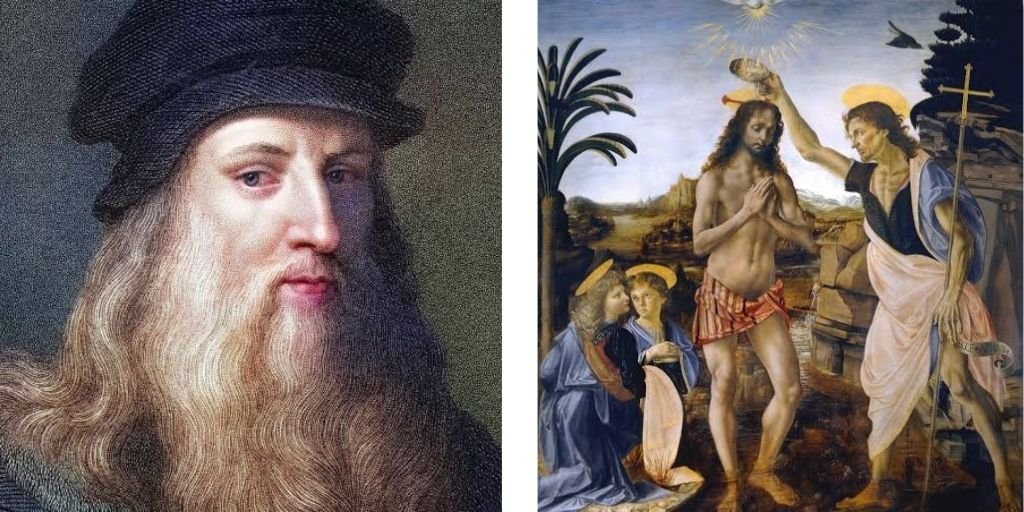
Leonardo da Vinci remains one of the most fascinating people in human history. He was an artist, inventor, scientist, engineer, architect, and curious observer of the world. Centuries after his death, people still study his paintings, notebooks, ideas, and experiments. But what made him so remarkable?
Perhaps the answer is simple: Leonardo never stopped asking questions. He wanted to understand how everything worked, from the movement of water and flight of birds to the structure of the human body and the expression on a person’s face. His curiosity crossed boundaries that people today often keep separate.
His name is closely connected with masterpieces such as the Mona Lisa and The Last Supper, yet his achievements went far beyond painting. His notebooks contain sketches of machines, anatomical studies, maps, bridges, weapons, flying devices, and countless observations about nature.
Leonardo’s life shows us what can happen when creativity and curiosity work together. He did not see art and science as enemies. To him, both were different ways of understanding the same world.
Leonardo da Vinci’s Early Life and Family
Leonardo was born on April 15, 1452, near the small Tuscan town of Vinci in what is now Italy. His full name was Leonardo di ser Piero da Vinci, meaning Leonardo, son of Ser Piero, from Vinci.
His father, Ser Piero, was a notary, while his mother, Caterina, came from a more modest background. Leonardo’s parents were not married to each other, and he grew up largely in his father’s family circle.
Although his childhood circumstances were unusual, they did not prevent him from developing an extraordinary imagination. The countryside around Vinci provided something that would become extremely important throughout his life: nature.
Imagine growing up surrounded by hills, streams, plants, animals, rocks, and changing skies. For a curious child, the landscape itself could become a classroom. Leonardo carefully observed the world around him, and this habit stayed with him for the rest of his life.
There is also an important lesson here. Leonardo did not become extraordinary simply because he was born talented. He developed his abilities through observation, practice, experimentation, and relentless curiosity.
His Education and Apprenticeship in Florence
Leonardo did not receive the kind of formal education that many famous scholars of his time received. He learned basic reading, writing, arithmetic, and practical skills, but his education was not centered on classical academic subjects.
His real artistic education began when he moved to Florence and entered the workshop of Andrea del Verrocchio, one of the leading artists of the period.
A Renaissance workshop was much more than a place where someone simply painted pictures. Apprentices learned a wide range of practical skills. Leonardo would have encountered painting, sculpture, drawing, metalwork, engineering, geometry, and the preparation of materials.
This environment suited him perfectly.
Leonardo learned how to observe objects carefully and reproduce them convincingly. He studied light, shadow, perspective, movement, and human anatomy. He also became interested in the technical side of art.
His experience in Verrocchio’s workshop helped shape an important feature of his personality: he wanted to know not only what something looked like but also why it looked that way.
That approach became the foundation of his later work.
The Artist Behind the Mona Lisa
Leonardo is perhaps best known as the painter of the Mona Lisa, one of the world’s most famous artworks.
The painting is believed to portray Lisa Gherardini, traditionally identified as the wife of Florentine merchant Francesco del Giocondo. Leonardo worked on the painting over a long period, and he appears to have continued refining it rather than treating it as a simple commission to be completed quickly.
What makes the Mona Lisa so captivating?
Her expression is one reason. The subtle smile seems to change depending on where and how you look at the painting. Leonardo achieved this partly through his sophisticated treatment of light and shadow.
His technique, known as sfumato, allowed tones and edges to blend softly rather than appearing as sharp outlines. The result creates a gentle transition between light and dark.
Leonardo also paid extraordinary attention to the landscape behind the figure. The winding paths, mountains, water, and atmospheric distance create a mysterious setting.
The painting’s fame grew enormously over time. Today, it attracts millions of visitors and has become a cultural symbol far beyond the world of art.
Yet the Mona Lisa is only one part of Leonardo’s artistic legacy.
The Last Supper and His Artistic Mastery
Another major masterpiece associated with Leonardo is The Last Supper, created for the refectory of the Santa Maria delle Grazie monastery in Milan.
The scene depicts Jesus announcing that one of his disciples will betray him. Instead of showing a quiet gathering, Leonardo presents a dramatic moment filled with emotion and movement.
Each apostle reacts differently. Some appear shocked, others confused, while a few gesture toward one another. Their reactions make the scene feel almost like a frozen moment from a conversation.
Leonardo carefully arranged the figures so that attention naturally moves toward Jesus. The perspective of the room also helps create a sense of depth.
Unfortunately, the painting suffered from serious deterioration relatively soon after its completion. Leonardo experimented with a technique that did not hold up well on the wall, and later damage and restoration efforts further affected the work.
Despite these problems, The Last Supper remains one of the most influential paintings in Western art.
It also reveals Leonardo’s larger philosophy. He did not simply paint people. He tried to capture thought, emotion, tension, and personality.
Leonardo’s Fascination With the Human Body
Leonardo’s scientific curiosity was especially clear in his studies of human anatomy.
He studied the human body through observation and dissection, producing remarkably detailed drawings of bones, muscles, organs, nerves, and other structures.
His famous Vitruvian Man combines art, mathematics, and anatomy. The drawing shows a male figure positioned within a circle and square, reflecting ideas about human proportions discussed by the ancient Roman architect Vitruvius.
For Leonardo, studying anatomy was not simply a scientific hobby. It directly improved his art.
How could an artist accurately paint a human arm without understanding the muscles beneath the skin? How could he represent a person’s movement without understanding bones and joints?
Leonardo wanted answers to such questions.
His anatomical drawings show an unusual combination of artistic precision and scientific investigation. Some of his observations were remarkably accurate for his time.
His notebooks demonstrate that he understood the importance of seeing things directly rather than relying entirely on traditional writings.
That attitude made him a true observer.
Leonardo the Inventor and Engineer
Leonardo’s notebooks are filled with designs that demonstrate the extraordinary range of his imagination.
He designed or studied concepts involving bridges, gears, pumps, military machines, mechanical devices, canals, boats, and flying machines.
Some designs resemble early versions of ideas that would become important centuries later. His famous flying-machine studies, for example, show his fascination with the possibility of human flight.
He carefully examined birds and their wings, trying to understand how flight worked. He then attempted to translate those observations into mechanical designs.
Not every invention would have worked in practice. Some were limited by the materials and technology available during his lifetime.
But that does not make them unimportant.
Leonardo’s real achievement was his method. He used drawings to think through problems. He broke complicated systems into smaller parts and examined how those parts might work together.
In that sense, his notebooks resemble an early workshop for ideas.
He also imagined a large bridge design and explored methods for moving water. His interests included both peaceful engineering projects and military technology, reflecting the practical demands of Renaissance patrons.
His inventions remind us that imagination often comes before technology. Someone must first imagine what could exist before another generation can build it.
His Scientific Studies and Curiosity About Nature
Leonardo’s interests extended far beyond machines and anatomy.
He studied water, geology, plants, animals, light, shadows, motion, and the atmosphere. He wanted to understand the rules behind natural phenomena.
Water fascinated him deeply. He observed how streams moved around obstacles and how currents formed patterns. These observations influenced his thinking about movement and engineering.
He also studied rocks and landscapes. Some of his observations about fossils and the formation of geological features were remarkably thoughtful for his era.
Leonardo’s approach can be summed up by one simple idea: look closely before making assumptions.
That sounds obvious today, but it was powerful. Rather than accepting every traditional explanation, Leonardo often tried to investigate things himself.
His notebooks reveal thousands of pages of questions and observations. Some ideas were developed extensively, while others were left as unfinished thoughts.
This unfinished quality is part of what makes his work so interesting.
Leonardo’s mind seemed to move like a river, constantly changing direction while still exploring the same enormous landscape of knowledge.
His Years in Milan and Life at the French Court
Leonardo spent important years in Milan, where he worked under the patronage of Ludovico Sforza.
During this period, he became involved in painting, engineering, theatrical design, architecture, and other projects.
His time in Milan was particularly productive. It was there that he worked on The Last Supper and developed many of his studies and designs.
Leonardo was not simply an isolated artist working in a studio. Renaissance courts offered opportunities for talented people who could solve problems, entertain audiences, design structures, and create impressive works of art.
Later in life, Leonardo moved to France at the invitation of King Francis I.
He spent his final years at Clos Lucé near the royal residence of Amboise. Although he produced less major painting during this period, he continued working on ideas and studies.
Leonardo died on May 2, 1519, in France.
He was approximately 67 years old.
By the time of his death, he had left behind an enormous body of notes and drawings, many of which would take generations to fully appreciate.
Leonardo’s Notebooks and the Secrets They Contain
One of the most remarkable parts of Leonardo’s legacy is his collection of notebooks.
They contain sketches, diagrams, scientific observations, artistic studies, questions, calculations, and personal working notes.
Leonardo often wrote in a form of mirror writing, particularly with his left hand. This has generated plenty of speculation, although it does not necessarily indicate a mysterious secret. It may simply have been a comfortable writing method for a left-handed person.
His notebooks show how Leonardo thought.
A drawing of a machine might sit beside an anatomical observation. A study of water could appear near a drawing of a face. A question about birds could lead into an investigation of mechanics.
To Leonardo, knowledge was connected.
Today, we often divide learning into categories: art, physics, biology, engineering, history, and mathematics. Leonardo’s notebooks show a mind that did not always recognize those boundaries.
His pages are almost like windows into his imagination.
They also reveal something else: Leonardo did not finish everything.
He frequently started projects, changed direction, returned to old ideas, and left works incomplete. This reminds us that genius is not necessarily a perfect path from beginning to end.
Sometimes it is a long process of questioning, experimenting, failing, and trying again.
Why Leonardo da Vinci Still Matters Today
Why does someone who lived more than five centuries ago continue to attract so much attention?
The answer is partly his extraordinary achievements, but there is something deeper.
Leonardo represents the power of curiosity.
He reminds us that creativity does not have to stay inside one box. An artist can be interested in science. An engineer can appreciate beauty. A scientist can learn from nature. A designer can study anatomy.
His life encourages us to connect ideas rather than separate them.
Modern fields such as engineering, animation, medical illustration, architecture, design, and scientific visualization can all find something valuable in his methods of observation and drawing.
Of course, Leonardo did not predict every modern invention, and it would be misleading to describe every sketch as an early version of a modern machine. His ideas belonged to the Renaissance and were limited by the knowledge and technology of his time.
Still, his way of thinking remains powerful.
He looked at ordinary things and asked extraordinary questions.
That may be his greatest legacy.
Leonardo da Vinci’s Legacy in Art and Culture
Leonardo’s influence can be seen across museums, universities, books, films, documentaries, and popular culture.
The Mona Lisa has become one of the most recognizable images on Earth. The Last Supper has influenced generations of artists. His anatomical drawings continue to be admired for their detail and accuracy.
His name has also become almost synonymous with the idea of the “Renaissance genius.”
Yet perhaps it is better to think of Leonardo as a lifelong learner.
He did not spend his life trying to prove that he knew everything. In many ways, his notebooks show the opposite. He was constantly aware of how much he did not understand.
That attitude is surprisingly modern.
In a world where information is available instantly, curiosity can still be more valuable than simply collecting facts. Leonardo’s example encourages us to slow down, observe carefully, ask better questions, and explore connections between different subjects.
His story also teaches us that being interested in many things is not necessarily a weakness. Sometimes those different interests can strengthen one another.
A person who understands art may approach science differently. A person who understands engineering may see design differently. A person who studies nature may discover new creative possibilities.
Leonardo lived this idea centuries before the phrase “interdisciplinary thinking” became common.
Conclusion: The Extraordinary Mind of Leonardo da Vinci
Leonardo da Vinci was far more than the painter of the Mona Lisa. He was an extraordinary observer whose interests reached across art, anatomy, engineering, nature, architecture, mechanics, and science.
His life was not a perfect story. Some projects remained unfinished, some experiments did not work, and many of his ideas remained on paper. But those imperfections make his story more human.
Leonardo’s greatest achievement may not have been any single painting or invention. It was the way he looked at the world.
He asked questions. He observed carefully. He experimented. He drew what he saw. He connected ideas that others might have kept apart.
That is why his legacy remains alive.
Centuries later, Leonardo still invites us to look at the world with fresh eyes and ask one simple question: What else is there to discover?
Frequently Asked Questions
1. Who was Leonardo da Vinci?
Leonardo da Vinci was an Italian Renaissance artist, inventor, engineer, scientist, and researcher. He is best known for masterpieces such as the Mona Lisa and The Last Supper, but his notebooks reveal interests in anatomy, mechanics, nature, architecture, and many other subjects.
2. When was Leonardo da Vinci born?
Leonardo was born on April 15, 1452, near Vinci in Tuscany, Italy. He later worked in important Renaissance centers including Florence and Milan before spending his final years in France.
3. What is Leonardo da Vinci most famous for?
He is most famous for painting the Mona Lisa and The Last Supper. However, he is also celebrated for his scientific studies, anatomical drawings, engineering concepts, and numerous notebook sketches.
4. Did Leonardo da Vinci invent the airplane?
Leonardo did not invent a working airplane. However, he studied birds and flight and created several designs for flying machines. His studies demonstrated an early attempt to understand the mechanics of flight, although the technology of his era could not make such machines practical.
5. Why is Leonardo da Vinci considered a genius?
Leonardo is considered exceptional because of the extraordinary range of his interests and his ability to connect art, observation, science, and engineering. His curiosity and detailed study of the natural world made him one of the most influential figures of the Renaissance.