
Queen Elizabeth II: Life, Reign, Family, Legacy & Royal History
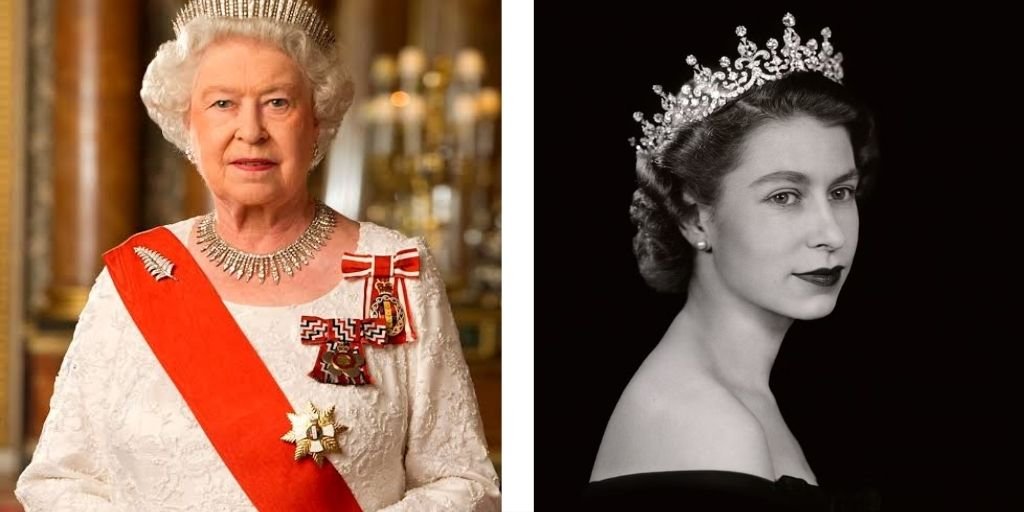
Queen Elizabeth II was one of the most recognizable figures of the modern world. For more than seven decades, she stood at the center of British public life, witnessing enormous changes in society, politics, technology, culture, and the Commonwealth. To many people, she represented tradition and continuity. To others, she was a fascinating link between an older age and the rapidly changing modern world.
Born into a royal family but not originally expected to become queen, Elizabeth’s life changed dramatically when her uncle abdicated the throne and her father became King George VI. Her own accession in 1952 eventually made her the longest-reigning monarch in British history.
But what made her story so remarkable? Was it simply her title, or was it the way she adapted to changing times while maintaining a strong sense of duty?
Her story includes childhood during wartime, a remarkable marriage, four children, decades of constitutional responsibility, moments of personal grief, family controversies, and an extraordinary relationship with the British public. Her reign became a historical bridge between generations.
Early Life and Royal Childhood
Elizabeth Alexandra Mary was born on April 21, 1926, in London. She was the first child of the Duke and Duchess of York, who later became King George VI and Queen Elizabeth.
At the time of her birth, few people expected that she would eventually become queen.
Her father was not the immediate heir to the throne. That position belonged to his older brother, Edward, Prince of Wales. Elizabeth therefore spent her early years as a member of the royal family without the expectation that she would one day carry the enormous responsibilities of the Crown.
She and her younger sister, Princess Margaret, were raised in a relatively sheltered environment. Their parents emphasized discipline, responsibility, and family values.
Elizabeth received education at home rather than attending a conventional school. She studied history, languages, literature, music, and constitutional matters. She also developed an early interest in horses and animals, interests that remained part of her personal life for decades.
Her childhood was not entirely peaceful, however.
The Second World War changed everything.
A Princess During Wartime
When Britain entered the war in 1939, Elizabeth was only 13 years old. The royal family remained in Britain while the country faced bombing and enormous uncertainty.
The young princess gradually became an important symbol of national morale.
One of her best-known wartime moments came in 1940, when she made a radio broadcast to children who had been separated from their families or evacuated from cities.
The message reflected a quality that would later define much of her public life: reassurance during difficult times.
Elizabeth also wanted to contribute more directly to the war effort as she grew older. In 1945, she joined the Auxiliary Territorial Service, where she trained as a driver and mechanic.
It was an unusual experience for a future monarch and gave her a practical connection with ordinary wartime service.
How Elizabeth Became Queen
The path to the throne changed unexpectedly because of the abdication crisis.
In 1936, King Edward VIII gave up the throne so he could marry Wallis Simpson, an American woman who had been divorced. His younger brother became King George VI.
Suddenly, Elizabeth became the heir presumptive.
The change transformed her childhood and future.
Her father was a reluctant king who had never expected to become monarch. Nevertheless, he accepted his responsibility and worked hard to restore confidence in the monarchy.
Elizabeth watched him closely.
His example influenced her deeply. She saw firsthand that being monarch was not simply about ceremonies, palaces, or public attention. It involved service, discipline, patience, and sacrifice.
When George VI died on February 6, 1952, Elizabeth was in Kenya on a royal tour.
At only 25 years old, she became queen.
The young woman who had once lived relatively quietly with her parents was suddenly responsible for one of the world’s oldest constitutional monarchies.
The Coronation of 1953
Elizabeth II’s coronation took place on June 2, 1953, at Westminster Abbey.
It was a historic occasion and one of the first major international events to be watched by millions through television.
For many households, the coronation helped make television a more important part of everyday life.
The ceremony itself was filled with centuries-old traditions. Elizabeth took the coronation oath, received the regalia, and was formally crowned.
Yet there was something striking about the contrast.
The ceremony represented centuries of tradition, while the television broadcasting it represented a rapidly developing technological age.
That contrast became a useful metaphor for Elizabeth’s entire reign. She often stood with one foot in history and the other in the modern world.
Marriage to Prince Philip
Before becoming queen, Elizabeth had already met the man who would become her husband.
Prince Philip of Greece and Denmark met Elizabeth when she was still a teenager. Their relationship developed over several years, and they became engaged in 1947.
They married on November 20, 1947, at Westminster Abbey.
Their marriage lasted more than 73 years, making it one of the longest royal marriages in British history.
Philip became the Duke of Edinburgh and spent decades supporting Elizabeth in her public duties.
A Partnership Behind the Crown
Being married to the monarch was not always an easy role.
Elizabeth was the sovereign, while Philip had to create a public identity of his own without overshadowing her position.
He supported thousands of official engagements and became known for his direct personality, interest in environmental issues, sports, and youth development.
Together, they had four children: Charles, Anne, Andrew, and Edward.
Their family life attracted enormous public interest, but they also experienced personal challenges and periods of intense media attention.
The death of Prince Philip in April 2021 was a major personal loss for Elizabeth.
It also marked the end of a partnership that had lasted through most of her adult life.
A Queen During a Changing Britain
Elizabeth became monarch at a time when Britain was still recovering from the Second World War.
The country she inherited in 1952 looked very different from the United Kingdom of the twenty-first century.
The British Empire was beginning to transform rapidly. Many territories gained independence, while the Commonwealth developed into a different kind of international association.
Social attitudes also changed dramatically.
During her reign, Britain experienced major changes in:
- Technology
- Entertainment
- Women’s rights
- Popular culture
- Immigration
- Education
- Media
- Family life
- Communication
- International relations
Elizabeth’s challenge was to remain a stable constitutional figure while the world around her changed.
She did not normally express personal political opinions publicly. Instead, she maintained political neutrality and worked with successive prime ministers.
Over her reign, she met an extraordinary number of political leaders.
Winston Churchill was the first British prime minister she worked with as monarch. She later worked with leaders including Anthony Eden, Harold Macmillan, Margaret Thatcher, Tony Blair, David Cameron, Theresa May, Boris Johnson, Liz Truss, and others.
Her relationship with each prime minister was different, but her constitutional role remained consistent.
The Queen and the Commonwealth
One of the most important parts of Elizabeth’s public work involved the Commonwealth.
Her reign began during the decline of the British Empire and continued through a period when many former colonies became independent nations.
Rather than disappearing completely, Britain’s relationships with many of these countries evolved through the Commonwealth.
Elizabeth became a major symbol of that organization.
She visited Commonwealth countries regularly and attended Commonwealth meetings and events. Her tours allowed her to meet people from different cultures and communities.
For many citizens across the Commonwealth, her visits became memorable national occasions.
A Changing International Role
The Commonwealth itself changed significantly during Elizabeth’s reign.
Countries joined and left different forms of association, political relationships evolved, and debates about Britain’s colonial history became increasingly important.
Elizabeth’s role was therefore not simply ceremonial. Her public presence became part of an international institution navigating a complicated historical legacy.
Elizabeth II and Modern Technology
It is easy to imagine a monarch surrounded entirely by tradition.
Elizabeth, however, lived through extraordinary technological change.
When she became queen, television was still relatively new in many homes. By the end of her reign, people communicated instantly through smartphones, social media, video calls, and digital platforms.
She embraced some forms of modern communication while maintaining the traditions of monarchy.
Her Christmas broadcasts evolved with changing technology. Later, royal communications increasingly used websites and social media.
One fascinating example came in 1976, when Elizabeth reportedly sent her first email during a visit connected with technological development.
Decades later, the monarchy was using digital platforms to reach global audiences.
It was almost like watching a handwritten letter gradually become a smartphone notification.
The institution remained recognizable, but the tools changed completely.
Family Life and Public Scrutiny
Royal families rarely enjoy ordinary privacy.
Elizabeth’s children and grandchildren became major public figures, and their relationships, marriages, divorces, and personal difficulties often dominated headlines.
The breakdown of several royal marriages during the 1980s and 1990s created difficult moments for the institution.
The marriages of Charles and Diana, Andrew and Sarah Ferguson, and Anne and Mark Phillips all received enormous media attention.
Elizabeth’s role as a mother existed alongside her role as monarch, creating complicated pressures.
The Diana Years
The death of Diana, Princess of Wales, in 1997 became one of the most challenging moments of Elizabeth’s reign.
Public reaction was enormous. Millions of people mourned Diana, and criticism emerged regarding the royal family’s response.
Elizabeth eventually addressed the nation and recognized the public’s grief.
The episode demonstrated how dramatically public expectations had changed.
The monarchy could no longer communicate with the public only through formal ceremonies and carefully controlled statements. People increasingly expected visible emotion and immediate engagement.
This became an important lesson in how traditional institutions had to adapt to a media environment that moved at extraordinary speed.
Major Milestones During Her Reign
Elizabeth II’s reign lasted from 1952 until 2022, making it the longest reign of any British monarch.
During those decades, she marked numerous milestones.
She celebrated her Silver Jubilee in 1977, Golden Jubilee in 2002, Diamond Jubilee in 2012, and Platinum Jubilee in 2022.
Each anniversary offered an opportunity to reflect on the country’s history.
The Silver Jubilee
The Silver Jubilee celebrated 25 years on the throne.
Large public celebrations took place throughout the United Kingdom and Commonwealth.
It demonstrated that Elizabeth had already become a long-term presence in national life.
The Golden Jubilee
Her 50th anniversary on the throne arrived during a period of reflection and renewed public affection.
Events across Britain celebrated her service, while international attention highlighted the extraordinary length of her reign.
The Diamond Jubilee
The Diamond Jubilee in 2012 marked 60 years as monarch.
The celebrations included public events, concerts, a major river pageant, and appearances by members of the royal family.
The timing was especially significant because Britain was also preparing to host the London Olympic Games.
The Platinum Jubilee
In 2022, Elizabeth became the first British monarch to celebrate a Platinum Jubilee, marking 70 years on the throne.
The occasion was historic.
Public events were held across the United Kingdom, while people around the world recognized an extraordinary record of service.
However, the celebrations were also bittersweet because Elizabeth’s health had begun to decline.
Her Style, Hobbies and Public Image
Although Elizabeth was known primarily for her constitutional role, people were also fascinated by her personality and personal interests.
She was famous for her brightly colored clothing, which helped her remain visible in large crowds.
Her wardrobe was practical as well as symbolic. When thousands of people gathered to see her, a bright outfit made it easier for them to identify her.
She was also passionate about horses.
Horse racing and breeding were important interests throughout her life. She regularly attended major racing events and maintained a close connection with equestrian activities.
Love of Dogs
Elizabeth was particularly associated with Pembroke Welsh Corgis.
Her first corgi, Susan, was given to her for her 18th birthday. Susan became the beginning of a long line of dogs associated with the queen.
Her love of animals gave the public a glimpse of a more personal side of someone whose official life could otherwise seem distant.
The Queen’s Relationship With the Public
How does a monarch remain relevant for 70 years?
That may be one of the most interesting questions surrounding Elizabeth II.
She did not seek celebrity in the modern sense. Instead, she built familiarity through consistency.
Generation after generation saw her appear at national events, open buildings, attend ceremonies, visit communities, and deliver annual Christmas messages.
People who were children when she became queen eventually became grandparents while she remained on the throne.
That continuity was unusual.
For many people, she was not simply a historical figure. She was a constant presence throughout their lives.
Her image appeared on stamps, coins, banknotes, newspapers, television screens, souvenirs, and official documents.
Whether people admired the monarchy or questioned it, Elizabeth herself became almost impossible to separate from modern British history.
Challenges and Controversies
No long reign is without controversy.
Elizabeth’s time as monarch included difficult debates about the future of the monarchy, Britain’s colonial history, royal finances, family controversies, and the relationship between the institution and the public.
The monarchy faced criticism from republican groups who argued that the United Kingdom should become a republic.
Others defended the institution as an important part of British culture and constitutional life.
The royal family’s connection with Britain’s imperial past also became increasingly debated.
These discussions did not disappear during Elizabeth’s lifetime.
Instead, they became part of a larger conversation about history, identity, tradition, and the future.
Elizabeth generally avoided entering political arguments herself.
Her approach was usually to remain above day-to-day political disputes and allow elected governments to make political decisions.
The Final Years of Her Life
Elizabeth’s final years were marked by both historic achievements and personal loss.
In 2021, Prince Philip died at Windsor Castle.
Elizabeth continued carrying out public responsibilities despite her grief and advancing age.
In 2022, she celebrated her Platinum Jubilee.
Her final public appearance came in September 2022, when she appointed Liz Truss as prime minister at Balmoral Castle.
Two days later, Buckingham Palace announced that the queen was under medical supervision.
Elizabeth II died on September 8, 2022, at Balmoral Castle in Scotland.
She was 96 years old.
Her death brought an extraordinary chapter of British history to an end.
Funeral and National Mourning
Elizabeth’s death generated an enormous international response.
Her coffin traveled through Scotland before being taken to London, where members of the public were able to pay their respects.
Large crowds gathered.
The state funeral took place on September 19, 2022, at Westminster Abbey.
World leaders, members of royal families, public figures, military representatives, and thousands of mourners attended.
She was later buried at St George’s Chapel, Windsor Castle, alongside her husband Prince Philip and other close members of her family.
The ceremony marked the end of an era that had lasted for more than seven decades.
Queen Elizabeth II’s Lasting Legacy
What will people remember most about Elizabeth II?
There is no single answer.
Some will remember the coronation. Others will remember the Jubilee celebrations, royal tours, Christmas broadcasts, colorful outfits, corgis, horses, or her appearances alongside different generations of her family.
Historians will likely focus on something larger: continuity.
Elizabeth became queen when Britain was recovering from war, when empire was still a major part of international politics, and when television was transforming communication.
She died in an age of smartphones, streaming platforms, social media, and instant global communication.
Her life therefore covered an extraordinary stretch of modern history.
Her legacy also belongs to the institution she represented. The monarchy survived numerous challenges during her reign and continued to evolve.
For supporters, she represented duty and stability.
For critics, her reign provided an opportunity to debate whether hereditary monarchy remains appropriate in the modern world.
Both perspectives are part of the historical conversation.
What is difficult to deny is the scale of her impact.
Few individuals have remained such a visible part of public life for so long.
Conclusion
Queen Elizabeth II’s life was far more than a story about a crown. It was the story of a young princess who unexpectedly became heir, a young woman who became queen at 25, a wife and mother, and a public servant who spent more than seven decades carrying out constitutional duties.
Her reign witnessed war’s aftermath, social transformation, technological revolutions, political changes, and the reshaping of Britain’s place in the world.
She became a symbol of continuity in a world that rarely stood still.
Whatever one’s opinion of monarchy, her historical importance is undeniable. Her life connected generations, and her reign became one of the defining chapters of modern British history.
Frequently Asked Questions
1. When did Queen Elizabeth II become queen?
Queen Elizabeth II became queen on February 6, 1952, following the death of her father, King George VI. Her coronation took place the following year on June 2, 1953.
2. How long did Queen Elizabeth II reign?
She reigned for more than 70 years, from 1952 until her death in 2022. She became the longest-reigning British monarch in history.
3. Who was Queen Elizabeth II married to?
She was married to Prince Philip, Duke of Edinburgh. They married in 1947 and remained together until his death in 2021.
4. How many children did Queen Elizabeth II have?
Elizabeth II and Prince Philip had four children: King Charles III, Anne, Princess Royal, Prince Andrew, and Prince Edward.
5. Where did Queen Elizabeth II die?
Queen Elizabeth II died at Balmoral Castle in Scotland on September 8, 2022, at the age of 96.