
Lewis Carroll: Life, Literature, Alice, and the Mind Behind Wonderland
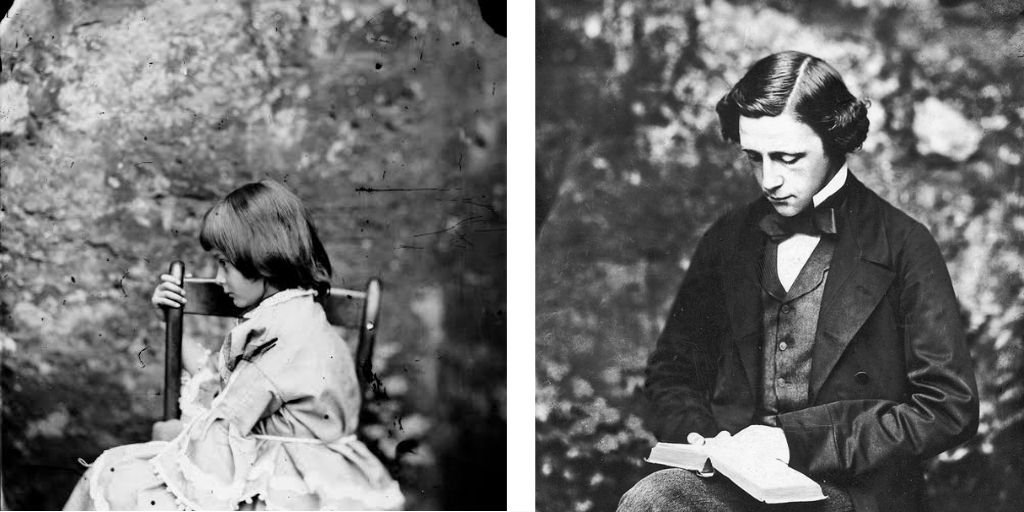
Lewis Carroll remains one of the most fascinating names in English literature. To many readers, he is simply the author of Alice’s Adventures in Wonderland, a strange and wonderful story filled with talking animals, impossible situations, riddles, and unforgettable characters. But there was much more to him than Wonderland.
Born Charles Lutwidge Dodgson, Carroll was a mathematician, teacher, photographer, poet, and writer whose imagination seemed to work on several levels at once. How did a quiet Victorian scholar create a story that continues to entertain children and adults more than a century later?
His work combined humor, logic, language, fantasy, and curiosity. In many ways, his books are like a door into a room where the normal rules of life have been turned upside down.
Early Life and Family Background
Lewis Carroll was born as Charles Lutwidge Dodgson on January 27, 1832, in Daresbury, Cheshire, England. He was the eldest son in a large family. His father, Charles Dodgson, was a clergyman, while his mother, Frances Jane Lutwidge, came from a well-connected family.
The Dodgson household was strongly connected with religion and education. Charles grew up in an environment where learning was valued, and this had a major influence on the direction of his life.
As a boy, he showed an early interest in making things, solving puzzles, drawing, and entertaining his brothers and sisters. He created small magazines and games for his family, showing that his playful imagination existed long before Alice entered his literary world.
His childhood was not simply about books and schoolwork. He also enjoyed performing tricks, inventing stories, and experimenting with ideas. That mixture of seriousness and play would eventually become one of the defining features of his writing.
Education at Rugby and Oxford
Carroll received a strong education and eventually attended Rugby School, one of England’s most respected schools. Although he was academically talented, his school years were not always easy.
He later went to Christ Church, Oxford, where he studied mathematics and classics. Oxford became central to his adult life. He would remain associated with Christ Church for decades, working as a mathematics lecturer and living within its academic world.
Mathematics might seem like an unusual background for a fantasy writer, but in Carroll’s case, the connection makes perfect sense.
He enjoyed rules, patterns, puzzles, and logical problems. At the same time, he loved taking those rules and playing with them. His imagination often worked like a mathematical puzzle: establish a rule, bend it, and see what happens.
This is one reason his stories can feel both completely absurd and strangely organized.
Why Charles Dodgson Became Lewis Carroll
One of the most interesting facts about the author is that Lewis Carroll was a pen name.
His real name was Charles Lutwidge Dodgson. He created the name “Lewis Carroll” from his first and middle names. “Lutwidge” was converted into a Latin form, and “Charles” was also given a Latin equivalent before being changed back into English.
The result was Lewis Carroll.
Why use a separate name?
Dodgson generally kept his academic and literary identities apart. Charles Dodgson was the serious mathematics lecturer and scholar. Lewis Carroll was the imaginative writer and creator of fantastical worlds.
This distinction became so established that today many people know “Lewis Carroll” better than they know the author’s real name.
The Birth of Alice in Wonderland
The story of Alice’s Adventures in Wonderland began during a summer outing in 1862.
Carroll was traveling by boat on the River Thames with the Reverend Robinson Duckworth and three sisters of the Liddell family. One of them was Alice Liddell, who was a child at the time.
During the outing, Carroll entertained the children with a story. Alice reportedly asked him to write the story down.
That simple request helped produce one of the most famous children’s books ever published.
Carroll eventually transformed the spoken story into a manuscript called Alice’s Adventures Under Ground. He later expanded and revised it, and the finished book appeared in 1865 under the title Alice’s Adventures in Wonderland.
The book introduced readers to a world where ordinary expectations no longer worked.
Alice changes size, meets creatures who speak, encounters strange rules, and finds herself surrounded by characters who seem to follow their own version of reality.
That sense of unpredictability is a major reason the book remains so memorable.
The Characters Who Made Wonderland Famous
Wonderland would not have become such an enduring cultural phenomenon without its remarkable characters.
Alice is the center of the story. She is curious, confident, confused, and willing to question the strange things happening around her. Unlike many traditional children’s heroines, she does not simply accept everything adults tell her.
Then there is the White Rabbit, whose famous concern about being late sends Alice into her extraordinary adventure.
The Mad Hatter and March Hare bring chaos and wordplay to the story. Their tea party is one of the book’s most recognizable scenes.
The Cheshire Cat is another unforgettable figure. His mysterious smile and strange conversations perfectly capture the unsettling humor of Wonderland.
And, of course, there is the Queen of Hearts, whose explosive temper turns almost every situation into a threat.
These characters work because they are not simply decorations. Each represents a different kind of behavior, from impatience and confusion to authority and irrationality.
Language, Logic, and Wordplay
One of Carroll’s greatest strengths was his ability to play with language.
His writing often makes a sentence appear logical while quietly making it absurd. He enjoyed puns, double meanings, nonsense poetry, riddles, and verbal tricks.
This is particularly clear in Through the Looking-Glass, the sequel to Alice’s Adventures in Wonderland. The book contains “Jabberwocky,” a poem filled with invented words that somehow still feels meaningful.
How can nonsense sound meaningful?
Carroll understood that language is not only about dictionary definitions. Sound, rhythm, context, and emotion can give invented words a strange kind of life.
His work demonstrates that readers can enjoy language even when they cannot completely explain it.
This is perhaps one of the reasons his books appeal to both children and adults. A child can enjoy the funny words, while an adult can notice the deeper games with logic and meaning.
Through the Looking-Glass and Its Different World
In 1871, Carroll published Through the Looking-Glass, and What Alice Found There.
Rather than simply repeating the first book, Carroll created another strange world with its own structure. Alice enters it through a looking glass and finds herself in a landscape that resembles a giant chessboard.
The chess idea gives the story an underlying framework. Alice moves from one stage to another, encountering characters such as Tweedledum and Tweedledee, Humpty Dumpty, and the Red Queen.
The Red Queen is especially famous for her unusual explanation of how quickly one must move simply to remain in the same place.
The book again demonstrates Carroll’s fascination with rules. The world appears organized, but its organization is wonderfully strange.
It is almost as if someone took a perfectly normal game, changed the instructions, and then invited you to play.
Carroll as a Mathematician
It would be a mistake to remember Carroll only as a fantasy author.
He spent much of his professional life as a mathematician and produced numerous mathematical and logical works. His academic interests included geometry, algebra, logic, and mathematical puzzles.
He also wrote books intended to explore logical thinking in accessible and entertaining ways.
His mathematical background influenced his fiction, but the relationship worked both ways. His playful imagination also helped him present intellectual problems in unusual forms.
Carroll seemed fascinated by the question of how people reason.
What happens when an apparently sensible statement contains a hidden problem? What happens when a rule is followed perfectly but produces a ridiculous result?
Those questions appear repeatedly in his stories.
Photography and Carroll’s Creative Eye
Another important part of Carroll’s life was photography.
He became interested in the new technology during the nineteenth century and eventually became a serious photographer. He photographed landscapes, friends, academics, artists, and children.
Photography gave him another way to observe people and the world around him.
He was particularly interested in portraiture. His photographs show his attention to expression, clothing, posture, and setting.
Photography also reflects a wider quality of Carroll’s personality: curiosity.
He did not limit himself to one field. Mathematics, literature, photography, puzzles, drawing, and theater all attracted his attention.
His life therefore looks less like a straight road and more like a collection of connected paths.
Poetry and Other Literary Works
Although Alice is his most famous creation, Carroll wrote much more than two fantasy novels.
His poetry includes humorous and nonsense verse, with Jabberwocky being the best-known example.
He also wrote The Hunting of the Snark, published in 1876. It is an imaginative poem about a strange expedition in search of an equally strange creature.
The poem is deliberately mysterious. Readers have debated its meaning for generations.
Was Carroll trying to communicate a specific message?
Perhaps. But part of the appeal is that the poem refuses to provide a simple answer. It invites readers to explore possibilities.
Carroll also wrote mathematical works, puzzles, essays, and other literary pieces. His interests were broad, and his writing career cannot be reduced to Wonderland alone.
The Influence of Victorian Society
To fully appreciate Carroll, it helps to understand the world in which he lived.
He belonged to Victorian England, a period marked by strict social expectations, rapid industrial change, scientific development, expanding education, and strong cultural traditions.
Children’s literature was also changing during this period. Earlier children’s books were often strongly focused on teaching moral lessons.
Carroll offered something different.
His stories could be enjoyed without requiring every event to deliver a clear lesson. Children could simply explore, laugh, question, and become confused along with Alice.
That was refreshing.
Instead of telling young readers exactly what to think, Carroll often encouraged them to experience uncertainty.
This approach helped make his work revolutionary in children’s literature.
Lewis Carroll’s Relationship With Children
Carroll was known for enjoying the company of children, and children played an important role in his social and creative life.
His friendship with the Liddell family is particularly significant because of the connection between Alice Liddell and the famous Wonderland stories.
Modern readers sometimes examine these relationships through the standards and concerns of the present day. Historical evidence and later interpretations have produced considerable discussion about Carroll’s relationships with young girls.
It is important to distinguish documented facts from speculation.
Carroll photographed many children and maintained friendships with children and their families. Some of his photographs of children have also attracted controversy, particularly when viewed through modern expectations.
At the same time, claims about hidden romantic or sexual meanings behind his relationships have often gone beyond what the historical record can firmly establish.
A careful biography therefore needs to acknowledge the questions without presenting speculation as established fact.
Why Lewis Carroll Still Matters Today
More than a century after his death, Carroll’s work remains remarkably alive.
Why?
Because people still understand Alice.
Children still experience the frustration of entering a world where nobody seems to make sense. Adults still recognize the absurdity of social rules, confusing conversations, and people who confidently say things that make no sense.
His stories also continue to inspire films, television programs, theater productions, illustrations, games, merchandise, academic studies, and countless adaptations.
The characters have become part of global popular culture.
But perhaps Carroll’s greatest achievement is simpler.
He reminded readers that imagination does not have to behave.
A story can be strange. A conversation can be ridiculous. A word can be invented. A question can have no clear answer.
And that can still be meaningful.
Lewis Carroll’s Legacy in Literature
Carroll died on January 14, 1898, in Guildford, England, shortly before his sixty-sixth birthday.
His death ended the life of Charles Dodgson, but Lewis Carroll’s literary identity continued to grow.
Today, Alice’s Adventures in Wonderland is considered a landmark of children’s literature and fantasy. Its influence can be seen in writers who experiment with language, dreamlike worlds, surreal humor, and unusual storytelling structures.
His books have also influenced the way people think about children’s imagination.
Carroll did not treat children simply as smaller adults who needed to be instructed. He gave them a world in which curiosity was valuable.
That may be the secret of his longevity.
A good children’s story grows with its reader. When you are young, you may enjoy the characters. When you are older, you may notice the wordplay. Later, you may discover the mathematical jokes, social observations, and philosophical questions.
The book changes because you change.
Conclusion
Lewis Carroll was far more than the author of Alice’s Adventures in Wonderland. Charles Lutwidge Dodgson was a mathematician, teacher, photographer, poet, puzzle-maker, and imaginative storyteller who created one of literature’s most extraordinary worlds.
His fascination with logic gave his nonsense structure, while his imagination gave his ideas freedom. Alice’s journey continues to invite readers to question rules, enjoy language, and remain curious about the impossible.
Perhaps that is why Wonderland never really grows old. Like a looking glass, it reflects something different depending on who is standing in front of it.
Frequently Asked Questions
1. Who was Lewis Carroll?
Lewis Carroll was the pen name of Charles Lutwidge Dodgson, an English writer, mathematician, photographer, and academic best known for Alice’s Adventures in Wonderland and Through the Looking-Glass.
2. What is Lewis Carroll best known for?
He is best known for creating Alice’s Adventures in Wonderland, one of the most influential fantasy and children’s books in English literature.
3. Was Lewis Carroll a real mathematician?
Yes. Carroll was a mathematics lecturer at Christ Church, Oxford, and wrote several mathematical and logical works alongside his literary books.
4. Who inspired Alice in Wonderland?
Alice Liddell, the daughter of Henry Liddell, dean of Christ Church, is widely associated with the inspiration for Carroll’s Alice. Carroll told a story to Alice and her sisters during a boat trip in 1862, which later developed into the famous book.
5. When did Lewis Carroll die?
Lewis Carroll died on January 14, 1898, in Guildford, England. He was 65 years old.