
Charles Darwin: Life, Evolution, Discoveries & Lasting Legacy
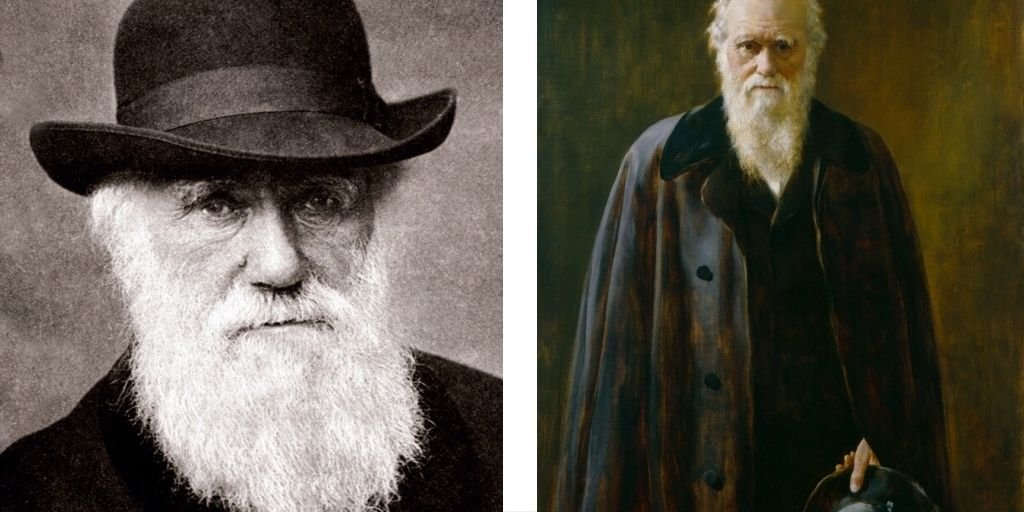
Introduction
Charles Darwin is one of the most influential figures in the history of science. His ideas changed the way people understood life, nature, animals, plants, and even humanity itself. Born in England in 1809, Darwin developed a lifelong fascination with the natural world. His observations during a famous voyage on the HMS Beagle eventually helped him develop the theory of evolution by natural selection.
But who was Darwin beyond the famous name in science books? What did he actually discover, and why does his work still matter today?
Darwin was not simply a man who wrote about animals changing over time. He spent decades observing, collecting evidence, comparing species, studying fossils, and questioning how living things became so diverse. His story is also one of patience. He did not rush to publish his most important idea. Instead, he spent years testing it against evidence.
Early Life and Family Background
Charles Robert Darwin was born on February 12, 1809, in Shrewsbury, England. He came from a wealthy and well-educated family with strong connections to medicine and intellectual life. His father, Robert Darwin, was a successful physician, while his grandfather, Erasmus Darwin, had been a respected physician, poet, and natural thinker.
From an early age, Darwin showed an interest in nature. He enjoyed collecting shells, insects, rocks, and plants. Instead of simply looking at the countryside around him, he wanted to understand it.
His childhood interests were important because they gave him practical experience with observation. Imagine having a huge library but never opening a book. Nature was Darwin’s library, and he spent much of his life learning how to read it.
Darwin attended Shrewsbury School before going to the University of Edinburgh to study medicine. However, medicine did not suit him. He found the surgical procedures of the time unpleasant and became more interested in natural history.
He later attended Christ’s College, Cambridge, where he studied for the clergy. Although religion was an important part of his early life, his growing interest in geology, plants, animals, and scientific observation increasingly shaped his future.
A Young Naturalist
At Cambridge, Darwin developed friendships with influential naturalists, including John Stevens Henslow. Henslow recognized Darwin’s abilities and encouraged his interest in collecting and studying natural specimens.
This relationship eventually played an important role in Darwin’s life. Henslow recommended him for a position as an unpaid naturalist aboard a surveying expedition that would change his career forever.
The Voyage of the HMS Beagle
In 1831, Darwin joined the HMS Beagle on a voyage around the world. He was only 22 years old.
The journey lasted almost five years, from 1831 to 1836. During that time, Darwin visited South America, the Galápagos Islands, Australia, southern Africa, and other locations.
The voyage became one of the most important scientific journeys in history.
Darwin carefully collected specimens and recorded observations about animals, plants, rocks, fossils, and geographical formations. He also witnessed earthquakes, studied volcanic landscapes, and examined fossils embedded in rocks.
South America
South America had a particularly strong influence on Darwin. He discovered fossils of extinct mammals that appeared related in some ways to living animals in the same region.
This raised an important question: why would extinct and living animals from the same area share similarities?
Could living creatures be connected to organisms that existed in the distant past?
These questions gradually became part of the larger puzzle Darwin was trying to solve.
The Galápagos Islands
The Galápagos Islands became especially famous in discussions of Darwin’s work. The islands contained related but distinct species that appeared adapted to different environments.
Darwin observed mockingbirds and tortoises and later studied the famous finches associated with his research.
The differences among island populations helped him think more deeply about adaptation and the possibility that species could change over generations.
It is important to remember, however, that Darwin’s theory did not emerge from the Galápagos alone. His thinking developed through evidence gathered from many parts of the voyage and through years of later research.
How Darwin Developed the Theory of Evolution
After returning to England, Darwin continued studying the specimens and notes he had collected.
He gradually developed a powerful explanation for how species could change over long periods.
The basic idea was surprisingly simple.
Living organisms vary. Some of those differences can be inherited. More individuals are born than can survive and reproduce. As a result, individuals with traits that help them survive and reproduce are more likely to pass those traits to future generations.
Over many generations, these small differences can accumulate.
This process became known as natural selection.
Variation
Individuals within the same species are not identical. Think about a litter of puppies. They may belong to the same breed, yet they can differ in size, color, behavior, and other characteristics.
Darwin recognized that such variation mattered.
Competition
Resources are limited. Food, shelter, water, and opportunities to reproduce are not unlimited.
Because organisms compete for survival, not every individual can leave the same number of offspring.
Inheritance
Some useful characteristics can be passed from parents to offspring.
Selection Over Time
When a particular inherited trait gives an organism an advantage, individuals carrying that trait may have a better chance of surviving and reproducing.
Over many generations, the trait may become more common.
Darwin compared this natural process with selective breeding. Humans can breed dogs or pigeons for particular characteristics. Nature, however, does not have a human breeder choosing traits. Environmental conditions influence which organisms are more likely to survive and reproduce.
Natural Selection Explained Simply
Natural selection can sound complicated when expressed in scientific language, but the basic concept is easier to understand through an everyday example.
Imagine a population of birds living in an area where food is mostly found inside hard seeds. Some birds happen to have slightly stronger or differently shaped beaks.
If those birds can open the available food more effectively, they may survive more successfully and produce more offspring. Their descendants may inherit similar characteristics.
After many generations, the population may contain many birds with beaks particularly suited to that environment.
The important point is that the birds do not consciously decide to change their beaks.
Nature does not say, “You need a stronger beak, so grow one.”
Instead, existing variation is filtered through survival and reproduction.
This is one reason Darwin’s work was so powerful. Evolution is not a ladder where every organism simply climbs toward perfection. It is more like a branching tree, with populations changing as they respond to different environments.
The Publication of On the Origin of Species
Darwin spent years developing his ideas before publishing them.
He was aware that his conclusions would be controversial. His theory challenged traditional ideas about the fixed nature of species and raised difficult questions about humanity’s place in the natural world.
In 1859, Darwin published On the Origin of Species.
The book presented evidence supporting evolution and explained natural selection as a major mechanism responsible for evolutionary change.
It became an important scientific work and generated enormous public interest.
Why Was the Book Important?
Darwin did not invent the idea that species might change. Earlier thinkers had proposed different forms of evolutionary change.
What made Darwin’s contribution so important was his detailed explanation of how evolutionary change could occur.
He brought together evidence from geography, fossils, anatomy, breeding, embryology, and observations of living organisms.
Rather than offering one isolated observation, he presented a broad argument.
That approach helped transform evolution from a philosophical possibility into a scientifically developed explanation.
Darwin and the Debate Over Human Evolution
Darwin’s ideas naturally led to questions about humans.
If species share common ancestry, could humans also be part of this larger history?
Darwin eventually addressed the subject directly in his 1871 book The Descent of Man.
He argued that humans share ancestry with other living organisms and emphasized similarities between humans and other animals.
This was especially controversial because it challenged the belief that humans were completely separate from the rest of nature.
Darwin did not claim that humans descended from modern monkeys or apes. Instead, the evolutionary view is that humans and modern apes share ancient common ancestors.
That distinction is important.
Human evolution is not a simple straight line. It is better understood as a branching family tree containing many extinct human relatives and populations.
Darwin’s Other Scientific Contributions
Darwin’s reputation is often associated almost entirely with evolution, but his scientific interests were much broader.
He studied plants, animals, geology, earthworms, coral reefs, orchids, climbing plants, and many other subjects.
His research demonstrated how careful observation could reveal surprising patterns.
Plants and Pollination
Darwin became deeply interested in orchids and the relationship between flowers and insects.
He examined how the structures of flowers could encourage particular insects to carry pollen from one plant to another.
His work showed that seemingly beautiful and complicated structures could have important biological functions.
Earthworms
Late in his life, Darwin studied earthworms.
At first glance, this may seem like an unusual subject for a famous scientist. But Darwin understood that even small organisms could have enormous effects on the environment.
Earthworms help mix and process soil, contributing to changes in landscapes over long periods.
His work demonstrated his belief that ordinary creatures could provide clues about major natural processes.
Coral Reefs
Darwin also developed ideas about how coral reefs form.
His observations during the Beagle voyage helped him propose a model in which coral reefs could develop around sinking volcanic islands.
This showed that Darwin’s scientific thinking extended well beyond evolution.
Darwin’s Personal Life
In 1839, Darwin married his first cousin, Emma Wedgwood. Their marriage was long-lasting, and the couple had ten children, although not all survived childhood.
Emma was an important part of Darwin’s personal life. She supported him through years of scientific work and through periods when he was physically unwell.
Darwin lived much of his later life at Down House in Kent.
His home became a place where he could conduct experiments, observe plants and animals, and write.
A Life of Careful Observation
Darwin’s daily work was not always dramatic.
Much of it involved reading, writing letters, examining specimens, conducting experiments, and thinking carefully about evidence.
This is an important lesson from his life. Major scientific discoveries are often built from thousands of small observations.
Darwin’s achievement was less like finding a single hidden treasure and more like assembling a giant puzzle piece by piece.
Darwin’s Health and Working Habits
Darwin experienced recurring periods of poor health throughout much of his adult life.
The exact explanation for his symptoms remains a subject of historical discussion, and it would be misleading to confidently assign a modern diagnosis to him.
Despite his difficulties, he maintained a productive scientific life.
He developed structured routines that allowed him to work for limited periods and then rest.
His approach shows another interesting side of his personality. Darwin was not portrayed as a constantly energetic laboratory worker. He often relied on steady routines, correspondence, observation, and long-term research.
This patience became one of his greatest strengths.
Controversy and Public Reaction
Darwin’s theory generated intense debate.
Some religious thinkers objected to evolutionary ideas because they believed they conflicted with traditional interpretations of creation.
Others criticized Darwin’s conclusions for scientific or philosophical reasons.
Yet the scientific discussion continued.
One of the most famous debates occurred in 1860 at Oxford, involving Darwin’s supporter Thomas Henry Huxley and Bishop Samuel Wilberforce.
The debate later became part of Darwinian history, although some popular versions of the story have likely been exaggerated.
The broader controversy was much larger than one public argument.
People were asking fundamental questions:
Where did life come from?
Are species fixed or changeable?
What is humanity’s relationship with other animals?
How old is life on Earth?
What role does nature play in shaping living organisms?
These questions made evolution important far beyond biology.
Darwin’s Influence on Modern Science
Today, evolution is one of the central ideas of modern biology.
Darwin’s original work has also been expanded and refined. Modern genetics has provided a deeper understanding of heredity, something Darwin himself did not fully understand because the mechanisms of genes and DNA were unknown during his lifetime.
Scientists now understand that mutation, recombination, inheritance, genetic drift, gene flow, natural selection, and other processes contribute to evolutionary change.
Darwin’s central insight remains enormously important: populations change over generations, and natural selection can produce adaptation.
Modern biology therefore does not simply repeat everything Darwin knew. Instead, it builds on his foundation using evidence and discoveries that became available later.
This is how science works. A great scientific idea is not a finished building. It is more like a foundation on which later generations construct additional floors.
Darwin’s Legacy in Everyday Life
You might wonder why a scientist who lived in the nineteenth century still matters today.
The answer is that evolutionary thinking appears throughout modern biology.
It helps scientists understand biodiversity, animal behavior, ecology, genetics, and the relationships among living organisms.
Evolutionary principles are also relevant to agriculture, conservation, and the study of infectious organisms.
Farmers and researchers, for example, must consider how populations respond to changing conditions. Conservation scientists study how species adapt to environmental pressures. Medical researchers examine how organisms can change over generations.
Darwin’s work also changed how people think about humanity.
It encouraged a deeper understanding of humans as part of the natural world rather than completely separate from it.
Why Charles Darwin Still Matters
Darwin’s greatest legacy may not be one particular sentence or book.
It may be the habit of asking better questions.
Why does this species look different from another?
Why do organisms have characteristics suited to their environments?
Why are related species found in different parts of the world?
Why do fossils resemble living organisms?
Darwin looked at these questions together.
His life reminds us that curiosity can lead somewhere extraordinary when combined with patience and evidence.
He also demonstrated that changing an established idea requires more than confidence. It requires observation, testing, comparison, and a willingness to follow evidence wherever it leads.
For the general public, perhaps that is the most valuable lesson of all.
Science is not simply about memorizing famous names and theories. It is about learning how to look at the world more carefully.
Conclusion
Charles Darwin transformed the study of life by providing a powerful explanation for how species change through generations. His voyage on the HMS Beagle, years of observation, research into living organisms and fossils, and eventual publication of On the Origin of Species created a lasting scientific legacy.
His work was controversial, but it encouraged generations of scientists to investigate life’s history with greater depth. Modern genetics and evolutionary biology have expanded Darwin’s ideas, providing details he could not have known during his lifetime.
Darwin died in 1882, but the questions he explored remain alive today. Every species, fossil, ecosystem, and inherited trait can tell us something about the long story of life. His legacy reminds us that sometimes the biggest discoveries begin with something very simple: looking closely and asking, why?
FAQs About Charles Darwin
1. Who was Charles Darwin?
Charles Darwin was an English naturalist and scientist best known for developing the theory of evolution by natural selection. His research helped explain how species can change over generations.
2. What did Charles Darwin discover?
Darwin developed the theory of natural selection as an explanation for evolutionary change. He supported his ideas with evidence from fossils, geography, anatomy, breeding, plants, animals, and observations made during his voyage on the HMS Beagle.
3. What was Darwin’s most famous book?
His most famous book was On the Origin of Species, published in 1859. It presented evidence for evolution and explained natural selection as an important mechanism of evolutionary change.
4. Did Charles Darwin say humans came from monkeys?
No. Darwin did not argue that humans descended from modern monkeys. Evolutionary science explains that humans and modern apes share ancient common ancestors.
5. Why is Charles Darwin important today?
Darwin is important because his work helped establish evolution as a central idea in biology. Modern science has expanded his work through genetics and other discoveries, but natural selection remains a funda