
Mother Teresa: Amazing Life, Service, Legacy & Inspiring Facts
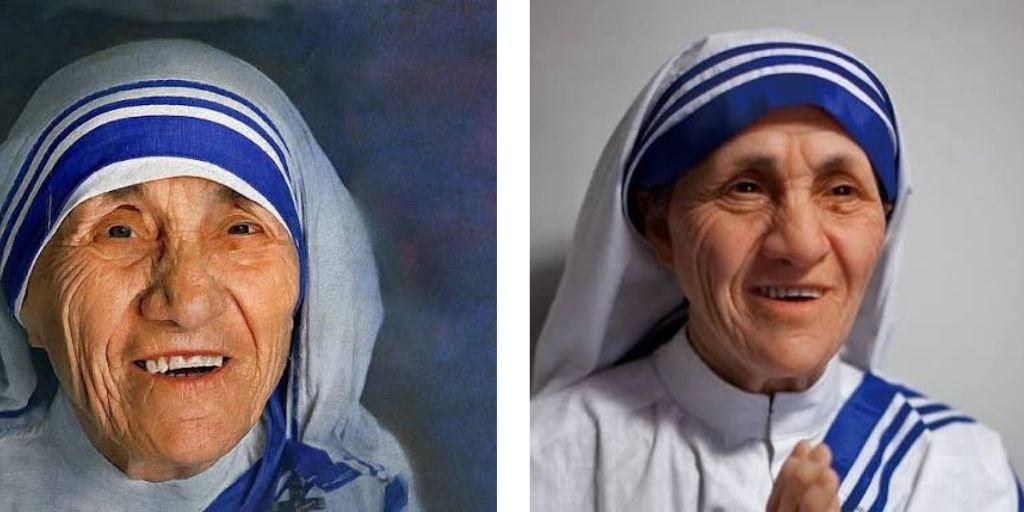
Mother Teresa remains one of the most recognized humanitarian figures of the 20th century. Known around the world for her work among people living in poverty, she devoted much of her life to caring for those who were sick, homeless, abandoned, and dying.
But who was the woman behind the famous white-and-blue sari? What motivated her to leave a comfortable teaching career and dedicate herself to people who had almost nothing?
Her story is not simply about charity. It is also about faith, sacrifice, discipline, compassion, and the difficult questions surrounding humanitarian work. Her life inspired millions, while her methods and some aspects of her organization also attracted criticism.
From her childhood in the Balkans to the creation of the Missionaries of Charity and her Nobel Peace Prize, her journey was remarkable. Today, her name continues to be associated with service to the poorest and most vulnerable people.
Early Life and Childhood
Mother Teresa was born Anjezë Gonxhe Bojaxhiu on August 26, 1910, in Skopje, then part of the Ottoman Empire and now the capital of North Macedonia. She was born into an Albanian family and grew up in a religious Catholic household.
Her parents were Nikollë Bojaxhiu and Dranafile Bojaxhiu. Her father was involved in business and community affairs, while her mother played an important role in raising the family.
Family and faith were central parts of her childhood. Her mother especially taught her children to care about people who were struggling. The family often helped people who were poor or in need.
These early experiences appear to have influenced the young Anjezë deeply. Imagine a small child watching her mother share food with someone who had nothing. Such a moment might seem ordinary, but repeated experiences like that can shape a person’s understanding of kindness.
When she was young, Anjezë became interested in religious life and missionary work. By her teenage years, she was already thinking seriously about dedicating herself to serving others.
At the age of 18, she left home to join the Sisters of Loreto, an Irish religious order with missions in India. It was a major decision because she would spend most of the rest of her life far from her birthplace.
Journey to India
In 1929, Anjezë arrived in India, a country that would become the center of her life’s work.
She first traveled to Darjeeling, where she began her religious training. In 1931, she took her first religious vows and adopted the name Teresa, after Saint Thérèse of Lisieux.
She later moved to Calcutta, now known as Kolkata, where she worked as a teacher at St. Mary’s School. She eventually became the school’s principal.
Teaching gave her an opportunity to work with young girls and develop her leadership skills. For many years, she lived within the structure of the Loreto community and followed a relatively organized life.
However, she increasingly became aware of the poverty surrounding her.
Kolkata was a crowded city with enormous differences between wealth and poverty. People could live in difficult conditions with little access to healthcare, food, housing, or social support.
For Teresa, this environment became increasingly difficult to ignore.
The Calling That Changed Her Life
One of the most important moments in her life came in 1946, during a train journey from Calcutta to Darjeeling.
She later described experiencing what she called a “call within a call.” She believed that she was being asked to leave her teaching work and serve people living in extreme poverty.
This was not a simple decision.
Leaving the Loreto convent meant stepping away from the familiar environment in which she had lived for many years. She wanted to work directly among people who were suffering rather than remain primarily within a school setting.
Eventually, she received permission from church authorities to pursue this new mission.
In 1948, she left the Loreto community’s traditional setting and began working among poor people in Calcutta.
She learned basic medical skills and began visiting neighborhoods where people faced severe hardship. She taught children, helped sick people, and provided support wherever she could.
Her approach was simple: begin with the person standing in front of you.
That philosophy became the foundation of her life’s work.
Founding the Missionaries of Charity
In 1950, Mother Teresa established the Missionaries of Charity, a religious congregation dedicated to serving people in need.
The organization began modestly but eventually grew into an international movement.
The sisters wore a distinctive white sari with blue borders. This became one of the most recognizable symbols associated with Mother Teresa and her work.
The Missionaries of Charity established homes for people who were dying, orphaned children, abandoned individuals, and people suffering from serious illnesses.
One of the best-known facilities was Nirmal Hriday, meaning “Pure Heart,” which opened in Calcutta in 1952. It served people who were dying and had nowhere else to go.
The goal was not necessarily to cure every illness. Instead, the sisters attempted to provide basic care, dignity, companionship, and a place where people could die with human support.
For someone who had been ignored by society, simply having another person sit beside them could mean a great deal.
Mother Teresa’s work gradually attracted volunteers, donations, and international attention.
Her Work With the Poor and Sick
Mother Teresa became famous because she focused on people who were often overlooked.
Her work included helping homeless people, caring for abandoned children, supporting people with serious illnesses, and assisting those near the end of life.
The Missionaries of Charity eventually operated homes and projects in many countries.
Mother Teresa also established children’s homes and facilities for people suffering from conditions such as leprosy. Her organization worked with people regardless of their social position.
One important part of her philosophy was the belief that every person deserved dignity.
She often emphasized small acts of love rather than waiting for large institutions or governments to solve every problem.
This idea made her message easy for ordinary people to understand.
You did not need to be wealthy to help someone. You could give food, time, attention, companionship, or a simple act of kindness.
Her philosophy was like lighting a candle in a dark room. One candle cannot illuminate an entire city, but it can make a real difference to the people standing nearby.
Global Recognition and the Nobel Peace Prize
Mother Teresa’s reputation grew rapidly during the 1960s and 1970s.
Journalists, filmmakers, volunteers, religious groups, and supporters helped bring attention to her work. Her organization expanded beyond India and established communities in different parts of the world.
She received numerous awards during her lifetime.
Among the most important was the Nobel Peace Prize in 1979.
The Nobel Committee recognized her humanitarian work and her efforts on behalf of people experiencing poverty and suffering.
When she accepted the award, she used the opportunity to speak about poverty, human dignity, and compassion.
Her international reputation continued to grow after the Nobel Prize.
She became a global symbol of charitable service, and her name was increasingly recognized even by people who did not share her religious beliefs.
Her Religious Faith and Philosophy
Faith was at the center of Mother Teresa’s life.
She was a Roman Catholic nun, and her understanding of service was closely connected with Christian teachings about love, sacrifice, and care for others.
She believed that serving vulnerable people was also a form of religious service.
However, her spirituality was more complicated than her public image sometimes suggested.
After her death, letters and writings revealed that she experienced long periods of spiritual doubt and a feeling of God’s absence. These writings surprised many people because the public often imagined her as someone who experienced constant spiritual certainty.
Her private struggles show another side of her personality.
Faith, for her, was not always about feeling confident or inspired. At times, it involved continuing to serve even when she felt spiritually uncertain.
That aspect of her life has attracted considerable attention from religious scholars and biographers.
A Life of Simplicity and Discipline
Mother Teresa was known for living simply.
She wore the same basic style of clothing associated with her religious order and lived within the community of the Missionaries of Charity.
Her lifestyle was very different from that of many internationally famous people.
As her reputation grew, she could have chosen a much more comfortable existence. Instead, she continued to emphasize simplicity and service.
She also expected discipline from members of her organization.
The Missionaries of Charity developed strict rules governing religious life, prayer, community living, and service.
Supporters saw this discipline as an important reason the organization was able to expand across countries and cultures.
Her daily routine reflected the idea that service was not an occasional activity. It was a way of life.
Criticism and Controversies
A complete discussion of Mother Teresa should also acknowledge the criticism surrounding her work.
Although she was celebrated by millions, some journalists, researchers, and former volunteers questioned conditions in certain facilities operated by the Missionaries of Charity.
Critics argued that some homes lacked adequate medical care, that pain relief was sometimes limited, and that the organization’s approach could place too much emphasis on accepting suffering.
Questions were also raised about the sources of some donations received by the organization and Mother Teresa’s relationships with controversial political figures and wealthy donors.
Supporters have disputed or contextualized some of these criticisms, pointing out that the Missionaries of Charity often worked with limited resources and served people whom other institutions had abandoned.
It is therefore important to separate documented facts from broader interpretations.
Mother Teresa’s legacy is neither simply a perfect humanitarian story nor a story that can be reduced entirely to criticism. Her work produced enormous charitable activity, while her methods and institutional practices have also been examined and debated.
Understanding both sides gives us a more complete picture.
Mother Teresa’s Later Years
As she grew older, Mother Teresa continued to lead the Missionaries of Charity despite declining health and the enormous demands of international leadership.
Her organization had expanded dramatically, and she traveled widely to visit communities, meet supporters, and promote her message.
She remained particularly focused on the poor and marginalized.
Her public appearances often attracted large crowds. Yet she continued to present herself as a servant rather than a celebrity.
By the 1990s, her health had become increasingly fragile.
She experienced several serious health problems and eventually stepped down from leadership of the Missionaries of Charity in 1997.
Her successor was Sister Nirmala Joshi, who continued leading the organization after Teresa’s retirement.
Mother Teresa died on September 5, 1997, in Calcutta at the age of 87.
Her death received international attention, and people around the world remembered her work.
Canonization and Lasting Legacy
Mother Teresa’s influence did not end with her death.
The Catholic Church began the process of recognizing her as a saint relatively quickly. She was beatified in 2003 by Pope John Paul II.
In 2016, Pope Francis canonized her as Saint Teresa of Calcutta.
Her canonization reflected the Catholic Church’s recognition of her religious life and charitable service.
Today, the Missionaries of Charity continue their work in many parts of the world.
Mother Teresa’s name is also connected with schools, charities, hospitals, awards, books, documentaries, and humanitarian programs.
Her image has become part of modern history.
Yet perhaps her most important legacy is the idea that compassion can begin at an individual level.
You do not always need enormous resources to make someone feel seen. Sometimes the first step is simply noticing another person’s suffering.
What We Can Learn From Her Life
There are many different lessons people take from Mother Teresa’s story.
One is the importance of service. Her life demonstrated how a person can build an entire mission around helping others.
Another lesson is persistence. She began her work with very limited resources, but the organization she created eventually became international.
There is also a lesson about human dignity. Her work focused on people who were often invisible to wider society.
At the same time, her story reminds us to examine humanitarian work critically. Good intentions do not automatically guarantee perfect results. Charitable organizations, like all institutions, can be examined, questioned, improved, and held accountable.
Perhaps that is one of the most useful ways to understand her legacy.
Mother Teresa’s life was not simply a story about one famous woman. It was also a story about poverty, religion, charity, institutional responsibility, and the complicated nature of helping others.
Mother Teresa’s Enduring Place in History
More than two decades after her death, Mother Teresa remains a deeply recognizable historical figure.
For Catholics and many other admirers, she represents extraordinary devotion to people in need. For others, her life raises difficult questions about charity, suffering, healthcare, and the responsibilities of humanitarian organizations.
Both the admiration and criticism have contributed to the continuing discussion around her legacy.
Her story continues to appear in classrooms, documentaries, biographies, religious studies, and discussions about humanitarianism.
What makes her life particularly memorable is the contrast between the simplicity of her daily message and the enormous international influence she eventually achieved.
She began by helping individual people.
That small-scale approach eventually became a worldwide organization.
Whether someone views her primarily as a religious figure, humanitarian, social worker, or controversial public personality, her impact on the modern conversation about poverty is difficult to overlook.
Her life encourages an important question: What happens when we stop looking away from people who are suffering?
For Mother Teresa, the answer was to move closer, listen, and serve.
Conclusion
Mother Teresa’s life was filled with devotion, sacrifice, achievement, controversy, and lasting influence. From her childhood in Skopje to her years serving poor communities in India and around the world, she created a legacy that continues to be discussed.
She founded the Missionaries of Charity, received the Nobel Peace Prize, became a global symbol of compassion, and was later canonized as Saint Teresa of Calcutta.
Her story also deserves a balanced understanding. Her humanitarian work inspired millions, while critics raised serious questions about some of her organization’s practices and beliefs about suffering.
Ultimately, her life remains a reminder that helping others can begin with something very simple: seeing another human being and treating that person with dignity.
Frequently Asked Questions
1. Who was Mother Teresa?
Mother Teresa, born Anjezë Gonxhe Bojaxhiu in 1910, was a Catholic nun and humanitarian who devoted much of her life to serving poor, sick, homeless, and abandoned people. She founded the Missionaries of Charity in Calcutta in 1950.
2. Why was Mother Teresa famous?
She became famous for her humanitarian work among people living in poverty. Her organization established homes and charitable communities in India and eventually in many countries around the world.
3. When did Mother Teresa receive the Nobel Peace Prize?
Mother Teresa received the Nobel Peace Prize in 1979 in recognition of her humanitarian work and efforts on behalf of people experiencing poverty and suffering.
4. When did Mother Teresa die?
Mother Teresa died on September 5, 1997, in Calcutta, India. She was 87 years old.
5. Why is Mother Teresa called Saint Teresa of Calcutta?
The Catholic Church beatified her in 2003 and canonized her in 2016. Following her canonization, she becam