
Thomas Edison: Amazing Life, Inventions, Career & Legacy
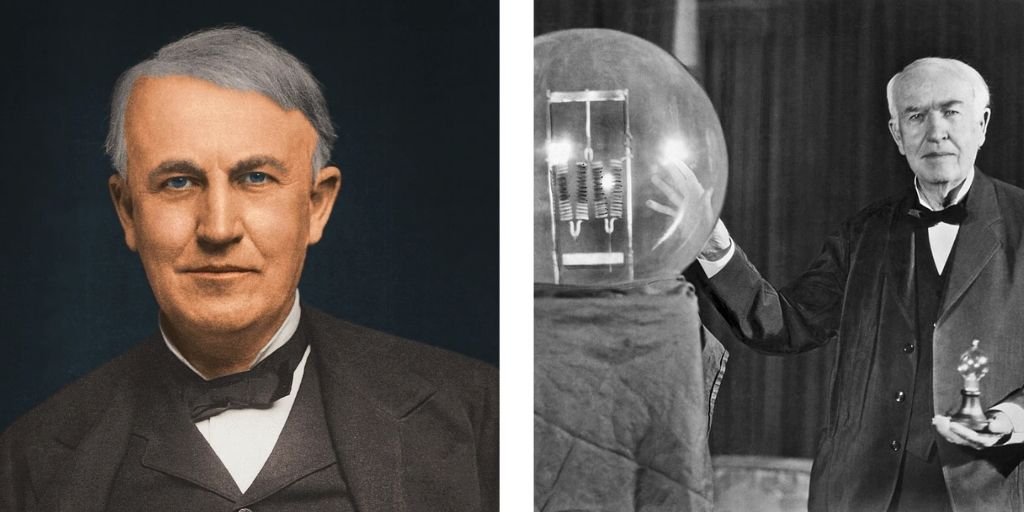
Thomas Edison is one of the most recognizable names in the history of invention. When we think about electric light, recording sound, or early motion pictures, his name often comes to mind. But who was the man behind these famous achievements?
Born in 1847, Edison grew up during a period when technology was changing rapidly. He became fascinated by machines, electricity, communication, and scientific experiments. Instead of simply dreaming about new ideas, he spent years testing them, improving them, and sometimes failing repeatedly before finding a solution.
His story is not only about inventions. It is also about curiosity, business, persistence, competition, and the changing world of the Industrial Revolution. Edison helped turn experimental ideas into practical products that ordinary people could eventually use.
So, what made his career so remarkable? His greatest strength was perhaps his willingness to keep working when an experiment did not go as planned. His laboratory was almost like a workshop of possibilities: every failed experiment could provide a clue for the next attempt.
Thomas Edison’s Early Life and Childhood
Birth and Family
Thomas Alva Edison was born on February 11, 1847, in Milan, Ohio, United States. He was the youngest of seven children of Samuel Ogden Edison Jr. and Nancy Matthews Elliott Edison.
His family later moved to Port Huron, Michigan, where Edison spent much of his childhood. His mother played an important role in his education. Although Edison attended school for only a short time, his mother encouraged him to read and learn independently.
This early experience helped shape his lifelong habit of asking questions.
A Curious Young Boy
Edison was interested in how things worked. He enjoyed reading about science and experimenting with different objects.
As a child, he reportedly carried out small experiments and developed an interest in chemistry. His curiosity was sometimes difficult for adults around him, but it eventually became one of his greatest strengths.
Rather than accepting that something simply worked, Edison wanted to know why it worked.
That mindset would later become central to his career.
Edison’s Early Work as a Telegraph Operator
Discovering the Telegraph
During his teenage years, Edison became interested in the telegraph. At the time, the telegraph was one of the most important communication technologies in the world.
Messages could travel over long distances through electrical signals. For people living in the nineteenth century, this was revolutionary.
Edison learned how the equipment worked and eventually became a telegraph operator.
Developing Technical Skills
Working with telegraph equipment gave Edison practical experience with electricity and communication systems. He began modifying equipment and experimenting with improvements.
This was important because Edison was not merely studying technology from books. He was learning by handling machines, repairing them, and attempting to make them better.
His early telegraph work provided a foundation for many of his later inventions.
The Rise of Thomas Edison as an Inventor
Moving Toward Invention
Edison eventually moved beyond operating telegraph equipment and began working professionally on inventions.
His early successes helped establish his reputation as a creative engineer and inventor. One important invention was an improved stock ticker, which allowed financial information to be transmitted more effectively.
His ability to create useful technology attracted investors and business partners.
The Importance of Practical Innovation
Edison had a particular interest in inventions that could solve everyday problems.
He did not simply want to create something unusual. He often wanted to develop systems that could be manufactured, sold, and used by large numbers of people.
That approach became a major feature of his career.
The Menlo Park Laboratory
A New Kind of Research Facility
In 1876, Edison established a research laboratory at Menlo Park, New Jersey.
The facility became famous for its experimental work. Edison brought together skilled workers, machinists, scientists, and other specialists to develop new technologies.
This was different from the traditional image of a lone inventor working alone at a desk.
Instead, Edison increasingly worked with a team.
A Workshop of Ideas
Menlo Park can be compared to a large kitchen where many ingredients were constantly being tested. Some combinations worked, others did not, but each experiment could lead to another possibility.
The laboratory became associated with a remarkable period of experimentation.
Edison and his team worked on electrical systems, sound recording, lighting, telegraph technology, and other projects.
This collaborative model helped influence the way industrial research was conducted in later decades.
The Invention and Development of the Phonograph
Recording Sound
One of Edison’s most famous achievements was the phonograph.
In 1877, Edison and his team developed a machine capable of recording and reproducing sound.
At the time, the idea of preserving someone’s voice and playing it back later seemed extraordinary.
Imagine hearing a person’s voice come from a machine when recording sound was still a completely new concept. The phonograph demonstrated that sound could be captured and reproduced.
Why the Phonograph Mattered
The phonograph had a major cultural impact.
It contributed to the development of recorded music and eventually helped create an entirely new entertainment industry.
People could listen to sounds without needing the performer to be physically present.
The technology continued to evolve, eventually leading toward modern recorded audio.
Edison and the Electric Light Bulb
Was Edison the First Person to Invent the Light Bulb?
The history of the electric light bulb is more complicated than the popular story sometimes suggests.
Several inventors had already experimented with electric lighting before Edison. Earlier designs faced problems involving efficiency, durability, cost, and practicality.
Edison’s contribution was not simply creating a light-producing device from nothing. He and his team worked extensively on developing a practical incandescent lighting system.
Creating a Practical Lighting System
Edison experimented with different filament materials and electrical designs.
The goal was to develop a lamp that could operate for a useful period while being affordable and suitable for everyday use.
The successful development of an incandescent lamp was only one part of the challenge. Edison also worked on generators, wiring, switches, meters, and other components needed to distribute electricity.
This broader system helped make electric lighting commercially practical.
Edison’s Electrical Power System
Beyond the Light Bulb
Edison’s work with electricity went far beyond the lamp itself.
He understood that people needed an entire infrastructure if electric lighting was going to become widespread.
That meant developing ways to generate and distribute electrical power.
Edison and his associates worked on power stations and electrical distribution systems. In 1882, the Pearl Street Station in New York City began supplying electricity to customers.
This was an important step toward modern electric power networks.
Changing Everyday Life
Electricity eventually transformed homes, businesses, factories, transportation, and entertainment.
Before widespread electric lighting, people depended heavily on daylight, candles, oil lamps, and gas lighting.
Electric illumination changed how cities operated after dark.
The transformation was gradual, but its long-term effects were enormous.
Edison’s Motion Picture Experiments
The Birth of Moving Images
Edison also became involved in the development of motion-picture technology.
His laboratory worked on devices designed to capture and display moving images. The Kinetograph camera and Kinetoscope viewing system were important parts of this work.
The Kinetoscope allowed individuals to watch moving images through a viewing device.
Influence on Entertainment
Motion-picture technology eventually developed far beyond these early machines.
The film industry became a major part of global entertainment, eventually leading to cinemas, television, and modern visual media.
Edison’s involvement in this field shows how broad his interests were. He was not focused on only one area of technology.
Edison’s Business Career and Companies
From Inventor to Entrepreneur
Edison was not only an inventor. He was also a businessman.
He understood that an invention needed manufacturing, investment, distribution, and customers if it was going to have a major social impact.
He became involved in several companies and commercial ventures.
One of the most important developments was the growth of Edison General Electric, which later became part of the corporate history of General Electric.
The Relationship Between Science and Business
Edison’s career demonstrates how closely invention and business became connected during the Industrial Revolution.
An inventor might create a machine, but making thousands or millions of machines required factories, workers, capital, transportation, and marketing.
Edison operated within this growing industrial system.
Thomas Edison and Nikola Tesla
A Famous Technological Rivalry
One of the most discussed chapters in Edison’s career involves Nikola Tesla and the competition between direct current and alternating current electrical systems.
Edison supported direct current, commonly called DC, while Tesla became closely associated with alternating current, or AC, through his work and collaboration with George Westinghouse.
The disagreement became part of what is often called the “War of the Currents.”
Different Approaches to Electricity
Direct current and alternating current have different technical characteristics.
AC eventually became widely used for electrical transmission because it could be efficiently transformed to different voltages, making long-distance distribution more practical.
The rivalry was therefore not simply a personal disagreement. It involved competing technologies, businesses, investors, and ideas about the future of electrical power.
The history of the period is complex, and both Edison and his competitors contributed to the development of modern electrical technology.
Edison’s Later Years and Continued Experiments
Never Completely Satisfied
Edison continued experimenting throughout his life.
Even after becoming famous and wealthy, he remained interested in new technical problems.
He worked on projects involving batteries, mining, chemicals, sound, manufacturing, and other technologies.
Not every project succeeded.
That is an important part of his story.
Edison created many successful inventions, but he also experienced failures and abandoned projects. His career demonstrates that invention is rarely a straight road from idea to success.
Persistence as a Working Method
Edison’s famous reputation for persistence comes partly from his approach to experimentation.
Rather than treating failure as the end, he often treated it as information.
This is one reason his story continues to inspire students, engineers, entrepreneurs, and inventors.
Thomas Edison’s Personal Life
Marriage and Family
Edison married Mary Stilwell in 1871. They had three children together. Mary died in 1884.
Edison later married Mina Miller in 1886. They also had three children.
His family life existed alongside an extremely demanding professional schedule.
Life at West Orange
In 1887, Edison established a major laboratory complex in West Orange, New Jersey.
The West Orange laboratory became an important center for his later research and manufacturing activities.
Edison spent many years there working with teams on different projects.
His working life was closely connected to his laboratories, where experimentation could continue day and night.
Thomas Edison’s Death and Historical Legacy
His Final Years
Thomas Edison died on October 18, 1931, at his home in West Orange, New Jersey. He was 84 years old.
By the time of his death, the world had changed dramatically from the one he had known as a child.
Electricity had become an essential part of modern life, recorded sound had become commercially important, and motion pictures had developed into a major industry.
A Lasting Influence
Edison’s legacy is much larger than a list of inventions.
He helped popularize the idea of organized industrial research, where teams could systematically test ideas and develop technologies for practical use.
His work influenced communications, entertainment, electrical power, manufacturing, and consumer technology.
At the same time, historians continue to examine the contributions of Edison and other inventors, reminding us that major technological changes are usually the result of many people working across different periods.
Thomas Edison’s Most Famous Inventions and Contributions
Phonograph
The phonograph made it possible to record and reproduce sound, helping lay foundations for the recorded-audio industry.
Incandescent Lighting System
Edison and his team developed a commercially practical lighting system that included lamps and supporting electrical infrastructure.
Electrical Power Distribution
His work helped demonstrate how centralized generation and electrical distribution could serve customers.
Motion-Picture Technology
Edison’s laboratories contributed to early camera and viewing technologies that became part of the development of cinema.
Telegraph Improvements
His early work with telegraph systems contributed to the development of improved communication technology.
Batteries and Other Experiments
Edison also spent considerable time working on storage batteries and numerous other technical problems.
His invention record illustrates something important: innovation can happen across several fields rather than in one narrow specialty.
Why Thomas Edison Still Matters Today
Thomas Edison lived in a world without smartphones, streaming services, modern computers, or widespread household electricity.
Yet many aspects of modern life can be connected indirectly to the technological systems that developed during his era.
Think about turning on a lamp, listening to recorded music, watching a movie, or communicating through electrical technology. These everyday activities belong to technological traditions that Edison helped shape.
His story also teaches a broader lesson.
Innovation is not always about having one brilliant idea. Sometimes it is about testing hundreds of possibilities, learning from mistakes, building a team, finding practical solutions, and continuing when the first attempt fails.
That may be Edison’s most enduring contribution.
Conclusion
Thomas Edison remains one of the most influential inventors of the modern era. His work with the phonograph, electric lighting, power distribution, telegraph technology, and motion pictures helped shape industries that changed everyday life.
His career was filled with both achievements and failures. He was an inventor, entrepreneur, experimenter, and organizer who understood the importance of turning ideas into practical systems.
What can we learn from his journey? Perhaps the biggest lesson is simple: curiosity becomes powerful when it is combined with action. Edison did not stop at asking questions. He built, tested, changed, and tried again.
More than a century later, his name continues to be connected with one of the most exciting periods of technological change in human history.
Frequently Asked Questions About Thomas Edison
1. Who was Thomas Edison?
Thomas Edison was an American inventor and businessman born in 1847. He became famous for his work in electric lighting, sound recording, telegraph technology, motion pictures, and electrical power systems.
2. What is Thomas Edison most famous for?
Edison is particularly famous for developing a commercially practical incandescent lighting system and for inventing the phonograph. His laboratories also contributed to early motion-picture technology and other electrical innovations.
3. Did Thomas Edison invent the light bulb?
Edison was not the first person to experiment with electric light bulbs. However, he and his team developed a more practical incandescent lighting system, including improvements to the lamp and the electrical infrastructure needed to make electric lighting commercially useful.
4. What was Thomas Edison’s most important invention?
There is no single universally agreed answer. His phonograph, practical electric lighting system, and contributions to electrical power distribution were among his most historically significant achievements.
5. When did Thomas Edison die?
Thomas Edison died on October 18, 1931, in West Orange, New Jersey, at the age of 84.