John Lennon: The Life, Music, Legacy and Story of a Legendary Beatle
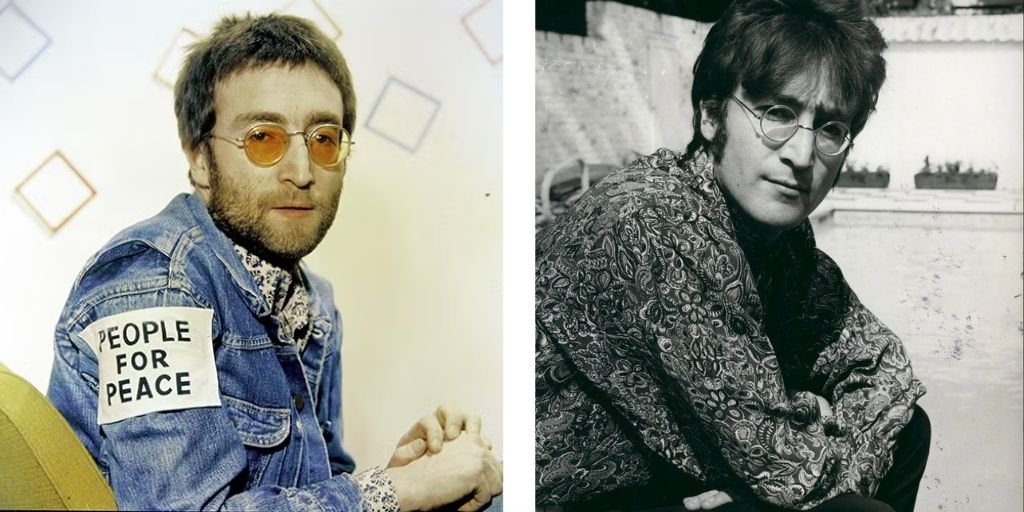
John Lennon was more than a musician. He was a songwriter, singer, artist, peace campaigner, and one of the most recognizable figures of the 20th century. As a member of The Beatles, he helped change popular music forever, while his later solo work showed a more personal and reflective side of his character.
What made Lennon so fascinating? Perhaps it was the combination of his creativity and contradictions. He could be humorous and serious, gentle and outspoken, playful and deeply thoughtful. His songs could make millions of people dance, while others encouraged listeners to think about love, peace, politics, identity, and life itself.
From his childhood in Liverpool to his worldwide fame with The Beatles and his later life with Yoko Ono, Lennon’s journey was extraordinary. His story was filled with success, personal struggles, artistic experiments, controversy, and unforgettable music.
Even decades after his death, people continue to listen to his songs and discuss his ideas. His voice remains familiar to generations who were not even alive when he was performing. In many ways, his cultural influence is like a stone thrown into a lake—the original splash may have happened long ago, but the ripples continue to travel.
1. John Lennon’s Early Life in Liverpool
John Winston Lennon was born on October 9, 1940, in Liverpool, England. His childhood was shaped by a mixture of family difficulties, independence, humor, and creativity.
Lennon spent much of his youth with his aunt Mimi and uncle George. His relationship with his mother, Julia, was complicated because he did not live with her continuously. Julia nevertheless played an important role in introducing him to music and encouraging his interest in playing instruments.
As a teenager, Lennon became increasingly interested in rock and roll. Like many young people of his generation, he was attracted to the energetic sounds coming from America. Artists such as Elvis Presley, Buddy Holly, and Little Richard demonstrated that popular music could be exciting, rebellious, and personal.
Lennon attended the Liverpool College of Art, where he developed his artistic interests but did not always fit comfortably into traditional academic expectations.
Music gradually became the center of his world.
In 1957, Lennon formed a skiffle group called The Quarrymen. That same year, he met a young guitarist named Paul McCartney. Their meeting became one of the most important moments in modern music history.
McCartney later introduced Lennon to George Harrison, and the partnership between Lennon and McCartney began to develop. The two young musicians wrote songs, experimented with different sounds, and dreamed of becoming successful performers.
At that stage, could they have imagined what was coming? Probably not.
2. The Meeting That Changed Music History
The relationship between John Lennon and Paul McCartney became one of the most famous songwriting partnerships ever recorded.
They were different personalities, but their differences often helped their creativity. Lennon tended to bring a sharper, more experimental edge, while McCartney often contributed melodic and polished ideas. Of course, these descriptions are simplified because both artists were capable of writing in many different styles.
The early years were not easy.
The group went through changing names, changing musicians, long performances, and financial uncertainty. Eventually, The Beatles developed a strong following in Liverpool and Hamburg, Germany.
Their time performing in Hamburg was particularly important. Long hours on stage forced the musicians to improve their playing and learn how to entertain demanding audiences.
The group eventually consisted of Lennon, McCartney, Harrison, and Ringo Starr.
Their manager, Brian Epstein, helped shape their professional image and secure important opportunities. Producer George Martin also became a major creative force in their recording career.
The Beatles released their first major single, “Love Me Do,” in 1962.
It was only the beginning.
3. Beatlemania and Worldwide Fame
The Beatles quickly became a cultural phenomenon.
Their popularity exploded in Britain before spreading internationally. In 1964, the group arrived in the United States to enormous public excitement. Their appearance on The Ed Sullivan Show introduced them to millions of American viewers.
This period became known as Beatlemania.
Fans screamed, newspapers followed their every move, and the four musicians became international celebrities almost overnight.
Lennon was particularly recognizable because of his wit and outspoken personality. He often answered reporters with humor and sarcasm, making him one of the most interesting members of the group to interview.
The Beatles produced hit after hit, including songs such as “She Loves You,” “I Want to Hold Your Hand,” “A Hard Day’s Night,” and “Help!”
They also starred in films, including A Hard Day’s Night and Help!
But their development did not stop with simple pop songs.
As their fame increased, their music became more ambitious.
4. The Beatles Become More Experimental
One of the most remarkable parts of Lennon’s career was how dramatically his music changed.
The early Beatles were known for catchy love songs and energetic performances. Later, the group began experimenting with studio technology, unusual instruments, different songwriting approaches, and more complex themes.
Albums such as Rubber Soul, Revolver, Sgt. Pepper’s Lonely Hearts Club Band, The Beatles, and Abbey Road demonstrated the enormous creative range of the group.
Lennon contributed many memorable songs during this period.
“In My Life” reflected on memory and the passing of time. “Strawberry Fields Forever” explored childhood memories and personal emotions. “Lucy in the Sky with Diamonds” demonstrated his fascination with imaginative and surreal imagery.
His writing was not always straightforward.
Sometimes Lennon used unusual lyrics and dreamlike pictures rather than telling a simple story. This encouraged listeners to interpret his work in their own ways.
The Beatles also became increasingly interested in Indian music, new recording techniques, and different artistic ideas.
Their music was becoming less like a product designed simply for entertainment and more like an artistic laboratory.
Lennon was an important part of that transformation.
5. John Lennon and Yoko Ono
In the late 1960s, Lennon’s personal and artistic life became closely connected with Japanese artist Yoko Ono.
The two met in 1966, and their relationship eventually became both romantic and creative.
Lennon and Ono collaborated on experimental art and music. They also became increasingly involved in peace activism.
Their relationship attracted enormous media attention, and Ono was often blamed by Beatles fans for contributing to the group’s eventual breakup. However, the reasons behind The Beatles’ separation were much more complicated.
The four members had developed different interests and working relationships. Business disagreements, creative differences, management problems, and personal changes all played roles.
It is therefore too simple to say that one person caused the breakup.
The Beatles officially separated in 1970.
For millions of fans, it was the end of an era.
For Lennon, however, it marked the beginning of another important chapter.
6. Lennon’s Solo Career
After The Beatles ended, Lennon began developing his identity outside the group.
His solo work was often more personal than his Beatles material.
In 1970, he released John Lennon/Plastic Ono Band. The album was emotionally direct and dealt with subjects such as childhood, loss, insecurity, and personal identity.
It sounded very different from many Beatles recordings.
Lennon was no longer trying to create music for a group of four. He could explore his own experiences with fewer limitations.
Then came Imagine in 1971.
The title song became one of Lennon’s most famous compositions. Its simple piano arrangement and broad message about peace and human cooperation helped it become an enduring cultural work.
The album also contained songs that addressed politics, relationships, and social concerns.
Other important solo recordings included Mind Games, Walls and Bridges, and Double Fantasy.
His solo career did not reproduce The Beatles’ exact cultural impact, but it revealed a different side of his creativity.
7. John Lennon and the Message of Peace
Lennon’s public image became increasingly associated with peace activism.
He and Yoko Ono used their fame to promote anti-war messages and encourage public discussion about peace.
One of their most famous campaigns took place in 1969 when they held a series of Bed-Ins for Peace. The events attracted international media attention and turned their private honeymoon into a public statement.
Lennon’s activism was sometimes controversial.
He openly criticized political institutions and questioned military conflict. His political views attracted the attention of the U.S. government, particularly during the early 1970s.
The song “Give Peace a Chance” became closely associated with anti-war movements.
Lennon’s approach was often unconventional. Instead of giving long political speeches, he sometimes used music, interviews, artwork, and public demonstrations.
His famous peace message was not simply part of his music career. It became a central part of his public identity.
8. His Relationship With America
Lennon’s political activities created difficulties during his years in the United States.
He and Ono moved to New York, where they became involved in cultural and political life.
During the early 1970s, Lennon faced immigration pressure from U.S. authorities. His earlier drug conviction in Britain became part of the government’s case against him.
Lennon fought the deportation effort for several years.
Eventually, he received permanent residency in the United States in 1976.
During this period, his public activities were closely watched, and the experience influenced some of his later work.
Despite the difficulties, Lennon became deeply connected with New York City.
He and Ono lived at The Dakota, a famous apartment building on Central Park West.
New York would remain an important part of the final years of his life.
9. Family, Fatherhood and a Period Away From Music
Lennon’s personal life changed significantly during the 1970s.
He and Yoko Ono had a son, Sean, who was born on October 9, 1975—Lennon’s 35th birthday.
Following Sean’s birth, Lennon stepped away from much of his professional music career for several years.
He focused heavily on family life.
This period was unusual for a musician who had spent much of his adult life surrounded by recording studios, concerts, journalists, and fans.
Lennon later described this time as an important period of domestic life.
He cooked, looked after his son, and spent more time at home.
Then, after several years away from the spotlight, Lennon began working on music again.
He and Ono recorded Double Fantasy, which was released in 1980.
The album represented a new stage in his life.
It contained songs from both Lennon and Ono and explored relationships, family, adulthood, and everyday life.
The record won the Grammy Award for Album of the Year in 1981, after Lennon’s death.
10. The Tragic Death of John Lennon
On December 8, 1980, John Lennon was killed outside The Dakota in New York City.
He was only 40 years old.
Earlier that day, Lennon and Ono had been working on music and had spent time outside their home.
That evening, Lennon returned to The Dakota with Ono.
He was shot by Mark David Chapman, who was arrested at the scene.
Lennon’s death shocked people around the world.
The reaction was enormous because he was not simply a famous musician. He had become a symbol connected with an entire generation of music, social change, creativity, and cultural experimentation.
Fans gathered in cities across the world to remember him.
His death also changed the way people viewed his legacy. Songs that had already been familiar suddenly carried new emotional weight.
For many listeners, Lennon’s music became connected with memories of an artist whose life had ended unexpectedly.
11. John Lennon’s Lasting Legacy
Why does John Lennon still matter?
Part of the answer is his music.
The songs he helped create with The Beatles remain among the most widely recognized recordings in popular culture. His solo work continues to attract listeners, musicians, historians, and fans.
But his legacy goes beyond records.
Lennon demonstrated that a successful musician could also become an artist with strong opinions about society. He used his fame to discuss peace, relationships, politics, family, creativity, and personal freedom.
His influence can be seen in later generations of musicians who wanted their work to express more than entertainment.
He also left behind a complicated human story.
Lennon was not a perfect figure. Like many famous people, he experienced personal conflicts, made mistakes, changed his views, and sometimes behaved in ways that later attracted criticism.
Understanding those contradictions makes his story more interesting, not less.
People often want famous figures to fit neatly into categories. Lennon does not.
He was a songwriter who wrote both simple pop songs and experimental compositions. He was a global celebrity who sometimes wanted privacy. He promoted peace while living through personal conflicts. He could be funny one moment and deeply serious the next.
That complexity is part of why people continue to discuss him.
His Influence on Music
Lennon’s songwriting influenced generations of artists.
His willingness to experiment helped demonstrate that popular music could explore serious subjects without losing its connection with a mass audience.
He also helped establish the idea that musicians could use studio recording as a creative tool rather than simply recording live performances.
His Cultural Influence
Lennon’s image became closely connected with the cultural changes of the 1960s and 1970s.
His glasses, long hair, music, interviews, artwork, and peace campaigns became recognizable symbols.
Yet his influence cannot be reduced to one image.
The deeper legacy lies in the questions his work encouraged people to ask.
Can music change how people think?
Can an artist use fame to discuss social issues?
Can a simple song communicate a powerful idea?
Lennon’s career suggested that the answer to each question could be yes.
Conclusion
John Lennon’s life was short, but his creative journey was enormous. From a Liverpool teenager with a guitar to a member of The Beatles and later an internationally known solo artist, he experienced a level of fame few musicians ever reach.
His songs became part of the soundtrack of modern history. His relationship with Yoko Ono, his peace activism, his family life, his political experiences, and his return to music all added different chapters to his story.
His death in 1980 ended his life at just 40, but it did not end his influence.
Decades later, people still hear his songs, study his lyrics, debate his ideas, and discover his work for the first time. That lasting interest may be the clearest sign of his importance.
John Lennon remains a fascinating example of how music can become more than sound. It can become memory, conversation, art, and a reflection of the world around us.
Frequently Asked Questions
1. Who was John Lennon?
John Lennon was an English singer, songwriter, musician, and peace activist best known as a founding member of The Beatles. He later developed a successful solo career with Yoko Ono and continued creating music until his death in 1980.
2. When was John Lennon born?
John Lennon was born on October 9, 1940, in Liverpool, England. His birthday was also the birthday of his son Sean, who was born in 1975.
3. What was John Lennon most famous for?
Lennon was most famous for his work with The Beatles, where he formed a highly influential songwriting partnership with Paul McCartney. He was also known for solo songs such as “Imagine” and “Give Peace a Chance.”
4. Who was John Lennon’s wife?
John Lennon was married to artist and musician Yoko Ono. They worked together on music, art, and peace campaigns and had a son named Sean.
5. How did John Lennon die?
John Lennon was fatally shot outside The Dakota in New York City on December 8, 1980. He was 40 years old.