Michael Jordan: The Amazing Life, Career, and Legacy of a Basketball Legend
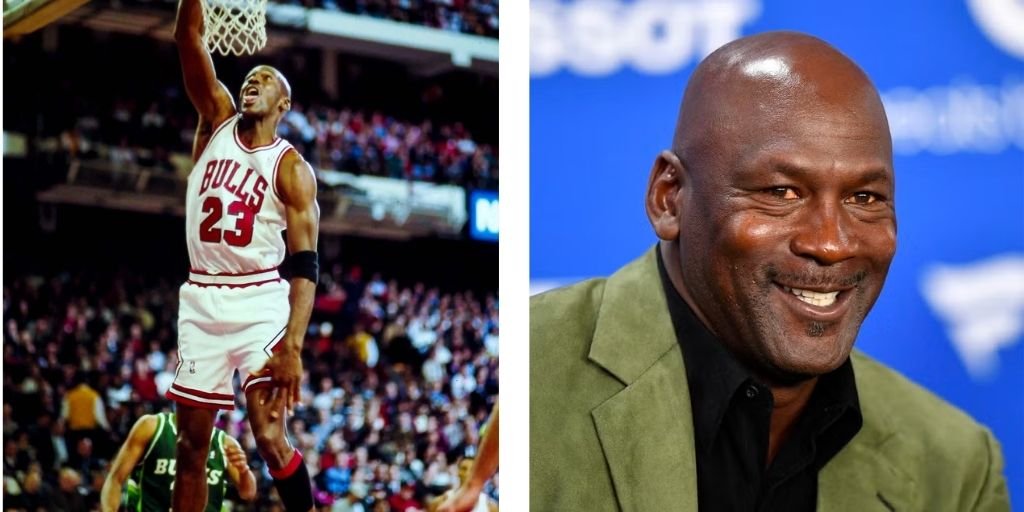
Michael Jordan is more than a famous basketball player. For millions of people, he became a symbol of determination, confidence, competition, and excellence. From his early days in North Carolina to his unforgettable years with the Chicago Bulls, Jordan built a career that changed basketball and reached far beyond the court.
But how did an ordinary young athlete become one of the most recognizable sports figures in the world? His story is filled with difficult moments, remarkable comebacks, championship victories, business success, and a constant desire to improve.
Early Life and Family Background
Michael Jeffrey Jordan was born on February 17, 1963, in Brooklyn, New York. His parents were James and Deloris Jordan, and the family later moved to Wilmington, North Carolina, where Michael spent much of his childhood.
Growing up, Jordan was surrounded by family members who encouraged discipline and hard work. His father had a strong influence on him, teaching him the value of responsibility and practical skills. His mother also played an important role in shaping his character.
Jordan was competitive from a young age. Whether he was playing sports with his brothers or taking part in school activities, he did not like losing. That competitive personality would eventually become one of the defining features of his professional career.
Basketball was not always his only interest. He also played baseball and football, but basketball gradually became the sport in which his natural athletic ability stood out.
His childhood story is often remembered because it shows that greatness does not always begin with instant success. Jordan had to develop his abilities through practice, setbacks, and persistence.
High School Basketball and a Life-Changing Opportunity
Jordan attended Emsley A. Laney High School in Wilmington. During his early high school years, he was not immediately viewed as an unstoppable basketball superstar.
A famous part of his story involves being cut from the varsity basketball team as a sophomore. Instead of allowing the disappointment to end his ambition, Jordan used it as motivation.
He continued practicing and worked on his game. His improvement was dramatic.
By his junior and senior years, he had become a highly regarded young player. College recruiters began paying attention, and Jordan eventually accepted a scholarship to the University of North Carolina.
This period demonstrates something important about his journey: talent mattered, but persistence mattered too.
A setback became fuel. In a way, that moment was like a closed door that forced Jordan to build a better path for himself.
College Years at the University of North Carolina
Jordan played college basketball at the University of North Carolina under legendary coach Dean Smith.
During his freshman season, he made a major impact. In the 1982 NCAA championship game against Georgetown, Jordan hit the game-winning jump shot that helped North Carolina win the national title.
That moment introduced him to a much larger audience.
Over the next two seasons, Jordan continued developing as a player. He became known for his scoring ability, athleticism, defensive skills, and confidence.
In 1984, he won major individual honors, including the Naismith and Wooden awards. After his junior season, Jordan entered the NBA draft.
His college career had lasted only a few years, but it gave him an important foundation. He learned how to compete under pressure, work within a team, listen to a coach, and perform when millions of people were watching.
Entering the NBA With the Chicago Bulls
The Chicago Bulls selected Jordan with the third overall pick in the 1984 NBA Draft.
When he entered the league, he immediately attracted attention.
Jordan brought extraordinary athleticism, creativity, and energy to the court. Fans quickly became fascinated by his ability to attack the basket, finish difficult shots, and rise above defenders.
During his rookie season, he averaged 28.2 points per game and earned NBA Rookie of the Year honors.
His popularity grew quickly, but success also brought new challenges. Opposing teams began designing defensive strategies specifically to slow him down.
Jordan had to learn that individual brilliance was not enough to win championships.
The Bulls needed to become a complete team.
The Road to NBA Championships
The path to championship success was not immediate.
Jordan became one of the league’s greatest individual players, but the Bulls repeatedly struggled against powerful teams, especially the Detroit Pistons.
The Pistons developed a physical defensive approach that made life difficult for Jordan and Chicago. Their battles became an important part of Jordan’s development.
Instead of simply trying to score more points, Jordan learned to trust his teammates and understand the importance of physical preparation, defense, passing, and leadership.
The Bulls gradually improved.
The arrival and development of players such as Scottie Pippen and Horace Grant helped create a stronger supporting cast. Coach Phil Jackson later introduced the triangle offense, giving the team another important tactical foundation.
Finally, in the 1990–91 season, Chicago defeated the Los Angeles Lakers in the NBA Finals.
Jordan won his first NBA championship.
It was only the beginning.
Michael Jordan’s Six NBA Championships
The Bulls won six NBA championships during Jordan’s career:
- 1991
- 1992
- 1993
- 1996
- 1997
- 1998
Jordan was named NBA Finals MVP in all six championship victories.
The first three titles came in consecutive seasons. Chicago became one of the defining teams of the early 1990s, while Jordan became the central figure of the NBA’s worldwide expansion.
After returning from his first retirement, Jordan led the Bulls to another three championships.
The 1996 season was particularly memorable because Chicago finished the regular season with 72 wins, setting an NBA record at the time. The Bulls went on to win the championship.
The 1998 championship became one of the most famous chapters of Jordan’s career. In Game 6 of the NBA Finals against the Utah Jazz, he made the decisive shot that gave Chicago its sixth title.
That image became one of the defining moments in sports history.
Olympic Success and the Dream Team
Jordan’s influence was not limited to the NBA.
He represented the United States at the 1984 Olympic Games in Los Angeles and won a gold medal.
He later became part of the legendary 1992 U.S. Olympic basketball team, widely known as the “Dream Team.”
The squad included several of the era’s greatest basketball players, including Magic Johnson, Larry Bird, Charles Barkley, Patrick Ewing, David Robinson, Scottie Pippen, and Jordan.
The team won the gold medal in Barcelona.
For basketball fans around the world, the Dream Team helped demonstrate the extraordinary level of talent in American basketball.
Jordan’s presence also contributed to the international growth of his personal brand and the sport itself.
Retirement, Baseball, and an Unexpected Comeback
In October 1993, Jordan shocked the sports world by announcing his retirement from basketball.
He had just won his third consecutive NBA championship, but he wanted to pursue professional baseball, a sport his father had loved.
Jordan signed with the Birmingham Barons, a minor-league baseball team affiliated with the Chicago White Sox.
His baseball experiment lasted one season.
He then returned to basketball in March 1995 with the famous announcement: “I’m back.”
Jordan returned to the Bulls and eventually led the team through another remarkable championship run.
His comeback showed that his career was not simply about uninterrupted success. It also contained uncertainty, experimentation, disappointment, and reinvention.
Sometimes a career is not a straight road. Jordan’s journey looked more like a winding path, with unexpected turns that ultimately became part of his legend.
The 1996–1998 Bulls Dynasty
Jordan’s return produced another extraordinary chapter.
The 1995–96 Bulls won 72 regular-season games, a record that remained unmatched until the Golden State Warriors won 73 games in 2015–16.
Jordan won the regular-season MVP award, All-Star Game MVP, and Finals MVP that season.
The Bulls defeated the Seattle SuperSonics in the NBA Finals.
The next two seasons brought more championships against the Utah Jazz.
The 1997 Finals included Jordan’s famous performance in Game 5, often remembered as the “Flu Game.” Jordan scored 38 points despite being visibly ill.
In 1998, the Bulls faced Utah again.
Game 6 ended with Jordan creating space against Bryon Russell and hitting the championship-winning shot.
Chicago won its sixth title.
For many fans, that moment became a fitting ending to Jordan’s Bulls career.
Michael Jordan’s Playing Style
What made Jordan so difficult to defend?
There was no single answer.
He combined speed, strength, balance, footwork, shooting, creativity, and body control.
His mid-range jump shot became one of his most recognizable weapons. He could also attack the basket, finish with either hand, create space with footwork, and make difficult shots while heavily defended.
His defensive ability was sometimes overshadowed by his scoring, but he was also an outstanding defender.
Jordan was selected to the NBA All-Defensive First Team nine times.
His ability to compete on both ends of the court made him a complete player.
He was also famous for adjusting his game as he became older. Early in his career, he relied heavily on explosive athleticism. Later, his footwork, shooting, and experience became increasingly important.
That evolution helped him remain effective even when he was no longer the same young athlete who could simply outrun everyone.
Awards, Records, and Individual Achievements
Jordan collected an extraordinary number of individual honors.
He won five NBA regular-season MVP awards and six NBA Finals MVP awards. He was selected to 14 NBA All-Star Games and won the All-Star Game MVP award three times.
He also won the NBA scoring title 10 times.
Jordan’s career regular-season scoring average was 30.1 points per game, the highest in NBA history among players who meet the league’s statistical qualifications.
He was also named NBA Defensive Player of the Year in 1988.
These numbers tell only part of the story.
Jordan’s influence was also visible in television ratings, merchandise sales, international basketball popularity, and the growing commercial value of professional athletes.
His name became associated with a level of competitiveness that extended far beyond statistics.
Air Jordan and His Business Empire
Jordan’s influence changed sports marketing as well as basketball.
His partnership with Nike produced the Air Jordan brand, beginning with the original Air Jordan basketball shoe in 1985.
The shoes became a cultural phenomenon.
People who had never played basketball began buying basketball shoes because they connected with the style, image, and story surrounding Jordan.
The brand eventually expanded far beyond footwear.
Jordan’s business career later included investments, endorsements, restaurants, and ownership interests.
He became the majority owner of the Charlotte Hornets in 2010, becoming the first former NBA player to become a majority owner of an NBA franchise. He later sold his majority stake in 2023 while retaining a minority interest.
His business story demonstrates how an athlete can turn sporting fame into a long-lasting commercial brand.
Michael Jordan’s Impact on Popular Culture
Jordan’s influence reached music, fashion, advertising, film, and everyday culture.
The 1996 movie Space Jam introduced him to another generation of fans by placing him alongside the Looney Tunes characters.
His Air Jordan sneakers became closely connected with streetwear and youth culture.
Television commercials and endorsement campaigns turned Jordan into a global celebrity.
He also became a symbol of the modern athlete as a worldwide brand.
Before Jordan, sports stars certainly had major endorsements. But his combination of athletic success, recognizable style, storytelling, and global marketing helped create a model that many later athletes followed.
His influence can still be seen in the way professional athletes approach branding today.
Life After Basketball
Jordan officially retired from the NBA for a third time in 2003 after playing for the Washington Wizards.
Although his playing career ended, his connection to basketball continued.
He remained involved in business and charitable activities and continued appearing at major sporting events.
His relationship with the NBA also remained significant through his ownership history with the Charlotte Hornets.
Jordan has also supported various charitable causes throughout his life, including organizations connected with education, health, and community development.
His post-playing career illustrates that retirement from professional competition does not necessarily mean retirement from influence.
Why Michael Jordan’s Legacy Still Matters
Why does Jordan remain so famous decades after his most celebrated championship?
Part of the answer is timing. He played during an era when the NBA was becoming increasingly visible around the world.
But timing alone does not explain his legacy.
Jordan combined extraordinary talent with relentless competitiveness. His story also included setbacks that made his achievements more relatable.
He missed shots. He lost playoff series. He was eliminated before reaching the Finals. He retired. He tried baseball. He returned. He lost again. Then he won.
That combination of triumph and difficulty helped make his story powerful.
For younger athletes, Jordan’s career can be viewed as a lesson in preparation and persistence. For basketball historians, his career represents a major period in the development of the NBA. For business observers, his brand demonstrates the commercial possibilities of athletic fame.
And for ordinary fans, his story remains simple: a young player faced obstacles, kept improving, and eventually reached extraordinary heights.
Conclusion
Michael Jordan’s career changed much more than the Chicago Bulls. His six championships, Olympic success, scoring achievements, iconic moments, and Air Jordan brand helped transform basketball into a truly global cultural force.
His journey was not perfect or predictable. It included setbacks, retirement, baseball, comebacks, and difficult competition. That is precisely what makes the story so compelling.
Jordan’s legacy lives in basketball arenas, sneaker culture, sports marketing, and the memories of fans who watched him compete. Decades after his greatest games, his name remains closely connected with one simple idea: the pursuit of excellence.
FAQs About Michael Jordan
1. When was Michael Jordan born?
Michael Jordan was born on February 17, 1963, in Brooklyn, New York. His family later moved to Wilmington, North Carolina, where he grew up.
2. How many NBA championships did Michael Jordan win?
Jordan won six NBA championships with the Chicago Bulls. The titles came in 1991, 1992, 1993, 1996, 1997, and 1998.
3. How many MVP awards did Michael Jordan win?
Jordan won five regular-season NBA MVP awards and six NBA Finals MVP awards during his professional basketball career.
4. Did Michael Jordan play baseball?
Yes. After retiring from basketball in 1993, Jordan played professional baseball in the minor leagues for the Birmingham Barons. He returned to the NBA in 1995.
5. What is Michael Jordan best known for?
Jordan is best known for his legendary NBA career with the Chicago Bulls, six championships, six Finals MVP awards, scoring achievements, Olympic success, and the global popularity of the Air Jordan brand.