
Albert Einstein: Life, Genius, Discoveries & Lasting Legacy
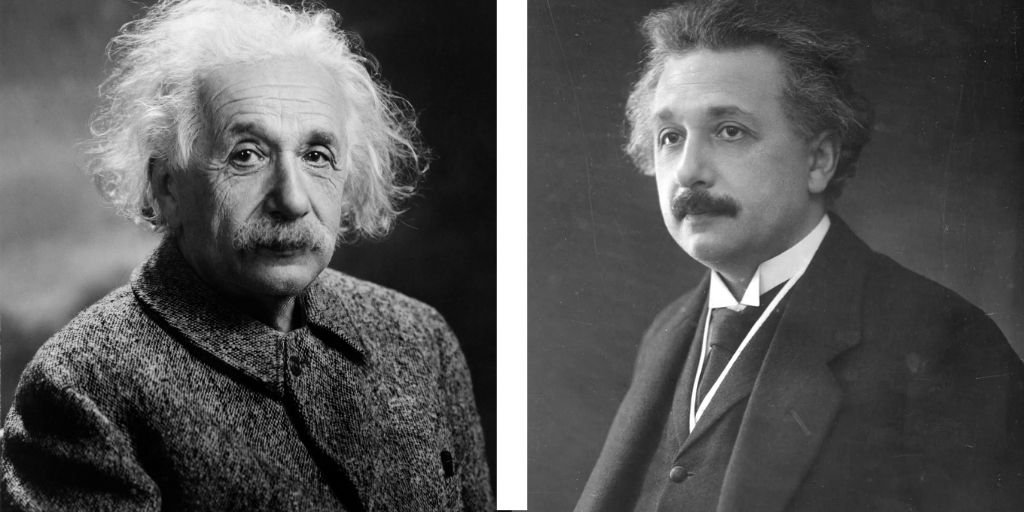
Albert Einstein is one of the most recognizable names in the history of science. Even people who have never studied physics have probably heard his name or seen the famous photograph of his wild hair and thoughtful expression. But who was the man behind that image? Was he simply a brilliant scientist, or was there much more to his story?
Born in Germany in 1879, Einstein changed the way people understood space, time, gravity, light, and energy. His ideas helped shape modern physics and influenced technology in ways that still affect our daily lives. Yet his life was not only about equations and scientific theories. He was also a curious thinker, a lover of music, a humanitarian, and a strong believer in independent thought.
His journey was far from ordinary. He experienced academic struggles, moved between countries, faced political pressure, and eventually became one of the most famous scientists on Earth. His story reminds us that intelligence is not simply about knowing answers. Sometimes, it is about asking better questions.
Early Life and Childhood of Albert Einstein
Albert Einstein was born on March 14, 1879, in Ulm, in the Kingdom of Württemberg, which was then part of the German Empire. His parents were Hermann Einstein and Pauline Koch. His father worked in business and electrical engineering, while his mother had a strong interest in music.
Einstein’s family later moved to Munich, where his father and uncle became involved in an electrical equipment company. This environment gave young Albert an early connection with technology and scientific ideas.
Interestingly, Einstein did not immediately look like the stereotypical child genius. One popular story claims that he did not speak until a relatively late age, although historians have questioned some details of that story. What is clearer is that he developed a strong independent mind at an early age.
One object that reportedly fascinated him was a compass. When he was young, he wondered how the needle could move even though there was nothing visible pushing it. That simple experience made a deep impression on him.
Think of a child looking at a locked door and becoming more interested in the key than the room behind it. Einstein had a similar curiosity. He wanted to understand what was happening beneath the surface.
His interest in mathematics and science grew as he became older. He also enjoyed playing the violin, an activity that remained important throughout his life.
Education and the Development of a Curious Mind
Einstein attended schools in Munich before eventually moving to Switzerland. His relationship with traditional education was complicated. He disliked rigid teaching methods and preferred learning through questioning and independent thinking.
In 1896, he entered the Swiss Federal Polytechnic in Zurich, where he studied mathematics and physics. There he met Mileva Marić, a fellow student who later became his first wife.
Einstein graduated in 1900. However, finding an academic position was not easy. His independent personality and unconventional approach did not always fit comfortably into the academic system of the time.
Instead of immediately becoming a university professor, he eventually found work at the Swiss Patent Office in Bern.
At first glance, working in a patent office might seem unrelated to changing the world of physics. In reality, it gave Einstein a stable job while allowing him time to think about scientific problems.
During this period, he examined inventions involving electrical and mechanical devices. His work required him to understand how different technologies functioned, and he continued thinking about fundamental questions in physics outside office hours.
This period demonstrates an important lesson: sometimes the path to success does not look impressive at the beginning. Einstein’s greatest scientific breakthroughs did not emerge from a glamorous laboratory. Some of them developed while he was working a regular job.
The Remarkable Year of 1905
The year 1905 is often called Einstein’s “miracle year” because he published several groundbreaking scientific papers.
Imagine a person opening one door and discovering an entirely new world behind it. Einstein seemed to open several doors at once.
One of his papers dealt with the photoelectric effect, explaining how light can cause electrons to be released from certain materials. His work helped establish the idea that light can behave as packets of energy, later known as photons.
Another paper examined Brownian motion, the random movement of tiny particles suspended in a fluid. Einstein showed how this movement could provide evidence for the existence of atoms and molecules.
Then came his special theory of relativity, which transformed ideas about space and time.
Finally, he published his famous relationship between mass and energy.
These achievements were extraordinary because they addressed different problems while pointing toward a deeper understanding of nature.
Einstein was only 26 years old in 1905.
His miracle year did not instantly make him a worldwide celebrity, but it established him as a serious and innovative physicist.
Special Relativity and a New Understanding of Time
One of Einstein’s most famous contributions was special relativity, published in 1905.
Before Einstein, many scientists commonly thought of time as something universal. In other words, a second for one person should be the same second for everyone everywhere.
Einstein challenged that assumption.
His theory showed that measurements of time and space depend on the motion of the observer. As objects move at extremely high speeds, effects such as time dilation become important.
This sounds strange because we do not experience these effects in ordinary life. If you travel in a car, you do not notice your watch behaving differently because your speed is far too slow compared with the speed of light.
But at extreme speeds, the difference becomes significant.
A simple analogy is to imagine two people watching the same race from different positions. They may agree about what happened, but their measurements can differ depending on their circumstances. Relativity takes this idea much further, showing that space and time themselves are connected to motion.
Einstein’s work changed physics because it challenged assumptions that had seemed obvious for centuries.
E = mc² and the Relationship Between Mass and Energy
Few scientific formulas are as famous as E = mc².
The equation expresses a profound relationship between mass and energy. It tells us that mass can be understood as a form of concentrated energy.
The letters are simple:
- E represents energy.
- m represents mass.
- c represents the speed of light.
Because the speed of light is enormous, even a small amount of mass corresponds to a very large amount of energy.
The importance of the equation goes far beyond its appearance on posters and classroom walls. It became an essential part of modern physics and helped scientists understand nuclear processes.
However, it is important not to confuse Einstein’s equation with the development of nuclear weapons. Einstein did not design an atomic bomb. His scientific work contributed to the understanding of mass and energy, while the later development of nuclear weapons involved many scientists, engineers, military programs, and political decisions.
Einstein himself became deeply concerned about the destructive potential of nuclear weapons.
General Relativity and the Nature of Gravity
Einstein did not stop with special relativity. He wanted to understand gravity as well.
This led to his general theory of relativity, published in 1915.
Newton had described gravity as a force acting between objects. Einstein developed a different picture. He proposed that massive objects affect the geometry of space and time, creating what is commonly called spacetime curvature.
A useful analogy is to imagine placing a heavy ball on a stretched rubber sheet. The sheet bends around the ball. If another smaller ball rolls nearby, its path changes because of that curved surface.
The real universe is far more complex than a rubber sheet, but the analogy can help explain the basic idea.
According to general relativity, planets orbit stars because they move through curved spacetime. Light can also be affected by gravity, which means that massive objects can bend the path of light.
This prediction became one of the reasons Einstein’s theory gained enormous attention.
In 1919, observations during a solar eclipse provided evidence consistent with Einstein’s prediction that gravity could bend starlight. The news made him internationally famous.
Suddenly, the quiet physicist had become a global celebrity.
Einstein Becomes an International Celebrity
After the success of his theories, Einstein’s reputation grew rapidly.
Newspapers around the world wrote about him. People wanted to meet him, photograph him, and hear his opinions. His appearance also became part of his public image.
His untidy hair, simple clothing, and relaxed attitude made him appear different from the traditional image of a formal professor.
But fame brought complications.
Einstein was not only asked about physics. Journalists also wanted his opinions on politics, war, religion, education, peace, and society.
He became an important public intellectual.
His celebrity was unusual because his fame came primarily from difficult scientific ideas. Yet his personality helped make him relatable. He often emphasized curiosity, imagination, and independent thinking rather than presenting himself as someone who possessed all the answers.
Einstein, Music, Family, and Personal Life
Behind the scientist was a complicated personal life.
Einstein married Mileva Marić in 1903. They had children, including Hans Albert and Eduard. Their marriage eventually ended in divorce in 1919.
Later that same year, Einstein married his cousin Elsa Einstein.
Family relationships were not always simple, and Einstein’s intense focus on his work sometimes created personal difficulties.
Music, however, remained one of his great sources of pleasure. He played the violin and frequently enjoyed classical music.
He particularly admired composers such as Wolfgang Amadeus Mozart.
For Einstein, music was not simply entertainment. It provided a different way of thinking and experiencing the world.
This is one of the most interesting parts of his personality. The scientist who spent years thinking about space and time also found joy in melodies and harmony.
Perhaps there is a lesson here for all of us: creativity does not always stay inside one box. Science, art, music, and imagination can influence one another.
Political Views, War, and Life in America
Einstein lived during one of the most politically turbulent periods in modern history.
As a Jewish intellectual in Germany, he became increasingly uncomfortable with the rise of Adolf Hitler and the Nazi regime. When Hitler came to power in 1933, Einstein was outside Germany and decided not to return.
He eventually settled in the United States and joined the Institute for Advanced Study in Princeton, New Jersey.
His decision to leave Germany was not simply a personal relocation. The political situation had become dangerous for Jewish people and opponents of the Nazi government.
Einstein became an American citizen in 1940.
During World War II, he supported efforts to understand the potential military consequences of nuclear research. In 1939, he signed a letter to President Franklin D. Roosevelt warning that Nazi Germany might pursue nuclear weapons research. The letter helped draw attention to the issue in the United States.
However, Einstein was not directly involved in the Manhattan Project.
After the war, he became an outspoken advocate for peace, international cooperation, and nuclear disarmament.
His experiences had changed him. He had seen how scientific knowledge could be used not only to improve human life but also to create devastating weapons.
Einstein’s Nobel Prize and Scientific Contributions
Einstein received the Nobel Prize in Physics in 1921, with the award announced in 1922.
Interestingly, the prize was not awarded specifically for relativity. He was recognized primarily for his explanation of the photoelectric effect.
This work was extremely important in the development of quantum theory and helped scientists better understand the relationship between light and matter.
His contributions to physics were broad.
They included work on:
- Relativity
- The photoelectric effect
- Brownian motion
- Quantum theory
- Statistical physics
- Cosmology
- The relationship between mass and energy
His work influenced generations of scientists.
Modern technologies that rely on principles connected to his theories include systems involving satellites, electronics, lasers, medical imaging, and other advanced technologies.
For example, satellite navigation requires extremely precise measurements of time, and relativistic effects have to be taken into account. Without correcting for these effects, positioning systems would become inaccurate.
That is remarkable when you think about it. Ideas developed more than a century ago continue to influence devices people use every day.
Einstein’s Later Years and Final Days
During his later years, Einstein continued working on major questions in physics.
He spent much of his time at the Institute for Advanced Study in Princeton. He was particularly interested in finding a unified theory that could connect different parts of physics.
He never completed that goal.
Yet his unfinished work does not make his career a failure. Science rarely moves in a straight line. A scientist may spend years exploring an idea without finding the final answer.
Einstein’s later years were also marked by his public involvement in social and political issues. He supported civil rights and spoke against racism and nationalism.
He also became an important voice for peace.
Einstein died on April 18, 1955, in Princeton, New Jersey, at the age of 76.
Even after his death, his scientific and cultural influence continued to grow.
The Lasting Legacy of Albert Einstein
What makes Einstein’s legacy so powerful?
It is not only the number of scientific papers he published. His greatest legacy may be the way he encouraged people to question assumptions.
Before his work, ideas about space, time, gravity, and energy seemed relatively settled. Einstein showed that even basic concepts deserve examination.
His influence reaches far beyond physics.
Students learn about his theories in classrooms. Scientists continue to test and expand ideas connected to his work. Engineers use principles related to relativity in modern technology. Writers, artists, educators, and philosophers have all drawn inspiration from his life.
His name has also become a symbol of intelligence.
But reducing Einstein to a symbol of “being smart” misses the more important lesson.
Einstein repeatedly emphasized imagination and curiosity. He understood that asking an unusual question can sometimes be more valuable than memorizing hundreds of answers.
His life was like a telescope pointed toward the unknown. He did not simply look at what everyone else could see. He tried to discover what might be hidden beyond it.
That mindset remains relevant today.
Whether you are a student, a teacher, a scientist, a business owner, or simply someone who enjoys learning, Einstein’s story offers a powerful reminder: never become so comfortable with an answer that you stop asking questions.
Conclusion
Albert Einstein changed the way humanity understands the universe. From his early curiosity about a compass to his revolutionary theories of relativity, his life was driven by a desire to understand how nature works. His scientific achievements transformed physics, while his thoughts on peace, education, freedom, and society made him an influential public figure.
His story was not perfect. He experienced personal challenges, political upheaval, and difficult relationships. Yet those complexities make his life more human and more interesting.
Einstein’s greatest lesson may be that curiosity can lead us farther than certainty. He showed that questioning familiar ideas can open the door to extraordinary discoveries.
More than a century after his most important scientific work, his ideas remain part of modern science and technology. His name continues to represent imagination, intelligence, and intellectual courage.
Perhaps that is why Albert Einstein remains so fascinating. He did not simply give the world new answers. He taught generations of people to look at old questions in a completely different way.
Frequently Asked Questions About Albert Einstein
1. Who was Albert Einstein?
Albert Einstein was a German-born physicist who became one of the most influential scientists in modern history. He developed the theories of special and general relativity and made major contributions to the understanding of light, energy, atoms, and quantum physics.
2. What is Albert Einstein most famous for?
Einstein is best known for his theories of relativity and the famous equation E = mc². He is also recognized for his explanation of the photoelectric effect, for which he received the Nobel Prize in Physics.
3. Did Albert Einstein invent the atomic bomb?
No. Einstein did not invent the atomic bomb and was not a member of the Manhattan Project. His scientific work helped establish important principles concerning mass and energy, but the atomic bomb was developed by a large team of scientists and engineers during World War II.
4. Why did Albert Einstein leave Germany?
Einstein left Germany after the Nazis came to power in 1933. As a Jewish scientist and outspoken public figure, he faced serious political and personal dangers under the Nazi regime. He eventually settled in the United States.
5. What is Albert Einstein’s greatest legacy?
His greatest legacy is his transformation of modern physics and his encouragement of independent thinking. His theories changed our understanding of space, time, gravity, light, and energy, while his public writings continue to inspire curiosity and critical thinking.