
Henry Ford: Life, Cars, Innovation & Lasting Legacy
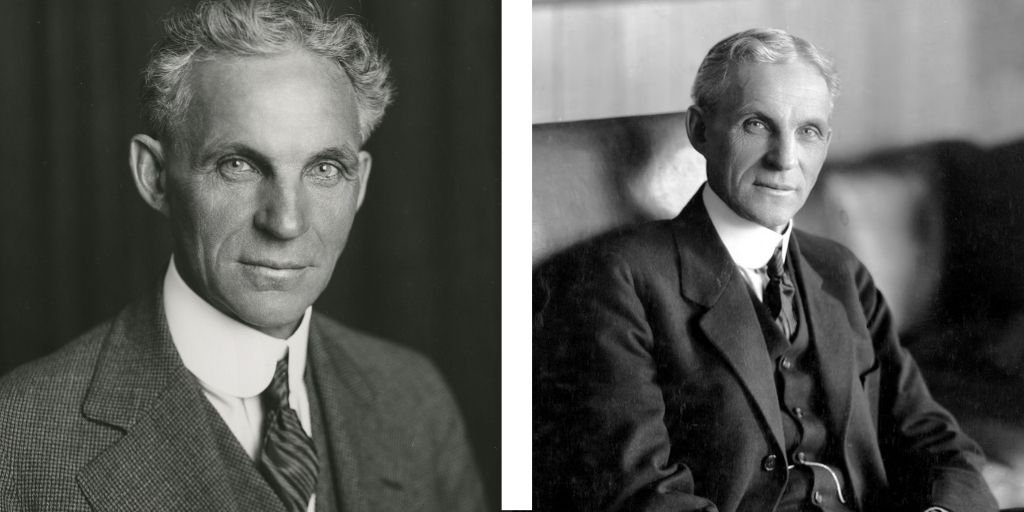
Henry Ford is one of the most recognizable names in the history of automobiles. When people think about the early days of the modern car, his name often comes to mind. But was he simply a successful businessman who built cars? Not quite. His influence reached much further.
Ford changed the way automobiles were manufactured, helped make cars affordable for ordinary families, and transformed the relationship between workers, factories, and mass production. His ideas helped shape the industrial world of the 20th century.
Born into a farming family, Ford developed a fascination with machines at a young age. He believed that technology should not belong only to wealthy people. If a useful invention could be produced efficiently, why shouldn’t ordinary families have access to it?
That simple question became one of the driving forces behind his career.
Early Life and Childhood of Henry Ford
Henry Ford was born on July 30, 1863, near Dearborn, Michigan, to William Ford and Mary Ford. His family lived on a farm, and his childhood was closely connected with agricultural life.
For many children growing up on farms during that period, machinery was simply part of everyday work. For Ford, however, machines became objects of curiosity.
He was fascinated by how things worked. Instead of seeing a broken machine as something useless, he wanted to understand what had gone wrong and how it could be repaired.
A Childhood Interest in Machinery
Ford’s interest became especially noticeable when he encountered mechanical devices outside the farm. He reportedly became interested in watches and learned to repair them. This experience gave him practical confidence with small mechanical systems.
The farm itself also exposed him to the hard physical work that machines could potentially reduce. Farming required long hours and considerable effort. Ford gradually developed the idea that machinery could make difficult tasks easier.
At the age of 16, he left the farm and moved to Detroit to work as an apprentice machinist. This was an important step because it placed him directly in the world of engineering and manufacturing.
Instead of simply reading about machines, he was learning how to build and repair them.
From Mechanic to Automobile Pioneer
During the late 19th century, automobiles were still experimental machines. Cars existed, but they were expensive, complicated, and far from being common household possessions.
Ford became interested in gasoline-powered engines and began experimenting with his own designs.
The Quadricycle
In 1896, Ford completed the Quadricycle, a lightweight gasoline-powered vehicle. It had four bicycle-like wheels and a simple engine.
By today’s standards, it was extremely basic. Yet it represented something important: Ford had demonstrated that he could design and build a working automobile.
The Quadricycle was not the beginning of the automobile, because other inventors were already working on motor vehicles. However, it was an important stage in Ford’s development as an engineer and entrepreneur.
Ford continued experimenting and eventually attracted financial support from investors.
His early business efforts were not always successful. His first automobile company eventually failed, teaching him an important lesson: building a good machine was only part of the challenge. A successful company also needed reliable production, reasonable prices, and a market of customers.
The Birth of the Ford Motor Company
In 1903, Henry Ford and a group of investors established the Ford Motor Company.
The company entered an automobile market that was still young and competitive. Ford’s ambition was different from simply producing luxury vehicles for wealthy buyers. He wanted to create a practical automobile that ordinary people could afford.
This goal eventually became closely associated with the Model T.
The Model T Changes Everything
Introduced in 1908, the Ford Model T became one of the most influential automobiles in history.
It was designed to be practical, durable, and relatively simple to operate. It was also produced in large numbers, which helped reduce its cost.
The Model T was not necessarily the most glamorous automobile. That was never really the point. Ford wanted something dependable that could handle everyday life.
Farmers, workers, business owners, and families could use it for transportation and work.
The car gradually changed American life. Communities became easier to reach, people could travel farther, and rural areas became more connected to towns and cities.
The automobile was becoming more than a luxury. It was becoming a tool for everyday life.
The Moving Assembly Line Revolution
Perhaps Ford’s greatest industrial contribution was not the car itself but the way cars were produced.
Before large-scale assembly methods became common, automobiles required considerable individual labor. Workers might spend long periods working on one vehicle.
Ford’s manufacturing system changed this process.
Breaking Production Into Steps
Instead of having workers complete large portions of a vehicle, production was divided into smaller, repeatable tasks.
The moving assembly line allowed a vehicle to move through the factory while workers performed specific jobs.
Think of it like preparing a meal in a large kitchen. One person prepares the ingredients, another cooks a particular part, another handles the presentation, and the finished meal moves forward. Each person has a defined task, allowing the entire process to become faster.
Ford applied a similar principle to automobile manufacturing.
The Highland Park plant in Michigan became famous for its large-scale production system. The approach dramatically reduced the time needed to assemble a vehicle.
This had enormous consequences.
When production became faster and more efficient, Ford could sell automobiles at lower prices. Lower prices meant more people could afford them. More customers created greater demand, which supported even larger production.
It became a powerful cycle.
How Ford Helped Make Cars Affordable
The Model T became famous partly because Ford focused on efficiency.
Ford did not want to build a small number of expensive cars. His goal was to produce large quantities of a dependable vehicle.
As manufacturing became more efficient, the price of the Model T declined significantly over time.
Mass Production and the Consumer
This approach helped introduce a new relationship between factories and consumers.
Instead of products being made individually for a small wealthy audience, factories could manufacture standardized goods for millions of people.
The idea eventually spread far beyond automobiles.
Household appliances, electronics, packaged goods, and many other products would later benefit from similar principles of large-scale production.
Ford therefore became associated with a broader industrial movement.
His factory was not simply producing cars. It was demonstrating what modern mass production could accomplish.
The Five-Dollar Day and Factory Workers
Ford’s approach to employees was one of the most discussed aspects of his business career.
In 1914, the Ford Motor Company introduced a famous wage policy that included a five-dollar daily wage for qualifying workers under certain conditions. At the time, this was unusually high compared with many industrial wages.
Why Pay Workers More?
There was a practical business reason behind the decision.
Factory work could be repetitive and demanding. Employee turnover was a major problem. Ford believed better pay could help attract and retain workers.
There was another interesting effect.
If workers earned more money, they could potentially become consumers themselves. In Ford’s broader industrial vision, workers were not only employees; they could also become customers.
However, the famous five-dollar day came with conditions and strict behavioral expectations. Ford’s company monitored aspects of workers’ lives through its Sociological Department.
This part of Ford’s legacy remains controversial because it demonstrated how much control the company attempted to exercise over employees.
His labor policies therefore contained both progressive and restrictive elements.
Henry Ford’s Business Philosophy
Ford believed strongly in efficiency, simplicity, and reducing unnecessary costs.
He disliked waste and often looked for ways to simplify manufacturing.
Standardization as a Business Tool
The Model T became strongly standardized. For many years, customers had relatively limited choices compared with modern vehicles.
The famous idea that customers could have a Model T in different colors as long as that color was black reflected Ford’s emphasis on efficiency, although the reality of Model T colors changed over its production history.
Standardization made manufacturing easier because factories did not need to constantly switch between many variations.
But there was a weakness.
As consumers became more interested in style and variety, Ford’s rigid approach began to create problems. Competitors, particularly General Motors, offered customers more choices.
Ford had mastered efficiency, but the automobile market was changing.
Fordlandia and Ambitious Experiments
Ford’s ambitions were not limited to automobiles.
One of his most unusual projects was Fordlandia, an industrial settlement established in the Brazilian Amazon during the late 1920s.
Ford wanted the project to produce rubber for his company’s operations. At the time, rubber was an important industrial material, particularly for tires.
Why Did Fordlandia Struggle?
The project faced serious difficulties.
The environment was challenging, local conditions were poorly understood, and the plantation system struggled with disease and agricultural problems. There were also cultural conflicts between Ford’s management practices and the expectations of local workers.
The experiment ultimately failed to achieve Ford’s goals.
Fordlandia is a useful reminder that even highly successful entrepreneurs can make serious mistakes when they enter unfamiliar environments.
Success in one industry does not automatically guarantee success everywhere.
Henry Ford and the American Automobile Culture
Ford’s influence reached beyond factories.
As cars became more affordable, they changed the way Americans lived.
People could travel farther for work. Families could take road trips. Businesses could reach customers in new areas. Rural communities became more connected.
The Road Becomes Part of Everyday Life
Before widespread automobile ownership, transportation depended heavily on trains, horses, streetcars, and walking.
The automobile offered something different: personal mobility.
A family no longer had to depend entirely on public transportation or railway schedules.
The growth of automobile ownership also encouraged road construction, gas stations, roadside businesses, motels, restaurants, repair shops, and other industries.
In that sense, Ford helped create an economic ecosystem around the automobile.
The effects can still be seen today.
When you drive to work, take a road trip, order something from a business outside your neighborhood, or visit another city by car, you are participating in a transportation culture that developed during the automobile revolution.
Controversies and Criticism
A complete story about Ford cannot focus only on his achievements.
His legacy includes serious controversies.
Views and Public Statements
Ford expressed antisemitic views and became associated with publications that promoted antisemitic ideas. His newspaper, the Dearborn Independent, published a series of articles known for spreading antisemitic conspiracy theories.
Ford later apologized and attempted to distance himself from some of these activities, but the episode remains an important and troubling part of his historical record.
His relationship with labor unions was also deeply complicated.
Ford Motor Company resisted unionization for many years. The company became known for strict labor practices, and tensions between management and workers could be intense.
The 1930s brought increasing labor activism across American industry, eventually leading to major changes in labor relations at Ford.
These controversies matter because historical figures should not be reduced to simple heroes or villains.
Ford transformed industry, but he also held views and supported practices that caused real harm.
Understanding both sides provides a more accurate picture.
Henry Ford’s Later Years
As Ford grew older, his role in the company changed.
His son, Edsel Ford, became president of the Ford Motor Company in 1919. Edsel helped guide the company through important periods of growth and competition.
Henry Ford, however, continued to exert significant influence.
During the 1920s and 1930s, Ford faced increasing competition. General Motors had developed a strategy based on offering different vehicles for different customers and regularly introducing new designs.
Ford’s continued attachment to the Model T eventually became a disadvantage.
The Model A
In 1927, Ford finally ended Model T production and introduced the Model A.
The new vehicle represented an effort to respond to changing consumer expectations.
But the automobile industry had already evolved. Customers increasingly wanted comfort, appearance, features, and variety.
Ford’s early success had been built around simplicity and standardization. The new market demanded flexibility.
This transition showed an important business lesson: an approach that creates success in one era may not work forever.
Henry Ford’s Death and Historical Legacy
Henry Ford died on April 7, 1947, at the age of 83.
By then, the automobile had become deeply embedded in modern society.
Ford left behind a company that would continue to grow and become one of the world’s major automobile manufacturers.
His personal legacy, however, is much larger than the Ford Motor Company.
A Lasting Industrial Influence
Ford helped popularize methods of production that influenced businesses across the world.
The assembly line became an important symbol of industrial efficiency. Standardized production became a foundation of modern manufacturing.
His ideas also contributed to the rise of consumer culture.
Affordable products could be manufactured on a huge scale, workers could earn wages and become consumers, and transportation could connect markets across increasingly large distances.
His influence can be compared to a stone thrown into a pond. The stone itself is small, but the ripples continue moving outward.
Ford’s automobile was one part of his story. The ripples reached factories, workers, roads, cities, businesses, and families.
What We Can Learn From Henry Ford Today
Why should people in the modern world still care about Henry Ford?
Because his story contains lessons about innovation, leadership, business, and human limitations.
Innovation Requires More Than a Good Idea
Ford did not invent the automobile. Instead, he helped make it practical and affordable for millions.
That distinction is important.
Innovation does not always mean creating something completely new. Sometimes it means taking an existing idea and finding a better way to produce, distribute, or use it.
Efficiency Has Limits
Ford demonstrated the power of efficiency, but his later struggles also showed its limitations.
Customers do not always want the cheapest or simplest product. They may want choice, design, comfort, personality, and new features.
A successful business must listen to its customers.
Leadership Can Have Contradictions
Ford was innovative but controversial.
He improved industrial wages in some important ways while also imposing strict controls on employees. He created economic opportunities while holding deeply troubling social views.
His life reminds us that achievement does not erase wrongdoing.
We can study someone’s accomplishments without ignoring their failures.
Technology Changes Society
Ford’s biggest lesson may be that technology rarely stays inside the factory where it is created.
Cars changed neighborhoods, employment, travel, retail, agriculture, entertainment, and family life.
Today, similar changes are happening with artificial intelligence, electric vehicles, robotics, and digital technology.
The question is not simply, “What can this technology do?”
We should also ask, “How will it change the way we live?”
Conclusion
Henry Ford was far more than a businessman who sold automobiles. He was an industrial innovator whose ideas helped reshape manufacturing and everyday life.
The Model T brought personal transportation within reach of millions, while Ford’s production methods demonstrated the enormous power of mass manufacturing. His labor policies, business decisions, and ambitious experiments also revealed the complicated nature of industrial leadership.
At the same time, his controversial political and social views cannot be ignored. A fair historical account must recognize both his achievements and his failures.
Perhaps the most valuable lesson from his life is that progress is rarely simple. A single invention can create opportunities while also producing new challenges.
Ford helped put America on wheels, but his greatest legacy may be the manufacturing system that changed how the modern world produces and consumes goods.
FAQs
1. Who was Henry Ford?
Henry Ford was an American industrialist and founder of the Ford Motor Company. He became famous for making automobiles affordable through large-scale production and for developing highly efficient assembly-line manufacturing methods.
2. What was Henry Ford best known for?
He is best known for the Model T automobile and for transforming automobile manufacturing through mass production and the moving assembly line.
3. Did Henry Ford invent the automobile?
No. Ford did not invent the automobile. Several inventors and engineers were developing motor vehicles before him. Ford’s major contribution was helping make automobiles practical, affordable, and widely available through efficient production.
4. Why was the Model T important?
The Model T was important because it was relatively affordable, durable, and practical. Large-scale manufacturing helped lower its price, allowing automobile ownership to spread among ordinary Americans.
5. What is Henry Ford’s lasting legacy?
His lasting legacy includes mass production, assembly-line manufacturing, affordable automobiles, and major changes in industrial work and consumer culture. His history also includes significant controversies that remain part of how his life is evaluated today.