Elle Macpherson: The Life, Career, Business, and Legacy of a Supermodel
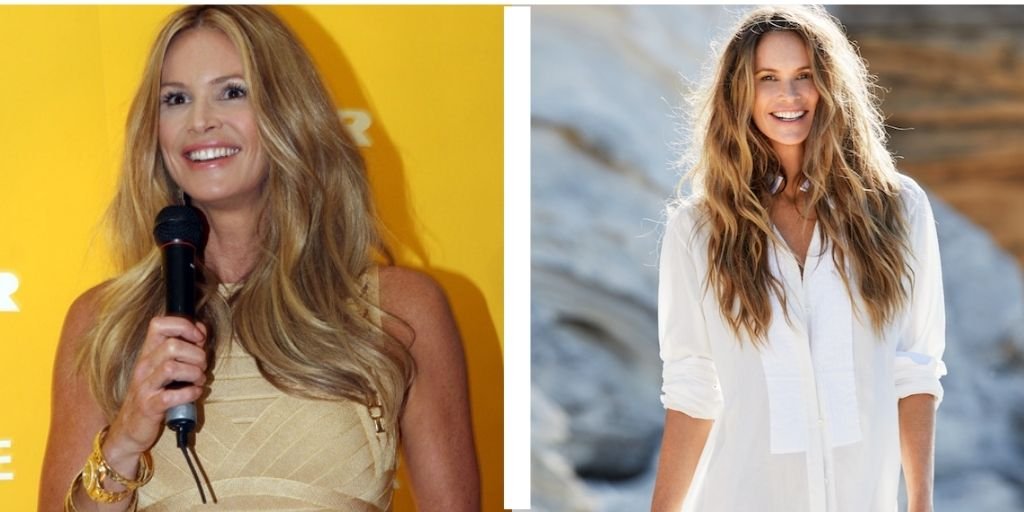
When people think about the great supermodels of the 1980s and 1990s, a few names immediately come to mind. Among them is Elle Macpherson, the Australian model whose extraordinary career transformed her from a young woman discovered in Sydney into an international fashion icon, actress, television personality, and entrepreneur.
Known around the world by the nickname “The Body,” Macpherson became much more than a familiar face on magazine covers. She built businesses, appeared in films and television, developed a distinctive personal brand, and eventually moved into the wellness industry. Her career is a fascinating example of how a model can turn visibility into long-term influence.
But what makes her story particularly interesting? It is not simply her success in fashion. It is the way she repeatedly reinvented herself.
From the catwalk to business meetings and from Hollywood to wellness, Macpherson’s career has moved through several different chapters. Her journey resembles a long-running fashion collection: each stage has a different look, but the identity behind it remains recognizable.
1. Early Life and the Beginning of a Remarkable Journey
Elle Macpherson was born Eleanor Nancy Gow in 1964 in Killara, in Sydney, New South Wales, Australia. Before international fame entered her life, she was simply a young Australian with ambitions that were not initially centered on modeling. The National Portrait Gallery of Australia records that she appeared in a memorable TAB Cola television advertisement at the age of 18.
That advertisement proved to be an important turning point.
The fashion industry can sometimes work like a doorway that appears unexpectedly. You may not be looking for it, but once it opens, an entirely different world becomes visible. That was essentially what happened to Macpherson.
Her appearance and natural presence quickly attracted attention. She eventually moved toward international modeling opportunities, particularly in the United States, where the fashion and magazine industries offered enormous possibilities.
For a young Australian entering an intensely competitive international market, establishing herself was no small achievement. The modeling business was already filled with talented women from around the world. Yet Macpherson had something distinctive: her height, athletic appearance, confident personality, and approachable smile helped her stand out.
Rather than attempting to disappear into the crowd, she gradually learned to make her individuality part of her appeal.
That lesson would become extremely important later in her career.
2. Rising to International Supermodel Status
During the 1980s, Macpherson’s profile grew rapidly. She appeared on major magazine covers, worked with leading fashion photographers, and became associated with some of the world’s most recognizable fashion brands.
Her breakthrough was particularly significant because she was part of a generation that helped redefine what a successful model could become.
Macpherson was not limited to runway appearances. Her image became valuable across magazines, advertising campaigns, television, and commercial partnerships. The National Portrait Gallery describes her as one of the leading supermodels of her era, noting her work with high-end designers, advertising campaigns, and major magazine covers.
Her career also benefited from the growing influence of celebrity culture. Models were no longer simply anonymous figures presenting clothing. The most successful names were becoming recognizable personalities in their own right.
Macpherson understood this shift.
She developed an identity that extended beyond individual photographs. Her name itself became a brand.
This was an important distinction. A successful model might earn money from individual assignments, but a recognizable personality could potentially build businesses around her reputation.
Macpherson eventually did exactly that.
3. Why She Became Known as “The Body”
Few celebrity nicknames become as closely connected to a person’s professional identity as “The Body” became associated with Elle Macpherson.
The nickname was popularized by Time magazine during the 1980s. The National Portrait Gallery notes that a 1986 Time cover story titled “The Big Elle” helped cement the label.
The phrase was memorable because it captured something visually obvious about her modeling image: she was tall, athletic, confident, and physically distinctive.
But there is another side to the story.
A nickname can be both an advantage and a limitation. It can make someone instantly recognizable, but it can also reduce a complicated person to one characteristic.
Macpherson eventually used the label differently. Rather than allowing it to remain simply a description of her appearance, she incorporated it into her business identity.
That was clever branding.
The same phrase that initially described her physical appearance eventually became connected with products, companies, and commercial projects.
In other words, Macpherson learned how to turn public perception into a professional asset.
That ability would become one of the most important themes of her career.
4. Sports Illustrated and a New Level of Fame
Macpherson’s association with the Sports Illustrated Swimsuit Issue became one of the defining chapters of her modeling career.
She appeared on the cover multiple times, eventually earning a record five covers according to the National Portrait Gallery.
The significance of those appearances went far beyond individual magazine sales.
At the time, the swimsuit issue had become a major cultural event. Appearing on its cover could dramatically increase a model’s public recognition. For Macpherson, repeated appearances helped establish her as one of the best-known models of her generation.
Her popularity also demonstrated that the traditional boundaries between fashion, entertainment, sports culture, and celebrity were becoming increasingly blurred.
Macpherson’s image was no longer restricted to fashion magazines.
People who did not regularly follow runway fashion knew who she was.
That broader recognition gave her an enormous advantage when she later entered other industries.
Her Sports Illustrated success also contributed to the longevity of her public image. While many models enjoy brief periods of extraordinary attention, Macpherson continued to remain relevant long after her initial breakthrough.
That longevity is one of the clearest measures of her influence.
5. From Modeling to Acting in Hollywood
Like several major models of her generation, Macpherson eventually explored acting.
She appeared in films including Sirens, The Mirror Has Two Faces, Batman & Robin, The Edge, and South Kensington. She also made television appearances, including a recurring role on the popular sitcom Friends. The National Portrait Gallery lists these acting and television credits among the major stages of her career.
Her Hollywood journey was interesting because acting requires a different set of skills from modeling.
A photograph may depend on posture, expression, styling, lighting, and a carefully controlled moment. Acting requires sustaining a character over time, responding to other performers, and communicating emotion through dialogue and behavior.
Macpherson’s film career therefore represented an opportunity to expand her public identity.
She was no longer simply the woman on a magazine cover. She was becoming a recognizable entertainment personality.
Her acting career did not replace modeling, but it added another layer to her professional life.
Her appearance in Batman & Robin, for example, placed her alongside a major Hollywood cast, while her role in The Edge gave her another opportunity to work within mainstream cinema.
Television also became part of the picture.
These experiences helped Macpherson develop a broader understanding of entertainment, production, and audience engagement.
6. Building a Business Empire Beyond Fashion
Perhaps the most impressive part of Macpherson’s story is what happened after she had already become famous.
She did not simply continue modeling indefinitely. Instead, she began transforming her name into a business platform.
In 1989, she became involved in licensing her name and image for commercial products. Her work eventually led to the development of Elle Macpherson Intimates, a lingerie business that became a major part of her entrepreneurial identity. WelleCo’s own account of her career describes the lingerie venture as an early example of her move from modeling into business.
This was significant because celebrity licensing was less common and less developed than it is today.
Macpherson was effectively taking an idea that many people now understand intuitively — turning a personal brand into a commercial ecosystem — and applying it at an early stage.
She did not want her career to depend entirely on being hired by other companies.
Instead, she increasingly wanted to participate in the ownership and development of products.
That difference matters.
A model is often paid for an appearance.
An entrepreneur can help build something that continues to exist after the photo shoot is finished.
Macpherson increasingly moved toward the second role.
Her businesses became extensions of her public identity, while her public identity gave those businesses immediate recognition.
7. Elle Macpherson Intimates and the Power of Personal Branding
The development of Elle Macpherson Intimates was particularly important because it connected her modeling experience directly to product design and retail.
She understood the lingerie market from the perspective of someone who had spent years working with fashion professionals, photographers, stylists, and designers.
That experience gave her useful insight into what consumers might want.
The idea was also commercially smart.
Instead of merely putting her photograph beside an unrelated product, the brand connected her personal identity with the product itself.
This approach helped establish a business model that would later become common among celebrities.
Her brand was built around several ideas: femininity, confidence, glamour, comfort, and an accessible form of luxury.
The result was a business that helped demonstrate that her value was not limited to appearing in advertising campaigns.
She could participate in creating the product, shaping its presentation, and developing its identity.
That shift from model to brand builder is arguably one of the most important aspects of her professional legacy.
8. Television Hosting and Production
Macpherson also expanded her career into television hosting and production.
She became associated with programs including Britain & Ireland’s Next Top Model and Fashion Star. The National Portrait Gallery identifies her as both a host and executive producer on television projects.
Television was a natural extension of her experience.
She understood fashion, had spent years working in front of cameras, and was already comfortable in celebrity environments.
But hosting involves another skill: communication.
A presenter has to guide an audience through a program, interact with contestants or guests, and maintain energy even when the camera is not focused solely on them.
Her involvement in fashion television also allowed her to occupy a different position within the industry.
Instead of being evaluated purely as a model, she could become someone helping shape the conversation around modeling.
That represented another step in her professional evolution.
Her career was becoming less about being the subject of the fashion industry and more about becoming an active participant in it.
9. Entering the Wellness World with WelleCo
One of the biggest later chapters in Macpherson’s career began with WelleCo, the Australian-born wellness company she founded in 2014.
According to WelleCo, the company grew out of Macpherson’s personal interest in wellness and was founded around the idea of supporting people’s broader approach to health and well-being.
The company’s flagship product became The Super Elixir, a nutritional greens product.
This represented another major transformation.
Fashion had introduced Macpherson to the public through appearance. Wellness gave her an opportunity to talk about lifestyle, nutrition, energy, and personal well-being.
Her role was not simply promotional. WelleCo identifies her as its founder and describes the company as a result of her personal wellness journey.
Macpherson’s transition into wellness also reflected a broader cultural change.
Consumers increasingly began to view health and beauty as connected rather than completely separate subjects.
The modern beauty industry is no longer just about lipstick, clothing, or skincare. It increasingly includes nutrition, fitness, mental well-being, sleep, lifestyle, and self-care.
Macpherson’s career moved in parallel with that transformation.
10. Personal Growth, Motherhood, and Reinvention
Behind the glamorous public image, Macpherson’s life has also included personal challenges and major changes.
She became a mother to two sons, Flynn and Cy, and has spoken publicly about the difficulty of balancing motherhood, relationships, business, and public expectations. WelleCo’s published material identifies her sons and discusses her reflections on motherhood and personal growth.
This is an important part of understanding her later career.
Fame can look effortless from the outside. A photograph may show confidence, elegance, and success, while the reality behind it can involve pressure, expectations, mistakes, and difficult decisions.
Macpherson’s later public discussions have increasingly focused on personal transformation and finding a deeper sense of purpose.
Her autobiography, elle, explores her rise to fame as well as personal transformation and challenges. WelleCo describes the book as a reflection on her life, career, adversity, and the lessons she has learned.
This later perspective adds depth to her story.
The young model who once became famous for her appearance eventually became someone speaking about identity, well-being, relationships, resilience, and personal fulfillment.
That is a very different conversation.
11. Elle Macpherson’s Lasting Influence and Legacy
So, what is Elle Macpherson’s real legacy?
Is it her modeling career?
Her Sports Illustrated covers?
Her nickname?
Her businesses?
Her acting?
Her television work?
The answer is probably all of these things together.
Macpherson’s greatest achievement may be the way she repeatedly expanded the definition of what a model could become.
She entered the industry at a time when models were often viewed primarily as visual personalities. Over the following decades, she helped demonstrate that a model could become a business owner, product creator, television host, producer, actress, and wellness entrepreneur.
Her career also illustrates the power of long-term personal branding.
She did not build her reputation around one product alone. Instead, she created a recognizable identity that could travel across different industries.
That is similar to building a bridge: the fashion industry was one side, while business, entertainment, and wellness became the other side. Her personal brand was the structure connecting them.
Her story also offers a lesson about reinvention.
The world that made Macpherson famous in the 1980s is very different from the media environment of today. Social media, digital advertising, influencer marketing, and direct-to-consumer businesses have changed how celebrities communicate with audiences.
Yet the basic principle remains surprisingly similar.
People connect with recognizable identities.
Macpherson understood that principle long before social media existed.
A Career Built on Adaptability
Perhaps the most valuable lesson from her career is adaptability.
Fashion trends change.
Magazine culture changes.
Television changes.
Consumer behavior changes.
Business models change.
But the ability to recognize change and respond to it can keep a career relevant.
Macpherson’s professional journey demonstrates exactly that.
She moved from modeling to licensing, from licensing to product development, from entertainment to entrepreneurship, and eventually toward wellness.
Each stage built upon the previous one.
The Meaning of “The Body” Today
Interestingly, the nickname that once focused almost entirely on physical appearance has acquired a broader meaning in the context of Macpherson’s later work.
Her wellness career has emphasized the idea that feeling well is part of looking and living well.
That does not erase the importance of her modeling achievements. Instead, it gives them another interpretation.
Her career began with the public fascination with her appearance, but it developed into a much wider conversation about identity and personal well-being.
Why Her Story Still Matters
For younger audiences, Macpherson’s story can be viewed as an early example of personal branding.
Before Instagram, TikTok, and modern influencer culture, she was already turning public recognition into commercial opportunities.
For business-minded readers, her career demonstrates the importance of owning part of the value you create.
For fashion enthusiasts, she remains one of the defining supermodels of her generation.
And for general audiences, her story is ultimately about reinvention.
A person does not have to remain trapped in the role that first made them successful.
That may be the most inspiring part of all.
Conclusion
Elle Macpherson’s career is much larger than the image of a famous supermodel. From her early days in Australia to international magazine covers, Hollywood appearances, television work, fashion businesses, and wellness entrepreneurship, she has continually found ways to evolve.
Her success was built on appearance, but it was sustained by adaptability, business awareness, and an ability to turn attention into opportunity.
For decades, she has remained a recognizable figure because she understood something many people in entertainment eventually discover: fame can open a door, but what you build after walking through it determines how long your influence lasts.
Macpherson’s journey from model to entrepreneur is therefore not simply a story about beauty or celebrity. It is a story about reinvention, personal branding, ambition, and the willingness to create a new chapter when an old one has reached its natural end.
Frequently Asked Questions
1. Who is Elle Macpherson?
Elle Macpherson is an Australian model, entrepreneur, actress, television host, and wellness businesswoman. She became internationally famous as one of the leading supermodels of the 1980s and 1990s and was famously nicknamed “The Body.”
2. Why is Elle Macpherson called “The Body”?
The nickname became widely associated with Macpherson after a Time magazine feature in the 1980s. Her tall, athletic appearance and successful modeling career helped make the name an enduring part of her public identity.
3. How many times did Elle Macpherson appear on the Sports Illustrated Swimsuit Issue cover?
The National Portrait Gallery of Australia states that Macpherson appeared on the cover of the Sports Illustrated annual swimsuit edition a record five times.
4. What businesses has Elle Macpherson been involved with?
Her entrepreneurial work has included Elle Macpherson Intimates, beauty and body-care products, and WelleCo, the wellness company she founded in 2014.
5. What is Elle Macpherson doing today?
Macpherson continues to be associated with wellness, entrepreneurship, fashion, and personal development. She remains closely connected with WelleCo and has also shared reflections on her life and experiences through her autobiography elle.