
David Letterman: The Life, Career, and Lasting Legacy of a Television Icon
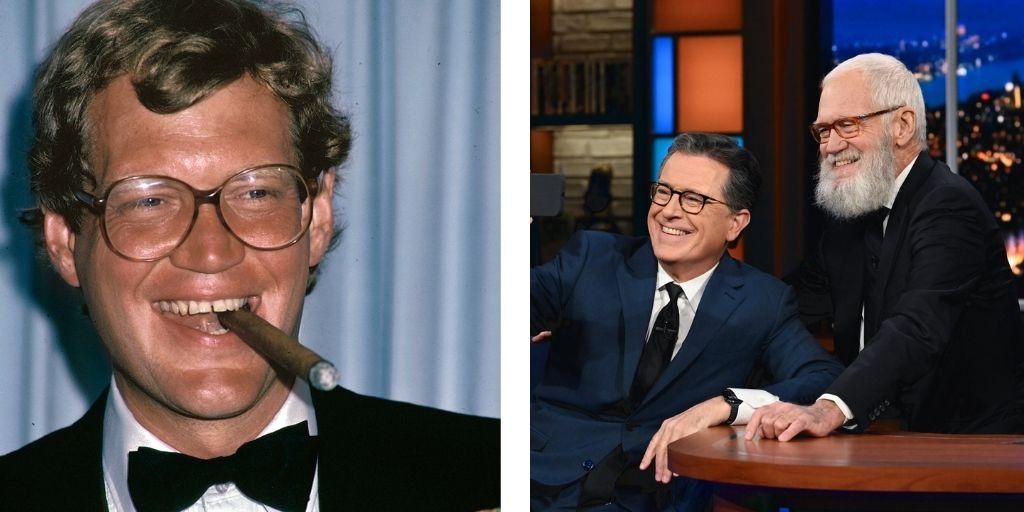
David Letterman is one of those television personalities who changed the way audiences think about late-night entertainment. With his dry delivery, unusual jokes, awkward pauses, strange characters, and willingness to make fun of television itself, he created a style that was difficult to imitate and even harder to replace.
For decades, viewers invited him into their homes through programs such as Late Night with David Letterman and Late Show with David Letterman. Yet his career was about much more than delivering monologues behind a desk. He became a cultural figure, a comedian, an interviewer, a producer, and an influential voice in American entertainment.
So, what made Letterman different? Perhaps it was the fact that he never seemed completely comfortable following the rules of television. Instead of simply presenting a polished show, he often exposed the machinery behind it. The result was television that could feel spontaneous, unpredictable, and surprisingly human.
Early Life and the Road to Comedy
David Michael Letterman was born on April 12, 1947, in Indianapolis, Indiana. His father, Harry Joseph Letterman, worked as a florist and was also known for his sense of humor and storytelling. His mother, Dorothy, worked as a church secretary.
Growing up in Indianapolis, Letterman developed an early interest in broadcasting. He attended Broad Ripple High School before studying at Ball State University in Muncie, Indiana. While at college, he became involved with the university’s student radio station and television station.
Those early broadcasting experiences were important because they allowed him to experiment with his personality. Instead of simply reading information, he discovered that he enjoyed entertaining people through unexpected comments and unconventional observations.
After graduating from Ball State, Letterman worked in local television and radio. His career did not immediately resemble the glamorous path associated with national television stars. He worked as a weather presenter and announcer, gradually developing the sarcastic style that would later become his trademark.
His weather reports were especially memorable because he refused to treat the job entirely seriously. He might deliver the forecast while making absurd comments or creating ridiculous weather-related situations.
In hindsight, these local broadcasts were like a comedian learning to play an instrument. The more he practiced, the more confident he became with timing, pauses, and audience reactions.
The Move to Los Angeles and the Big Break
Like many aspiring entertainers, Letterman eventually moved to Los Angeles. He began performing stand-up comedy and writing material for television.
His career took an important turn when he appeared on The Tonight Show Starring Johnny Carson. Carson was one of the most respected figures in American late-night television, and appearing on his program could dramatically increase a comedian’s profile.
Letterman’s appearances demonstrated that his humor was unusual. He did not rely only on conventional punchlines. Instead, he could create comedy from awkwardness, silence, absurd observations, and interactions with the host.
Johnny Carson became an important supporter of Letterman’s career. The exposure helped Letterman gain recognition throughout the entertainment industry.
Soon, television executives began to see something distinctive in him. He was not simply another comedian hoping to become a traditional talk-show host. He had a personality that could potentially redefine what a late-night program looked like.
Late Night with David Letterman Changes the Formula
In 1982, Letterman began hosting Late Night with David Letterman on NBC. The program followed The Tonight Show and initially had a younger, more experimental identity.
Traditional talk shows generally followed a predictable structure: opening monologue, celebrity guests, musical performances, and a polished conversation.
Letterman played with that structure.
He might interrupt a segment with a bizarre stunt, send a staff member into an unusual situation, or turn an ordinary object into the center of a joke. The show often seemed to be asking, “What if we stopped pretending television had to behave normally?”
That approach attracted a dedicated audience.
One of the program’s most important innovations was its use of recurring comedy features. Segments such as Stupid Pet Tricks, Stupid Human Tricks, and various Top Ten lists became recognizable parts of popular culture.
The humor was often intentionally silly. But that was precisely the point.
Letterman understood that comedy did not always require an elaborate setup. Sometimes an ordinary person doing something ridiculous could be more entertaining than an expensive production.
His relationship with the audience also felt different. He could acknowledge that a joke had failed, mock the studio, question a segment, or laugh at his own mistakes. Instead of hiding imperfections, he sometimes turned them into the entertainment.
A Unique Style of Humor
Letterman’s comedy is difficult to describe with one word. It included sarcasm, irony, absurdity, observational humor, satire, physical comedy, and deliberate awkwardness.
One of his greatest strengths was timing.
He could allow a pause to become part of the joke. He could look toward the camera after something unexpected happened and let the audience understand the humor without explaining it.
This technique made viewers feel as though they were participating in the joke.
His comedy also frequently challenged the idea of what a host was supposed to do. Instead of always appearing confident and polished, Letterman sometimes acted confused, annoyed, curious, or amused by the chaos surrounding him.
That unpredictability became part of his appeal.
Imagine a traditional talk show as a carefully decorated dining room where everything is arranged perfectly. Letterman’s show was more like a kitchen during dinner service: things were still happening, people were moving around, and occasionally something went wrong. Somehow, that made it more entertaining.
The Letterman Top Ten Tradition
Among Letterman’s most recognizable contributions was the Top Ten list.
The segment became a recurring feature in which Letterman and his writers presented ten humorous reasons, explanations, possibilities, or observations based on a particular topic.
The format was simple but remarkably flexible.
It could address politics, entertainment, everyday life, celebrities, holidays, television, sports, or completely ridiculous subjects. The countdown structure gave the jokes a built-in rhythm and encouraged anticipation.
The Top Ten format eventually became one of the most recognizable elements of Letterman’s television identity.
It also demonstrated his ability to turn a simple concept into a cultural tradition. The segment was easy to understand, easy to adapt, and capable of producing memorable punchlines.
The NBC and CBS Era
Letterman’s career reached a major turning point in 1993 when he left NBC and began hosting Late Show with David Letterman on CBS.
The move was significant because Letterman had been widely associated with NBC’s late-night programming. His departure created one of television’s most talked-about transitions.
At CBS, he competed directly with The Tonight Show, now hosted by Jay Leno.
The competition became a major television story during the 1990s. Both hosts had large audiences, but their personalities and comedic approaches were different.
Leno generally represented a more traditional late-night format, while Letterman’s program retained much of the strange, unpredictable spirit that had characterized his earlier work.
The CBS program became a major institution in American television.
Letterman interviewed politicians, actors, musicians, athletes, authors, filmmakers, comedians, and other public figures. Some conversations were serious, while others became intentionally chaotic.
The host’s relationship with guests could be unpredictable. Sometimes he asked thoughtful questions. At other times, he pushed a conversation into unusual territory simply to see what would happen.
That unpredictability became one of the reasons people continued watching.
Memorable Guests and Interviews
Letterman’s guest list over the years reads like a history of American popular culture.
He interviewed major Hollywood stars, musicians, political leaders, athletes, comedians, writers, and cultural figures. Some guests appeared repeatedly, developing a familiar relationship with the host and audience.
One of the most interesting aspects of his interviews was that Letterman did not always behave like a conventional interviewer.
He could be genuinely curious, but he could also be skeptical. He sometimes challenged celebrities rather than simply promoting their latest project.
That created moments that felt more authentic than the standard publicity interview.
His conversations with musicians were particularly memorable because the program could combine discussion with live performance. Actors could promote films, comedians could perform, and public figures could reveal aspects of themselves that audiences did not always see elsewhere.
Letterman’s interviewing style also evolved with age. As his career progressed, he appeared increasingly interested in meaningful conversations rather than simply generating jokes.
Letterman and the Art of the Interview
A good interviewer does not necessarily need to dominate a conversation. Sometimes the best approach is to create enough space for the guest to reveal something unexpected.
Letterman became increasingly skilled at doing this.
He could ask a seemingly ordinary question and then follow the answer into an interesting story. His reactions—sometimes amused, sometimes skeptical, sometimes completely deadpan—also became part of the interview.
There were moments when he appeared genuinely impressed by a guest. There were other times when he clearly did not understand or appreciate the subject.
That honesty was useful.
Audiences could sense that Letterman was not simply following a script designed to make everyone look perfect.
His interviews could therefore feel like conversations rather than advertisements.
Personal Life and Public Scrutiny
Although Letterman spent much of his professional life discussing celebrities and public figures, his own private life eventually became a subject of intense media attention.
Letterman married Regina Lasko in 2009, although the couple had been together for many years before their marriage. They have one son, Harry.
His personal life became especially newsworthy in 2009 when he publicly discussed a blackmail attempt involving revelations about relationships with women who had worked around his television programs.
Letterman addressed the situation publicly on his program, using his familiar style of humor while acknowledging the seriousness of what had happened.
The episode demonstrated one of the challenges of living as a highly recognizable public figure: eventually, the person behind the television persona becomes part of the story.
Letterman chose to discuss the matter rather than allow speculation to completely control the narrative.
Retirement from the Late Show
After more than three decades of late-night television, Letterman announced his retirement from Late Show with David Letterman.
His final episode aired on May 20, 2015.
The farewell was emotional but remained consistent with Letterman’s personality. The program celebrated his career while avoiding the kind of overly sentimental presentation that might have felt unnatural for him.
His retirement marked the end of an important chapter in American television.
For generations of viewers, Letterman had been part of the nightly routine. His departure was not simply the cancellation of a program. It represented the closing of an era in which late-night hosts could become major cultural personalities.
Stephen Colbert succeeded him as host of The Late Show.
Although the format continued, Letterman’s particular style could not simply be duplicated.
Life After Late-Night Television
Retirement did not mean Letterman disappeared from public life.
Instead, he found new ways to use his personality and curiosity.
One of the most significant developments was My Next Guest Needs No Introduction with David Letterman, a Netflix interview series that premiered in 2018.
The program offered a different version of Letterman.
Rather than sitting behind a traditional late-night desk and moving rapidly between jokes and segments, he could spend much more time with individual guests.
The series featured prominent personalities from entertainment, politics, sports, business, and culture.
The longer format suited the older Letterman. He appeared less interested in rushing toward the next punchline and more interested in allowing conversations to develop.
That change revealed something important about his career.
Letterman was never only a comedian. Curiosity had always been one of his strongest qualities. As he grew older, that curiosity became increasingly visible.
Letterman’s Influence on Modern Comedy
It is difficult to discuss modern late-night television without considering Letterman’s influence.
Many hosts who came after him adopted aspects of his approach: unusual comedy segments, self-aware humor, unconventional interviews, absurd sketches, and a willingness to make the host part of the joke.
His influence extended beyond talk shows.
Comedians learned from his use of awkward pauses and unexpected reactions. Writers learned that ordinary situations could become comedy. Television producers saw that audiences could appreciate formats that were less polished and more experimental.
Letterman also helped establish the idea that a host could have a distinctive personality rather than simply serving as a presenter.
That legacy remains visible in contemporary entertainment.
His Relationship with Comedy and Aging
One fascinating aspect of Letterman’s later career is the way his humor changed as he aged.
When he was younger, much of his comedy was built around disruption. He enjoyed breaking the rhythm of television and surprising viewers.
As he grew older, his public persona became more reflective.
He still enjoyed jokes, but he also seemed increasingly comfortable discussing life, history, politics, creativity, and personal experiences.
That evolution is natural.
A comedian’s perspective often changes with age. The subjects that seemed important at 30 may look very different at 60 or 70.
Letterman demonstrated that an entertainer does not have to remain frozen in the style that originally made them famous.
David Letterman’s Enduring Legacy
What is Letterman’s greatest contribution?
There is no single answer.
For some viewers, it is the Top Ten list. For others, it is his unusual interviews. Some remember his absurd comedy segments, while others remember the famous rivalry between his program and The Tonight Show.
But perhaps his biggest contribution was giving television permission to be weird.
He showed that audiences could enjoy imperfection. A host did not always have to appear completely prepared. A joke could fail. A guest could surprise the host. A segment could go in an unexpected direction.
And sometimes, that uncertainty was exactly what made the show work.
Letterman’s career can therefore be viewed as a bridge between traditional television and the more self-aware comedy that became increasingly common in later decades.
He helped audiences become comfortable with hosts who were willing to expose the artificial nature of television.
That is a remarkable achievement.
Why David Letterman Still Matters
Even after leaving traditional late-night television, Letterman’s work remains relevant because the qualities that defined his career are not tied to one particular decade.
Curiosity is timeless.
Good storytelling is timeless.
A well-timed joke is timeless.
And the ability to laugh at yourself never really goes out of style.
Letterman’s career also offers an interesting lesson about success. He did not become influential by fitting perfectly into an established formula. He became influential by developing a recognizable voice and trusting it.
That voice changed over time, but it remained identifiable.
For longtime fans, watching Letterman today can feel like reconnecting with an old friend who has become a little more thoughtful but has not completely lost his mischievous side.
For younger audiences discovering him for the first time, his work provides a useful window into how American television comedy evolved.
Conclusion
David Letterman’s career is much larger than a collection of late-night episodes. From local broadcasting in Indiana to national television, from experimental comedy to long-form interviews, he continually reinvented what a television personality could be.
His humor was sometimes strange, sometimes uncomfortable, and often brilliantly simple. His interviews could be funny one night and surprisingly meaningful the next.
Most importantly, he demonstrated that authenticity can be more entertaining than perfection. He treated television like a playground rather than a rigid set of rules, and generations of comedians and hosts benefited from that approach.
Whether remembered for his sharp wit, unusual comedy, famous guests, Top Ten lists, or relaxed later interviews, Letterman’s influence is firmly established. His career remains a fascinating story of creativity, reinvention, and the power of having a voice that sounds unmistakably like your own.
FAQs About David Letterman
1. Who is David Letterman?
David Letterman is an American comedian, television host, writer, and producer best known for hosting Late Night with David Letterman on NBC and Late Show with David Letterman on CBS. He became one of the most influential figures in American late-night television.
2. When did David Letterman retire from late-night television?
Letterman retired from The Late Show in 2015. His final episode aired on May 20, 2015, ending a late-night hosting career that had lasted more than three decades.
3. What made David Letterman’s comedy different?
His comedy combined sarcasm, irony, absurdity, awkwardness, observational humor, and unexpected situations. Rather than always presenting polished entertainment, he often made the imperfections of television part of the joke.
4. What is David Letterman doing after retirement?
Letterman continued working in entertainment after leaving traditional late-night television. His Netflix series My Next Guest Needs No Introduction with David Letterman allowed him to conduct longer and more relaxed interviews with notable guests.
5. Why is David Letterman considered influential?
Letterman helped change the structure and tone of late-night comedy. His unconventional segments, self-aware humor, distinctive interviews, and willingness to experiment influenced later comedians, television hosts, writers, and entertainment programs.