George Washington: The Life, Leadership, and Legacy of America’s First President
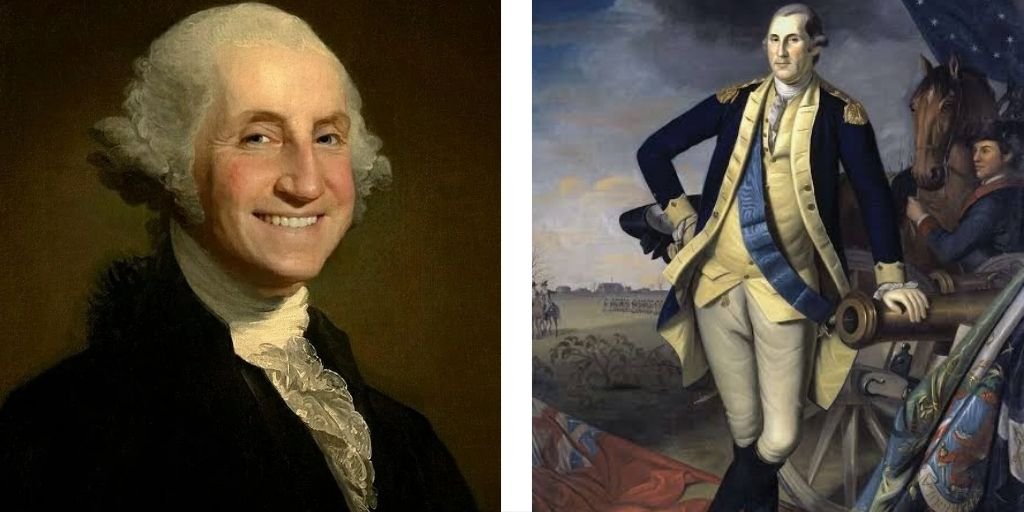
George Washington remains one of the most recognizable figures in American history. He is remembered as the commander who helped lead the American colonies to independence, the statesman who helped establish a new government, and the first president of the United States. But behind the familiar portrait on the dollar bill was a complicated man who lived through a period of enormous political and social change.
Washington did not begin life as a national hero. He was born into a Virginia farming family and gradually built his reputation through military service, land ownership, political involvement, and leadership. His journey from a young surveyor to the head of a revolutionary army and eventually the nation’s first president was extraordinary.
What makes his story particularly interesting is that the United States was still an experiment when Washington became president. There was no established tradition for how a president should behave. In many ways, he was helping write the rulebook while performing the job. His choices influenced the presidency for generations.
Early Life and Family Background
George Washington was born on February 22, 1732, in Westmoreland County, Virginia, then part of the British colonies in North America. He was the eldest child of Augustine Washington and Mary Ball Washington’s surviving children from their marriage.
His family belonged to Virginia’s landowning society, although the Washingtons were not among the wealthiest families in the colony. His father owned plantations and was involved in agricultural activities, including tobacco production. The family also had connections to local business and land development.
Washington’s childhood was shaped by the world of colonial Virginia. Agriculture dominated the economy, and social status was strongly connected to land ownership. Young George developed an interest in mathematics, surveying, and practical skills rather than receiving the classical education that some wealthy young men enjoyed.
When Washington was still a teenager, his father died. This changed the family’s circumstances and limited some of the opportunities available to him. Instead of attending college in England, as some young men from prominent families did, Washington began developing practical experience.
His early work as a surveyor was particularly important. Surveying took him into the Virginia frontier, where he learned about geography, land, settlements, and the challenges faced by colonists moving westward. These experiences helped develop the confidence and physical endurance that would later serve him in military campaigns.
Washington’s Military Beginnings
Washington’s military career began long before the American Revolution.
As a young man, he became involved with Virginia’s colonial militia. In the 1750s, tensions between Britain and France over control of North American territory erupted into conflict. Washington was sent into the frontier as a young officer.
His first major military experience came during the French and Indian War. In 1754, Washington participated in a confrontation near present-day Pittsburgh that helped trigger wider fighting between British and French forces and their Native American allies.
The experience was difficult and sometimes embarrassing. Washington’s early military decisions were not always successful, but they gave him valuable lessons about leadership, discipline, logistics, and the realities of warfare.
He later served with British forces and gained additional experience during campaigns against French and Indigenous forces. Although his early career contained mistakes, Washington developed a reputation for courage and determination.
The French and Indian War also taught him something that would become important later: military strength alone does not guarantee success. Armies need supplies, reliable communication, trained personnel, strong leadership, and political support.
After the war, Washington returned to Virginia and focused on his estate, Mount Vernon. Yet military experience had already placed him on a path toward national prominence.
Life at Mount Vernon
Washington’s home, Mount Vernon, became an important part of his identity.
Located along the Potomac River in Virginia, Mount Vernon was a large agricultural estate. Washington managed plantations, livestock, crops, workers, and business affairs. The estate was also dependent on the labor of enslaved people, a fact that remains an essential part of any honest account of his life.
Washington married Martha Custis in 1759. Martha was a wealthy widow with two children from her previous marriage. The marriage significantly increased Washington’s financial resources and social standing.
Although Washington and Martha did not have biological children together, he became a stepfather figure to her children and remained closely connected to the Custis family.
Life at Mount Vernon presented Washington as a gentleman farmer and member of Virginia’s political elite. He served in Virginia’s House of Burgesses and became increasingly interested in colonial political affairs.
At first, Washington did not necessarily seek complete separation from Britain. Like many colonists, he was concerned about British policies and taxation but remained connected to British political and cultural traditions.
As tensions increased, however, his position changed.
Washington and the American Revolution
By the early 1770s, relations between Britain’s government and the American colonies had deteriorated dramatically.
Events such as the Boston Massacre, the Boston Tea Party, and the Coercive Acts contributed to growing resistance. Many colonists believed Britain was imposing policies without giving them adequate political representation.
Washington attended the First and Second Continental Congresses as a Virginia delegate. In 1775, after fighting began at Lexington and Concord, Congress faced a crucial decision: who should command the newly organized Continental Army?
Washington was selected as commander in chief.
His appointment made sense for several reasons. He had military experience, came from Virginia, and had a reputation that could help unite different colonies behind a common cause. He also appeared willing to serve without demanding excessive personal power.
Yet the position was extremely difficult.
The Continental Army suffered from shortages of food, clothing, weapons, ammunition, and trained soldiers. Enlistments often lasted for limited periods, and soldiers sometimes left when their terms ended.
Washington faced the enormous task of turning a collection of colonial forces into an effective army.
His leadership would be tested repeatedly.
The Revolutionary War and Washington’s Leadership
Washington’s military career during the Revolution included both victories and serious defeats.
One of his earliest major successes came in December 1776, when he crossed the Delaware River and attacked Hessian forces at Trenton, New Jersey. The victory helped restore morale at a time when the revolutionary cause appeared to be in serious danger.
A few days later, Washington achieved another important success at Princeton.
These victories demonstrated that Washington could take calculated risks and use surprise effectively. More importantly, they helped keep the revolutionary army alive.
The war, however, was far from easy.
Washington suffered defeats around New York and Philadelphia. British forces occupied major cities, while American troops struggled through harsh conditions. The winter at Valley Forge became particularly famous because soldiers endured cold, hunger, disease, and inadequate supplies.
Yet Valley Forge also became a period of military development. Training under Baron Friedrich Wilhelm von Steuben helped improve discipline and battlefield organization.
Washington’s greatest strength may not have been an extraordinary record of battlefield victories. Instead, his importance came from persistence. He kept the army together despite repeated setbacks.
The eventual alliance with France proved critical. French military assistance, naval support, money, and troops strengthened the American cause.
In 1781, American and French forces surrounded the British army under General Charles Cornwallis at Yorktown, Virginia. A French naval victory helped prevent British reinforcement or escape by sea. Cornwallis surrendered in October.
The fighting did not immediately end everywhere, but Yorktown marked a decisive turning point.
Washington had helped lead the revolutionary forces through years of uncertainty.
From General to National Leader
Winning the war created a new challenge: what kind of country would the former colonies become?
Washington returned to Mount Vernon after the war, apparently hoping to resume private life. His resignation as commander in chief impressed many people because he voluntarily gave up military authority.
This decision became part of his reputation as a leader who did not want to become a military dictator.
But the new republic faced serious problems. The Articles of Confederation created a national government that was too weak to deal effectively with many economic, political, and security issues.
Washington became increasingly concerned about the country’s future.
In 1787, delegates gathered in Philadelphia for the Constitutional Convention. Washington was chosen to preside over the meeting.
The resulting Constitution created a stronger federal government while dividing power among different branches.
Washington supported the new framework and became one of the most important figures associated with its adoption.
When the Constitution was ratified and the first presidential election took place, Washington was the obvious choice.
In 1789, he became the first president of the United States.
The First Presidency
Washington’s presidency was unlike any that followed because there was no established presidential tradition.
How should the president dress? How formal should meetings be? How should the president communicate with Congress? Could the president reject legislation? How much authority should the executive branch exercise?
Washington had to help answer these questions.
He established practices that became important traditions. He created a cabinet to advise him and worked with figures such as Thomas Jefferson and Alexander Hamilton, even though they frequently disagreed.
One of the major challenges was the country’s financial condition.
Hamilton, serving as secretary of the treasury, proposed a financial program that included federal assumption of state debts and the creation of a national bank. Washington supported important parts of Hamilton’s program.
At the same time, political divisions became increasingly serious.
Jefferson and Hamilton developed competing visions for the country’s future. Their disagreements contributed to the emergence of political factions that eventually became organized political parties.
Washington disliked intense factionalism, but he could not prevent it.
His administration also faced international challenges. The French Revolution placed the United States in a difficult position because America had an alliance with France but also wanted to avoid another major war.
Washington’s administration adopted a policy of neutrality.
This approach was controversial, but Washington believed the young nation was not yet strong enough to become involved in European conflicts.
The Whiskey Rebellion and Federal Authority
One of the biggest domestic challenges during Washington’s presidency came from the Whiskey Rebellion.
In 1791, the federal government placed a tax on distilled spirits. Farmers in western Pennsylvania strongly opposed the measure because whiskey was an important product and a practical way to transport surplus grain.
Protests eventually became violent.
Washington took the rebellion seriously because the new federal government needed to demonstrate that federal laws had meaning.
He called upon state militias and personally traveled part of the way with the forces assembled to suppress the uprising.
The rebellion collapsed without a major battle.
The episode sent an important message: unlike the weak government under the Articles of Confederation, the new federal government had the authority and willingness to enforce its laws.
For Washington, maintaining order was closely connected to preserving the credibility of the Constitution.
Washington’s Farewell and Final Years
Washington chose not to seek a third presidential term.
His decision established a tradition that lasted until Franklin D. Roosevelt was elected to four terms in the twentieth century. The Twenty-Second Amendment later formally limited presidents to two elected terms.
Washington’s Farewell Address, published in 1796, offered advice about the country’s future.
He warned against excessive political factionalism and urged Americans to protect national unity. He also cautioned against permanent alliances with foreign powers, although his position was more nuanced than the simple slogan often associated with it.
After leaving office in 1797, Washington returned to Mount Vernon.
He remained interested in public affairs and was briefly appointed senior commander of the United States Army during rising tensions with France.
His private life, however, was increasingly focused on Mount Vernon and his business affairs.
Washington died on December 14, 1799, after a sudden illness. He was 67 years old.
His death produced widespread mourning throughout the United States and abroad.
Slavery and the Contradictions of Washington’s Legacy
Any serious discussion of Washington must address slavery.
Washington was an enslaver for much of his life. Enslaved people worked at Mount Vernon and other properties connected to him. They performed agricultural, domestic, skilled, and other forms of labor without freedom.
This creates one of the central contradictions of his historical reputation.
Washington participated in a revolution that declared principles of liberty while personally benefiting from a system that denied liberty to thousands of people.
His views on slavery changed over time, but he did not become an abolitionist during his lifetime. In his will, Washington provided for the emancipation of the enslaved people he personally owned after Martha Washington’s death, subject to certain conditions. The enslaved people owned by the Custis estate were governed by different legal arrangements.
Martha Washington ultimately arranged for the people enslaved by George Washington to be freed earlier than the terms of his will would otherwise have required.
Washington’s relationship with slavery illustrates why historical figures should not be reduced to simple heroes or villains.
He contributed enormously to the creation of the United States while also participating in an institution fundamentally opposed to the ideals of equality and freedom that the nation would later expand.
Understanding both sides provides a more complete picture.
George Washington’s Lasting Legacy
Washington’s influence extends far beyond his military victories or two presidential terms.
Perhaps his greatest contribution was demonstrating that political and military power could be surrendered voluntarily.
After leading an army, he returned to private life. After serving as president, he left office. These actions helped establish the idea that American leaders were supposed to serve temporarily rather than rule permanently.
His image became part of the country’s political culture.
Washington appeared on currency, monuments, postage stamps, public buildings, and countless historical works. The nation’s capital was named Washington, D.C., in his honor.
The Washington Monument became one of America’s best-known landmarks, while Mount Vernon remains an important historical site.
His name has also been attached to schools, cities, counties, military installations, universities, and countless public institutions.
But perhaps the most interesting part of Washington’s legacy is the continuing debate about him.
Should he primarily be remembered as a revolutionary leader? A founding statesman? A symbol of national unity? A wealthy planter who benefited from slavery? A flawed individual who helped establish democratic institutions?
The answer is that he was all of these things.
History is rarely a straight line. It is more like a large mosaic, with each piece showing a different part of the person.
Washington’s story contains courage, ambition, patience, mistakes, contradictions, privilege, responsibility, and political judgment.
That complexity is exactly what makes his life worth studying.
Why George Washington Still Matters Today
More than two centuries after his death, Washington continues to appear in discussions about leadership and public service.
His career raises questions that remain relevant. What should a leader do when victory seems unlikely? How should political disagreements be handled? When should someone step away from power? How can a new government earn public trust?
Washington’s answers were not always perfect.
He made mistakes and held views that modern Americans rightly question. Yet his willingness to establish institutions rather than build a personal monarchy was significant.
Imagine being given extraordinary power at a moment when an entire country was being created. What would you do with it?
Washington repeatedly faced that question.
His decision to leave military command after the Revolution and later retire from the presidency helped shape expectations about peaceful transfers of power.
The United States would eventually develop political traditions far beyond anything Washington could have imagined. Nevertheless, many of those traditions began with choices made during his lifetime.
His story also reminds us that national history is created by imperfect people.
Washington was not born knowing how to build a country. He learned through experience, failure, conflict, and responsibility.
That may be one reason his life remains so compelling.
Conclusion
George Washington’s life was closely connected to the birth of the United States. From his early years in colonial Virginia to his military service, leadership during the Revolution, presidency, and retirement at Mount Vernon, he experienced some of the most important events in American history.
His greatest legacy may be the example he set about leaving power. At a time when military victories could have encouraged personal rule, Washington chose to return authority to civilian institutions.
At the same time, his history cannot be separated from slavery, wealth, and the inequalities of eighteenth-century America. Recognizing these contradictions does not erase his accomplishments; instead, it allows us to understand them more honestly.
Washington’s story continues because it is about more than one man. It is about how a fragile experiment became a nation and how leadership can shape institutions long after a leader is gone.
Frequently Asked Questions
1. Who was George Washington?
George Washington was an American military leader, revolutionary commander, statesman, and the first president of the United States. He served as president from 1789 to 1797.
2. What was George Washington famous for?
He is best known for commanding the Continental Army during the American Revolution and later becoming the first president under the U.S. Constitution.
3. Where did George Washington live?
Washington’s most famous home was Mount Vernon in Virginia. He lived there for much of his adult life, including before and after his presidency.
4. Did George Washington own enslaved people?
Yes. Washington enslaved people throughout much of his life and relied on their labor at Mount Vernon and other properties. His relationship with slavery is an important and complex part of his historical legacy.
5. Why is George Washington important in American history?
Washington played a central role in the Revolution, helped establish the new federal government, served as its first president, and set important precedents for presidential leadership and the peaceful transfer of political power.