
Margaret Thatcher: The Life, Leadership, and Legacy of Britain’s Iron Lady
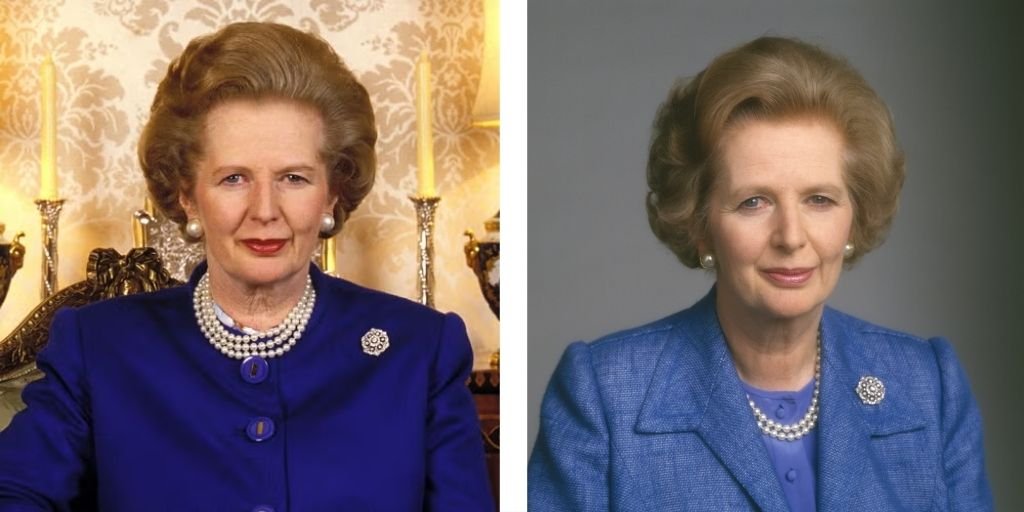
Margaret Thatcher remains one of the most recognizable and controversial political figures in modern British history. Loved by many, strongly criticized by others, she changed the direction of the United Kingdom during her years in office and left an influence that continues to shape political debate.
She was more than Britain’s first female prime minister. She represented a particular political philosophy built around individual responsibility, free markets, lower taxation, national independence, and a smaller role for the state. To her supporters, she helped restore confidence to a struggling country. To her critics, her policies increased inequality and weakened parts of Britain’s social fabric.
So, who was the woman behind the famous political image? How did a grocer’s daughter from Grantham rise to the highest political office in Britain? And why does her name still generate such strong reactions decades after she left Downing Street?
To understand her legacy, we need to look beyond the famous nickname “Iron Lady” and examine her childhood, political beliefs, time in government, major decisions, controversies, and lasting impact.
Early Life and Family Background
Margaret Hilda Roberts was born on October 13, 1925, in Grantham, Lincolnshire, England. She grew up in a modest middle-class family and was raised in an environment where hard work, discipline, thrift, and personal responsibility were taken seriously.
Her father, Alfred Roberts, was a grocer and local politician. He was involved in community affairs and served as a local councillor and mayor. His political engagement had a major influence on his daughter.
Margaret’s mother, Beatrice, managed the household and helped create the disciplined family environment in which Margaret grew up.
The young Margaret was an excellent student. She developed an interest in public affairs and showed a strong determination to succeed. Her childhood did not suggest that she would eventually become one of the most powerful political leaders of the twentieth century, but several characteristics that later defined her career were already visible.
She was organized, ambitious, competitive, and willing to work extremely hard.
Her upbringing also influenced her view of society. She believed that people should be encouraged to improve their circumstances through effort rather than depending heavily on government assistance.
That belief would become central to her political identity.
Education and the Beginning of Her Career
Thatcher won a scholarship to Kesteven and Grantham Girls’ School before earning a place at Somerville College, Oxford. There she studied chemistry and graduated in 1947.
At Oxford, she also became increasingly interested in politics. She joined the university’s Conservative Association and eventually became its president.
Her scientific education might seem unusual for a future prime minister, but it reflected another important part of her personality: she valued evidence, preparation, and disciplined thinking.
After university, Thatcher worked as a research chemist. She was involved in food-related scientific research before eventually moving toward law and politics.
She studied law and qualified as a barrister, specializing in taxation.
Her professional path therefore combined science, law, and politics. Each field gave her different skills that later proved useful in public life.
But entering politics was not easy. Britain in the middle of the twentieth century was still strongly dominated by men, particularly at senior levels.
Thatcher’s determination to succeed in that environment became one of the defining features of her career.
The Road to Parliament
Margaret Thatcher first stood for Parliament as a Conservative candidate in the 1950 and 1951 general elections. She lost both contests, but the experience gave her valuable political exposure.
In 1959, she won the parliamentary seat of Finchley and entered the House of Commons.
Her rise through Conservative politics was gradual rather than immediate. She held several junior positions before becoming Secretary of State for Education and Science in Edward Heath’s government.
Her time as education secretary became controversial.
One of the most famous episodes involved the ending of free school milk for some older children. Critics nicknamed her “Margaret Thatcher, Milk Snatcher.” The controversy followed her for years and contributed to her public image as someone prepared to make unpopular decisions.
Yet Thatcher was not simply a politician interested in reducing government spending. She was developing a broader political philosophy.
She increasingly believed that Britain’s economic problems could not be solved through traditional government intervention alone.
The country needed fundamental change.
Becoming Conservative Party Leader
The 1970s were difficult years for Britain. Inflation was high, industrial disputes were frequent, economic growth was weak, and confidence in government institutions had suffered.
Against this background, Thatcher challenged Edward Heath for the leadership of the Conservative Party in 1975.
She won.
Her victory was historic. She became the first woman to lead a major political party in Britain.
Her political philosophy was strongly influenced by classical liberal and conservative ideas, including the importance of private enterprise, property ownership, competition, and personal responsibility.
She was also deeply concerned about the growing influence of the state.
For Thatcher, government should provide essential services and maintain order, but it should not attempt to control every part of people’s economic lives.
Her philosophy was sometimes described as “Thatcherism.”
The term covered a range of ideas rather than one simple policy. It generally included free-market economics, privatization, trade union reform, reduced taxation, deregulation, and a strong emphasis on individual responsibility.
Thatcher’s approach represented a major shift within British conservatism.
The 1979 Election and Arrival at Downing Street
In 1979, the Conservative Party won the general election, and Margaret Thatcher became prime minister.
She was Britain’s first female prime minister.
Her arrival at 10 Downing Street represented an important moment in British political history. However, Thatcher herself generally preferred to be judged by her policies rather than simply by her gender.
She entered office during a period of serious economic difficulty.
Inflation was high, unemployment was rising, and Britain faced major industrial tensions. The country was sometimes portrayed as being in decline compared with other advanced economies.
Thatcher believed that gradual adjustments were not enough.
Her government adopted policies designed to reduce inflation and transform the structure of the British economy.
Interest rates were raised, public spending was controlled, state-owned industries were gradually privatized, and financial restrictions were reduced.
These changes were painful.
Unemployment increased substantially during the early years of her government, and many traditional industries suffered.
For supporters, these sacrifices were part of a necessary economic transformation.
For opponents, they represented an unacceptable human cost.
The debate over this period remains one of the most important parts of Thatcher’s legacy.
Economic Reforms and Privatization
One of Thatcher’s most significant contributions was her attempt to move Britain toward a more market-oriented economy.
During the postwar decades, large parts of the British economy were owned or heavily influenced by the state. Thatcher’s government believed that private ownership and competition could make businesses more efficient.
Several major state-owned enterprises were privatized.
These included British Telecom, British Gas, British Airways, and other major companies.
The government also encouraged wider share ownership. Millions of people were introduced to the stock market through privatization programs.
Thatcher famously promoted the idea of a property-owning democracy.
Home ownership became an important part of this vision. Council tenants were given opportunities to buy their homes under the Right to Buy policy.
Supporters argued that this gave ordinary families a valuable asset and increased personal independence.
Critics, however, argued that the sale of council housing reduced the supply of affordable homes and contributed to long-term housing problems.
This disagreement illustrates an important point about Thatcher’s politics: the same policy could be viewed as liberation by one person and social disruption by another.
Her economic reforms were not simply technical adjustments. They changed how many Britons thought about ownership, government, business, and personal responsibility.
The Falklands War and a Defining Moment
In 1982, Argentina invaded the Falkland Islands, a British overseas territory in the South Atlantic.
Thatcher’s government responded by sending a British military task force to retake the islands.
The conflict lasted several weeks and ended with British forces regaining control.
The war had a major effect on Thatcher’s political position.
Before the conflict, her government faced economic difficulties and declining popularity. The military victory dramatically increased public support.
Thatcher’s handling of the crisis also strengthened her international reputation.
She presented herself as a leader willing to make difficult decisions and defend British interests.
For supporters, the Falklands demonstrated courage and determination.
Critics questioned aspects of the government’s approach and the wider consequences of the conflict.
Nevertheless, the war became one of the defining events of her premiership.
It reinforced the image that had already begun to emerge internationally: Margaret Thatcher was a leader who was prepared to stand firm under pressure.
The Miners’ Strike and Conflict With Trade Unions
Another major confrontation came in 1984–85 with the miners’ strike.
The National Union of Mineworkers opposed plans to close numerous coal mines.
The dispute became one of the longest and most bitter industrial conflicts in modern British history.
Thatcher’s government had prepared extensively for a confrontation with organized labor. The government believed that powerful trade unions had gained too much influence over the British economy and that reform was necessary.
The strike lasted for roughly a year.
There were clashes between police and striking miners, divided communities, and serious economic consequences in mining areas.
Eventually, the miners returned to work without achieving their main objectives.
The dispute became a turning point in British industrial relations.
Thatcher’s government subsequently continued reforms that restricted union power and changed the legal framework governing industrial action.
Supporters believed these measures reduced disruptive strikes and restored balance between unions, employers, and the state.
Critics argued that the reforms weakened workers’ bargaining power and accelerated the decline of traditional industrial communities.
Even today, memories of the miners’ strike remain deeply emotional in many former mining regions.
Foreign Policy and Relationship With Ronald Reagan
Thatcher played an important role on the international stage.
She developed a particularly close relationship with United States President Ronald Reagan.
The two leaders shared many political beliefs, especially their opposition to communism and their support for market-oriented economic policies.
Their partnership became an important feature of Western politics during the final years of the Cold War.
Thatcher was a strong opponent of the Soviet system, but her relationship with Soviet leader Mikhail Gorbachev was more complicated than simple confrontation.
She famously recognized that Gorbachev could be someone with whom the West could work.
This demonstrated a practical side of her foreign policy. Although she had strong ideological convictions, she could also recognize opportunities for negotiation.
She was also deeply committed to Britain’s relationship with Europe, although her position became increasingly complicated over time.
She supported British membership in the European Economic Community but became increasingly critical of deeper European political and economic integration.
Her 1988 Bruges speech became particularly influential among Eurosceptics within the Conservative Party.
Her disagreements over European integration would eventually contribute to serious tensions within her own party.
The 1987 Election and Peak of Her Power
Thatcher won three consecutive general elections.
Her third victory came in 1987.
By this point, she had become one of the most dominant figures in British politics.
Her government had transformed important areas of the economy, reshaped industrial relations, expanded home ownership, and promoted a different vision of Britain’s place in the world.
Yet political success also created new challenges.
The Community Charge, commonly known as the poll tax, became particularly controversial.
The system replaced domestic rates with a flat-rate charge on individuals in each local authority area.
Critics argued that the tax was unfair because people with very different incomes could face similar bills.
Mass protests followed.
The controversy damaged Thatcher’s authority.
At the same time, divisions within the Conservative Party over Europe and other policies were becoming more serious.
The woman who had built her reputation on political strength increasingly faced resistance from colleagues within her own party.
The End of Her Premiership
In 1990, Michael Heseltine challenged Thatcher for the Conservative leadership.
Although Thatcher initially refused to resign, the first leadership ballot failed to give her a decisive victory.
After discussions with senior colleagues, she concluded that she no longer had sufficient support to continue.
She resigned as prime minister in November 1990.
John Major succeeded her.
Thatcher left office after more than eleven years as prime minister, making her one of the longest-serving British prime ministers of the twentieth century.
Her departure was emotional and politically significant.
For supporters, it marked the end of an extraordinary era.
For opponents, it represented the beginning of an opportunity to move beyond policies they believed had caused social damage.
But Thatcher herself did not disappear from public life.
She remained politically active, wrote books, delivered speeches, and continued to influence Conservative thinking.
Life After Downing Street
After leaving the premiership, Thatcher entered the House of Lords as Baroness Thatcher.
She continued writing and speaking about politics, international affairs, economics, and her political philosophy.
Her memoirs provided an extensive account of her time in government.
She also remained an influential figure within conservative politics around the world.
However, her later years were affected by declining health.
She died on April 8, 2013, at the age of 87.
Her death prompted an unusually wide range of reactions.
Some mourned the loss of a historic leader.
Others remembered the hardships associated with her policies.
The strong reactions demonstrated just how deeply she had affected British society.
Margaret Thatcher’s Legacy
How should Thatcher ultimately be remembered?
There is no single answer.
Her supporters credit her with helping modernize Britain’s economy, reducing the power of trade unions, encouraging entrepreneurship, expanding private ownership, and restoring a sense of national confidence.
Her critics point to unemployment, regional inequality, industrial decline, housing concerns, and the social costs of rapid economic change.
Both perspectives are important.
Thatcher’s legacy is best understood as a transformation rather than a simple political success or failure.
Before her premiership, Britain had a larger state-owned sector, stronger trade unions, and a different relationship between government and industry.
After her years in office, the economic landscape had changed dramatically.
Some of those changes were continued by later governments, including Labour governments that accepted several elements of the market economy she had helped establish.
This is perhaps one of the clearest signs of her influence.
A political leader’s lasting impact is not measured only by the policies that survive unchanged. It can also be measured by the boundaries of political debate.
Thatcher moved those boundaries.
She changed the questions British politicians were expected to answer about taxation, ownership, welfare, markets, unions, and government.
Her influence also extended beyond Britain.
Political movements in other countries adopted elements of her economic approach, while critics around the world used her government as an example of the risks associated with rapid market reform.
In that sense, her legacy became international.
Why Margaret Thatcher Still Matters Today
Decades after her premiership, Thatcher continues to appear in political debates, documentaries, books, classrooms, and popular culture.
Why?
Because many of the issues she confronted remain relevant.
How much should governments regulate businesses?
How high should taxes be?
What responsibilities belong to individuals, and what responsibilities belong to the state?
How should governments respond when traditional industries disappear?
What is the right balance between economic growth and social protection?
These questions have no easy answers.
Thatcher’s career provides a historical case study in what happens when a government chooses a clear ideological direction and is willing to accept significant political conflict to pursue it.
Her story also demonstrates how complicated political leadership can be.
She was simultaneously a trailblazer and a polarizing figure. She broke a major political barrier by becoming Britain’s first woman prime minister, yet her policies generated fierce opposition from many women and working-class communities.
She was celebrated internationally while remaining deeply controversial at home.
Perhaps the best analogy is that Thatcher acted like a political earthquake: she did not merely rearrange a few buildings; she changed the landscape itself. Whether someone considers that change beneficial or damaging often depends on where they stood when the ground moved.
Her greatest historical importance may therefore lie not in any single policy but in the scale of the transformation associated with her time in office.
Conclusion
Margaret Thatcher’s journey from a grocer’s daughter in Grantham to Britain’s first female prime minister is one of the most remarkable political stories of the modern era. Her government transformed the economy, challenged trade union power, expanded private ownership, reshaped Britain’s foreign policy, and changed the direction of Conservative politics.
At the same time, her policies produced serious social and economic consequences that remain debated today.
She was neither a simple hero nor a simple villain. She was a determined, highly influential leader whose decisions affected millions of people.
Whatever one’s political views, it is difficult to discuss modern British history without discussing Margaret Thatcher. Her influence continues to be felt because the questions she raised about government, freedom, responsibility, markets, and society have never truly gone away.
FAQs About Margaret Thatcher
1. Who was Margaret Thatcher?
Margaret Thatcher was a British Conservative politician who served as prime minister from 1979 to 1990. She was Britain’s first female prime minister and became internationally known for her free-market economic policies and strong political leadership.
2. Why was Margaret Thatcher called the Iron Lady?
She became known as the “Iron Lady” because of her firm political style, strong anti-communist views, and willingness to make difficult decisions despite intense opposition.
3. What was Thatcherism?
Thatcherism refers broadly to the political and economic ideas associated with Thatcher, including privatization, lower taxation, deregulation, trade union reform, free markets, private ownership, and greater emphasis on individual responsibility.
4. What were Margaret Thatcher’s major achievements?
Her major achievements included winning three general elections, introducing extensive economic reforms, privatizing several state-owned companies, expanding home ownership through Right to Buy, reforming trade union law, and playing an important role in Britain’s foreign policy during the Cold War and Falklands conflict.
5. Why is Margaret Thatcher controversial?
Thatcher remains controversial because her economic and social reforms had very different effects across Britain. Supporters credit her with modernizing the economy and increasing private ownership, while critics argue that her policies contributed to unemployment, inequality, and the decline of traditional industrial communities.