Nelson Mandela: The Life, Struggle, and Legacy of a Global Leader
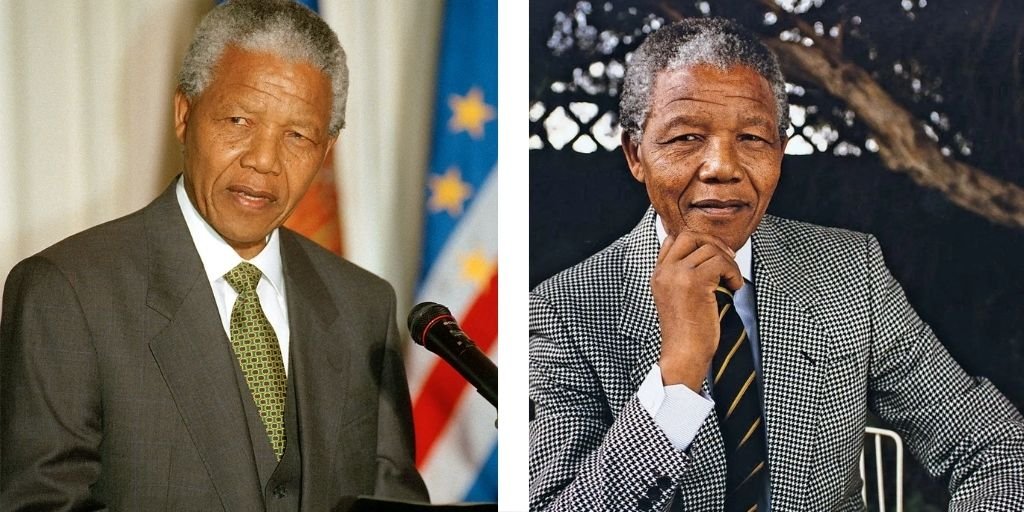
Nelson Mandela is remembered around the world as a symbol of courage, freedom, reconciliation, and human dignity. His life was shaped by one of the most difficult political struggles of the modern era: the fight against apartheid in South Africa. Yet his story is about much more than politics. It is also about resilience, sacrifice, leadership, forgiveness, and the belief that people can change the future even when circumstances seem impossible.
Born in 1918, Mandela grew up in a rural South African community and eventually became one of the country’s most influential political figures. He spent 27 years in prison because of his opposition to apartheid, but imprisonment did not destroy his determination. Instead, his experiences helped shape a leader who would eventually guide South Africa toward democracy.
What makes his story particularly remarkable? Mandela did not simply fight to replace one form of division with another. After becoming president, he worked toward reconciliation between people who had stood on opposite sides of a deeply painful history. His journey offers lessons that remain relevant far beyond South Africa.
1. Early Life and Family Background
Nelson Rolihlahla Mandela was born on July 18, 1918, in the village of Mvezo in South Africa’s Cape Province. His family belonged to the Thembu royal household, and his father, Gadla Henry Mphakanyiswa, served as a local chief and adviser to the Thembu king.
Mandela’s childhood was very different from the life he would later experience as an international statesman. He spent much of his youth in the countryside, surrounded by traditional customs, community gatherings, and stories passed from one generation to another.
His birth name, Rolihlahla, is often translated as “pulling the branch of a tree,” although it is also commonly explained in a more informal sense as referring to someone who causes trouble. At school, one of his teachers gave him the English name “Nelson,” following a common educational practice of assigning African students European names.
After his father’s death, Mandela was placed under the guardianship of Jongintaba Dalindyebo, the acting regent of the Thembu people. Living in the regent’s household exposed him to discussions about leadership, justice, and community responsibilities.
Those early experiences mattered. Mandela later became known for listening carefully to different opinions before making decisions. The idea that leadership involved serving a community, rather than simply controlling it, had roots in his childhood.
His early years therefore provided the foundation for qualities that would become central to his public life: patience, discipline, respect for tradition, and an interest in justice.
2. Education and the Path Toward Leadership
Education became an important part of Mandela’s development. He attended local schools before studying at Clarkebury Boarding Institute and later Healdtown. Eventually, he enrolled at the University of Fort Hare, an institution that educated many future African political and intellectual leaders.
At Fort Hare, Mandela studied subjects that included English, anthropology, politics, and law-related disciplines. He also became involved in student politics.
His political awakening did not happen overnight. Instead, it developed gradually as he became more aware of the inequalities surrounding him. South Africa’s racial system placed enormous restrictions on the country’s Black majority, while political power remained concentrated in the hands of the white minority.
Mandela later moved to Johannesburg, where he encountered the realities of urban life and racial discrimination on a much larger scale.
He eventually completed his legal studies and became involved in law. Together with Oliver Tambo, he established a law practice that provided legal assistance to Black South Africans who often had limited access to fair representation.
Law gave Mandela a close view of how discriminatory legislation affected ordinary people. People could lose jobs, homes, freedom of movement, and basic rights because of racial classifications.
For Mandela, these were not abstract political debates. They were human experiences.
His education therefore became more than a personal achievement. It gave him tools to understand the legal and political structures that maintained inequality.
3. Understanding Apartheid in South Africa
To understand Mandela’s life, it is essential to understand apartheid.
Apartheid became South Africa’s official system of racial segregation after the National Party came to power in 1948. Although racial discrimination existed before that date, the apartheid government expanded and formalized segregation through a broad network of laws.
People were classified according to racial categories, and these classifications affected almost every part of daily life.
Where could someone live? Which school could they attend? Where could they work? Could they move freely? Which public facilities could they use? These questions were heavily influenced by racial laws.
Black South Africans were particularly affected. Millions were removed from areas designated for white occupation and forced into separate residential communities. Pass laws restricted movement, while political participation was severely limited.
Imagine a country where your legal rights could depend largely on the racial category assigned to you. That was the reality Mandela and millions of other South Africans confronted.
Mandela initially believed that organized political action, protest, education, and legal challenges could help bring change. Over time, however, the government’s increasingly harsh response pushed the liberation movement toward more confrontational strategies.
The struggle against apartheid became a long and painful conflict involving political activism, imprisonment, international pressure, economic sanctions, and armed resistance.
Mandela became one of its most recognizable figures.
4. Joining the African National Congress
Mandela joined the African National Congress, commonly known as the ANC, in 1944. The organization had been established decades earlier to advance the political rights of Black South Africans.
Mandela and other young activists believed the movement needed a stronger grassroots presence. They helped form the ANC Youth League, which promoted mass participation and a more assertive approach to political activism.
The Youth League included other important figures such as Walter Sisulu and Oliver Tambo. Together, these leaders helped transform the political energy of a younger generation into organized resistance.
Mandela became increasingly involved in campaigns against discriminatory laws.
The Defiance Campaign of 1952 was one major example. Activists deliberately violated apartheid regulations as a form of nonviolent resistance. The campaign demonstrated that ordinary people could participate in political action rather than leaving the struggle entirely to established leaders.
Mandela’s role within the movement grew.
He became known as a disciplined organizer and determined activist. But he also attracted the attention of government authorities.
Repeated arrests, bans, surveillance, and restrictions became part of his life.
Rather than withdrawing, Mandela became increasingly committed to the belief that political freedom required sustained public pressure.
5. Imprisonment and the Long Years on Robben Island
One of the most difficult chapters of Mandela’s life began with his imprisonment.
In 1964, he was sentenced to life imprisonment following the Rivonia Trial. The charges were connected to activities involving sabotage and the struggle against apartheid.
Mandela spent much of his imprisonment on Robben Island, where conditions were harsh.
Prisoners performed physically demanding labor, lived under strict regulations, and experienced racial discrimination even within the prison system. Mandela was separated from his family and saw his children grow up while he remained behind bars.
Twenty-seven years is an extraordinarily long period to spend in prison.
Yet Mandela’s imprisonment became a remarkable demonstration of endurance.
He studied. He exercised. He communicated with other prisoners. He debated politics. He learned to understand the perspectives of people with different views.
Over time, he became one of the most respected figures among political prisoners.
His ability to maintain discipline was especially important. Prison could have transformed his anger into bitterness. Instead, he increasingly focused on the larger objective of creating a democratic South Africa.
His years behind bars were like a long pressure chamber: painful, restrictive, and unforgiving, yet they helped shape the qualities that later made him such an influential negotiator.
Mandela was eventually moved from Robben Island to other prisons, including Pollsmoor Prison and Victor Verster Prison.
During these years, discussions between the apartheid government and Mandela began to develop.
6. Freedom and the Road to Democracy
On February 11, 1990, Nelson Mandela walked out of Victor Verster Prison as a free man.
The moment became one of the defining images of the twentieth century.
Crowds gathered to welcome him, and millions of people around the world watched the historic event.
Mandela’s release did not immediately solve South Africa’s problems. The country remained deeply divided, and political violence continued.
The challenge was enormous: how could a society that had been separated by law, fear, and violence for generations build a democratic future?
Mandela and the ANC entered negotiations with the government led by President F. W. de Klerk.
These negotiations were difficult. There were disagreements within political movements, continuing violence, and deep mistrust between communities.
Nevertheless, negotiations continued.
In 1993, Mandela and de Klerk jointly received the Nobel Peace Prize for their efforts to dismantle apartheid and establish democratic foundations.
The following year, South Africa held its first democratic national election in which citizens of all races could participate.
The ANC won overwhelmingly, and Nelson Mandela became president.
On May 10, 1994, he was inaugurated as South Africa’s first Black president.
For millions of people, the event represented something much larger than a political transition. It represented the collapse of a system that had denied the majority of the population full political rights.
7. Presidency and the Challenge of Reconciliation
Mandela’s presidency lasted from 1994 to 1999.
He inherited a country with enormous social and economic challenges. Poverty was widespread, racial inequality remained deeply rooted, and many communities carried memories of violence and injustice.
Mandela understood that political victory alone would not heal the country.
One of his most important approaches was reconciliation.
Instead of encouraging widespread revenge against former opponents, his government promoted a process of confronting the past while attempting to prevent new cycles of violence.
The Truth and Reconciliation Commission became a major part of this process. Led by Archbishop Desmond Tutu, the commission investigated human rights abuses committed during the apartheid era.
Victims were given opportunities to tell their stories, while some perpetrators could seek amnesty under specific conditions.
The process was far from perfect. Some critics believed it did not provide sufficient justice or compensation. Others argued that it was essential for preventing South Africa from descending into further conflict.
Mandela’s approach reflected a powerful idea: reconciliation does not necessarily mean forgetting.
Instead, a society can acknowledge painful history while choosing not to let that history permanently control its future.
That principle became one of Mandela’s most enduring contributions.
8. Mandela and the Power of Forgiveness
Why did forgiveness become such an important part of Mandela’s public image?
The answer is closely connected to his experience of imprisonment.
Mandela had every reason to feel anger toward the system that had taken decades of his life. Yet he recognized that a democratic South Africa would need to include people who had once supported apartheid.
His approach was pragmatic as well as moral.
If the new government attempted to punish every person associated with the former system, the country could have faced even greater instability.
Mandela therefore promoted cooperation where possible.
One famous example was his effort to use national symbols and institutions to bring divided communities together. Sport became one such tool.
His support for the South African rugby team during the 1995 Rugby World Cup became an iconic moment. Rugby had traditionally been strongly associated with white South Africans, but Mandela used the event as an opportunity to demonstrate national unity.
The image of Mandela wearing a Springbok jersey and presenting the trophy to captain Francois Pienaar became symbolic of his broader political philosophy.
The message was simple: a shared future could be built even by people whose histories had placed them on opposite sides.
Forgiveness, in Mandela’s case, was not the same as pretending that injustice had never happened. It was a strategy for preventing yesterday’s conflict from becoming tomorrow’s conflict.
9. Human Rights, Social Justice, and Global Influence
Mandela’s influence extended far beyond South Africa.
He became a global advocate for human rights, democracy, equality, and freedom.
He spoke against racism and oppression and supported efforts to address poverty, disease, and social inequality.
After leaving the presidency in 1999, Mandela remained active in public life. He supported organizations and campaigns focused on children’s welfare, education, HIV/AIDS awareness, and conflict resolution.
His foundation and charitable work continued his commitment to public service.
Mandela also became an international symbol of resistance.
People facing oppression in different parts of the world saw aspects of their own struggles reflected in his story.
His message was particularly powerful because it was backed by experience. He was not speaking about hardship from a comfortable distance. He had personally experienced discrimination, imprisonment, political isolation, and loss.
At the same time, Mandela’s legacy should not be reduced to a perfect heroic image. His political career involved difficult decisions, controversial strategies, and disagreements with governments and political groups.
Understanding those complexities actually makes his story more meaningful.
Real leadership rarely takes place in simple circumstances.
10. Mandela’s Personal Life and Character
Behind the political icon was a complicated human being.
Mandela married three times and had children and grandchildren. His political work placed enormous pressure on his family life.
His first marriage, to Evelyn Ntoko Mase, ended in divorce. He later married Winnie Madikizela-Mandela, a major anti-apartheid activist in her own right. Their relationship eventually ended in divorce. Mandela later married Graça Machel in 1998.
His family life was affected heavily by his political commitments and imprisonment.
Mandela openly acknowledged that his political dedication came with personal costs.
One of his most admired characteristics was discipline. He developed routines during imprisonment and maintained a strong commitment to physical fitness for much of his life.
He was also known for his ability to communicate with people from very different backgrounds.
Mandela could speak with political leaders, prisoners, workers, celebrities, children, and ordinary citizens. He often used humor and warmth to establish connections.
That human quality helped transform him from a political prisoner into an internationally respected statesman.
His example reminds us that leadership is not always about speaking the loudest. Sometimes it is about listening, remaining calm, and understanding what motivates other people.
11. Later Years, Death, and Enduring Legacy
After leaving office, Mandela continued his public and humanitarian work, although he gradually reduced his political activities.
He remained deeply respected both inside and outside South Africa.
In 2009, the United Nations recognized July 18 as Nelson Mandela International Day, encouraging people to devote time to community service and positive action.
Mandela died on December 5, 2013, at the age of 95.
His death prompted an extraordinary international response. Leaders, activists, artists, athletes, and ordinary citizens remembered his contribution to the struggle for freedom and democracy.
Yet Mandela’s legacy is not simply a collection of statues, quotations, books, and commemorations.
His most important legacy may be the idea that political transformation can be combined with reconciliation.
South Africa still faces serious challenges, including inequality, unemployment, poverty, and debates about the pace of social and economic transformation. These realities show that Mandela’s presidency did not magically solve every problem.
That should not diminish his achievement.
Instead, it reminds us that changing laws is only one step toward changing society.
Mandela helped create the political conditions for a democratic South Africa. The generations that followed inherited the responsibility of continuing that work.
His life also demonstrates the power of persistence.
A young man from a rural community became a lawyer, activist, prisoner, negotiator, president, and global humanitarian figure.
The journey took decades.
There was no shortcut.
12. What the World Can Learn From Nelson Mandela
Perhaps the most valuable question is not simply, “What did Mandela accomplish?” but “What can we learn from his life?”
First, resilience matters.
Mandela spent 27 years in prison, yet imprisonment did not eliminate his hope for change. Difficult circumstances can shape a person without completely defining that person’s future.
Second, leadership requires patience.
The transition from apartheid to democracy involved negotiations, disagreements, setbacks, and uncertainty. Mandela understood that lasting political change often takes time.
Third, forgiveness can be powerful.
Forgiveness does not erase injustice. Instead, it can help people avoid becoming trapped by hatred and revenge.
Fourth, courage is not the absence of fear.
Mandela lived through dangerous and uncertain circumstances. Courage meant continuing despite those risks.
Finally, freedom carries responsibility.
Mandela’s story was never simply about gaining political power. It was about creating a society in which people could participate in their country’s future.
His life can therefore be viewed as a bridge between two worlds: one defined by legalized racial separation and another based on democratic participation.
The bridge was not built easily. It was constructed through sacrifice, negotiation, protest, imprisonment, courage, and eventually reconciliation.
That is why his story continues to attract readers, students, activists, and leaders across generations.
Conclusion
Nelson Mandela’s life remains one of the most powerful stories of the modern age. He experienced discrimination, imprisonment, political struggle, personal loss, and enormous responsibility, yet he continued working toward a democratic future.
His greatest achievement was not simply becoming South Africa’s first Black president. It was helping a deeply divided country imagine that its people could share a future.
Mandela’s legacy reminds us that meaningful change requires courage, patience, sacrifice, and a willingness to see beyond immediate anger. His story does not suggest that society’s problems disappear overnight. Instead, it shows that even seemingly impossible systems can change when people refuse to give up on justice.
For that reason, his influence continues long after his death. His life remains a reminder that one person’s determination can become part of a much larger movement—and that the choices made after victory can be just as important as the struggle that came before it.
Frequently Asked Questions
1. Who was Nelson Mandela?
Nelson Mandela was a South African anti-apartheid activist, political leader, and statesman. He became the country’s first Black president in 1994 after spending 27 years in prison for his opposition to apartheid.
2. Why was Nelson Mandela imprisoned?
Mandela was imprisoned because of his involvement in the struggle against apartheid. In the Rivonia Trial, he was convicted of charges including sabotage and sentenced to life imprisonment in 1964.
3. How long was Nelson Mandela in prison?
Nelson Mandela spent 27 years in prison. He was held at several facilities, including Robben Island, Pollsmoor Prison, and Victor Verster Prison, before his release in February 1990.
4. When did Nelson Mandela become president?
Mandela became president of South Africa in May 1994 following the country’s first democratic national election in which citizens of all races were able to vote.
5. What is Nelson Mandela best remembered for?
Mandela is best remembered for his role in ending apartheid, helping establish democratic government in South Africa, promoting reconciliation, and becoming an international symbol of human rights and freedom.