Alfred Hitchcock: The Brilliant Master of Suspense and His Timeless Legacy
Introduction
Few filmmakers have shaped the language of cinema as deeply as Alfred Hitchcock. Even people who have never watched all of his movies may recognize the ideas associated with his name: suspense, mysterious strangers, dangerous secrets, unexpected twists, and ordinary people caught in extraordinary situations.
Born in London in 1899, Hitchcock began his career during the silent-film era and eventually became one of the most recognized directors in Hollywood. Over several decades, he created movies that entertained audiences while also playing with their fears and expectations.
But what made him so memorable? Was it the stories, the actors, the music, or his unusual way of showing danger? The answer is a combination of all of them. Hitchcock understood that fear is often strongest when we know something the character does not.
His films were like carefully constructed roller coasters. He knew when to take the audience upward slowly, when to make them wait, and when to suddenly send them downward. That control over emotion became his signature.
Early Life and the Beginning of His Career
Alfred Joseph Hitchcock was born on August 13, 1899, in Leytonstone, London, England. He grew up in a strict Catholic family and later described aspects of his childhood as influential in shaping his personality and interests.
As a young man, Hitchcock initially studied engineering-related subjects and worked in technical and advertising positions. His professional life changed when he became interested in the growing film industry.
His First Steps Into Cinema
Hitchcock began working in the film business during the early 1920s. He started with roles involving title cards, set design, writing, and production work. These early experiences gave him an understanding of how movies were constructed behind the camera.
Rather than becoming a director overnight, he learned different parts of filmmaking one step at a time.
His early directing opportunities came in Britain, where he developed a reputation for creating stories involving crime, mystery, and suspense. Silent films required filmmakers to communicate emotions and information visually, and Hitchcock became particularly skilled at doing this.
The Lodger and Early Recognition
One of his important early successes was The Lodger: A Story of the London Fog, released in 1927. The film demonstrated several ideas that would become important throughout his career, including suspicion, mistaken identity, visual storytelling, and the fear of an unknown criminal.
The movie helped establish Hitchcock as a director with a distinctive approach.
He was already discovering something that would remain central to his work: sometimes what the audience imagines can be more frightening than what the camera actually shows.
Alfred Hitchcock’s Move From Britain to Hollywood
Hitchcock spent much of his early career making films in Britain, but his international reputation continued to grow. Eventually, he moved into American filmmaking.
His first Hollywood film was Rebecca, released in 1940 and produced by David O. Selznick. The movie was based on Daphne du Maurier’s novel and starred Laurence Olivier and Joan Fontaine.
Rebecca became a major success and won the Academy Award for Best Picture, although the award went to the film’s producers rather than Hitchcock personally.
A New Chapter in America
Hollywood offered Hitchcock larger budgets, famous performers, and access to a powerful studio system. However, he did not simply abandon the techniques he had developed in Britain.
Instead, he expanded them.
During the 1940s and 1950s, he directed films involving romance, espionage, murder, mistaken identity, psychological tension, and ordinary people placed under extraordinary pressure.
Movies such as Foreign Correspondent, Shadow of a Doubt, Spellbound, Notorious, and Strangers on a Train demonstrated how broad his storytelling abilities had become.
His stories could begin with something seemingly harmless and gradually turn into situations filled with danger.
The Hitchcock Style: How He Created Suspense
When people discuss Hitchcock, the word “suspense” almost always appears. But suspense in his movies was not simply about shocking the audience.
He understood the difference between surprise and suspense.
Surprise Versus Suspense
Imagine two people sitting at a table while a bomb suddenly explodes. The audience experiences surprise.
Now imagine the audience sees a bomb under the table, knows it will explode in five minutes, and watches two characters continue talking without realizing what is happening.
That is suspense.
Hitchcock often gave viewers information that his characters did not have. This created anticipation. The audience waited for the moment when the characters would discover the truth.
It was a simple technique, but in Hitchcock’s hands it became incredibly powerful.
The Importance of Waiting
Hitchcock understood that suspense needs time.
If a mystery is solved immediately, there is little emotional investment. But if viewers are forced to wait, their imagination begins working.
A door becomes frightening.
A staircase becomes suspicious.
A crowded train becomes uncomfortable.
A seemingly innocent conversation can suddenly feel dangerous.
Hitchcock transformed ordinary locations into places of uncertainty.
Famous Movies That Defined His Career
Hitchcock directed more than 50 feature films during his career. Several became classics and continue to influence filmmakers.
Rear Window
Released in 1954, Rear Window starred James Stewart and Grace Kelly. Stewart plays a photographer confined to his apartment after an injury. With little else to do, he watches the people living across the courtyard.
Eventually, he becomes convinced that one of his neighbors has committed murder.
The brilliance of the movie comes from its limited viewpoint. The audience sees the world largely from Stewart’s perspective. We watch him watching other people.
But then an uncomfortable question appears: how much should we trust what we see?
The movie explores curiosity, privacy, relationships, and suspicion while maintaining Hitchcock’s trademark tension.
Vertigo
Vertigo, released in 1958, starred James Stewart and Kim Novak. The story follows a former detective who develops an intense obsession surrounding a mysterious woman.
The movie examines identity, memory, desire, obsession, and deception.
Unlike a straightforward thriller, Vertigo gradually becomes more psychological. Hitchcock makes viewers question not only what is happening but also why the characters behave as they do.
North by Northwest
Released in 1959, North by Northwest combines suspense, humor, romance, and adventure.
Cary Grant plays Roger Thornhill, an advertising executive who is mistakenly identified as a government agent. Suddenly, his ordinary life becomes a dangerous chase.
The famous crop-duster sequence and the Mount Rushmore climax demonstrate Hitchcock’s ability to create visually memorable set pieces.
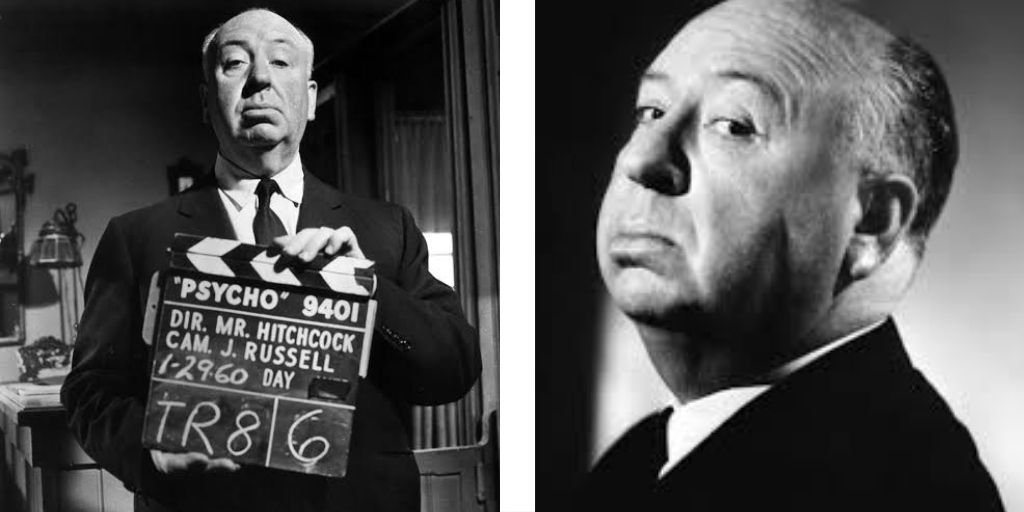
Psycho
Few films changed popular cinema as dramatically as Psycho.
Released in 1960, the movie starred Anthony Perkins as Norman Bates and Janet Leigh as Marion Crane.
The story begins in one direction and then unexpectedly changes course.
The Shower Scene
The shower sequence became one of the most famous scenes in movie history. Hitchcock used rapid editing, sound, camera angles, and suggestion to create violence without depending on graphic imagery.
The scene demonstrated an important lesson about filmmaking: sometimes what the audience thinks it sees can be more powerful than what is directly shown.
Psycho also introduced audiences to a complex antagonist whose personality became an important part of the movie’s mystery.
The Birds
In 1963, Hitchcock released The Birds, a horror-thriller about seemingly ordinary birds becoming increasingly aggressive toward people.
The movie is unsettling partly because Hitchcock does not provide a simple explanation for what is happening.
That uncertainty makes the threat harder to understand.
Hitchcock and His Famous Collaborations
Hitchcock worked with some of the biggest actors, writers, composers, producers, and designers of his era.
His collaborations with actors were particularly important.
James Stewart
James Stewart appeared in several Hitchcock films, including Rear Window, The Man Who Knew Too Much, and Vertigo.
Stewart’s screen persona often allowed Hitchcock to place an apparently ordinary man into increasingly complicated situations.
Cary Grant
Cary Grant worked with Hitchcock on movies including Suspicion, Notorious, To Catch a Thief, and North by Northwest.
Grant brought charm and sophistication to characters who were frequently surrounded by danger and uncertainty.
Grace Kelly
Grace Kelly appeared in three Hitchcock films: Dial M for Murder, Rear Window, and To Catch a Thief.
Hitchcock admired her screen presence and frequently used the contrast between elegance and danger to create tension.
Ingrid Bergman
Ingrid Bergman starred in Spellbound, Notorious, and Under Capricorn.
Her work with Hitchcock helped produce some of the director’s most memorable romantic and psychological stories.
The Role of Music, Editing, and Camera Work
Hitchcock’s storytelling did not depend only on dialogue.
He understood that cinema is a visual medium.
Working With Bernard Herrmann
Composer Bernard Herrmann became one of Hitchcock’s most important creative collaborators.
Herrmann’s music for films such as Vertigo, North by Northwest, and Psycho became closely associated with their emotional power.
The score for Psycho, particularly the sharp string sounds used during the shower sequence, became legendary.
Music did not merely accompany Hitchcock’s images. It helped shape the audience’s emotional reaction.
Camera Movement and Visual Details
Hitchcock frequently used camera movement to reveal information slowly.
A character might enter a room while the camera quietly draws attention to an important object.
A long shot might show something happening in the background.
A close-up might reveal fear on a character’s face.
These choices encouraged audiences to become active participants in the story.
Instead of simply watching, viewers searched the screen for clues.
Hitchcock’s Cameos and Public Persona
One of the most recognizable traditions connected to Hitchcock was his brief appearances in his own films.
These cameos became a kind of game for audiences.
Spotting Hitchcock
Hitchcock could appear as a passenger, a pedestrian, a man leaving a building, or someone sitting quietly in a public place.
Because his appearance was often brief, viewers began watching his movies partly to discover where he would appear.
Over time, his physical appearance also became recognizable.
His distinctive silhouette, serious expression, and formal clothing contributed to his public image.
Alfred Hitchcock Presents
Hitchcock’s television career further strengthened his celebrity.
Alfred Hitchcock Presents premiered in 1955 and introduced viewers to mystery and suspense stories presented by Hitchcock himself.
His dry humor and distinctive introductions made him more than a filmmaker. He became a television personality.
For many viewers, he was almost as recognizable as the movies he directed.
Themes That Appeared Again and Again
Although Hitchcock worked across different genres, several themes repeatedly appeared in his stories.
The Innocent Person in Danger
One recurring idea was the ordinary person accused of something they did not do.
This appears clearly in films such as The 39 Steps, Saboteur, and North by Northwest.
Why is this idea so effective?
Because viewers can imagine themselves in the same situation. There is something deeply unsettling about suddenly losing control of your own life.
Obsession and Identity
Hitchcock was also interested in people who become obsessed with others or with particular ideas.
Vertigo is perhaps the strongest example, but the theme appears throughout his filmography.
Characters often struggle with identity, memory, appearance, and perception.
Fear of the Unknown
Another major theme was uncertainty.
Hitchcock did not always explain everything.
Sometimes the unanswered question was the source of the fear.
This approach remains powerful because real life does not always provide complete explanations either.
Awards, Recognition, and Critical Reputation
Hitchcock received enormous recognition during his lifetime, although his relationship with major awards was complicated.
He received five Academy Award nominations for Best Director but never won the competitive Oscar in that category.
His nominated films included Rebecca, Lifeboat, Spellbound, Rear Window, and Psycho.
In 1968, he received the Irving G. Thalberg Memorial Award from the Academy of Motion Picture Arts and Sciences.
A Director Who Became a Cultural Icon
Hitchcock’s reputation continued to grow after his major commercial successes.
Film scholars and directors studied his techniques, while audiences continued discovering his work.
His influence reached far beyond suspense cinema.
Filmmakers working in horror, mystery, crime, psychological drama, and even comedy have borrowed techniques associated with him.
His legacy is therefore not limited to one genre.
Alfred Hitchcock’s Personal Life
Hitchcock married screenwriter and editor Alma Reville in 1926. Their partnership lasted until his death.
Alma was an important creative presence in his professional life and worked with him on many productions.
They had one daughter, Patricia Hitchcock.
A Long Partnership With Alma Reville
Alma’s contribution to Hitchcock’s films has received increasing attention over the years.
She participated in script development and production discussions and was an important collaborator behind the scenes.
Their relationship demonstrates that filmmaking is rarely the work of one person alone, even when the director receives most of the public attention.
The Final Years and Death of Alfred Hitchcock
Hitchcock continued directing into the 1970s.
His later films included Frenzy, released in 1972, and Family Plot, released in 1976.
Although his health and energy were changing with age, he remained interested in filmmaking.
Hitchcock died on April 29, 1980, in Los Angeles, California, at the age of 80.
By then, he had already secured a remarkable place in film history.
But his story did not end with his death.
In many ways, his influence became even clearer afterward.
Why Alfred Hitchcock Still Matters Today
Why do Hitchcock’s movies remain relevant when many of them were made decades ago?
The answer lies in the basic human emotions at the center of his stories.
Fear does not become outdated.
Neither do jealousy, curiosity, suspicion, love, guilt, obsession, or the desire to uncover a secret.
Modern filmmakers have access to digital effects, computer-generated imagery, advanced cameras, and sophisticated editing software. Hitchcock worked with far fewer technological tools.
Yet his films prove that technology is not the heart of suspense.
Storytelling is.
A Lasting Influence on Modern Cinema
Hitchcock helped establish techniques that remain familiar today.
The idea of giving viewers information before characters discover it is still common in thrillers. The use of confined spaces, visual clues, unreliable perception, mistaken identity, and psychological tension continues across film and television.
His work also showed directors that ordinary situations could become terrifying.
A shower.
A hotel room.
A train journey.
A quiet neighborhood.
A family visit.
A trip to the countryside.
Hitchcock could turn everyday experiences into sources of anxiety.
That is perhaps his greatest lesson.
You do not always need a monster hiding in the darkness. Sometimes the darkness is created by what the audience thinks might happen next.
Conclusion
Alfred Hitchcock remains one of the most influential directors in the history of cinema. From his beginnings in British silent films to his celebrated Hollywood career, he developed a unique approach to suspense that continues to fascinate audiences.
His movies were built around more than murder and mystery. They explored fear, identity, obsession, trust, curiosity, and uncertainty.
Films such as Rear Window, Vertigo, North by Northwest, Psycho, and The Birds remain important because their central emotions are still familiar.
Hitchcock understood something that every storyteller can learn from: sometimes the greatest power comes from making people wait.
That is why his work continues to live on. The technology may change, the actors may change, and filmmaking styles may change, but the human desire to discover what happens next never disappears.
Frequently Asked Questions
1. Who was Alfred Hitchcock?
Alfred Hitchcock was an English film director and producer known for suspense, mystery, psychological drama, and thriller movies. He worked in British cinema before becoming a major Hollywood filmmaker.
2. What is Alfred Hitchcock most famous for?
He is particularly famous for films such as Psycho, Vertigo, Rear Window, North by Northwest, and The Birds. He is also widely recognized for developing sophisticated techniques for creating suspense.
3. Did Alfred Hitchcock win an Oscar for directing?
No. Hitchcock received five Academy Award nominations for Best Director but did not win the competitive award. He later received the Irving G. Thalberg Memorial Award in 1968.
4. What was Alfred Hitchcock’s most famous movie?
Psycho is among his most famous movies and became especially well known for its innovative storytelling, psychological tension, and iconic shower sequence. Vertigo and Rear Window are also regarded as major works of his career.
5. When did Alfred Hitchcock die?
Alfred Hitchcock died on April 29, 1980, in Los Angeles, Califor