
Stephen Hawking: The Extraordinary Life, Discoveries, Books & Legacy
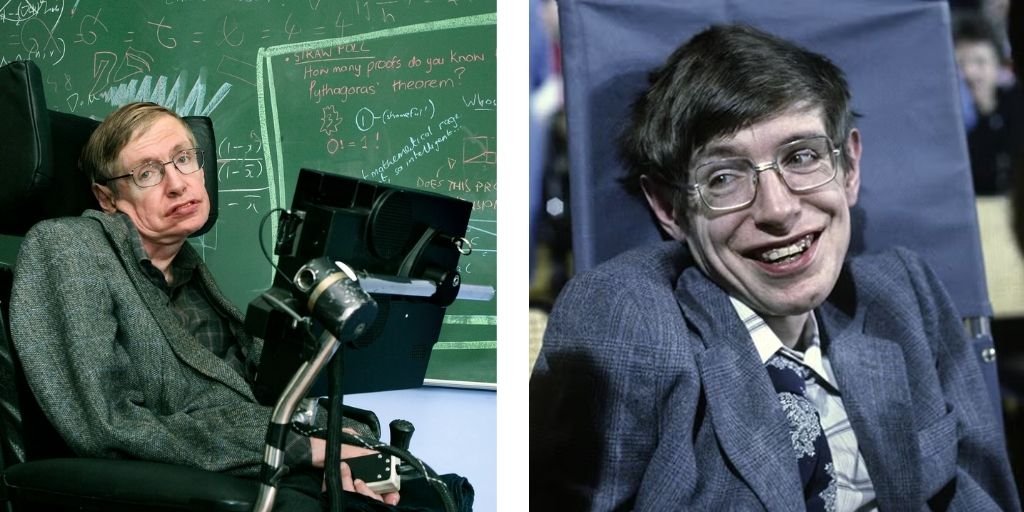
Stephen Hawking was one of the most recognizable scientists of the modern era. His name became closely connected with black holes, the origins of the universe, and some of the biggest questions humans have ever asked. Yet his story was about much more than science. It was also a story of determination, curiosity, communication, and an unusual ability to make complicated ideas interesting to ordinary people.
Born in Oxford, England, in 1942, Hawking became a theoretical physicist and cosmologist whose work changed the way scientists think about black holes. He also became a bestselling author and a familiar face in popular culture. Despite living for decades with a serious motor neuron disease, he continued researching, writing, teaching, and speaking to audiences around the world.
What made his journey so remarkable? Perhaps it was the contrast between the limitations placed on his body and the extraordinary freedom of his mind. His life showed that scientific curiosity can survive enormous obstacles and that asking a good question can sometimes be as important as finding an answer.
Early Life and Family Background
Stephen William Hawking was born on January 8, 1942, in Oxford, England. Interestingly, his birth occurred exactly 300 years after the death of Galileo Galilei, a coincidence that Hawking later found amusing.
His parents, Frank and Isobel Hawking, valued education. His father was a medical researcher, while his mother had studied philosophy, politics, and economics. The family encouraged intellectual curiosity, and young Stephen developed an interest in how things worked.
He was not always the stereotypical image of a brilliant student. At school, he was curious and imaginative, but his interests did not necessarily fit neatly into traditional classroom expectations. He enjoyed building things and solving problems, and his friends gave him the nickname “Einstein.”
That nickname turned out to be surprisingly appropriate.
Hawking eventually attended University College, Oxford, where he studied physics. He later moved to the University of Cambridge for graduate research in cosmology.
During these years, his interest in the universe became increasingly serious. Instead of simply asking how objects moved, he became fascinated by questions such as: How did the universe begin? Could the universe have a beginning and an end? What happens inside a black hole?
Those questions would define much of his career.
Education and the Beginning of His Scientific Career
At Oxford, Hawking studied physics and became particularly interested in the fundamental laws governing nature. He graduated with a first-class honours degree in physics in 1962.
He then went to Cambridge to pursue a PhD in cosmology.
This period was also when his health began changing dramatically. Hawking started experiencing problems with balance and coordination. Simple physical tasks became increasingly difficult. Eventually, doctors diagnosed him with amyotrophic lateral sclerosis, commonly known as ALS, a form of motor neuron disease.
He was only 21.
The diagnosis was devastating, and doctors initially gave him only a limited amount of time to live. But Hawking continued his studies. Rather than abandoning his academic ambitions, he concentrated on the questions that fascinated him most.
This was a turning point.
Imagine a person standing at the edge of a huge ocean with only a small boat. The ocean represents everything humanity does not yet understand about the universe. Hawking knew he could not explore every part of it, but he decided to sail as far as his mind could take him.
His health affected his physical abilities, but his intellectual curiosity remained powerful.
His Groundbreaking Work on Black Holes
One of Hawking’s most important scientific contributions involved black holes.
A black hole is an area of space where gravity is so strong that anything crossing a certain boundary cannot escape through ordinary means. Even light cannot escape from inside that boundary, known as the event horizon.
For years, physicists generally believed black holes behaved in a very simple way: matter could fall into them, but nothing could come back out.
Hawking challenged part of that picture.
Working with ideas from quantum theory and general relativity, he showed that black holes are not completely black. They can emit radiation, now known as Hawking radiation.
This was a remarkable result because it connected two major areas of physics that often seem difficult to combine: gravity and quantum mechanics.
Why was this discovery important?
Because it changed the question.
Instead of asking only what happens when something falls into a black hole, scientists could also ask what happens to the black hole itself over enormous periods of time.
According to Hawking’s theoretical work, black holes can gradually lose energy through radiation. Over an extremely long period, this process could cause a black hole to shrink.
The idea opened new discussions about information, gravity, thermodynamics, and the fundamental structure of nature.
It also helped transform black holes from mysterious astronomical objects into laboratories for testing some of physics’ deepest ideas.
The Big Bang and the Beginning of the Universe
Black holes were only one part of Hawking’s scientific interests. He also made important contributions to our understanding of the beginning of the universe.
Hawking worked with mathematician Roger Penrose on mathematical results concerning singularities. Their work suggested that, under certain conditions described by general relativity, the universe’s history could be traced back toward a singular beginning.
The Big Bang is often misunderstood as an explosion happening at one particular location in empty space. It is better understood as the rapid expansion of space itself from an extremely hot and dense early state.
Hawking’s research helped explore what the laws of physics might tell us about the earliest moments of cosmic history.
These questions are enormous.
Where did space come from? Did time itself have a beginning? Could there have been something before the Big Bang?
Hawking spent much of his career exploring questions like these, although some remained open and continue to challenge physicists today.
Living With Motor Neuron Disease
Hawking’s scientific career cannot be separated completely from his experience with motor neuron disease.
The condition gradually weakened the muscles he used for movement and speech. Over time, he required a wheelchair and assistance with everyday activities.
Eventually, he could communicate using a computer-based speech system. He controlled the system through small physical movements, allowing him to select words and construct sentences.
The electronic voice became closely associated with him.
It is important, however, not to reduce Hawking’s life to his disability. His physical condition was a major part of his experience, but he was also a scientist, author, teacher, father, and public intellectual.
His achievements were not simply the result of “overcoming” disability. They also depended on colleagues, family members, assistants, technological tools, academic institutions, and his own sustained intellectual work.
Technology played a particularly important role. Communication devices gave Hawking a way to participate in lectures, interviews, research discussions, and public conversations despite severe physical limitations.
His life became an example of how accessibility technology can expand what people are able to accomplish.
A Brief History of Time and His Rise to Global Fame
Hawking became internationally famous after publishing A Brief History of Time in 1988.
The book attempted something extremely difficult: explaining major ideas about cosmology to readers without advanced scientific training.
It discussed subjects including the Big Bang, black holes, time, space, and the nature of the universe.
Why did it become so successful?
Hawking had a rare ability to begin with a huge question and gradually guide readers toward the scientific ideas used to investigate it.
The book became a major bestseller and was translated into numerous languages.
For many people, it was their first serious introduction to modern cosmology.
Hawking later published other books designed for general audiences, including The Universe in a Nutshell, The Grand Design, and books written with his daughter Lucy Hawking for younger readers.
His writing helped turn cosmology into something that people outside universities could discuss at dinner tables, in classrooms, and among friends.
His Books and Contributions to Popular Science
Hawking understood that science should not remain locked inside academic journals.
His books introduced readers to ideas that might otherwise appear intimidating.
Some notable works include:
- A Brief History of Time — an accessible exploration of cosmology and the universe.
- Black Holes and Baby Universes and Other Essays — a collection of scientific and personal reflections.
- The Universe in a Nutshell — a visual and conceptual journey through modern physics.
- On the Shoulders of Giants — a collection highlighting the work of major scientific thinkers.
- The Grand Design — a discussion of questions concerning the origin and nature of the universe.
- George’s Secret Key to the Universe — a children’s science-adventure series created with Lucy Hawking.
These works showed different sides of his communication style.
Some focused heavily on scientific concepts, while others used storytelling to introduce younger readers to astronomy and physics.
His larger contribution to public science was not simply selling books. He helped demonstrate that complicated scientific questions could be discussed with curiosity rather than fear.
Hawking’s Views on Time, Space, and Human Existence
Hawking was fascinated by time.
Why does time appear to move in one direction? Could time have behaved differently in the early universe? What happens to our understanding of time near a black hole?
These were not merely abstract questions for him. They represented the boundaries of human knowledge.
He often emphasized the importance of asking fundamental questions.
Science does not always provide immediate answers. Sometimes researchers spend decades developing better observations, mathematical tools, and theories before an answer becomes possible.
Hawking also frequently discussed humanity’s place in the universe.
He believed that understanding the cosmos could change the way people think about themselves. The universe is enormous, while Earth occupies only a tiny part of it.
Yet this tiny planet produced beings capable of looking toward distant galaxies and asking where everything came from.
That contrast fascinated him.
Awards, Positions, and Scientific Recognition
Hawking received numerous honors during his lifetime.
He became a Fellow of the Royal Society and later served as Lucasian Professor of Mathematics at the University of Cambridge, one of the most prestigious academic positions in Britain.
The position had previously been held by Isaac Newton.
That historical connection made Hawking’s appointment particularly notable.
He also received major scientific awards and international recognition for his contributions to theoretical physics and cosmology.
Although he became a celebrity, academic recognition remained important to his career. His work was evaluated and discussed within the scientific community, where theoretical ideas must survive mathematical examination and comparison with observations.
His fame therefore came from two overlapping worlds: professional science and public communication.
Stephen Hawking in Popular Culture
Hawking eventually became more than a scientist known mainly to physicists.
He appeared in television programs, documentaries, interviews, and fictional entertainment.
His recognizable computerized voice and wheelchair made him instantly identifiable, but his personality also helped him connect with audiences.
He appeared in programs such as The Simpsons, Star Trek: The Next Generation, and The Big Bang Theory.
These appearances were not simply publicity. They reflected how unusual it was to see a leading scientist become part of mainstream entertainment.
His public image also helped make scientific curiosity culturally visible.
Someone who had never opened a physics textbook might still recognize Hawking and understand that he spent his life asking questions about black holes and the universe.
Personal Life, Family, and Relationships
Hawking married Jane Wilde in 1965. They had three children: Robert, Lucy, and Timothy.
Jane played an important role in supporting the family during the years when Hawking’s physical condition became increasingly demanding.
Their marriage later ended, and Hawking married his nurse, Elaine Mason, in 1995. That marriage ended in divorce in 2006.
Hawking’s personal life was complicated, like the lives of many public figures. His story included professional success, family responsibilities, relationships, disagreements, and periods of difficulty.
His daughter Lucy later became a writer and worked with him on children’s science books.
Family therefore became part of Hawking’s broader legacy, particularly through efforts to make scientific ideas accessible to younger readers.
Stephen Hawking’s Legacy
Stephen Hawking died on March 14, 2018, at his home in Cambridge, England, at the age of 76.
His death marked the end of one of the most extraordinary scientific careers of the modern period.
But his work did not end with his death.
Researchers continue investigating black holes, quantum gravity, cosmology, and the early universe. Hawking’s theoretical ideas remain part of these discussions, while some questions connected to his work remain unresolved.
His legacy exists on several levels.
Scientifically, his research changed discussions about black holes and cosmology.
Educationally, his books introduced difficult concepts to millions of readers.
Technologically, his use of communication systems demonstrated the value of adaptive technology.
Culturally, he became one of the rare scientists whose name became widely recognized outside academia.
Perhaps his most enduring lesson is simple: curiosity matters.
The universe contains questions that are larger than any individual lifetime. Hawking spent his life asking some of them anyway.
Conclusion
Stephen Hawking’s story was far more than the story of a famous physicist. It was the story of a person who remained deeply curious about the universe while facing extraordinary physical challenges.
His research transformed ideas about black holes, cosmology, and the origins of the universe. His books brought these subjects to readers around the world, and his public appearances helped make science part of popular culture.
He did not answer every question about the cosmos, and science continues to develop beyond his work. But that may be part of the beauty of his legacy. Hawking reminded millions of people that unanswered questions are not failures. They are invitations to explore.
Frequently Asked Questions
1. Who was Stephen Hawking?
Stephen Hawking was a British theoretical physicist and cosmologist best known for his work on black holes, cosmology, and the origins of the universe. He also became a highly successful popular science author.
2. What was Stephen Hawking famous for?
He was especially famous for proposing that black holes can emit radiation, now called Hawking radiation. He was also known for his research into cosmology and his bestselling book A Brief History of Time.
3. What disease did Stephen Hawking have?
Hawking was diagnosed with motor neuron disease, specifically ALS, when he was 21. The disease progressively affected his movement and speech, but he continued his scientific and writing career for decades.
4. What was Stephen Hawking’s most famous book?
His most famous book was A Brief History of Time, published in 1988. It introduced general readers to subjects such as space, time, black holes, and the origins of the universe.
5. When did Stephen Hawking die?
Stephen Hawking died on March 14, 201