John F. Kennedy: Life, Presidency, Achievements & Lasting Legacy
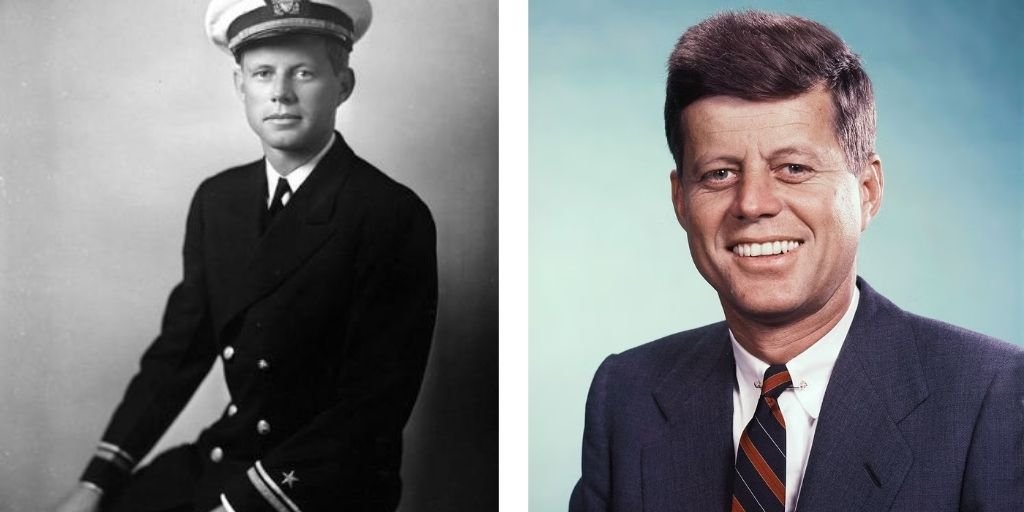
John F. Kennedy remains one of the most recognizable presidents in American history. His time in the White House was short, but his influence reached far beyond the years he served. From his early political career to the challenges of the Cold War, the space race, and the civil rights struggle, his life reflected a period of enormous change in the United States.
Why does his name still attract so much attention decades later? Part of the answer lies in the combination of his youth, communication skills, political ambition, family background, and the dramatic events surrounding his presidency. Kennedy represented a new generation of leadership at a time when the world was becoming increasingly connected and increasingly dangerous.
Early Life and Family Background
John Fitzgerald Kennedy was born on May 29, 1917, in Brookline, Massachusetts. He was the second son of Joseph P. Kennedy Sr. and Rose Fitzgerald Kennedy. His father was a successful businessman and later became an important political figure, while his mother came from a prominent Boston family.
Kennedy grew up in a large family with strong political ambitions. His siblings included Robert Kennedy and Edward Kennedy, both of whom later became important figures in American politics.
A privileged but demanding childhood
Kennedy’s family had considerable wealth, but growing up in such a competitive household came with expectations. His father encouraged his children to achieve and become involved in public life.
As a young man, Kennedy also experienced serious health problems. Despite these difficulties, he continued his education and developed an interest in history, international affairs, and politics.
He attended Harvard University, where he studied government and international relations. His undergraduate thesis later became a book titled Why England Slept, examining Britain’s preparedness before World War II.
Military Service and World War II
Before entering politics, Kennedy served in the United States Navy during World War II. His military experience became an important part of his public identity.
In 1943, Kennedy was serving as the commander of a patrol torpedo boat, PT-109, in the Pacific. The boat was struck by a Japanese destroyer and badly damaged.
Kennedy and his crew faced a dangerous situation. Despite his own injuries, he helped his surviving crew members reach safety. He reportedly swam through difficult conditions while helping injured sailors.
His actions earned him the Navy and Marine Corps Medal and later became part of his political story.
From war hero to public servant
The war changed Kennedy’s life. His older brother Joseph P. Kennedy Jr., who had also been expected to enter politics, was killed during a military mission in 1944.
After the war, Kennedy increasingly turned toward public service. His family background, education, military record, and growing political confidence gave him a strong foundation for a career in government.
Beginning of a Political Career
Kennedy entered national politics in 1946 when he successfully ran for the U.S. House of Representatives from Massachusetts.
He served in the House for several terms before moving to the Senate in 1952. His political reputation continued to grow, although his career was not without difficulties.
Marriage and public image
Kennedy married Jacqueline Bouvier in 1953. Jacqueline, later widely known as Jackie Kennedy, became an important public figure in her own right.
The couple’s youth, style, and family attracted enormous media attention. When Kennedy entered the presidential race, his image was very different from that of many older political leaders.
His health problems continued during these years, and he underwent major medical treatment. Yet he remained politically active.
In 1957, Kennedy won the Pulitzer Prize for his book Profiles in Courage. The book discussed American politicians who had demonstrated courage by making difficult political decisions.
Whether discussing policy, history, or leadership, Kennedy increasingly presented himself as someone willing to accept responsibility when circumstances became difficult.
The 1960 Presidential Election
The 1960 election was one of the most closely watched political contests in American history.
Kennedy won the Democratic nomination and faced Republican candidate Richard Nixon, who was serving as vice president under President Dwight D. Eisenhower.
The election was extremely competitive.
The famous television debates
One major development was the presidential television debate. Millions of Americans watched Kennedy and Nixon debate national issues.
Kennedy appeared confident and comfortable in front of the television cameras. His youthful appearance and communication style helped create a powerful public impression.
The election was ultimately decided by a very narrow margin in the popular vote. Kennedy won the Electoral College and became the 35th president of the United States.
At only 43 years old, he was the youngest person ever elected president at that time and the first Roman Catholic elected to the presidency.
His victory symbolized a changing America.
A New Generation in the White House
Kennedy entered office on January 20, 1961. His inaugural address became one of the most famous speeches in American political history.
His message emphasized public service and responsibility. Rather than presenting citizenship simply as something people received from government, he encouraged Americans to think about what they could contribute themselves.
His administration included several young and talented officials. His brother Robert Kennedy became attorney general, while other advisers brought experience in economics, foreign affairs, defense, and government.
The idea of the New Frontier
Kennedy described his domestic program as the “New Frontier.” The phrase represented his vision of moving the country forward in areas such as education, economic growth, science, health, and social progress.
Not every proposal succeeded in Congress. Kennedy faced opposition from members of both parties and from powerful political interests.
Still, his administration helped create an atmosphere of ambition and possibility.
It was almost like trying to turn the steering wheel of a large ship while it was already moving. The president could influence the direction, but he could not instantly change everything.
The Cold War and International Challenges
Kennedy’s presidency unfolded during the Cold War, when the United States and Soviet Union competed for political, military, technological, and ideological influence around the world.
The threat of nuclear war was a constant concern.
The Bay of Pigs invasion
One of Kennedy’s earliest foreign-policy crises came in Cuba.
In April 1961, a group of Cuban exiles attempted to overthrow Fidel Castro’s government with support from the United States. The invasion at the Bay of Pigs failed.
The episode was a major embarrassment for Kennedy’s administration.
Kennedy accepted responsibility for the failure rather than simply blaming others. The experience also influenced how he approached later national-security decisions.
The Cuban Missile Crisis
The most dangerous moment of his presidency came in October 1962.
American officials discovered Soviet missiles being placed in Cuba. Because Cuba was close to the United States, the situation created a serious threat.
Kennedy had several choices, including military action. Instead, his administration imposed a naval blockade, which it described as a quarantine, while negotiations continued.
For several tense days, the world appeared dangerously close to nuclear conflict.
Eventually, Soviet leader Nikita Khrushchev agreed to remove the missiles from Cuba. The United States also made commitments concerning American missiles in Turkey, although that part of the agreement was not publicly emphasized at the time.
The crisis demonstrated how quickly a political confrontation could become a global disaster.
Kennedy’s handling of the situation remains one of the most studied parts of his presidency.
The Space Race and the Moon Ambition
Kennedy’s presidency also coincided with an extraordinary competition in space exploration.
The Soviet Union had achieved several early milestones, including launching Sputnik and sending Yuri Gagarin into space. American leaders worried that the Soviet achievements demonstrated technological superiority.
Kennedy responded by setting an ambitious goal.
A journey to the Moon
In 1961, Kennedy challenged the United States to land a person on the Moon and return that person safely to Earth before the decade ended.
At the time, this sounded almost impossible.
The United States had only recently begun sending humans into space. Yet Kennedy’s challenge helped give NASA and the American scientific community a clear national objective.
The goal was eventually achieved in 1969, six years after Kennedy’s death, when Apollo 11 astronauts Neil Armstrong and Buzz Aldrin walked on the Moon.
Kennedy therefore became closely associated with one of the greatest technological ambitions of the twentieth century.
Civil Rights and Domestic Change
The civil rights movement became increasingly important during Kennedy’s presidency.
African Americans were fighting against segregation, discrimination, and unequal access to voting and other rights. Demonstrations and confrontations occurred across the country.
Initially, Kennedy approached civil rights cautiously, partly because he faced political resistance from Southern Democrats.
However, events gradually pushed his administration toward stronger action.
The struggle for equality
In 1961, Freedom Riders challenged segregation in interstate transportation. Violence against civil rights activists brought national attention to the issue.
The administration also became involved in major disputes over the integration of universities, including the University of Mississippi and the University of Alabama.
In June 1963, Kennedy delivered a major televised address in which he presented civil rights as a moral issue as well as a political one.
He then proposed comprehensive civil rights legislation.
Kennedy did not live to see that legislation become law. After his assassination, President Lyndon B. Johnson strongly supported the bill, which became the Civil Rights Act of 1964.
This is an important part of Kennedy’s legacy because it shows how political progress can continue beyond the life of the leader who first pushes an issue forward.
Kennedy’s Communication Skills and Public Image
One reason Kennedy remains so memorable is his ability to communicate.
His speeches were carefully written, but they were also designed to sound direct and inspiring.
His inaugural address is remembered for encouraging citizens to think about service and responsibility.
The power of television
Kennedy understood the growing importance of television in American politics.
He often appeared calm and composed during televised events. His press conferences were also notable because he answered questions directly and sometimes used humor.
The Kennedy family became part of American popular culture. Jackie Kennedy’s fashion, interest in historic preservation, and public appearances generated international attention.
The White House was presented as a place of youth, culture, music, and intellectual life.
This helped create the image of a modern presidency.
However, Kennedy’s public image was not the complete story. Behind the polished photographs and speeches were difficult political decisions, serious health problems, military tensions, and complicated personal circumstances.
Major Achievements and Challenges
Kennedy’s presidency lasted less than three years, so judging his record requires understanding both what he accomplished and what remained unfinished.
His administration helped establish important initiatives in science, international diplomacy, defense, and civil rights.
Peace Corps and public service
One lasting initiative was the creation of the Peace Corps in 1961. The organization sent American volunteers abroad to assist with education, community development, health, and other projects.
The idea reflected Kennedy’s belief that ordinary citizens could contribute to international understanding.
Nuclear arms control
Kennedy also moved toward reducing tensions with the Soviet Union after the Cuban Missile Crisis.
In 1963, the United States, Soviet Union, and United Kingdom signed the Limited Nuclear Test Ban Treaty. It prohibited nuclear tests in the atmosphere, outer space, and underwater.
The treaty did not end the Cold War, but it represented an important step toward limiting nuclear dangers.
Economic policy
Kennedy supported economic measures intended to encourage growth and employment. His administration also became involved in debates about taxes, wages, trade, and government spending.
Some of his proposals were controversial, but several became important components of later economic policy.
Assassination in Dallas
On November 22, 1963, Kennedy traveled to Dallas, Texas, as part of a political trip.
He was riding in a motorcade through the city with Jackie Kennedy and Texas Governor John Connally and his wife, Nellie Connally.
Shots were fired as the motorcade passed through Dealey Plaza.
Kennedy was fatally wounded.
He was transported to Parkland Memorial Hospital, where doctors attempted to save him. He was pronounced dead shortly after arriving.
The nation was stunned.
Lee Harvey Oswald
Lee Harvey Oswald was arrested shortly after the shooting and accused of assassinating the president.
Two days later, Oswald was shot and killed by nightclub owner Jack Ruby while being transferred by police.
Because Oswald never stood trial, questions surrounding the assassination continued for decades.
The Warren Commission later concluded that Oswald acted alone. Other investigations, researchers, historians, and members of the public have continued to debate aspects of the case.
The assassination became one of the defining tragedies of twentieth-century America.
Legacy of John F. Kennedy
Kennedy’s legacy is larger than the policies passed during his presidency.
His presidency became associated with youth, optimism, public service, technological ambition, and leadership during dangerous international crises.
A symbol of possibility
For many Americans, Kennedy represented the belief that government could inspire people to attempt difficult things.
The Moon program is perhaps the clearest example. The goal began as an enormous challenge and eventually became a reality.
His words also continued to influence public discussions about citizenship.
At the same time, a balanced view should recognize that Kennedy was not a perfect president. His administration experienced serious failures, including the Bay of Pigs invasion. His record on civil rights developed over time rather than beginning with the strongest possible position.
Historical figures are rarely simple.
Kennedy’s story is better understood as a combination of achievement, controversy, ambition, mistakes, and unfinished work.
Why John F. Kennedy Still Matters Today
Why does a president who served for such a short period remain so familiar?
One reason is that Kennedy lived at the intersection of several major historical changes. The United States was dealing with racial inequality, nuclear weapons, technological competition, global conflict, and rapid changes in communication.
He also became president during the rise of television, allowing millions of people to experience presidential leadership in a more immediate way.
His assassination further transformed his place in history.
For many people, Kennedy became a symbol of a lost future—a leader whose presidency ended before its possibilities could fully develop.
Yet his most valuable lesson may be broader than nostalgia.
His life demonstrates how leadership involves choices under pressure. A president may have tremendous authority, but every decision carries consequences. Sometimes the wisest action is not the most dramatic one.
Kennedy’s response to the Cuban Missile Crisis is a powerful example. Instead of rushing into military action, his administration created space for negotiation.
That lesson remains relevant whenever nations face dangerous confrontations.
Conclusion
John F. Kennedy’s life was remarkably short, but it contained military service, political achievement, international crises, technological ambition, and historic tragedy. From his early years in Massachusetts to his years in Congress and the White House, he became one of the most recognizable leaders of the twentieth century.
His presidency brought successes and failures. He faced the Cold War, the Cuban Missile Crisis, the space race, civil rights challenges, and difficult domestic debates. His assassination in 1963 abruptly ended his leadership, leaving many questions about what might have happened if he had lived.
Yet his influence continued. The Peace Corps, nuclear test-ban efforts, the push toward civil rights legislation, and the vision of reaching the Moon all became important parts of his historical story.
Perhaps that is why his legacy continues to attract attention. Kennedy reminds us that history is not simply about how long someone holds power. Sometimes a short period of leadership can leave an unusually deep mark.
Frequently Asked Questions
1. Who was John F. Kennedy?
John F. Kennedy was the 35th president of the United States. He served from January 1961 until his assassination in November 1963.
2. What was John F. Kennedy best known for?
He is best known for his leadership during the Cold War, the Cuban Missile Crisis, his support for the space program, his famous speeches, the creation of the Peace Corps, and his evolving support for civil rights.
3. How old was John F. Kennedy when he became president?
Kennedy was 43 years old when he was inaugurated in January 1961, making him the youngest person elected president at that time.
4. What happened to John F. Kennedy?
Kennedy was assassinated on November 22, 1963, while traveling in a presidential motorcade in Dallas, Texas. Lee Harvey Oswald was arrested and accused of the assassination but was killed before he could stand trial.
5. What is John F. Kennedy’s lasting legacy?
His legacy includes his approach to Cold War diplomacy, the push toward the Moon landing, the Peace Corps, his civil rights initiatives, and his powerful influence on American political culture and presidential communication.