
Vincent van Gogh: Amazing Life, Art, Paintings & Lasting Legacy
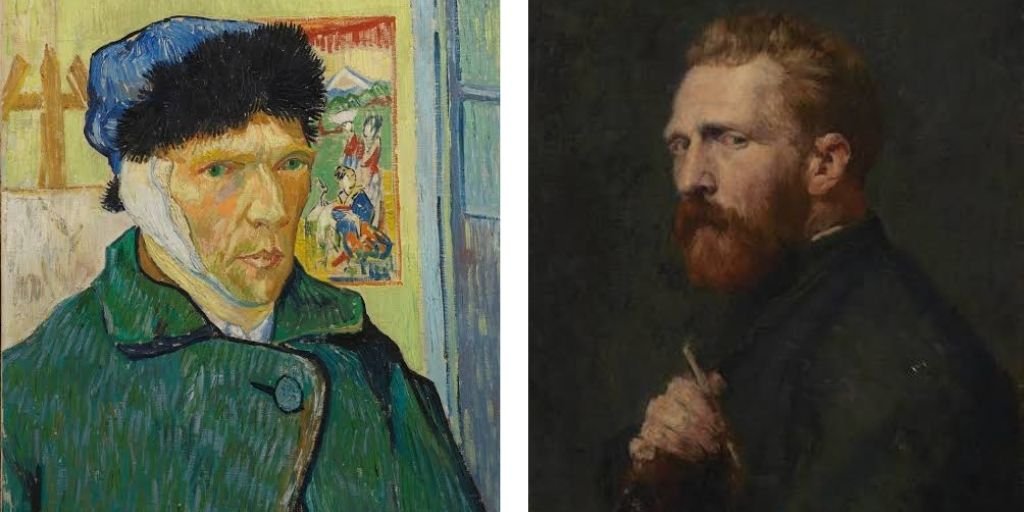
Vincent van Gogh is one of the most recognized artists in the history of Western art. His paintings are famous for their bold colors, swirling brushstrokes, emotional energy, and unforgettable subjects. Yet behind those paintings was a complicated man who spent much of his life searching for purpose, connection, and a place in the world.
How did an artist who sold very little during his lifetime become one of the most celebrated painters ever? Why do works such as The Starry Night, Sunflowers, and The Bedroom continue to attract millions of people?
The answer is not simply talent. Van Gogh brought emotion into every brushstroke. His art often feels alive, almost as if the canvas is breathing. His short and difficult life became deeply connected with his work, creating a story that continues to fascinate people more than a century after his death.
1. Early Life and Family Background
Vincent Willem van Gogh was born on March 30, 1853, in the village of Groot-Zundert in the Netherlands. He grew up in a religious family. His father, Theodorus van Gogh, was a Protestant minister, while his mother, Anna Carbentus van Gogh, came from a family with an interest in art and books.
Vincent was one of several children, and his younger brother Theo would eventually become the most important person in his life.
As a young boy, Vincent was thoughtful, serious, and sometimes withdrawn. He enjoyed walking through the countryside and observing nature. Those early experiences later became important to his artistic imagination.
His relationship with Theo was especially significant. Theo worked in the art business and supported Vincent emotionally and financially for many years. The brothers exchanged hundreds of letters, giving historians an unusually detailed look into Vincent’s thoughts, ambitions, frustrations, and artistic development.
Before becoming a painter, however, Vincent tried several different paths.
He worked for an art dealership, taught in England, studied religion, and eventually became a preacher. His desire to help poor and working people was particularly strong. He spent time among miners in Belgium and lived in difficult conditions because he wanted to understand their lives.
This period showed an important part of his personality. Vincent did not simply want to observe people from a distance. He wanted to experience their struggles.
That compassion later appeared in his paintings.
2. From Preacher to Passionate Artist
Van Gogh did not seriously begin his career as a professional artist until he was in his late twenties. In 1880, he decided to focus on drawing and painting.
At first, he struggled technically. His early drawings were often dark and heavy, and he spent considerable time studying human figures, landscapes, and everyday objects.
Vincent taught himself through practice, books, museum visits, and guidance from other artists. He also worked with artists such as Anton Mauve, who was related to him through marriage.
His early work focused strongly on ordinary people.
Rather than painting wealthy families or glamorous scenes, he was interested in farmers, workers, peasants, and rural life. He believed these people deserved artistic attention.
One of his most important early paintings was The Potato Eaters, completed in 1885.
The painting shows a poor farming family sitting around a table while eating potatoes. The colors are dark, and the faces and hands appear rough. Van Gogh deliberately avoided making the people look beautiful in a traditional sense.
He wanted the painting to communicate the reality of their lives.
Vincent once described his intention as showing people who had earned their meal through honest work. The painting was not immediately successful, but it demonstrated the direction his art was taking.
He was searching for something deeper than surface beauty.
3. Paris and the Discovery of Color
A major transformation occurred when Van Gogh moved to Paris in 1886 to live with his brother Theo.
Paris was one of the most exciting artistic centers in Europe. Vincent encountered the work of Impressionist and Post-Impressionist painters, including Claude Monet, Camille Pissarro, Edgar Degas, and Georges Seurat.
The experience changed his approach to painting.
His earlier work had been dominated by dark earth tones. In Paris, he discovered the power of brighter colors. He began experimenting with yellow, blue, red, green, and other vivid combinations.
His brushwork also became more energetic.
Imagine an artist who had been working in a room filled with shadows suddenly opening the curtains and seeing sunlight for the first time. Paris had a similar effect on Vincent’s artistic development.
He painted portraits, city scenes, flowers, restaurants, and self-portraits. His famous series of self-portraits from this period shows how quickly his style developed.
Van Gogh also became interested in Japanese woodblock prints, known as ukiyo-e. Their strong outlines, unusual compositions, flat areas of color, and attention to everyday subjects influenced him greatly.
Paris helped Vincent realize that color could communicate feelings, not merely describe objects.
This discovery would become one of the defining characteristics of his mature paintings.
4. The Move to Arles and the Yellow House
In 1888, Van Gogh left Paris and moved to Arles in southern France.
He was attracted by the bright sunlight, rural landscapes, fields, orchards, and strong colors of the region. He hoped to establish an artistic community where painters could live and work together.
Vincent rented part of a building known as the Yellow House.
He dreamed that other artists would join him there. His friend and fellow artist Paul Gauguin eventually arrived, and the two worked together for a short period.
Their relationship was complicated. Both men were passionate about art, but they had very different personalities and artistic ideas. Their disagreements became increasingly intense.
During his time in Arles, however, Van Gogh produced some of his most famous paintings.
He painted fields, cafes, portraits, landscapes, and still lifes. His Sunflowers series became especially important.
The paintings feature yellow flowers arranged in simple containers. At first glance, the subject seems ordinary. But Vincent transformed it through color, texture, and energetic brushwork.
The flowers appear both beautiful and fragile.
He also created The Bedroom, a painting showing the interior of his room in the Yellow House. The simple furniture, bright walls, and unusual perspective give the scene a strangely personal feeling.
It is almost like looking into someone’s private world.
5. Vincent van Gogh and Paul Gauguin
Paul Gauguin’s stay in Arles became an important but difficult chapter in Van Gogh’s life.
The two artists discussed painting constantly. Vincent preferred working directly from nature, while Gauguin was more willing to use imagination and memory.
Their artistic disagreements sometimes became personal.
By late 1888, tensions between them had become severe. After an incident involving a razor, Gauguin left Arles.
Van Gogh then suffered a serious mental health crisis and was taken to a hospital.
The famous story of Van Gogh cutting off part of his ear has been repeated countless times. While the basic event is historically documented, many details surrounding it have been debated by historians.
What is clear is that the incident marked a major crisis in his life.
It is also important not to reduce Van Gogh’s entire story to this event.
For many years, popular culture presented him mainly as the stereotypical image of the “mad artist.” That description is far too simple. His life involved creativity, friendship, ambition, loneliness, financial difficulties, physical illness, and psychological suffering.
His artistic achievements cannot be explained by suffering alone.
In fact, he continued to create remarkable work during periods when his life was extremely difficult.
6. Saint-Rémy and Some of His Greatest Paintings
After the crisis in Arles, Van Gogh voluntarily entered the Saint-Paul-de-Mausole asylum in Saint-Rémy-de-Provence in 1889.
He continued painting while receiving care.
This period produced some of his most famous works.
Among them is The Starry Night, painted in June 1889.
The painting presents a nighttime view filled with swirling movement, glowing stars, a bright moon, a quiet village, and a tall cypress tree. The sky seems to move like waves.
Why does the painting remain so powerful?
Perhaps because it transforms a familiar nighttime landscape into something emotional and almost dreamlike. The stars are not simply points of light. They become part of the painting’s emotional atmosphere.
Van Gogh also produced works such as Irises, Wheat Field with Cypresses, and numerous portraits and landscapes during this period.
His technique became increasingly expressive. Instead of trying to reproduce reality exactly, he used lines, shapes, and colors to communicate how a scene felt to him.
That distinction is essential to understanding his art.
A tree in a Van Gogh painting is not simply a tree. It can become a symbol of movement, strength, loneliness, or life.
7. Van Gogh’s Unique Painting Style
What makes a Van Gogh painting instantly recognizable?
Several features stand out.
Bold Brushwork
Van Gogh often applied paint in thick, visible strokes. Instead of hiding the process of painting, he allowed viewers to see it.
Powerful Colors
He used intense colors to create emotional effects. Yellow, blue, green, orange, and red frequently appear in combinations that feel energetic.
Movement
His brushstrokes often create a sense of motion. Clouds, trees, stars, grass, and fields may seem to move across the canvas.
Ordinary Subjects
He painted bedrooms, chairs, shoes, flowers, farmers, cafes, and landscapes. His genius was partly in transforming ordinary things into memorable images.
Emotional Expression
Van Gogh was not simply interested in what something looked like. He wanted to express what it meant or felt like.
His style developed from traditional academic drawing toward the expressive approach associated with Post-Impressionism.
However, it is difficult to place him neatly into one artistic category. His work contains influences from Impressionism, Japanese prints, realism, and other movements while remaining distinctly his own.
8. Famous Vincent van Gogh Paintings
Van Gogh created around 2,000 artworks, including roughly 900 paintings and many drawings and sketches.
Several have become cultural icons.
The Starry Night
Perhaps his most famous painting, The Starry Night was created while he was staying at the asylum in Saint-Rémy. Its swirling sky and brilliant stars have made it one of the most recognizable images in modern art.
Sunflowers
Van Gogh painted several versions of sunflowers. These works demonstrate his fascination with yellow and his ability to create visual richness from a simple subject.
The Bedroom
This painting shows his room in the Yellow House in Arles. Its simple furniture and unusual perspective create a deeply personal atmosphere.
The Potato Eaters
An important early work, it reflects his interest in working-class rural life and demonstrates the darker style of his early period.
Irises
Painted at Saint-Rémy, Irises demonstrates his ability to combine strong colors with flowing shapes.
Wheat Field with Cypresses
This series reflects his fascination with the landscape around Saint-Rémy. The tall cypress trees become powerful vertical forms against the moving sky.
Self-Portraits
Van Gogh created numerous self-portraits, particularly during his years in Paris. Together, they document the evolution of his appearance, technique, and artistic style.
Each painting gives us another piece of the puzzle.
9. His Relationship With Theo and His Final Years
Theo van Gogh played a central role in Vincent’s life.
As an art dealer, Theo understood the changing art world and helped Vincent financially. More importantly, he encouraged his brother to continue painting.
Vincent depended heavily on Theo’s support, and their letters reveal how much their relationship mattered.
Despite his difficulties, Vincent remained determined to develop as an artist.
In 1890, he moved to Auvers-sur-Oise, a village near Paris, where he came under the care of Dr. Paul Gachet.
During his short time there, Vincent painted at an extraordinary pace.
He created landscapes, portraits, houses, gardens, and fields. His works from Auvers include Portrait of Dr. Gachet, Church at Auvers, and Wheatfield with Crows.
Sadly, his life ended on July 29, 1890, at the age of 37, following a shooting incident two days earlier.
His death brought an end to a life that had lasted only a few decades but left an extraordinary artistic legacy.
Theo was deeply affected by Vincent’s death and died only a few months later.
The brothers were eventually buried together at Auvers-sur-Oise.
10. Why Vincent van Gogh Became Famous After His Death
One of the most fascinating parts of Van Gogh’s story is that he was not widely successful during his lifetime.
He struggled financially and sold very few paintings.
So how did his reputation grow?
Theo and other supporters helped promote his work after his death. Exhibitions introduced more people to his paintings, while critics and artists increasingly recognized the originality of his style.
His sister-in-law, Johanna van Gogh-Bonger, also played a major role in preserving and promoting Vincent’s work and correspondence after Theo’s death.
Over time, his reputation expanded dramatically.
Artists who followed him were influenced by his use of color and expressive brushwork. His paintings became increasingly important to the development of modern art.
Today, Van Gogh is not remembered as an unsuccessful painter.
He is remembered as an artist who changed the possibilities of painting.
His story also became part of popular culture. Books, films, documentaries, exhibitions, merchandise, and museums have introduced his work to generations of new audiences.
The tragedy is that Vincent never lived long enough to experience the level of recognition his work eventually received.
11. Vincent van Gogh’s Influence on Modern Art
Van Gogh’s influence reaches far beyond his own paintings.
His emotional approach to color and brushwork influenced later artists, especially those associated with Expressionism and other modern movements.
He showed that painting could be more than an accurate representation of the physical world.
A painter could distort shapes, exaggerate colors, and change the rhythm of brushstrokes to communicate emotion.
That idea became extremely important in twentieth-century art.
His influence can also be seen outside traditional painting.
Today, his work appears in educational materials, fashion, design, animation, advertising, digital media, and popular culture.
Why does his art remain so accessible?
One reason is that his subjects are easy to understand.
You do not need to be an art historian to recognize a sunflower, a starry night, a bedroom, or a wheat field. Yet once you look closely, you discover layers of emotion and technique.
His paintings work on two levels: they are immediately recognizable, but they also reward deeper attention.
12. Vincent van Gogh’s Lasting Legacy
Van Gogh’s legacy is much larger than a collection of famous paintings.
His life reminds us that recognition does not always arrive quickly. He spent years working without the success he wanted, yet he continued developing his craft.
That determination is one reason people around the world connect with him.
His story also encourages us to look beyond stereotypes.
It is easy to describe him only as a troubled genius. But Vincent was far more complicated. He was a reader, letter writer, draftsman, painter, brother, friend, dreamer, and deeply observant human being.
He cared about ordinary people and ordinary places.
He saw beauty in fields, flowers, workers, trees, bedrooms, and night skies.
Perhaps that is his greatest gift.
Van Gogh showed that you do not need an extraordinary subject to create extraordinary art. Sometimes the familiar world is enough if you look at it with fresh eyes.
His paintings continue to speak because they feel human.
The thick strokes, brilliant colors, quiet interiors, restless skies, and expressive faces seem to carry something of the person who made them.
More than a century after his death, people still stand before his paintings and ask the same basic question: What was Vincent trying to tell us?
Maybe there is no single answer.
Perhaps the power of his work comes from the fact that every viewer can find something different in it.
Conclusion
Vincent van Gogh’s life was short, difficult, and filled with uncertainty, but his artistic achievement was extraordinary. From his early paintings of rural workers to the brilliant landscapes and portraits of his later years, he constantly searched for new ways to express what he saw and felt.
His fame came largely after his death, but his influence has continued to grow. Paintings such as The Starry Night, Sunflowers, and The Bedroom have become part of global culture.
Van Gogh teaches us that art is not always about perfect beauty. Sometimes it is about emotion, honesty, movement, and seeing ordinary life in a completely new way. His paintings remain powerful because they do exactly that.
Frequently Asked Questions
1. Who was Vincent van Gogh?
Vincent van Gogh was a Dutch painter who became one of the most influential figures in Western art. He created around 900 paintings and many drawings during his career, including The Starry Night, Sunflowers, and The Potato Eaters.
2. What is Vincent van Gogh’s most famous painting?
The Starry Night is generally considered his most famous painting. Created in 1889 while Van Gogh was staying at an asylum in Saint-Rémy, it is known for its swirling night sky, bright stars, and expressive brushwork.
3. Why did Vincent van Gogh use so much yellow?
Yellow became an important part of Van Gogh’s artistic vocabulary, particularly during his time in southern France. He used it to represent sunlight, warmth, energy, and emotional intensity.
4. Did Vincent van Gogh become famous during his lifetime?
Van Gogh achieved very limited commercial success during his lifetime. His reputation grew significantly after his death as his paintings were exhibited, discussed, collected, and promoted by people who recognized their importance.
5. Why is Vincent van Gogh important to art history?
Van Gogh helped expand the expressive possibilities of painting. His bold colors, visible brushwork, emotional landscapes, and unusual compositions influenced generations of modern artists and helped shape the development of mode