
Sir Isaac Newton: Life, Discoveries, Laws & Lasting Legacy
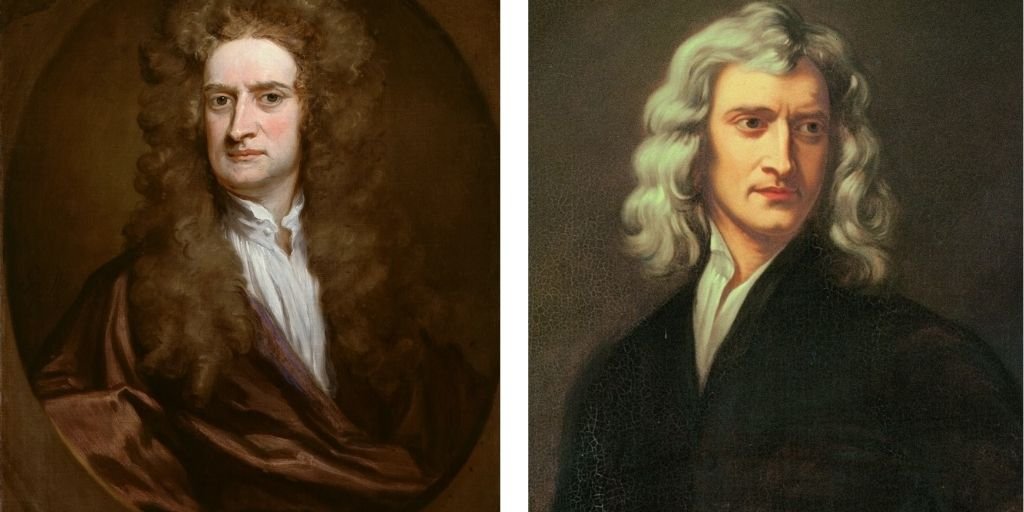
Sir Isaac Newton is one of the most influential figures in the history of science. When we think about gravity, motion, light, and the mathematical rules that describe the physical world, his name quickly comes to mind. But who was the man behind these famous discoveries?
Newton was more than a scientist sitting alone with books and experiments. He was a mathematician, physicist, astronomer, philosopher, and deeply curious thinker who wanted to understand how nature worked. His ideas changed the way people looked at the universe and helped establish many of the foundations of modern science.
From his early years in England to his remarkable work at Cambridge, Newton spent much of his life asking difficult questions. Why do objects fall? Why do planets remain in orbit? What makes light behave differently when it passes through a prism? Could the movements of objects on Earth and in the heavens be explained by the same principles?
His search for answers produced discoveries that would influence science for centuries.
Early Life and Family Background
Isaac Newton was born on January 4, 1643, in Woolsthorpe, Lincolnshire, England, according to the calendar then used in England. His father, also named Isaac Newton, had died before his birth. Newton was therefore born into a farming family during a difficult period in English history.
His childhood was not especially easy. When Newton was still young, his mother, Hannah Ayscough, remarried and left him in the care of his grandmother for several years. This separation appears to have affected him deeply.
As a child, Newton showed a strong interest in building things and understanding how they worked. He reportedly made small mechanical devices, including clocks and models. Instead of simply accepting how something worked, he wanted to take the idea apart mentally and understand its moving pieces.
This curiosity became one of the defining features of his personality.
Newton was initially expected to follow a farming path. However, it soon became clear that agriculture was not where his greatest talents lay. His education eventually opened the door to a very different future.
He attended The King’s School in Grantham, where he developed an interest in mathematics and science. His academic ability became increasingly obvious, and he eventually entered Trinity College, Cambridge, in 1661.
That decision changed the course of science.
Education at Cambridge
At Cambridge, Newton studied subjects that would help shape his future work. He read mathematics, philosophy, astronomy, and the works of earlier thinkers.
However, Newton was not satisfied with simply learning established ideas. He wanted to investigate problems himself.
During the 1660s, Cambridge became an important intellectual environment for him. He studied the work of famous thinkers such as Galileo Galilei, Johannes Kepler, René Descartes, and others.
One of Newton’s greatest strengths was his ability to connect ideas that other people often treated separately.
Imagine having thousands of puzzle pieces scattered across a table. Newton had an unusual ability to recognize which pieces belonged together. He could take observations about falling objects, planetary motion, mathematics, and light and search for the deeper principles connecting them.
His university years were especially productive when the plague forced Cambridge to close in 1665. Newton returned to Woolsthorpe and continued working independently.
These years are sometimes described as his “annus mirabilis,” or miraculous years, because several major ideas developed during this period.
He explored mathematics, motion, gravity, and optics. Although some of these ideas would take years to fully develop and publish, the foundations were being built.
Newton and the Famous Apple Story
Few scientific stories are as famous as the apple associated with Newton.
According to the traditional account, Newton was sitting beneath an apple tree when he saw an apple fall. This supposedly made him think about why objects always fall toward Earth.
Did an invisible force pull the apple downward? If so, could that same force extend far enough to influence the Moon?
The popular version of the story has probably been simplified over time. There is no strong evidence that an apple literally struck Newton on the head.
However, the underlying idea is important.
Newton was interested in whether the force that causes an object to fall on Earth could be connected to the force governing celestial motion.
This was a revolutionary way of thinking.
Instead of treating earthly events and heavenly movements as completely different subjects, Newton searched for one universal explanation.
That idea eventually contributed to his theory of universal gravitation.
The Laws of Motion
Newton’s three laws of motion became among the most famous principles in physics.
They describe relationships between forces and the movement of objects. Even though the language of physics has become much more advanced, Newton’s laws remain extremely useful for understanding everyday motion.
First Law: Inertia
Newton’s first law states that an object will remain at rest or continue moving in a straight line at a constant speed unless acted upon by an external force.
Think about a football lying on the ground. It does not suddenly start moving by itself. Someone has to kick it.
Now imagine a ball rolling across a smooth surface. It would continue moving if nothing slowed it down. In the real world, friction and air resistance usually interfere.
This tendency to resist changes in motion is called inertia.
Second Law: Force and Acceleration
Newton’s second law explains how force affects motion. In its familiar mathematical form, force is related to mass and acceleration.
The basic idea is simple: applying more force generally produces more acceleration, while a heavier object requires more force to achieve the same acceleration.
This principle helps explain everything from pushing a shopping cart to designing vehicles and spacecraft.
Third Law: Action and Reaction
Newton’s third law is often summarized as: for every action, there is an equal and opposite reaction.
Consider walking.
When you push your foot backward against the ground, the ground pushes your foot forward. That reaction helps move your body ahead.
The same principle helps explain swimming, rocket propulsion, jumping, and many other forms of movement.
Together, Newton’s three laws created a powerful framework for understanding motion.
Universal Gravitation and the Movement of Planets
Newton’s work on gravity was perhaps his most famous scientific achievement.
Before Newton, scientists had made important discoveries about planetary motion. Johannes Kepler had identified mathematical patterns describing the paths of planets around the Sun.
Newton went further by asking what physical force could explain those movements.
His theory of universal gravitation proposed that every object with mass attracts every other object with mass.
The strength of that attraction depends on the masses involved and the distance between them.
This idea helped explain why an apple falls toward Earth, why the Moon remains in orbit, and why planets travel around the Sun.
The significance was enormous.
Newton showed that the same natural principle could operate across Earth and the wider universe.
The night sky was no longer completely separate from everyday life. The falling apple and orbiting Moon could be understood within the same mathematical framework.
This was a major step toward the modern scientific picture of the universe.
The Principia: Newton’s Greatest Scientific Work
In 1687, Newton published one of the most important scientific books ever written: Philosophiæ Naturalis Principia Mathematica, commonly known as the Principia.
The book presented his laws of motion and theory of universal gravitation.
The work was difficult to read and was written for a relatively specialized audience. Yet its influence was enormous.
Newton used mathematics to describe physical events with remarkable precision. He demonstrated that planetary motion, falling bodies, tides, and other phenomena could be studied through mathematical principles.
The Principia helped establish what became known as classical mechanics.
For centuries, scientists used Newton’s framework to understand mechanical systems.
His work also showed the growing power of mathematics as a language for describing nature.
In many ways, the Principia became a blueprint for scientific thinking: observe nature, develop mathematical relationships, test ideas, and use them to explain multiple phenomena.
Newton’s Work on Light and Color
Newton was fascinated by light.
His experiments with prisms helped demonstrate that white light is composed of different colors.
When sunlight passes through a glass prism, it can separate into a spectrum of colors. Newton carefully studied this effect and argued that the colors were already present in white light rather than being created by the prism.
This challenged some existing assumptions about color.
He also experimented with combining colors again to produce white light.
His research contributed significantly to the scientific study of optics.
Newton’s interest in light was not merely theoretical. He wanted to understand what light actually was and how it behaved.
The Reflecting Telescope
Newton also designed an improved type of telescope known as the reflecting telescope.
Traditional telescopes of the period commonly used lenses. Newton recognized that lenses could create an optical problem called chromatic aberration, where different colors of light focus differently.
His solution was to use mirrors instead.
The resulting design was smaller and more practical than many refracting telescopes of the time and became an important development in astronomical instruments.
This showed another side of Newton’s talent: he did not simply develop theories. He also created practical devices to investigate nature.
Newton and the Development of Calculus
Newton made major contributions to mathematics, including the development of methods that became calculus.
At roughly the same time, the German mathematician Gottfried Wilhelm Leibniz independently developed his own form of calculus.
The later dispute over priority became one of the most famous intellectual conflicts in mathematical history.
Newton’s mathematical methods were closely connected to his work in physics. He needed powerful mathematical tools to describe changing quantities, motion, and rates.
Calculus eventually became essential across science and engineering.
Today, it is used in fields ranging from physics and astronomy to economics, engineering, computer science, and biology.
Although modern calculus is much more developed than Newton’s original methods, his contribution helped transform mathematics into a tool capable of describing continuous change.
Newton’s Personality and Private Interests
It is tempting to imagine Newton as a calm, perfectly organized genius. The historical reality was more complicated.
He could be intensely private, stubborn, competitive, and deeply absorbed in his work.
Newton also spent considerable time studying subjects that modern science would place outside mainstream scientific research, including alchemy and religious interpretation.
This may seem surprising today.
Why would one of history’s greatest physicists study alchemy?
The answer is that the boundaries between science, philosophy, religion, chemistry, and mystical traditions were different in Newton’s time. He was interested in discovering hidden principles behind nature.
His notebooks reveal a man with an extraordinary appetite for knowledge.
He did not limit his curiosity to subjects that would later become recognized as conventional science.
Newton also had conflicts with other intellectuals, particularly when questions of priority were involved. His disagreements with Leibniz over calculus and with Robert Hooke over scientific ideas show how intensely he defended his intellectual work.
His brilliance did not make him free from human emotions.
In fact, perhaps that makes his story more interesting.
Newton’s Later Career and Public Life
Newton eventually moved beyond university research into important public positions.
In 1696, he became Warden of the Royal Mint and later Master of the Mint.
This was a significant government role.
Newton took the responsibilities seriously. He worked on matters involving the English currency and became involved in efforts to combat counterfeiting.
His scientific reputation helped make him a respected public figure.
He also served as president of the Royal Society, one of Britain’s most important scientific organizations.
Newton was knighted by Queen Anne in 1705, becoming Sir Isaac Newton.
By this stage, he was not simply an academic researcher. He had become a major national figure.
His influence extended far beyond the university environment where his scientific career had begun.
Newton’s Influence on Modern Science
Newton’s influence is difficult to overstate.
For more than two centuries, Newtonian mechanics provided the main framework for understanding physical motion.
Engineers used Newton’s principles to design machines, bridges, vehicles, and other structures. Astronomers used them to calculate planetary movements. Scientists used them to study physical systems throughout the natural world.
Even today, Newton’s laws remain central to many practical applications.
Modern physics eventually showed that Newton’s framework is not complete in every situation. Einstein’s theories of relativity changed our understanding of gravity and motion at extremely high speeds and in very strong gravitational fields. Quantum mechanics transformed our understanding of the microscopic world.
But this did not make Newton irrelevant.
Instead, it showed something important about scientific progress.
Science often develops like a building. A newer floor does not necessarily make the foundation useless.
Newtonian physics remains an excellent approximation for many everyday situations.
When engineers calculate the motion of a vehicle, when people study projectiles, or when machines are designed, Newton’s principles are still highly valuable.
Newton’s Legacy and Why He Still Matters
Newton died on March 31, 1727, and was buried in Westminster Abbey.
His legacy, however, continued to grow.
He had changed physics, mathematics, astronomy, and scientific thinking.
Perhaps his greatest achievement was not a single equation or discovery. It was the demonstration that nature could be described through universal mathematical principles.
Newton helped encourage a new way of thinking about the physical world.
Instead of asking only what happened, scientists increasingly asked why it happened and whether the same rule could explain other events.
That approach remains at the heart of modern science.
Newton also reminds us that major discoveries rarely appear from nowhere. His work built on generations of earlier thinkers, including Galileo and Kepler. At the same time, future scientists would build on Newton and eventually identify limits in his theories.
This is how knowledge grows.
One generation lays down a path, another extends it, and someone else may discover that the path leads somewhere entirely unexpected.
Newton’s story is therefore not only about gravity or mathematics. It is about curiosity.
He looked at ordinary things—a falling object, a beam of light, a moving body—and asked extraordinary questions.
That habit of questioning is perhaps the most valuable part of his legacy.
Conclusion
Sir Isaac Newton changed the way humanity understood the physical universe. His laws of motion, theory of gravity, research into light, mathematical contributions, and scientific writings helped create the foundation of classical physics.
His life was complicated, and he was far from a perfect person. Yet his determination to understand nature produced discoveries that influenced science for generations.
The next time you watch an object fall, see the Moon in the night sky, or observe something moving, you are seeing a world that Newton helped us learn to describe.
His greatest lesson may be simple: never stop asking why.
Frequently Asked Questions
1. Who was Sir Isaac Newton?
Sir Isaac Newton was an English mathematician, physicist, astronomer, and philosopher whose work transformed the study of motion, gravity, mathematics, and light. He is widely regarded as one of the most influential scientists in history.
2. What is Sir Isaac Newton most famous for?
Newton is best known for his three laws of motion and theory of universal gravitation. He also made major contributions to optics and mathematics, including the development of calculus.
3. Did an apple really fall on Newton’s head?
The popular story says that an apple fell on Newton’s head and inspired his ideas about gravity. Historical evidence does not support the dramatic version of the story. However, accounts connected to Newton indicate that seeing an apple fall helped him think about the nature of gravity.
4. What was Newton’s most important book?
His most famous scientific work was Philosophiæ Naturalis Principia Mathematica, commonly called the Principia. Published in 1687, it presented his laws of motion and theory of universal gravitation.
5. Why is Newton still important today?
Newton’s ideas remain important because they provide a highly useful framework for understanding everyday motion and many engineering and scientific problems. Although modern physics has expanded beyond Newton’s theories, his work remains a fundamental part of science education an