Muhammad Ali: The Amazing Life, Career, Fights & Legacy
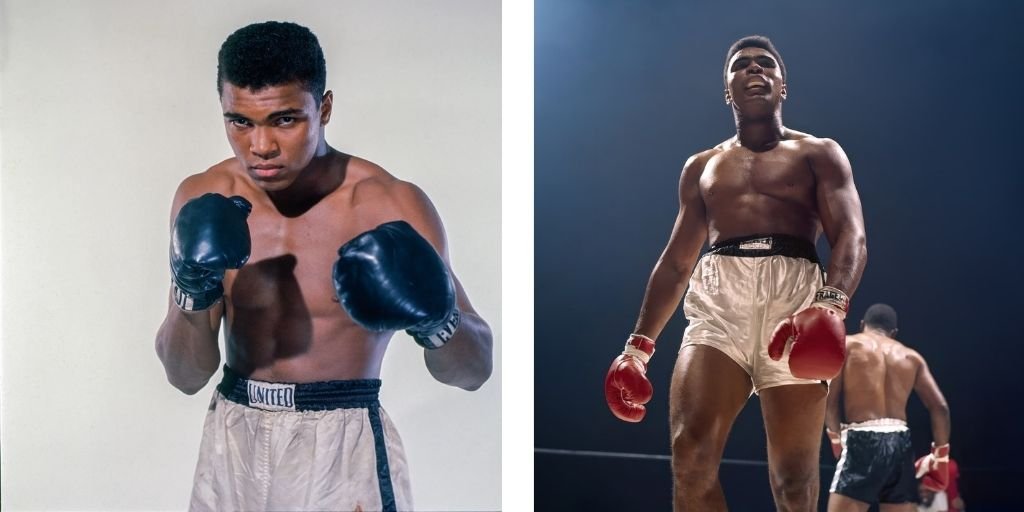
Muhammad Ali was more than a famous boxer. He was an athlete, entertainer, activist, speaker, and cultural figure whose influence reached far beyond the boxing ring. Born Cassius Marcellus Clay Jr. in Louisville, Kentucky, in 1942, he grew from a young amateur boxer into one of the most recognizable people in the world.
His story was filled with remarkable victories, difficult moments, strong opinions, personal changes, and unforgettable performances. He had the confidence to tell the world he was the greatest, but his life also showed the price that sometimes comes with standing firmly behind your beliefs.
What made Ali different? It was not simply his speed or punching ability. He understood how to turn a sporting event into a story. He could make people laugh, surprise an opponent, inspire supporters, and create headlines with only a few sentences.
His journey can be compared to a long championship fight. There were moments when he appeared completely in control, moments when he was pushed against the ropes, and moments when nobody knew what would happen next. Yet he continued moving forward.
Early Life and the Young Cassius Clay
Muhammad Ali was born on January 17, 1942, in Louisville, Kentucky. His father, Cassius Marcellus Clay Sr., worked as a sign painter and also painted signs and advertisements. His mother, Odessa Clay, worked as a domestic helper.
Ali grew up in a period when racial segregation was a major part of American life. His childhood experiences shaped his understanding of society and later influenced many of his public positions.
His introduction to boxing came almost by accident.
As a young boy, Ali had a bicycle that was stolen. Upset about the theft, he told police officer Joe Martin that he wanted to fight the person responsible. Martin, who also trained young boxers, suggested that the boy learn how to box before looking for a fight.
That advice changed history.
Ali began training at a young age and quickly showed unusual natural ability. He was not built like the traditional heavyweight boxer people might imagine. Instead of relying only on power, he developed speed, movement, timing, and confidence.
A natural entertainer
Even before becoming famous, Ali had a personality that demanded attention. He enjoyed talking, performing, and predicting what he would do inside the ring.
For some people, his confidence seemed excessive. For others, it was part of what made him fascinating.
He did not simply want to win. He wanted people to watch.
Olympic Gold and the Rise of a Young Champion
Ali’s amateur career eventually took him to the 1960 Olympic Games in Rome. At only 18 years old, he competed in the light-heavyweight division.
He won the gold medal after defeating Poland’s Zbigniew Pietrzykowski in the final. The Olympic record confirms that Cassius Clay won the light-heavyweight title at the Rome Games.
The achievement was an important turning point.
Ali returned to the United States as an Olympic champion and soon entered professional boxing.
The young fighter had already demonstrated that he had the physical tools required for a great career. But nobody could yet know just how dramatically he would change heavyweight boxing.
His professional career began in 1960, and his early performances quickly attracted attention.
An unusual heavyweight style
Heavyweight boxing was traditionally associated with powerful punches and physical strength. Ali brought something different.
He moved around the ring with remarkable speed. He used his hands to distract opponents and his feet to create distance. He could lean away from punches, move backward, circle an opponent, and suddenly attack.
His famous approach eventually became associated with phrases such as “float like a butterfly, sting like a bee.”
The image was appropriate. He could appear almost relaxed before suddenly landing a sharp combination.
Becoming the Heavyweight Champion
Ali’s professional rise accelerated during the early 1960s.
One of the most important moments came in 1964 when he challenged Sonny Liston for the heavyweight championship. Liston was widely regarded as a dangerous and powerful champion, while Ali was still a young challenger.
Before the fight, Ali confidently predicted victory and constantly spoke to the public about the upcoming contest.
Then came the fight.
Ali’s speed and movement frustrated Liston. The younger boxer won when Liston did not answer the bell for the seventh round.
At just 22 years old, Ali had become the heavyweight champion of the world.
The victory transformed him from a promising boxer into an international star.
A champion who talked
Ali understood something that many athletes did not: boxing was also entertainment.
He gave journalists memorable lines. He predicted rounds. He created nicknames. He challenged opponents verbally before they ever entered the ring.
Today, athletes regularly build public identities through interviews and social media. Ali was doing something similar decades earlier, when television, newspapers, and radio were the main ways athletes reached the public.
His words became part of the show.
From Cassius Clay to Muhammad Ali
In 1964, after becoming heavyweight champion, Ali announced that he had joined the Nation of Islam and adopted the name Muhammad Ali.
The name change became an important part of his identity.
He rejected the name Cassius Clay because he believed it represented a name connected to slavery and did not reflect who he was.
His decision was controversial at the time, and many people continued using his former name.
Ali remained firm.
A changing public figure
His religious identity was only one part of a broader transformation. The confident young boxer increasingly became outspoken about race, religion, war, and personal freedom.
He was no longer simply talking about boxing.
He was becoming a public figure whose statements could generate national debate.
The Vietnam War and His Refusal to Serve
One of the most important chapters of Ali’s life came during the Vietnam War.
In 1966, Ali was classified as eligible for military service. In 1967, after being drafted, he refused induction into the U.S. Army.
His position was connected to his religious beliefs and opposition to the war.
The decision had enormous consequences.
Ali was stripped of his heavyweight championship and effectively prevented from boxing professionally during his prime years.
His boxing license was suspended, and he faced legal consequences.
For a young athlete who had reached the top of his profession, this was a devastating interruption.
Years away from the ring
Ali spent several years unable to compete professionally.
Imagine reaching the highest level of your career and then being told you cannot do the thing that made you famous. For Ali, that period meant losing some of his most valuable athletic years.
Yet he did not disappear.
He continued speaking publicly and eventually became an important voice in discussions about war, race, religion, and individual conscience.
When his legal situation changed and he was able to return to boxing, the sport had changed as well.
So had Ali.
The Greatest Fights of His Career
Muhammad Ali’s career contains some of boxing’s most remembered contests.
His rivalry with Joe Frazier became particularly important. Their first meeting took place in 1971 at Madison Square Garden in New York.
The fight was promoted as a battle between two undefeated former champions. Frazier won a unanimous decision after 15 rounds.
Ali had suffered his first professional defeat.
But the rivalry was far from finished.
Ali vs. George Foreman
In 1974, Ali faced George Foreman in Kinshasa, Zaire, in what became known as the “Rumble in the Jungle.”
Foreman was younger, powerful, and considered a major threat.
Ali used a strategy that became known as the “rope-a-dope.” He spent portions of the fight leaning against the ropes and allowing Foreman to throw punches while attempting to conserve energy.
Then Ali attacked.
In the eighth round, Ali knocked Foreman out and regained the heavyweight championship.
It was one of the greatest surprises in boxing history.
Ali vs. Joe Frazier III
The rivalry with Frazier reached its final major chapter in 1975 in the Philippines.
The fight became known as the “Thrilla in Manila.”
It was an extremely demanding contest. Both fighters pushed themselves through intense physical punishment.
After 14 rounds, Frazier’s corner stopped the fight.
Ali won, but he later acknowledged how difficult the battle had been.
The contest demonstrated an important truth about Ali’s career: victory did not always mean an easy night.
Sometimes greatness came from surviving an enormous challenge.
His Boxing Style and Ring Intelligence
Ali’s boxing style remains one of the most studied aspects of his career.
He was exceptionally fast for a heavyweight. His footwork allowed him to control distance, while his reflexes helped him avoid punches.
He also had excellent timing.
Rather than simply standing in front of opponents and exchanging punches, he often moved around them, changed angles, and disrupted their rhythm.
Speed over brute force
Ali demonstrated that a heavyweight did not always have to fight like a slow-moving power puncher.
He could use movement as a weapon.
His hands were quick, his combinations were sharp, and his ability to read opponents allowed him to adjust during fights.
He also used psychological tactics.
Before a fight, Ali might insult an opponent or predict exactly what would happen. This was not merely entertainment. It became part of the competitive atmosphere.
Some opponents became frustrated before the opening bell.
Life Outside the Boxing Ring
Ali’s public life was almost as famous as his sporting career.
He appeared on television, met political leaders, spoke to crowds, and participated in humanitarian activities.
He also became known for his humor.
Ali could be serious one moment and playful the next. He understood how to connect with ordinary people.
A voice for social change
Ali’s public statements about race and war made him a symbol for many people who admired his willingness to challenge powerful institutions.
Not everyone agreed with him.
That disagreement was part of his story.
He was not a quiet champion who avoided difficult subjects. He repeatedly placed his beliefs in public view.
His fame gave those beliefs a much larger audience.
Over time, even people who disagreed with some of his positions recognized the importance of his willingness to speak openly.
Later Career and Retirement
Ali continued boxing into the late 1970s.
After his major victories, however, the physical cost of professional boxing became increasingly visible.
He fought Leon Spinks in 1978 and lost the first meeting. Later that year, Ali defeated Spinks in their rematch to regain the heavyweight championship.
With that victory, Ali became the first three-time heavyweight champion of the world.
His career eventually came to an end after a final professional fight against Trevor Berbick in 1981.
Ali retired with a professional record of 56 wins and 5 losses, including 37 victories by knockout.
But statistics alone cannot explain his importance.
Thousands of boxers have recorded wins and losses. Very few have changed the way the world thinks about their sport.
Health Challenges and His Later Years
After retirement, Ali devoted considerable time to humanitarian causes and public appearances.
In 1984, he was diagnosed with Parkinson’s syndrome, a condition that affected his movement and speech over the following decades.
The contrast was difficult to ignore.
The man once famous for lightning-fast footwork gradually lost some of the physical abilities that had made him extraordinary inside the ring.
Yet Ali continued appearing in public.
The Olympic flame
One of his most memorable later public appearances came at the 1996 Atlanta Olympics, where he helped light the Olympic cauldron during the opening ceremony.
For many viewers, the moment carried enormous emotional weight.
The champion who had once moved around a boxing ring with extraordinary speed stood with visible physical difficulty, but still represented determination and courage.
His presence reminded people that a person’s identity can become larger than physical ability.
Muhammad Ali’s Family and Personal Life
Ali was married several times and had children.
His personal life received significant media attention throughout his career, partly because of his extraordinary fame.
Like many public figures, his private life included both happy periods and difficult experiences.
His children and grandchildren have continued to discuss his influence and the lessons they learned from him.
The man behind the public image
It is easy to remember Ali only as the loud, confident champion who predicted victories.
But there was another side to him.
People close to Ali often described his warmth, generosity, humor, and concern for others.
His public personality could be theatrical, but his humanitarian work showed another dimension.
This is one reason his story remains so interesting.
He was not simply one character.
He was a son, husband, father, athlete, believer, activist, celebrity, and eventually an elder statesman of sport.
Muhammad Ali’s Lasting Legacy
Muhammad Ali died on June 3, 2016, in Scottsdale, Arizona, at the age of 74.
By then, his influence had extended far beyond boxing.
He had become a symbol of confidence, individuality, courage, and resistance.
His legacy can be seen in many places.
Boxers continue to study his movement and psychological tactics. Athletes continue to borrow from his approach to self-promotion. Public figures continue to reference his famous expressions.
But perhaps his most important legacy is the idea that an athlete can have a voice.
More than a champion
Ali showed that a sportsman did not have to remain silent about society.
He used his fame to discuss subjects that mattered to him. Sometimes his words were controversial. Sometimes they were funny. Sometimes they were provocative.
But people listened.
His life also demonstrated that fame does not protect a person from hardship.
He lost fights. He lost years of his boxing career. He faced public criticism. He experienced serious health problems.
Yet his story continued.
That is why his legacy feels larger than a list of championship victories.
Why Muhammad Ali Still Matters Today
Why do people who never watched Ali fight still know his name?
The answer is partly his personality.
He understood the power of confidence. He understood the importance of storytelling. He knew how to make people pay attention.
But there was something deeper.
Ali’s life raised questions that remain relevant:
What happens when personal beliefs conflict with public expectations?
Should an athlete speak about politics and society?
How much should a person sacrifice for a principle?
Can a person remain confident without becoming arrogant?
Ali’s life does not provide simple answers to all these questions.
Instead, it gives people a remarkable story to examine.
He was a champion who understood that life existed outside the ring.
His journey from Louisville teenager to Olympic gold medalist, heavyweight champion, controversial public figure, humanitarian, and global icon remains one of the most extraordinary stories in modern sports history.
Conclusion
Muhammad Ali’s life was much bigger than boxing. He became an Olympic champion, won the heavyweight championship multiple times, participated in legendary fights, and developed a public personality unlike almost any other athlete of his generation. His decision to stand behind his religious and personal beliefs also changed the direction of his life and career.
What makes his story unforgettable is the combination of talent and personality. Ali could fight with extraordinary skill, speak with remarkable confidence, and connect with audiences around the world.
His career eventually ended, and illness changed his physical abilities, but his influence did not disappear.
Muhammad Ali left behind more than championship belts. He left behind a story about courage, identity, conviction, perseverance, and the power of using your voice.
That is why, decades after his greatest fights, people still remember the name.
FAQs About Muhammad Ali
1. Who was Muhammad Ali?
Muhammad Ali was an American professional boxer and one of the most famous athletes of the 20th century. Born Cassius Marcellus Clay Jr., he won Olympic gold in 1960 and became a multiple-time heavyweight champion.
2. What was Muhammad Ali’s original name?
He was born Cassius Marcellus Clay Jr. in Louisville, Kentucky, on January 17, 1942. He later changed his name to Muhammad Ali after joining the Nation of Islam and adopting a new religious identity.
3. How many times did Muhammad Ali become heavyweight champion?
Ali became heavyweight champion three times. His victories over George Foreman and Leon Spinks were particularly important in his championship history.
4. What was Muhammad Ali’s professional boxing record?
Ali finished his professional career with 56 wins and 5 losses, including 37 wins by knockout.
5. Why is Muhammad Ali remembered beyond boxing?
Ali is remembered for his athletic achievements as well as his personality, public speaking, humanitarian work, and willingness to express his beliefs on major social issues. His influence reached sports, culture, me