
Kurt Cobain: Life, Music, Nirvana & Lasting Legacy
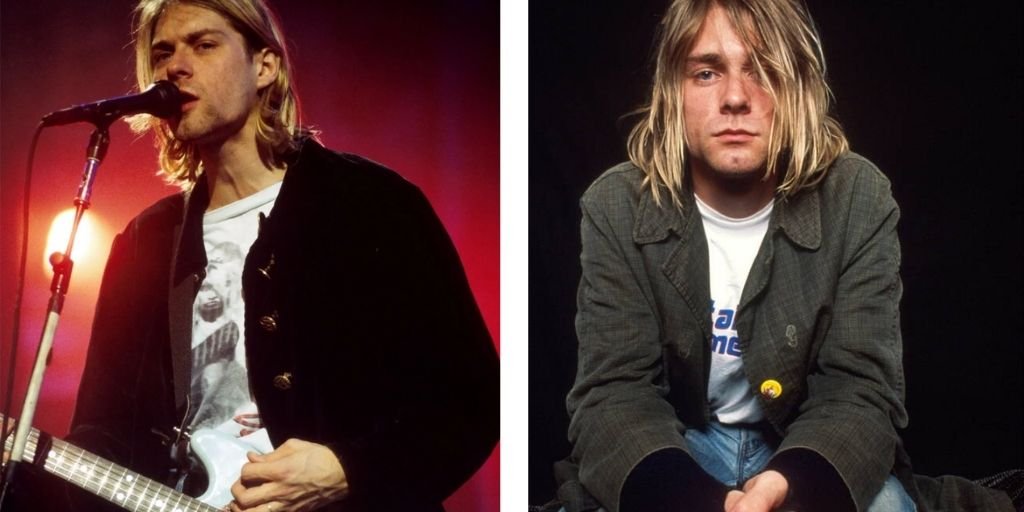
Kurt Cobain was more than the frontman of Nirvana. He became one of the defining voices of a generation that was searching for something honest in a world that often felt polished and artificial. With his rough-edged voice, emotional songwriting, and unmistakable stage presence, Cobain helped move alternative rock from the underground into the mainstream.
His story was complicated. It included creativity, fame, relationships, personal struggles, artistic ambition, and tragedy. Yet behind the famous image was a human being who often seemed uncomfortable with the attention surrounding him. So, who was Kurt Cobain before he became a global rock icon? How did Nirvana change music, and why does his work still matter decades later?
To understand his legacy, we have to look beyond the photographs and famous songs. We have to look at the person, the artist, and the cultural moment that made his music so powerful.
Early Life and Childhood
Kurt Donald Cobain was born on February 20, 1967, in Aberdeen, Washington. He grew up in a working-class environment and showed an interest in art and music from an early age. His childhood was not always easy, and his parents’ divorce had a major emotional effect on him.
As a child, Cobain enjoyed drawing, creating stories, and listening to music. Creativity gave him a way to express feelings that he did not always know how to explain directly. Music eventually became one of his strongest forms of communication.
He was exposed to a wide range of artists and styles. Punk rock became particularly important because of its raw energy and rejection of conventional expectations. Instead of presenting music as something distant or perfect, punk made it feel immediate and human.
That attitude would later become central to Cobain’s own artistic identity.
Teenage Cobain became increasingly interested in playing guitar. He formed friendships with other young musicians and began developing his own style. At this stage, there was little reason to believe that he would eventually become one of the most recognizable musicians in modern rock history.
Yet the foundation was already there.
Discovering Music and Finding His Voice
Cobain did not simply want to become a technically impressive guitarist. He wanted music to say something.
That distinction mattered.
His early musical influences helped shape a style that combined the speed and attitude of punk with the heavier sound of underground rock. He was attracted to music that could be loud one moment and surprisingly vulnerable the next.
This combination became one of his greatest strengths as a songwriter.
Rather than writing every song in a straightforward way, Cobain often mixed humor, frustration, emotion, strange imagery, and personal observations. Some lyrics were deliberately unclear. Others seemed deeply personal. The result was music that different listeners could interpret in different ways.
It was almost like looking into a cracked mirror. Everyone could see something different in the reflection.
Cobain’s guitar playing was also distinctive. He was not interested in showing off complicated solos simply to prove his ability. Instead, he often focused on memorable riffs, changes in volume, distorted sounds, and strong melodies.
His approach demonstrated an important idea: a song does not have to be technically complicated to be powerful.
The Formation of Nirvana
In the late 1980s, Cobain became involved with bassist Krist Novoselic. The two musicians eventually formed Nirvana, a band that would become one of the most influential groups in rock history.
Early Nirvana was part of the underground music scene in the Pacific Northwest. The band played small venues and worked to establish an audience. Their first album, Bleach, was released in 1989 and introduced listeners to the group’s heavier early sound.
At this point, Nirvana was far from being a worldwide phenomenon.
The band’s lineup eventually settled around Cobain, Novoselic, and drummer Dave Grohl. Grohl joined Nirvana in 1990 and became an important part of the band’s developing sound.
Together, the three musicians created something remarkably effective. Cobain’s songwriting and vocals, Novoselic’s bass playing, and Grohl’s energetic drumming produced a sound that was aggressive but also melodic.
The ingredients were ready.
What happened next changed popular music.
Nevermind and the Explosion of Grunge
In 1991, Nirvana released Nevermind. Few people could have predicted the enormous impact the album would have.
The record included songs such as “Smells Like Teen Spirit,” “Come as You Are,” “Lithium,” and “In Bloom.” The music was powerful enough for rock fans but accessible enough to reach listeners who had never paid much attention to underground alternative music.
“Smells Like Teen Spirit” became especially important. Its loud guitars, memorable chorus, and chaotic energy captured something about the mood of young people at the time.
Suddenly, Nirvana was everywhere.
The success of Nevermind helped push grunge and alternative rock into the center of popular culture. Major record labels began paying closer attention to underground bands. Fashion, radio, television, and youth culture all began reflecting the influence of the Seattle music scene.
Cobain, however, did not always appear comfortable with his new status.
He had spent years participating in an underground culture that valued independence and authenticity. Now he was being turned into a celebrity.
That contradiction followed him throughout the rest of his career.
Kurt Cobain as a Songwriter
Cobain’s greatest contribution may not have been his image or even his voice. It was his songwriting.
He understood the power of contrast.
A song could begin quietly and suddenly explode. A beautiful melody could sit beside uncomfortable lyrics. A simple guitar progression could become unforgettable when combined with the right vocal performance.
His writing often avoided obvious explanations. Instead, he created songs that allowed listeners to bring their own experiences into the music.
That may be one reason his work remains relevant.
When people hear a song such as “Come as You Are,” they may connect it to completely different memories or emotions. Music can work that way. A songwriter creates the doorway, but listeners decide what they find on the other side.
Cobain also challenged traditional ideas about what a rock star should look and sound like. He could appear careless, funny, angry, vulnerable, or deliberately strange.
He did not fit neatly into the polished image of a conventional celebrity.
That became part of his appeal.
In Utero and Artistic Independence
After the massive success of Nevermind, Nirvana faced enormous pressure.
How do you follow an album that changed your life and transformed the music industry?
Instead of simply repeating the formula, the band moved toward a rougher and more experimental sound. In Utero, released in 1993, demonstrated that Nirvana was not interested in becoming a predictable commercial act.
Songs such as “Heart-Shaped Box,” “All Apologies,” and “Rape Me” showed different sides of Cobain’s writing.
The album was less polished in feeling than Nevermind, although it still contained memorable melodies. It sounded like a band trying to reclaim some control over its artistic identity.
For Cobain, that control was important.
Fame had given him opportunities, but it had also created expectations. People wanted him to represent an entire generation. They wanted answers about his opinions, his personality, his clothes, his relationships, and his music.
But Cobain was not a spokesperson for everyone.
He was a musician.
And his music often expressed emotions that were difficult to reduce to simple explanations.
Kurt Cobain and Courtney Love
Cobain’s personal life also attracted enormous public attention, particularly his relationship with musician Courtney Love.
The two met in the early 1990s and married in 1992. Their relationship became one of the most talked-about partnerships in rock culture.
They had a daughter, Frances Bean Cobain, in 1992.
Cobain and Love were both famous musicians, and their lives were followed intensely by the media. Their relationship was often portrayed through dramatic headlines, but the reality of any private relationship is always more complicated than what appears in newspapers or magazines.
For Cobain, family life existed alongside the pressures of touring, recording, celebrity, and personal difficulties.
His role as a father was also an important part of his identity.
Despite the enormous amount of attention surrounding his family, it is important to remember that public stories rarely capture the full reality of private lives.
Personal Struggles and the Pressure of Fame
Cobain experienced serious personal difficulties during his adult life. His struggles with physical pain, substance use, and mental and emotional distress became part of the public narrative surrounding him.
It is easy to look back at a famous person and turn their suffering into mythology. But doing so can hide the human reality.
Cobain was not simply a tragic rock character.
He was a person dealing with problems that affected his everyday life.
Fame could not solve those problems. In some ways, it added another layer of pressure. Everywhere he went, people recognized him. His music was analyzed. His personal choices were discussed. His appearance became part of popular culture.
Imagine having every difficult moment examined under a giant spotlight. That was part of the reality Cobain faced.
His story also reminds us that artistic success and personal happiness are not the same thing. A person can achieve enormous professional success while still experiencing deep struggles privately.
That is an important lesson when discussing his life.
MTV Unplugged and a Different Side of Cobain
One of Nirvana’s most memorable performances came through MTV Unplugged in New York, recorded in 1993.
The performance showed a quieter side of the band.
Instead of relying on the loud guitars and explosive performances associated with Nirvana, the musicians created an intimate atmosphere. Cobain’s voice sounded exposed and emotional.
The set included Nirvana songs as well as covers, demonstrating the band’s wide musical interests.
The performance became legendary because it revealed something underneath the noise.
Cobain did not need huge distortion or a screaming crowd to command attention. His voice and songwriting could carry the performance on their own.
The Unplugged appearance has remained one of the clearest examples of his ability to communicate emotion through simplicity.
Sometimes, the quieter moments tell us more than the loud ones.
The Final Months and Death
Kurt Cobain’s final months were marked by serious personal difficulties and growing concern among people close to him.
On April 8, 1994, Cobain was found dead at his home in Seattle. He was 27 years old. His death was ruled a suicide.
His passing shocked the music world.
For many fans, it was difficult to accept that someone who had become a symbol of youth culture could die so young. Nirvana had only recently been one of the biggest bands in the world.
The tragedy also contributed to the mythology surrounding Cobain and the so-called “27 Club,” a group of famous musicians who died at age 27. However, it is important not to romanticize early death or treat it as a necessary part of artistic greatness.
Cobain’s death was a tragedy, not a conclusion that makes his art more valuable.
His music was already powerful because of the songwriting, performances, and emotional connection it created with listeners.
The Legacy of Kurt Cobain
More than three decades after his death, Cobain remains an influential figure in music and popular culture.
Nirvana helped open the door for alternative rock to reach a massive audience. The band’s success demonstrated that unconventional music could become commercially successful without completely losing its identity.
Cobain also influenced the way musicians approached image and authenticity.
He did not look like the stereotypical rock superstar. He often appeared uncomfortable with celebrity culture. His clothing, interviews, performances, and songwriting all challenged expectations.
His influence can be heard in later generations of rock and alternative musicians.
But his legacy goes beyond music.
Cobain became a symbol of individuality. For many listeners, his songs provided a place to express anger, loneliness, confusion, insecurity, or simply the feeling of not fitting in.
That may explain why younger generations continue to discover Nirvana.
A great song can outlive the circumstances in which it was created.
Why Kurt Cobain Still Matters Today
Why are people still talking about Kurt Cobain?
The answer is not simply nostalgia.
His music continues to connect because human emotions do not become outdated.
People still experience uncertainty. They still struggle with identity. They still feel pressure from society. They still search for ways to express emotions that are difficult to put into ordinary conversation.
Cobain gave those feelings a musical language.
His career was relatively short, but its cultural impact was enormous. He showed that vulnerability could coexist with power and that a simple song could shake an entire industry.
His influence can also be seen in the continuing popularity of Nirvana’s recordings, documentaries, books, clothing, artwork, and discussions about alternative music.
Yet perhaps the most meaningful part of his legacy is simpler.
Someone hears a Nirvana song for the first time and feels understood.
That is a powerful thing for any artist to achieve.
Conclusion
Kurt Cobain’s life was brief, complicated, creative, and deeply influential. As the singer, guitarist, and principal songwriter of Nirvana, he helped transform alternative rock and changed the direction of popular music in the early 1990s.
His story was not perfect, and it should not be turned into a romantic legend. Behind the famous photographs and unforgettable songs was a real person who experienced extraordinary success alongside serious personal struggles.
His music continues because it feels human. It can be loud, quiet, angry, funny, vulnerable, and confusing—sometimes all within the same song.
That is why Kurt Cobain remains important. His legacy is not simply that he became famous. It is that his music gave millions of people a way to hear their own emotions reflected back at them.
FAQs About Kurt Cobain
1. Who was Kurt Cobain?
Kurt Cobain was an American musician, singer, guitarist, and songwriter best known as the frontman and primary songwriter of Nirvana. He became one of the most influential figures in alternative rock.
2. What band was Kurt Cobain in?
Kurt Cobain was the lead singer and guitarist of Nirvana. The band’s most famous lineup included Cobain, bassist Krist Novoselic, and drummer Dave Grohl.
3. What was Kurt Cobain’s most famous song?
“Smells Like Teen Spirit” is generally regarded as Nirvana’s most famous song. It became a defining track of the grunge movement and helped make the band internationally famous.
4. When did Kurt Cobain die?
Kurt Cobain died on April 5, 1994, at the age of 27. His body was discovered several days later, on April 8, at his Seattle home.
5. Why is Kurt Cobain still influential?
Cobain remains influential because of his songwriting, distinctive vocal style, guitar work, and impact on alternative rock. His music continues to connect with listeners because it explores emotions and experiences that remain relatable across generations.