
Elizabeth Taylor: Inspiring Life, Career, Movies & Legacy
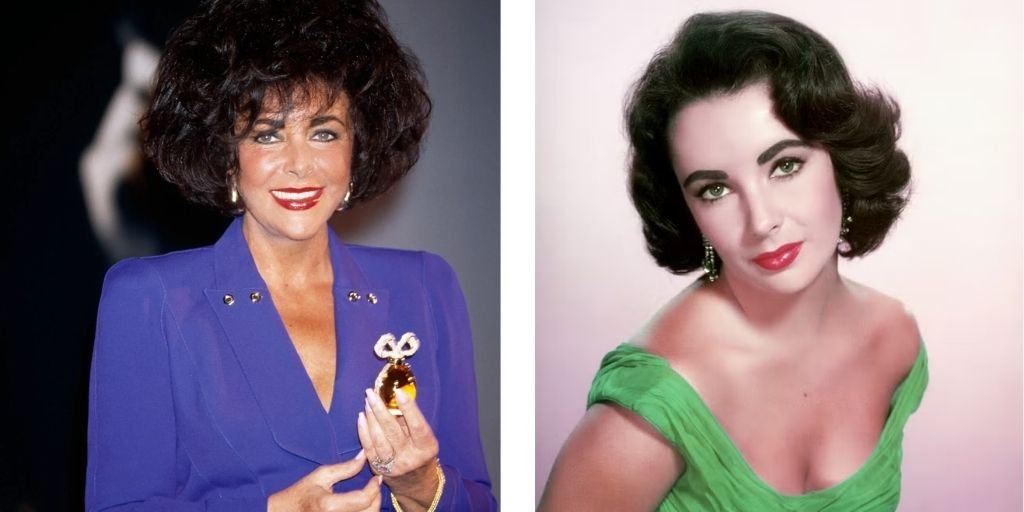
Elizabeth Taylor was far more than a glamorous Hollywood star. With her striking violet-blue eyes, powerful screen presence, and unforgettable performances, she became one of the most recognizable actresses of the 20th century. Yet behind the famous photographs and dazzling jewelry was a complicated woman whose life included remarkable success, personal struggles, passionate relationships, illness, friendship, and charitable work.
From child stardom to Academy Award-winning performances, Taylor lived a life that often seemed larger than the movies she made. She became a symbol of classic Hollywood, but she also helped shape the modern idea of celebrity. Her name remains connected with films such as National Velvet, A Place in the Sun, Giant, Cat on a Hot Tin Roof, Cleopatra, and Who’s Afraid of Virginia Woolf?
So, what made Elizabeth Taylor so memorable? Perhaps it was the combination of talent and vulnerability. Her career was like a long Hollywood film itself—full of brilliant moments, unexpected turns, difficult chapters, and unforgettable scenes.
Early Life and Childhood in London
Elizabeth Rosemond Taylor was born on February 27, 1932, in Hampstead, London, to American parents Sara Sothern and Francis Taylor. Her father worked as an art dealer, while her mother had previously been an actress.
Although Taylor was born in England, her family moved to the United States when she was a child. They settled in Los Angeles, where the young Elizabeth soon came into contact with the entertainment industry.
Her beauty attracted attention early, but becoming a successful actress required more than appearance. Taylor had a natural screen presence that became increasingly obvious as she grew older.
Her childhood was unusual. While many children were attending school and enjoying ordinary family life, Taylor was beginning to work in Hollywood. She entered the film business at an age when most children were still discovering their interests.
That early experience shaped her personality and career. She learned how cameras worked, how productions operated, and how much pressure could come with fame.
The Beginning of a Hollywood Career
Taylor’s early career developed at Metro-Goldwyn-Mayer, one of the major Hollywood studios of the era. Her first important screen appearances came during the 1940s, when she was still a child.
One of her early successes was National Velvet, released in 1944. In the film, Taylor played Velvet Brown, a young girl who dreams of competing in a major horse race. Her performance made a strong impression and helped establish her as a rising young star.
What made the performance special was the emotional sincerity she brought to the role. She did not simply look like a movie star; she made audiences believe in the character’s determination.
As Taylor moved into her teenage years, she continued appearing in successful productions. Films such as Father of the Bride helped audiences see her transition from child performer to young adult actress.
The transition was not always easy. Hollywood could be demanding, particularly for performers who had grown up in front of the public. Taylor had to develop an adult identity while much of the world was still thinking of her as a child star.
Becoming a Major Movie Star
During the 1950s, Elizabeth Taylor’s career entered a new phase. She became one of Hollywood’s leading actresses and began taking on more mature and demanding roles.
Her work in A Place in the Sun in 1951 showed that she could perform alongside major dramatic actors and handle serious material. She later appeared in Giant with James Dean and Rock Hudson, further strengthening her reputation.
Taylor’s career during this period was built on variety. She could play romantic characters, wealthy social figures, troubled women, and emotionally complicated personalities.
Her appearance naturally contributed to her public image. Her famous eyes, dark hair, and elegant style made her a favorite subject for photographers. But reducing her success to beauty would overlook an important part of her career.
Taylor understood emotion.
She knew how to communicate anger, jealousy, fear, love, loneliness, and determination through expression and voice. Her performances often depended on emotional intensity rather than simply delivering dialogue.
That quality became even more important as she entered some of the strongest dramatic roles of her career.
Award-Winning Performances and Acting Style
Taylor received her first Academy Award for Best Actress for BUtterfield 8 in 1960. The film gave her the opportunity to portray Gloria Wandrous, a woman dealing with complicated relationships and social expectations.
Her second Academy Award came for Who’s Afraid of Virginia Woolf? in 1966. This performance is widely regarded as one of the defining achievements of her career.
In the film, Taylor played Martha, the wife of George, portrayed by Richard Burton. The story revolves around a couple whose marriage is filled with conflict, bitterness, emotional games, and hidden pain.
Taylor transformed herself for the role. Rather than relying on the glamorous image audiences associated with her, she embraced a more worn and emotionally intense appearance.
Her performance demonstrated that she could move beyond the conventional image of a Hollywood beauty.
A different kind of screen presence
Taylor’s acting style was often highly emotional. She could make a scene feel intimate even when surrounded by elaborate sets and famous co-stars.
This emotional directness became one of her greatest strengths. Her characters frequently seemed to be fighting for something—love, respect, freedom, security, or simply the chance to be understood.
She was not always subtle, but subtlety was not necessarily the point. Taylor’s strongest performances often had the force of a storm: dramatic, emotional, and impossible to ignore.
Cleopatra and the Height of Fame
Few projects in Hollywood history are as closely associated with Elizabeth Taylor as Cleopatra.
Released in 1963, the historical epic was one of the most expensive and ambitious films of its era. Taylor played Cleopatra, Queen of Egypt, while Richard Burton portrayed Mark Antony.
The production became famous for its enormous sets, costumes, financial problems, delays, and massive scale. Taylor’s salary and contract also attracted considerable attention.
The movie’s production costs became legendary, but Cleopatra ultimately became an important part of Taylor’s legacy.
More importantly, the film changed how audiences viewed her public image. She was no longer simply a former child star who had become a leading actress. She had become an international celebrity whose personal life could attract almost as much attention as her movies.
Her relationship with Burton intensified that attention.
Their romance became one of the most famous celebrity relationships of the period. Their on-screen partnership and off-screen relationship created a level of media fascination that would feel familiar to modern audiences.
Elizabeth Taylor and Richard Burton
Taylor and Richard Burton married twice. Their relationship was passionate, complicated, and frequently covered by newspapers and magazines.
They first married in 1964 after beginning their relationship during the production of Cleopatra. Their marriage ended in divorce in 1974, but they remarried in 1975 before divorcing again in 1976.
Their relationship became part of Hollywood mythology, but it is worth remembering that real relationships are more complicated than headlines.
Together, they appeared in several films, including The Sandpiper, The V.I.P.s, The Taming of the Shrew, and Who’s Afraid of Virginia Woolf?
Their chemistry was especially powerful in Who’s Afraid of Virginia Woolf?, where their performances depended heavily on emotional confrontation.
Taylor’s personal life was frequently treated as public entertainment. She had multiple marriages and relationships, and the press often followed her private life closely.
Yet her marriages were only one part of her story.
Her career continued for decades, and she developed interests and responsibilities that extended well beyond acting.
Family, Friendships, and Personal Challenges
Elizabeth Taylor became a mother several times and experienced the pressures of raising a family while maintaining an extraordinary career.
Her private life included moments of happiness as well as periods of difficulty. She experienced serious health problems over the years and underwent medical treatment and surgeries.
Instead of allowing every challenge to disappear behind the image of glamour, Taylor increasingly spoke publicly about subjects that affected her.
Her friendship with Michael Jackson became particularly well known. Taylor supported Jackson during major periods of public attention and remained an important figure in his life.
Their friendship also demonstrated something that was sometimes overlooked in discussions of Taylor: loyalty mattered deeply to her.
Taylor could be outspoken and emotional, but she was also known for forming strong personal bonds.
Her life was not a straight line from success to success. It contained setbacks, controversy, recovery, and reinvention.
That is one reason her story continues to interest people. Behind the diamonds and movie premieres was a person dealing with many of the same emotional realities as everyone else.
Elizabeth Taylor’s Jewelry and Fashion Legacy
Elizabeth Taylor had a legendary love of jewelry. Over the course of her life, she assembled an extraordinary collection of diamonds, pearls, emeralds, and other precious stones.
Some pieces became almost as famous as she was.
The Taylor-Burton Diamond, for example, became one of the most talked-about jewels associated with her. Richard Burton purchased the diamond for Taylor in 1968, and its size and history helped turn it into a symbol of their extravagant lifestyle.
She also owned the famous La Peregrina pearl, which Burton gave her as a gift.
For Taylor, jewelry was not simply decoration. It became part of her identity and personal expression.
Her fashion influence extended beyond jewelry. She became known for dramatic gowns, elegant hairstyles, and a distinctive approach to glamour.
Today, vintage Hollywood fashion often draws inspiration from the visual language associated with stars such as Taylor.
Her Work Against HIV and AIDS
One of the most important parts of Taylor’s later legacy came outside Hollywood.
During the 1980s, when HIV and AIDS were surrounded by fear, misinformation, and stigma, Taylor became a prominent advocate for people affected by the epidemic.
She helped establish the American Foundation for AIDS Research, commonly known as amfAR, and later founded the Elizabeth Taylor AIDS Foundation.
Her activism brought visibility to an issue that many public figures were reluctant to discuss.
Taylor used her fame to raise money and encourage public attention toward HIV/AIDS research, treatment, and support.
This work changed how many people understood her public role. She was no longer simply an actress speaking at charity events. She became an active advocate who used her celebrity platform to support a major humanitarian cause.
Turning fame into advocacy
Taylor’s activism is an important reminder that celebrity can be used in different ways.
A famous person can attract cameras, but attracting attention is not the same as creating change. Taylor repeatedly used public appearances, fundraising, and personal advocacy to keep HIV/AIDS in public conversation.
Her work became one of the defining parts of her legacy.
Later Career and Life Beyond Hollywood
Taylor continued acting after the peak of her film career, although her work became less centered on major theatrical productions.
She appeared in television projects, stage productions, and occasional films. She also became increasingly involved in business, philanthropy, and public advocacy.
Her perfume business became another successful part of her professional life. Fragrances associated with her name helped extend her brand beyond the movie industry.
Taylor understood something that many celebrities eventually discover: fame can change form.
Even when an actress is no longer appearing in major films every year, audiences may remain interested in her life, style, opinions, and personal story.
Taylor’s name remained culturally powerful for decades.
She also became an author, writing about aspects of her life and experiences. Her memoirs and interviews gave audiences opportunities to hear her perspective rather than relying entirely on newspaper coverage.
The Cultural Legacy of Elizabeth Taylor
Elizabeth Taylor died on March 23, 2011, at Cedars-Sinai Medical Center in Los Angeles. She was 79.
Her death marked the end of an extraordinary chapter in Hollywood history.
Yet her influence did not disappear.
Taylor remains remembered through her films, photographs, interviews, fashion, jewelry, charitable work, and cultural impact.
She helped define the idea of the international movie star. At a time when studios had enormous influence over performers’ careers, Taylor eventually became a powerful figure in her own right.
Her life also illustrates how celebrity culture changed throughout the 20th century.
She began her career in an era when movie studios carefully managed stars’ public images. She later lived through the rise of television, tabloid journalism, and increasingly aggressive media coverage of celebrities.
In that sense, Taylor stands between two eras.
She belonged to classic Hollywood, but her enormous personal fame also resembles the celebrity culture that dominates today’s entertainment world.
Why audiences still remember her
Why does Elizabeth Taylor continue to attract attention?
Her films are certainly part of the answer. But there is something larger.
Her story combines beauty, talent, ambition, vulnerability, romance, controversy, resilience, and humanitarian work.
She was never simply one thing.
That complexity makes her fascinating.
Like a classic painting that reveals new details whenever you look at it, Taylor’s life can be understood from many different angles. One person may remember her as Cleopatra, another as Martha in Who’s Afraid of Virginia Woolf?, while someone else may remember her for her AIDS activism or famous jewelry.
All of those memories belong to the same remarkable story.
Conclusion
Elizabeth Taylor’s life cannot be reduced to glamorous photographs or famous marriages. She was a child star who became an award-winning actress, an international celebrity, a fashion icon, a businesswoman, and a determined humanitarian.
Her greatest legacy may be the way she continued to reinvent herself. When one chapter ended, another began. Her career moved from childhood films to serious drama, while her public life eventually expanded into philanthropy and advocacy.
Taylor remains an enduring figure because her story contains both extraordinary privilege and very human struggles. She lived under an enormous spotlight, yet she continued to search for love, meaning, purpose, and independence.
Her movies keep her on screen, but her humanitarian work helped give her legacy a life beyond Hollywood.
Frequently Asked Questions
1. What was Elizabeth Taylor best known for?
Elizabeth Taylor was best known for her successful acting career, her roles in films such as Cleopatra and Who’s Afraid of Virginia Woolf?, her distinctive beauty and violet-blue eyes, her high-profile relationships, and her humanitarian work related to HIV/AIDS.
2. How many Academy Awards did Elizabeth Taylor win?
Elizabeth Taylor won two Academy Awards for Best Actress. She won for BUtterfield 8 in 1961 and Who’s Afraid of Virginia Woolf? in 1967.
3. Who was Elizabeth Taylor married to?
Elizabeth Taylor was married eight times to seven different men. Her husbands included Conrad Hilton Jr., Michael Wilding, Michael Todd, Eddie Fisher, Richard Burton, John Warner, and Larry Fortensky. She married Burton twice.
4. What was Elizabeth Taylor’s connection to AIDS activism?
Taylor became a prominent HIV/AIDS activist during the 1980s. She helped establish amfAR and later created the Elizabeth Taylor AIDS Foundation, using her public platform to raise awareness and funds for the cause.
5. When did Elizabeth Taylor die?
Elizabeth Taylor died on March 23, 2011, at the age of 79 in Los An