Charles Lindbergh: Amazing Life, Historic Flight, Controversies & Legacy
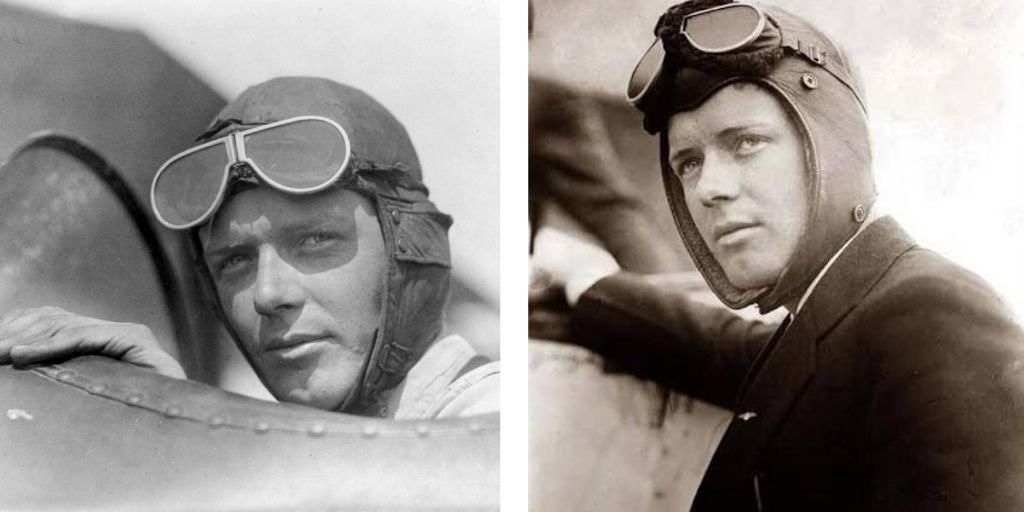
Charles Lindbergh remains one of the most fascinating and complicated figures in the history of aviation. In 1927, he became an international sensation after completing the first solo nonstop flight from New York to Paris across the Atlantic Ocean. He was only 25 years old.
His achievement seemed almost impossible at the time. Imagine climbing into a small aircraft, leaving the safety of land behind, and flying alone across thousands of miles of open ocean with limited navigation technology. It was like stepping into an enormous darkness with only courage, preparation, and a machine between you and the unknown.
Yet his story did not end with that famous flight. Lindbergh became a celebrity, an author, an inventor, an environmental advocate, and a controversial political figure. His life included extraordinary accomplishments as well as deeply troubling episodes that continue to shape how people remember him.
Early Life and Family Background
Charles Augustus Lindbergh was born on February 4, 1902, in Detroit, Michigan. His father, Charles August Lindbergh, was a lawyer who later became a U.S. congressman representing Minnesota. His mother, Evangeline Lodge Land, was a chemistry teacher.
Lindbergh grew up partly in Little Falls, Minnesota, where his family maintained a farm. From an early age, he showed an interest in machines, engines, and mechanical devices.
Rather than being a traditional student who loved classroom life, Lindbergh was fascinated by practical experimentation. He enjoyed understanding how things worked and often spent time around automobiles and machinery.
That curiosity would eventually lead him toward aviation.
The airplane was still a relatively young invention during his childhood. Flying was dangerous, expensive, and far from ordinary. Pilots were often viewed as daring adventurers rather than everyday professionals.
For Lindbergh, however, aircraft represented something more than excitement. They represented freedom, technology, and a challenge that demanded discipline.
Discovering Aviation
Lindbergh attended the University of Wisconsin–Madison, where he studied mechanical engineering. He eventually left college because he wanted to pursue his growing interest in aviation.
In the early 1920s, aviation offered opportunities for adventurous young people willing to accept significant risks.
Lindbergh learned to fly and became involved in barnstorming, a popular form of entertainment in which pilots traveled from town to town performing demonstrations and offering rides.
These experiences helped him develop confidence in the air.
He also worked as an airmail pilot. This was particularly important because airmail flying required much more than simply knowing how to control an aircraft. Pilots had to deal with poor weather, darkness, primitive navigation equipment, and uncertain landing conditions.
Flying the mail helped Lindbergh develop the calm, practical approach that later became one of his greatest strengths.
A Pilot Who Valued Preparation
Lindbergh was not simply fearless. In fact, his approach to flying was often based on reducing unnecessary risk.
He carefully studied aircraft performance, fuel requirements, weather conditions, and navigation. His famous Atlantic attempt was not simply an act of spontaneous bravery. It was the result of detailed planning.
That distinction matters because his success was built as much on discipline as courage.
The Challenge of the Atlantic
Before Lindbergh’s famous journey, several aviators had already attempted or completed important transatlantic flights.
The Atlantic Ocean represented one of aviation’s greatest challenges. Aircraft had limited fuel capacity, weather could change rapidly, and navigation over open water was extremely difficult.
Aviation enthusiasts wondered whether a pilot could travel nonstop from New York to Paris.
The Orteig Prize helped turn that question into a serious competition. Raymond Orteig, a New York hotel owner, offered a $25,000 prize to the first successful nonstop flight between New York City and Paris.
The prize attracted several experienced teams.
Lindbergh believed he could succeed, but he needed an aircraft capable of carrying enough fuel without becoming dangerously heavy.
He eventually gained financial support from businessmen in St. Louis, Missouri. Their backing allowed him to commission an aircraft designed specifically for the attempt.
That aircraft became famous as the Spirit of St. Louis.
The Spirit of St. Louis
The aircraft was built by Ryan Airlines in San Diego, California.
Its design was focused almost entirely on one goal: carrying Lindbergh safely across the Atlantic.
The aircraft was relatively simple by modern standards. There was no sophisticated cockpit filled with digital screens, satellite navigation, or modern communication equipment.
Lindbergh even had limited visibility because the aircraft’s fuel tank was positioned in front of him. He relied on instruments and a periscope-like viewing arrangement to help him see ahead.
Why accept such limitations?
Because every extra pound mattered.
Fuel was essential, but additional equipment added weight. Lindbergh’s aircraft was therefore designed around efficiency and endurance.
The airplane became more than a machine. It became a symbol of what careful engineering could accomplish.
The Historic 1927 Flight
On May 20, 1927, Lindbergh took off from Roosevelt Field near New York City.
He was attempting to fly nonstop to Paris.
The journey covered roughly 3,600 miles and lasted about 33 and a half hours.
Think about that for a moment. Lindbergh had to remain alert for more than a full day while flying alone over an ocean.
He faced clouds, fog, fatigue, and difficult navigation. He reportedly struggled to remain awake during portions of the journey.
There was no passenger beside him to help.
There was no modern autopilot system to take over.
There was no smartphone or GPS to confirm his position.
He had to rely on his knowledge, instruments, observations, and judgment.
On May 21, Lindbergh finally approached France.
When the Spirit of St. Louis landed at Le Bourget Field near Paris, enormous crowds rushed toward the aircraft.
The young American pilot had achieved what many considered one of aviation’s greatest feats.
Becoming an International Celebrity
Lindbergh’s arrival in Paris transformed him overnight.
He had not simply won a competition. He had captured the imagination of people around the world.
Newspapers celebrated him. Crowds wanted to see him. Politicians welcomed him. His name became synonymous with aviation.
He returned to the United States as a national hero.
President Calvin Coolidge welcomed him, and Lindbergh received numerous honors.
His fame was unlike anything a modern pilot might experience.
Today, people are accustomed to celebrities becoming famous through television, social media, movies, and online platforms. In the 1920s, newspapers, radio, and photographs were among the most powerful ways a person could become internationally recognized.
Lindbergh became one of the first modern media celebrities.
A New Era for Aviation
His achievement also had practical consequences.
The flight demonstrated that long-distance aviation was becoming more realistic.
Airlines, aircraft manufacturers, investors, and governments began taking commercial aviation more seriously.
Passenger aviation would grow dramatically over the following decades.
Lindbergh had not created commercial air travel by himself, but his flight helped convince the public that aviation could become part of everyday life.
Marriage, Family and Personal Life
In 1929, Lindbergh married Anne Morrow, the daughter of diplomat Dwight Morrow.
Anne was intelligent, educated, and an accomplished writer.
The couple became one of America’s most famous families.
They had several children, and Anne became an important partner in Lindbergh’s life and work.
She was also a skilled pilot and navigator. The couple traveled extensively by air and participated in aviation-related projects.
Their family life, however, was deeply affected by tragedy.
In 1932, their young son, Charles Lindbergh Jr., was kidnapped from the family’s home in New Jersey.
The child was later found dead.
The crime became one of the most heavily publicized cases in American history.
The investigation attracted enormous attention and eventually resulted in the conviction of Bruno Richard Hauptmann.
The tragedy had a lasting impact on the Lindbergh family and influenced public discussions about crime, privacy, and media behavior.
Lindbergh and Aviation Development
Lindbergh remained involved in aviation after his famous Atlantic crossing.
He worked as a consultant and helped promote improvements in aircraft technology.
He also traveled extensively and studied aviation systems in different countries.
His experience gave him a unique perspective on the future of flight.
He understood that aircraft needed to become safer, more reliable, and more efficient if aviation was going to serve ordinary people.
His technical interests extended beyond aircraft themselves.
Lindbergh became interested in medical technology as well. Working with physician Alexis Carrel, he helped develop an experimental perfusion pump designed to keep organs and tissues supplied with oxygenated blood outside the body.
The work was an unusual example of how aviation-inspired mechanical thinking could intersect with medicine.
Political Views and World War II
The later part of Lindbergh’s public life became much more controversial.
During the years before America’s entry into World War II, he argued that the United States should avoid becoming directly involved in the European conflict.
He became associated with the America First movement, which opposed U.S. intervention in the war.
Lindbergh gave speeches expressing strong criticism of American involvement.
Some of his statements became especially controversial because they appeared to blame Jewish Americans and Jewish influence for pushing the country toward war.
These remarks severely damaged his public reputation.
After Germany’s attack on Poland and the growing threat of Nazi expansion, the political environment changed rapidly.
Following the Japanese attack on Pearl Harbor in December 1941, the United States entered World War II.
Lindbergh wanted to contribute to the American war effort despite his earlier political position.
He was not accepted back into active military service as a regular officer, but he later worked with aircraft manufacturers and participated in operations in the Pacific as a civilian technical adviser.
He flew combat missions and helped improve aircraft performance and tactics.
His wartime activities showed another complicated side of his personality: his political judgment had been deeply controversial, but his technical knowledge remained valuable.
Controversies and Changing Reputation
How should history remember someone who accomplished something extraordinary but also expressed deeply controversial ideas?
That is one of the central questions surrounding Lindbergh.
It is easy to admire the technical achievement of his Atlantic flight. It was undeniably remarkable.
At the same time, his political statements before World War II cannot simply be ignored.
His association with isolationism and controversial comments about Jewish Americans became a major part of his historical record.
This is why Lindbergh’s legacy is more complicated than that of a simple aviation hero.
Hero and Controversial Public Figure
Public figures are often placed into neat categories: hero or villain, success or failure.
Real life is rarely that simple.
Lindbergh’s story is a reminder that a person can accomplish something extraordinary while also holding views that deserve serious criticism.
His achievements in aviation remain historically important, but admiration for those achievements does not require ignoring his political record.
Environmental Interests and Later Years
In his later years, Lindbergh became increasingly interested in environmental conservation.
He became concerned about industrial development, pollution, and the destruction of natural environments.
His travels had exposed him to remote regions and traditional communities, giving him a strong appreciation for nature.
He became involved with conservation organizations and spoke about the need to protect the environment.
This part of his life may surprise people who know him mainly as the pilot of the Spirit of St. Louis.
Lindbergh’s interests had expanded considerably.
He had moved from aviation toward questions about technology, nature, and the relationship between modern society and the natural world.
He continued writing and traveling.
Lindbergh died on August 26, 1974, in Hawaii at the age of 72.
He was buried on the island of Maui.
Charles Lindbergh’s Lasting Legacy
Lindbergh’s greatest historical contribution remains his 1927 Atlantic flight.
The achievement demonstrated what a determined pilot and a carefully designed aircraft could accomplish.
But his influence goes beyond that single journey.
He helped popularize aviation during a period when the industry was still developing.
His fame brought public attention to long-distance flying and helped create excitement around the future of air travel.
His life also provides valuable lessons about fame.
Imagine becoming one of the most admired people on Earth at the age of 25. How would you handle that level of attention?
Lindbergh’s experience suggests that extraordinary success can bring extraordinary pressure.
His story also demonstrates that technological progress is not always a straight line. Aviation developed through experimentation, failure, risk, and persistence.
Perhaps most importantly, his life reminds us that historical figures should be studied in their full context.
We can recognize the courage required for his transatlantic flight while also examining the political views and controversies that complicated his reputation.
That balanced approach gives us a more honest understanding of the past.
Conclusion
Charles Lindbergh’s life was filled with extraordinary achievements, personal tragedy, technological curiosity, political controversy, and changing public opinions. His 1927 nonstop solo flight across the Atlantic made him a global hero and helped inspire a new era of aviation.
Yet his story cannot be reduced to one famous flight. His later political activities, wartime experiences, scientific interests, environmental concerns, and complicated personal life all contributed to his historical image.
Lindbergh remains a fascinating figure because his life reflects both the possibilities and contradictions of the modern age. His aircraft crossed an ocean, but his legacy continues to cross generations, raising questions about courage, technology, fame, responsibility, and how we judge the people who shaped history.
FAQs About Charles Lindbergh
1. Who was Charles Lindbergh?
Charles Lindbergh was an American aviator who became internationally famous after completing the first solo nonstop flight from New York to Paris in 1927.
2. What aircraft did Charles Lindbergh fly across the Atlantic?
He flew the Spirit of St. Louis, a specially designed aircraft built for his transatlantic journey.
3. How long did Lindbergh’s Atlantic flight take?
The flight from New York to Paris took approximately 33 and a half hours.
4. Why was Charles Lindbergh controversial?
Lindbergh became controversial because of his political views before World War II, particularly his opposition to American intervention and statements concerning Jewish Americans.
5. What is Charles Lindbergh best remembered for?
He is best remembered for his historic 1927 solo nonstop Atlantic flight, an achievement that became a major milestone in aviation history.