
Brad Pitt: Amazing Life, Career, Movies & Lasting Legacy
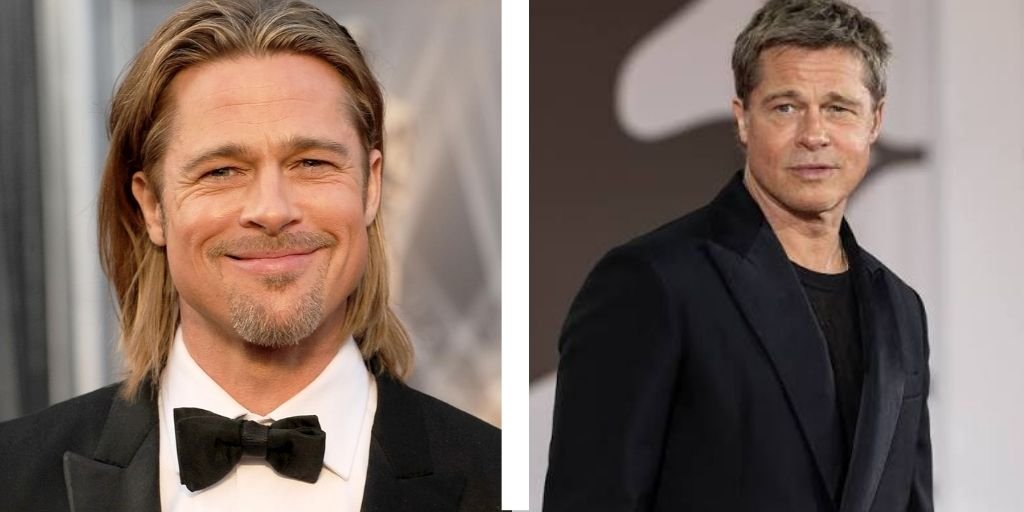
Introduction
Brad Pitt is one of those rare Hollywood stars whose name can instantly bring a movie to mind. From intense dramas and action films to thoughtful productions behind the camera, his career has covered several decades and countless styles. But what makes him more than just a famous actor? Is it his screen presence, his choice of challenging roles, his work as a producer, or simply his ability to remain relevant as the entertainment world changes?
Born in Oklahoma and raised in Missouri, Pitt eventually moved to California with dreams of becoming an actor. What followed was a remarkable journey from small television appearances to international stardom. His career has included major box-office successes, critically praised performances, Academy Award recognition, and influential work in film production.
Early Life and Childhood
Brad Pitt was born William Bradley Pitt on December 18, 1963, in Shawnee, Oklahoma. He grew up in Springfield, Missouri, where his family lived a relatively ordinary life. His father, William Alvin Pitt, worked in a trucking company, while his mother, Jane Etta, was a school counselor.
Growing up, Pitt participated in sports, school activities, and other interests. There was nothing about his childhood that guaranteed he would become one of Hollywood’s biggest names. Like many young people, he had to discover what direction he wanted his life to take.
Education and Early Ambitions
Pitt attended the University of Missouri, where he studied journalism with a focus on advertising. He was close to completing his degree when his ambitions began to change.
Instead of entering the advertising world, he became increasingly interested in acting. Shortly before graduating, he made a bold decision: he left college and moved to Los Angeles.
That decision could easily have gone wrong. Hollywood is filled with talented people who never receive their big opportunity. Pitt, however, continued working toward his goal.
The Struggle Before Hollywood Fame
Pitt’s early years in Los Angeles were far from glamorous. He studied acting and accepted small jobs while looking for opportunities in television and film.
His first screen appearances included small roles in television programs during the late 1980s. These appearances helped him gain experience and become more familiar to casting directors.
The Importance of Small Roles
Before audiences knew him as a leading man, Pitt had to prove that he could perform.
One of his early memorable appearances came in the 1991 film Thelma & Louise, where he played J.D., a charming young drifter. His role was not enormous, but his screen presence attracted considerable attention.
Sometimes a career changes because of one small opportunity. For Pitt, Thelma & Louise was like a door opening just enough for Hollywood to notice what was on the other side.
Becoming a Hollywood Star
After Thelma & Louise, Pitt began receiving larger opportunities. His combination of appearance, charisma, and acting ability made him attractive to filmmakers, but he also demonstrated a willingness to take complicated roles.
During the early 1990s, he appeared in films such as A River Runs Through It, Kalifornia, and Legends of the Fall.
From Heartthrob to Serious Actor
Legends of the Fall helped establish Pitt as a major romantic and dramatic star. However, he did not want to remain trapped in the image of a handsome Hollywood celebrity.
That became increasingly clear with films such as Interview with the Vampire, Se7en, and 12 Monkeys.
In Se7en, Pitt played Detective David Mills opposite Morgan Freeman. The dark crime thriller showed audiences a more intense side of his acting.
His performance in 12 Monkeys was particularly important because it demonstrated that he could embrace eccentric and unpredictable characters. He won the Golden Globe for Best Supporting Actor and received an Academy Award nomination for the role.
Brad Pitt’s Most Important Movies
Over the years, Pitt has appeared in a wide range of films. His filmography includes crime stories, historical dramas, romantic movies, science fiction, war films, comedies, and large-scale action productions.
Fight Club
Released in 1999 and directed by David Fincher, Fight Club became one of Pitt’s most recognizable movies.
He played Tyler Durden, a mysterious and rebellious character whose philosophy challenges modern consumer culture.
Although the movie divided audiences when it first appeared, it developed a major following over time. Pitt’s performance became one of the defining parts of the film.
Ocean’s Eleven
Pitt showed another side of himself in Ocean’s Eleven, directed by Steven Soderbergh.
Playing Rusty Ryan alongside George Clooney, Pitt became part of a charismatic ensemble. The film’s relaxed humor and stylish presentation turned it into a major success.
He later returned for Ocean’s Twelve and Ocean’s Thirteen.
Troy
In Troy, Pitt played the legendary Greek warrior Achilles. The film gave him an opportunity to lead a large historical epic and showcase his physical performance.
The role became particularly memorable because Achilles combines strength with vulnerability. Pitt portrayed the character as more than simply an unbeatable warrior.
Mr. & Mrs. Smith
In 2005, Pitt starred opposite Angelina Jolie in Mr. & Mrs. Smith. The action-comedy combined romance, humor, espionage, and spectacular action sequences.
The film was commercially successful and became an important part of Pitt’s popular-culture image.
The Curious Case of Benjamin Button
Pitt took on a very different challenge in David Fincher’s The Curious Case of Benjamin Button.
He played Benjamin Button, a man who experiences life in reverse physical aging. The movie explored love, time, aging, and loss.
His performance earned him an Academy Award nomination for Best Actor.
Inglourious Basterds
Quentin Tarantino’s Inglourious Basterds gave Pitt one of his most entertaining roles.
As Lieutenant Aldo Raine, he led a group of soldiers during an alternate-history World War II story. The character was larger than life, humorous, violent, and unforgettable.
The film demonstrated Pitt’s ability to combine comedy and intensity within the same performance.
Brad Pitt as a Producer
Pitt’s influence extends beyond acting. He has also built an important career as a film producer.
Through Plan B Entertainment, the production company he helped establish, Pitt became involved with projects that earned significant critical recognition.
Producing Award-Winning Films
Plan B has been associated with films such as 12 Years a Slave, Moonlight, The Big Short, The Departed, and Minari.
12 Years a Slave won the Academy Award for Best Picture, making Pitt an Oscar-winning producer.
This part of his career is particularly interesting because producing requires a different kind of influence. An actor controls a performance, but a producer can help shape which stories reach the screen in the first place.
Pitt’s production work has therefore expanded his Hollywood legacy beyond his own performances.
Major Awards and Recognition
Pitt’s career has received recognition from some of the biggest organizations in entertainment.
He has earned multiple Academy Award nominations throughout his career. His supporting performance in Once Upon a Time in Hollywood finally earned him the Academy Award for Best Supporting Actor.
Once Upon a Time in Hollywood
In Quentin Tarantino’s 2019 film, Pitt played Cliff Booth, a laid-back stuntman and longtime friend of Leonardo DiCaprio’s character.
The role allowed Pitt to use subtle humor rather than relying entirely on dramatic intensity.
His performance was widely praised and resulted in his first competitive acting Oscar.
The victory represented an important moment because Pitt had already spent decades as one of Hollywood’s most recognizable performers.
His Acting Style and Screen Presence
What makes Pitt so effective on screen?
Part of the answer is his ability to make very different characters feel believable. He can play a romantic hero, troubled detective, rebellious outsider, historical figure, soldier, stuntman, or eccentric supporting character.
Quiet Confidence
One of Pitt’s strengths is that he does not always need to dominate a scene through loud dialogue.
Sometimes a facial expression, pause, or small gesture can communicate more than a long speech. His performances often rely on this understated quality.
That makes his work particularly effective in ensemble movies, where he can support other performers while still creating a memorable character.
Personal Life and Public Attention
Like many major celebrities, Pitt’s personal life has received enormous attention from the media.
His relationships, marriages, family life, and legal disputes have often become subjects of public discussion. However, separating his professional achievements from media coverage is important when considering his career.
Life Under the Spotlight
Being famous can be complicated. Pitt has experienced periods when his private life received nearly as much attention as his movies.
Despite this intense public interest, he has continued working in film and has maintained a career that extends far beyond celebrity headlines.
His experience also illustrates a larger reality of modern fame: when someone becomes internationally recognizable, maintaining privacy can become extremely difficult.
Philanthropy and Humanitarian Work
Pitt has also been involved in charitable and humanitarian efforts.
His philanthropic interests have included housing, disaster relief, and other social causes. After Hurricane Katrina, he became involved with efforts connected to rebuilding homes in New Orleans through the Make It Right Foundation.
He has also supported various charitable organizations and humanitarian initiatives over the years.
Using Fame for a Larger Purpose
Celebrity can provide access to resources and attention that ordinary individuals may not have.
Pitt has used some of that visibility to support causes beyond entertainment. While philanthropy cannot define an entire person’s legacy, it is an important part of understanding the public work associated with his career.
Brad Pitt’s Career After 50
Many actors find it difficult to maintain major leading roles as they grow older. Pitt has managed to remain highly visible.
His later career has included projects such as Ad Astra, Once Upon a Time in Hollywood, Bullet Train, and Babylon.
Adapting to a Changing Industry
The film business has changed dramatically since Pitt first arrived in Hollywood.
Streaming platforms, franchise filmmaking, international audiences, and changing viewing habits have transformed the industry. Pitt has continued to work within this changing environment while choosing a mixture of commercial and artistic projects.
His career demonstrates that longevity is not simply about staying famous. It is also about adapting.
Brad Pitt’s Cultural Impact and Legacy
Brad Pitt’s influence can be seen across modern popular culture.
He became one of the defining male stars of the 1990s and 2000s, but his career has lasted much longer than the traditional Hollywood heartthrob phase.
More Than a Movie Star
His legacy rests on several connected achievements:
- A career spanning more than three decades
- Major performances across many genres
- Academy Award recognition
- Successful work as a producer
- Collaborations with respected directors
- A strong international fan base
- Continued relevance across different generations of audiences
Perhaps the most impressive aspect is his versatility.
He did not build his reputation around only one type of movie. Instead, he repeatedly changed direction. That willingness to experiment helped him remain interesting to audiences.
What Makes Brad Pitt Still Relevant?
Why does Pitt remain a recognizable name after so many years?
The answer is partly consistency. He has continued appearing in major productions while avoiding the need to repeat exactly the same role.
He has also benefited from working with filmmakers such as David Fincher, Quentin Tarantino, Steven Soderbergh, and other major directors.
A Career Built Like a Long Road
Think of a Hollywood career as a long road rather than a single destination. Some performers have one huge success and disappear from the spotlight. Others keep moving, changing direction when necessary.
Pitt’s career resembles the second path.
He has had romantic successes, experimental films, action blockbusters, serious dramas, and supporting performances. Some projects were bigger successes than others, but the overall journey has remained remarkably durable.
Conclusion
Brad Pitt’s story is not simply about becoming famous. It is about building a career that survived changing trends, shifting audience tastes, and the enormous pressures of celebrity.
From a young man who left college to pursue acting in Los Angeles to an internationally recognized Oscar-winning performer and producer, his journey shows the value of persistence and adaptability. His most memorable characters—from Tyler Durden and Rusty Ryan to Cliff Booth—have become part of modern movie culture.
His legacy will likely continue because his career contains more than celebrity. It contains memorable performances, ambitious productions, important collaborations, and a willingness to take creative risks. For audiences around the world, Brad Pitt remains a fascinating example of how a movie star can evolve without losing the qualities that made people notice him in the first place.
FAQs About Brad Pitt
1. When was Brad Pitt born?
Brad Pitt was born on December 18, 1963, in Shawnee, Oklahoma, United States.
2. What is Brad Pitt best known for?
He is best known for films including Fight Club, Se7en, Ocean’s Eleven, Troy, Mr. & Mrs. Smith, Inglourious Basterds, The Curious Case of Benjamin Button, and Once Upon a Time in Hollywood.
3. Has Brad Pitt won an Academy Award?
Yes. Pitt won the Academy Award for Best Supporting Actor for his performance as Cliff Booth in Once Upon a Time in Hollywood. He also won an Oscar as a producer of 12 Years a Slave, which received Best Picture.
4. Is Brad Pitt also a film producer?
Yes. Through Plan B Entertainment, Pitt has been involved in producing several acclaimed films, including 12 Years a Slave, Moonlight, and The Big Short.
5. What makes Brad Pitt’s career significant?
His career is significant because he successfully moved from television and romantic leading roles into challenging dramatic performances, action films, comedy, and producing. His ability to adapt has helped him remain one of Hollywood’s most recognizable stars for decades.