Jay Leno: The Life, Career, Cars, and Legacy of a Comedy Legend
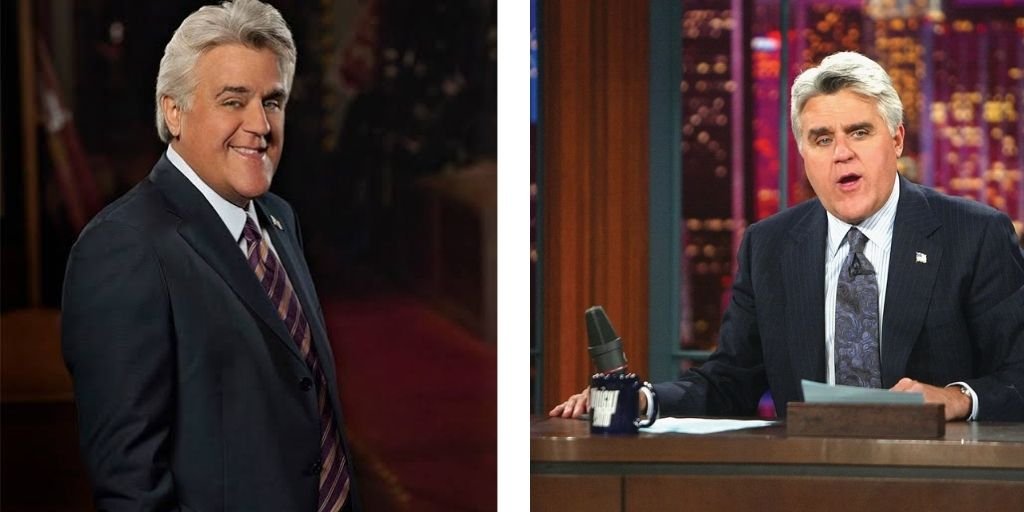
Jay Leno is one of those entertainers whose name instantly brings a familiar smile. For decades, he has been associated with late-night television, observational humor, celebrity interviews, stand-up comedy, and an extraordinary passion for automobiles. Yet there is much more to his story than the man who spent years sitting behind a desk and delivering jokes about the day’s biggest headlines.
Born in New York and raised in Massachusetts, Leno worked his way through the comedy circuit before becoming a nationally recognized performer. His friendly personality, distinctive voice, tireless work ethic, and ability to connect with ordinary people helped him build a career that lasted for generations.
His journey is particularly interesting because he never depended on just one form of entertainment. Television made him famous, but stand-up kept him connected to audiences. His fascination with vehicles became another major part of his public identity. In many ways, his career resembles a classic automobile: it has changed over time, but the engine has never really stopped running.
Early Life and Family Background
Jay Leno was born James Douglas Muir Leno on April 28, 1950, in New Rochelle, New York. His father, Angelo, worked in insurance, while his mother, Catherine, had Scottish roots and worked as a homemaker.
Although he was born in New York, Leno grew up largely in Andover, Massachusetts. His upbringing was relatively ordinary, and that background later became an important part of his comedic style. Instead of presenting himself as an untouchable celebrity, he often came across as someone who understood everyday life.
As a child, Leno reportedly struggled academically because of dyslexia. Rather than allowing that difficulty to define him, he developed other strengths, particularly his ability to communicate, observe people, and make others laugh.
He attended Emerson College in Boston, where he studied speech therapy. During his college years, he began taking comedy more seriously. His early performances helped him discover that he had a natural ability to hold an audience’s attention.
That decision changed the direction of his life.
Comedy was not necessarily the safest career choice, but Leno approached it with remarkable persistence. He spent years performing in clubs and working on his material before becoming a household name.
The Long Road to Stand-Up Success
Leno’s career did not begin with instant fame. Like many comedians, he had to spend years performing in small clubs, developing jokes, learning how audiences reacted, and figuring out his own style.
Stand-up comedy can be unforgiving. A joke either works or it does not, and there is nowhere to hide when an audience is sitting silently in front of you. Leno embraced that challenge.
His style was generally observational. Instead of relying heavily on complicated characters or controversial shock humor, he often focused on familiar subjects: families, politics, technology, relationships, celebrities, and everyday frustrations.
That accessibility became one of his greatest strengths.
Leno eventually began appearing on television programs, which expanded his audience. His frequent appearances on The Tonight Show Starring Johnny Carson were especially important. Carson was already one of the biggest names in American entertainment, and appearing on his program gave emerging comedians an enormous platform.
Leno’s performances demonstrated that he could work in a television environment while maintaining the rhythm and personality of a live comedian.
By the 1980s, he had become a recognizable entertainment figure, appearing on numerous television programs and comedy specials.
Becoming Host of The Tonight Show
The biggest chapter of Leno’s career began in 1992 when he succeeded Johnny Carson as host of The Tonight Show.
Replacing Carson was an enormous challenge. Carson had hosted the program for three decades and had become almost synonymous with American late-night television.
Would audiences accept a new host?
Leno faced that question immediately.
His answer was simple: work harder.
As host, Leno developed a format built around topical monologues, celebrity interviews, comedy sketches, and recurring segments. His opening monologue became particularly important to the show’s identity.
Every evening, viewers could expect jokes about current events, politicians, celebrities, sports, and popular culture.
The formula proved successful.
Under Leno, The Tonight Show became one of the most recognizable programs on American television. He developed a reputation for arriving prepared, generating large amounts of material, and maintaining a steady connection with mainstream audiences.
One of his defining characteristics was his work ethic. Leno was known for his willingness to continue performing stand-up while hosting television. Rather than treating late-night television as the final destination, he continued visiting comedy clubs and testing jokes in front of live audiences.
That commitment helped keep his comedic instincts sharp.
His Unique Style of Humor
What makes Leno’s comedy distinctive?
The answer is partly its simplicity.
He has generally avoided making himself the center of every joke. Instead, he often observes the strange and amusing things people do every day.
His comedy frequently works because audiences recognize themselves in it.
Whether discussing parents, traffic, technology, politics, television, or consumer habits, he has a talent for taking an ordinary situation and giving it a humorous twist.
His delivery is also important. Leno’s deep voice, expressive facial reactions, and measured timing became instantly recognizable.
He was never primarily a comedian who needed elaborate costumes or complicated stage productions. His strongest tool was the joke itself.
That approach made him accessible to a broad television audience, including viewers who might not normally watch stand-up comedy.
The Tonight Show and the Changing Television Landscape
Leno’s years on late-night television coincided with enormous changes in American media.
When he began hosting, viewers primarily consumed television through traditional broadcast networks. Cable television was expanding, but the internet had not yet transformed entertainment.
Over time, audiences gained access to websites, social media, streaming platforms, smartphones, podcasts, and countless other forms of entertainment.
Late-night television therefore became increasingly competitive.
Despite these changes, Leno remained successful because he understood the importance of consistency. Viewers knew what they were getting when they turned on the program.
That predictability could be a strength.
His version of late-night entertainment was designed for a wide audience rather than a narrow demographic. He frequently mixed major celebrities with comedians, musicians, actors, athletes, and unusual guests.
His ability to make conversations feel relatively relaxed helped reinforce his approachable image.
The Tonight Show Transition and Television Controversy
Leno’s career also included one of the most widely discussed transitions in modern late-night television.
In 2009, NBC moved Leno away from The Tonight Show and gave the position to Conan O’Brien. Leno subsequently received a prime-time program, The Jay Leno Show.
The arrangement did not produce the results NBC hoped for, and the network eventually changed course.
In 2010, Leno returned to The Tonight Show, while O’Brien departed NBC.
The situation generated extensive public discussion about television ratings, network decisions, contracts, and the future of late-night programming.
For Leno, it was a complicated period during an otherwise highly successful career.
He ultimately continued hosting The Tonight Show until 2014, when Jimmy Fallon succeeded him.
Although the transition marked the end of his most famous television role, it did not mean Leno was finished with entertainment.
Far from it.
A Passion for Cars That Became a Second Career
Ask many people what they associate with Jay Leno besides comedy, and automobiles will probably be near the top of the list.
Leno has developed one of the world’s best-known private vehicle collections. His interest covers far more than expensive modern sports cars.
He has shown enthusiasm for vintage automobiles, motorcycles, American classics, European models, unusual engineering projects, and historically important machines.
For Leno, a car is not simply something that gets you from one place to another.
It can be a piece of history.
It can represent engineering innovation, craftsmanship, cultural change, or an important moment in transportation.
His collection is especially interesting because of its variety. Instead of focusing exclusively on the most valuable luxury cars, he has often highlighted unusual vehicles that tell an interesting story.
That philosophy has made his automotive work appealing even to people who are not traditional car enthusiasts.
Jay Leno’s Garage
Leno’s automotive passion eventually became the foundation for Jay Leno’s Garage.
The program allowed him to share vehicles with viewers while explaining their history, design, technology, and personalities.
The appeal of the show is that Leno does not simply stand beside expensive cars and tell viewers how valuable they are. He frequently drives them, works with mechanics, meets collectors, and investigates the stories behind the machines.
That hands-on approach gives the program a different feeling from a conventional celebrity lifestyle show.
A rare automobile becomes more interesting when you learn who designed it, why it was built, what made it unusual, and how it performs on the road.
Leno also has a particular interest in restoration.
A neglected automobile can sometimes look like little more than an old pile of metal. After careful restoration, however, it can become a moving piece of history.
That transformation mirrors the way Leno approaches many aspects of his career: preserve what works, improve what can be improved, and keep moving.
His Approach to Collecting Automobiles
Leno’s collection demonstrates that collecting does not have to be based entirely on price.
He has expressed appreciation for vehicles that have fascinating stories or unusual engineering.
His interests include steam-powered automobiles, early electric vehicles, muscle cars, motorcycles, supercars, and classic European automobiles.
He has also shown interest in vehicles that ordinary enthusiasts might overlook.
This makes his collection educational as well as entertaining.
One of the most appealing aspects of his automotive personality is curiosity. He seems genuinely interested in understanding how machines work.
That curiosity also connects naturally with his comedy career. Both require observation.
A comedian studies people and situations.
A car enthusiast studies machines and their history.
In both cases, attention to small details can reveal something much bigger.
Life Beyond the Television Desk
Although late-night television made Leno internationally famous, he has never completely abandoned stand-up comedy.
He has continued performing live because the connection between comedian and audience remains important to him.
Stand-up offers something television cannot fully reproduce.
There is no editing in a live comedy club. The audience responds immediately, and the performer learns immediately.
For an experienced comedian, that environment can be both demanding and energizing.
Leno has also appeared in films, television programs, animated projects, and other entertainment productions.
His voice and recognizable personality have made him a natural choice for guest appearances and voice roles.
Even after leaving The Tonight Show, he remained active rather than disappearing from public life.
His automotive programs and continued live performances allowed him to maintain a relationship with audiences in different ways.
Work Ethic and Business Philosophy
One of the most frequently discussed elements of Leno’s career is his work ethic.
He built his reputation during a period when entertainers often had to travel extensively, perform live, and gradually build an audience.
Instead of waiting for opportunities, he continued working.
That philosophy became particularly visible during his television years. Even while hosting one of the biggest late-night programs in the country, he continued performing stand-up.
There is a lesson in that approach.
Success can make people comfortable, but staying successful often requires continuing to practice the skill that created the success in the first place.
For Leno, that skill was comedy.
He also developed a reputation for being interested in the practical side of money and work. His career demonstrates the value of diversification: television, live performance, automotive media, appearances, and other projects all became parts of his professional life.
Personal Life and Philanthropy
Leno married Mavis Leno in 1980. The couple have generally maintained a relatively private personal life compared with many Hollywood personalities.
Mavis has also been involved in charitable and advocacy work, and the couple have supported various philanthropic causes.
Leno himself has participated in charitable events and donated his time and resources to organizations and causes.
His public image has often remained surprisingly grounded despite his level of fame.
He has frequently been described as approachable, particularly when interacting with automotive enthusiasts, mechanics, collectors, and members of the public.
That quality has helped distinguish him from the stereotype of the distant celebrity.
Accidents, Injuries, and Resilience
Leno’s passion for vehicles has occasionally carried genuine risks.
His collection includes powerful machines, experimental technology, vintage vehicles, and motorcycles. Working around old or high-performance machinery can be dangerous even for experienced enthusiasts.
Leno has experienced serious injuries in recent years, including incidents involving vehicles and mechanical equipment.
Rather than allowing those events to end his public activities, he has generally approached recovery with determination.
His resilience is consistent with the work ethic that has characterized much of his career.
At an age when many entertainers have stepped away from demanding schedules, Leno has continued to appear publicly, perform, and explore his automotive interests.
Why Jay Leno Remains Popular
Why does Leno remain recognizable after so many years?
Part of the answer is longevity.
He has been visible across several generations of entertainment.
Older audiences remember him from his early comedy appearances and The Tonight Show. Younger viewers may know him from Jay Leno’s Garage, internet clips, automotive media, or guest appearances.
Another reason is his personality.
Leno has generally presented himself as enthusiastic rather than aloof. Whether he is discussing a celebrity, telling a joke, or examining an old engine, he often approaches the subject with curiosity.
That enthusiasm is contagious.
His career also demonstrates adaptability. He successfully moved between comedy clubs, television, automotive programming, and other media.
In an entertainment industry where public attention can disappear quickly, staying relevant for decades is an achievement in itself.
Jay Leno’s Lasting Legacy
Leno’s legacy cannot be reduced to one television show.
He became an important figure in American late-night entertainment, helping define the style of mainstream comedy for a generation of viewers.
At the same time, he helped demonstrate that a celebrity’s personal passion could become meaningful entertainment.
His automotive programs introduced millions of people to vehicles they might never otherwise encounter.
For some viewers, watching Leno explore a historic car became an informal lesson in engineering, design, manufacturing, and history.
For others, it was simply enjoyable television.
That broad appeal may ultimately be one of his greatest achievements.
Leno’s story is also a reminder that careers do not always need to follow a straight line. He began as a stand-up comedian, became a television host, developed a major automotive presence, and continued performing long after leaving his most famous position.
His journey shows that reinvention does not necessarily mean abandoning your original identity. Sometimes, it means finding new ways to express it.
Conclusion
Jay Leno has built a career that extends far beyond late-night television. From small comedy clubs to one of America’s most famous television desks, he demonstrated persistence, discipline, and an ability to connect with ordinary audiences. His love of automobiles added another dimension to his public identity and eventually became a major part of his entertainment career.
What makes his story particularly compelling is the combination of humor and curiosity. He has remained interested in people, machines, history, and the changing world around him. Whether he is telling a joke to a live audience or examining the engine of a century-old automobile, he brings the same basic quality: enthusiasm.
His career may have changed gears many times, but the journey is far from ordinary.
Frequently Asked Questions
1. Who is Jay Leno?
Jay Leno is an American comedian, television host, writer, actor, and automotive enthusiast. He is best known for hosting The Tonight Show and for his automotive program Jay Leno’s Garage.
2. When did Jay Leno host The Tonight Show?
Leno first became host of The Tonight Show in 1992 after Johnny Carson’s retirement. He later returned to the program in 2010 and remained host until 2014.
3. Why is Jay Leno famous for cars?
Leno has maintained an extensive collection of automobiles and motorcycles for many years. His enthusiasm includes classic, vintage, rare, unusual, and high-performance vehicles. His interest became widely known through Jay Leno’s Garage.
4. Is Jay Leno still a comedian?
Yes. Although he is no longer the host of The Tonight Show, Leno has continued performing stand-up comedy and making entertainment appearances.
5. What is Jay Leno’s Garage?
Jay Leno’s Garage is an automotive series centered on Leno’s passion for vehicles. The program explores cars, motorcycles, engineering, restoration, collectors, and the stories behind unusual machines.