
Bill Clinton: 12 Fascinating Chapters of His Life, Presidency, and Legacy
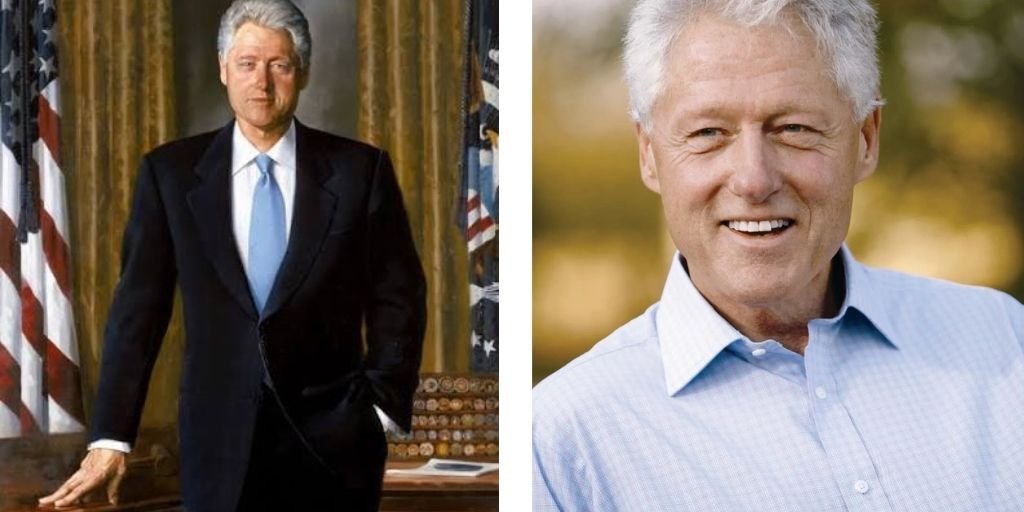
Bill Clinton remains one of the most recognizable American political figures of the late 20th century. His journey from a small-town childhood in Arkansas to the White House is a story of ambition, public service, political success, controversy, and reinvention.
Serving as the 42nd president of the United States from 1993 to 2001, Clinton governed during a period of major economic growth, rapid technological change, international developments, and intense political conflict. His presidency included significant legislation and diplomatic efforts, but it was also marked by the Monica Lewinsky scandal and his impeachment by the House of Representatives. The Senate ultimately acquitted him in 1999.
His life can be viewed almost like a long-running American political story: one chapter explains where he came from, another describes his rise to power, and later chapters explore what happened after he left the Oval Office.
Early Life and Family Background
A childhood in Arkansas
William Jefferson Clinton was born on August 19, 1946, in Hope, Arkansas. His early years were shaped by a modest Southern environment and by the experiences of growing up in the postwar United States.
He was raised primarily by his mother, Virginia Dell Blythe, and his grandparents played an important role in his early upbringing. His stepfather, Roger Clinton Sr., later became part of his family life.
Growing up in Arkansas helped shape Clinton’s connection with ordinary Americans. Rather than beginning life surrounded by national political power, he came from a relatively small community where personal relationships and communication mattered greatly.
That background later became part of his political identity. He developed a reputation for being comfortable speaking with people from different backgrounds, whether they were voters, business leaders, students, or political opponents.
A strong interest in public service
As a young man, Clinton became interested in government and public affairs. A particularly important experience came when he attended Boys State and later Boys Nation. These programs exposed him to political leadership and public service.
Another influential moment came when he met President John F. Kennedy as a teenager. The encounter helped strengthen his interest in national politics.
For Clinton, politics was not simply about elections. It became a way of understanding how government could affect people’s everyday lives.
Education and the Road to Politics
Clinton’s academic journey took him beyond Arkansas. He attended Georgetown University, where he studied international affairs.
His time at Georgetown was important because it introduced him to a wider political world. Washington, D.C., was no longer something distant from an Arkansas teenager; it became an environment he could imagine entering himself.
After Georgetown, Clinton received a Rhodes Scholarship and studied at Oxford University. He later attended Yale Law School, where he earned his law degree.
Learning from different worlds
His education exposed him to different political ideas, cultures, and institutions. These experiences became useful later in his career, especially when dealing with international issues.
You can think of his education as a toolbox. Each institution gave him another tool: international affairs from Georgetown, global exposure from Oxford, and legal training from Yale.
He returned to Arkansas with a growing interest in public service and eventually entered electoral politics.
Becoming Governor of Arkansas
Before reaching the White House, Clinton built his political career in Arkansas.
He was elected governor in 1978 at a relatively young age. His first term, however, was difficult. After serving one term, he lost his reelection campaign in 1980.
For many politicians, an electoral defeat can become the end of the road. For Clinton, it became a lesson.
He returned to political life and won the governorship again in 1986. He went on to serve multiple terms and developed a reputation as a pragmatic Southern Democrat.
Education, infrastructure, and economic development
As governor, Clinton focused on areas including education, economic development, transportation, and government modernization.
His Arkansas experience also helped shape the political approach he would later bring to Washington. He often emphasized balancing social programs with economic concerns rather than presenting government as belonging entirely to one ideological camp.
The experience taught him another important political lesson: national politics often requires compromise.
The 1992 Presidential Campaign
Clinton entered the 1992 presidential election as the governor of Arkansas.
The political environment was complicated. Republican President George H. W. Bush was seeking reelection, while independent candidate Ross Perot attracted significant attention.
Clinton ultimately won the Democratic nomination and defeated Bush and Perot in the general election.
His campaign presented him as a younger generation of leadership.
The famous campaign emphasis on the economy helped communicate a simple message to voters who were concerned about their financial circumstances.
A new political generation
Clinton’s victory marked a change in American politics. He was born after World War II and represented a generation that had grown up during the Cold War, civil rights movement, television expansion, and major social changes.
His election also demonstrated that a Democrat from Arkansas could build a national coalition.
In 1993, he entered the White House as the 42nd president of the United States.
Clinton’s Presidency and Domestic Policies
Clinton’s presidency covered two terms, from 1993 through January 2001. His administration addressed healthcare, welfare, education, crime, taxation, trade, technology, and the federal budget.
The Clinton Presidential Library describes his domestic agenda as including welfare reform, environmental regulation, gun restrictions, and efforts to address the federal deficit.
Family and Medical Leave
One important early achievement was the Family and Medical Leave Act, signed in 1993. The law provided eligible workers with job-protected unpaid leave for certain family and medical reasons.
It reflected Clinton’s broader argument that government policy could help working families deal with major life events.
Healthcare reform
Healthcare was another major issue.
The Clinton administration attempted a major overhaul of the American healthcare system. The effort became politically difficult and ultimately failed to pass in the form originally proposed.
However, healthcare remained part of the administration’s policy legacy. The Clinton Library notes that the failed reform effort was followed by developments including the Children’s Health Insurance Program, or CHIP.
This is an important reminder that political outcomes are not always simply victories or defeats. Sometimes a failed proposal influences later policy.
Economic Growth and the Federal Budget
The economy became one of the defining subjects of Clinton’s presidency.
During the 1990s, the United States experienced substantial economic expansion. The administration pursued deficit reduction, changes to tax policy, spending decisions, trade expansion, and policies intended to encourage economic growth.
The 1993 Omnibus Budget Reconciliation Act increased certain taxes and included spending reductions. According to the Clinton Presidential Library, the federal government recorded a budget surplus in 1998, the first since 1969.
The technology boom
The 1990s also saw explosive growth in personal computing, the internet, telecommunications, and technology companies.
The economy was changing rapidly. New businesses emerged, traditional industries adapted, and millions of Americans experienced a new digital environment.
Clinton’s presidency coincided with this transformation, although economic growth cannot be attributed to one president alone. Many forces contributed, including technological innovation, monetary policy, business investment, international trade, and broader economic conditions.
The Clinton Library records that the administration promoted fiscal discipline, education and training, technology, and expanded international markets.
Welfare Reform, Trade, and Social Policy
One of the most debated domestic changes of Clinton’s presidency was welfare reform.
In 1996, Clinton signed the Personal Responsibility and Work Opportunity Reconciliation Act. The legislation significantly changed federal welfare policy and introduced new requirements and structures for assistance programs.
Why was welfare reform controversial?
Supporters viewed the changes as an effort to encourage employment and reduce long-term dependence on government assistance.
Critics raised concerns about whether vulnerable families could receive adequate support under the new system.
Understanding the issue requires looking beyond slogans. Welfare policy affects employment, poverty, childcare, family stability, state budgets, and the responsibilities of government.
Trade was another important part of the Clinton era. The administration supported greater international economic integration, including the North American Free Trade Agreement.
Trade agreements created opportunities for businesses to sell goods across borders, while also creating debates about manufacturing jobs, wages, competition, and economic adjustment.
These debates continue to influence American economic discussions today.
Foreign Policy and International Affairs
Clinton’s presidency occurred during a period when the Cold War had recently ended and the United States was adjusting to a different global environment.
Instead of focusing primarily on competition with the Soviet Union, American foreign policy dealt with regional conflicts, terrorism, trade, humanitarian crises, and international cooperation.
The Balkans
One major challenge was the conflict in Bosnia and Herzegovina. The Clinton administration supported international efforts aimed at ending the violence and ethnic conflict.
The Clinton Library identifies intervention in Bosnia as one of the administration’s major international actions.
Northern Ireland
Clinton also became involved in the Northern Ireland peace process.
His administration supported diplomatic efforts that contributed to the broader international environment surrounding the Good Friday Agreement of 1998.
The Clinton Library identifies Northern Ireland as one of the administration’s significant international peace initiatives.
Middle East diplomacy
The administration also worked on Arab-Israeli peace negotiations. These efforts included meetings and negotiations involving Israeli and Palestinian leaders.
The Middle East peace process remained unresolved, but Clinton’s presidency was deeply involved in diplomatic attempts to reach an agreement.
Foreign policy during these years was therefore a mixture of diplomacy, military involvement, economic relationships, and international partnerships.
The Monica Lewinsky Scandal and Impeachment
No discussion of Clinton’s presidency can avoid the scandal involving Monica Lewinsky, a White House intern.
The controversy became a major national political story in the late 1990s.
In December 1998, the House of Representatives voted to impeach Clinton on two articles involving perjury and obstruction of justice. The Clinton Presidential Library records that the impeachment proceedings stemmed from investigations into his relationship with Lewinsky.
The Senate trial
The impeachment then moved to the Senate.
The Senate trial began in January 1999. On February 12, the Senate voted on the articles of impeachment.
The official Senate record shows that the first article received 45 guilty votes and 55 not-guilty votes. The second received 50 guilty votes and 50 not-guilty votes. Neither reached the two-thirds threshold required for conviction.
Clinton therefore remained in office and completed his second term.
The episode became one of the most significant political controversies of the late 20th century and continues to be studied in discussions about presidential power, personal conduct, investigations, and the constitutional impeachment process.
Clinton’s Second Term and the End of the Presidency
Clinton won reelection in 1996, defeating Republican nominee Bob Dole and independent candidate Ross Perot. The Clinton Library notes that this made him the first Democrat since Franklin D. Roosevelt to win a second presidential term.
His second term included continued economic expansion, international negotiations, debates over Social Security and Medicare, and the impeachment crisis.
The country was also entering a new technological era.
The internet was becoming increasingly important in homes, schools, businesses, and government. The dot-com boom was reshaping expectations about the future.
By January 2001, Clinton left the White House after eight years in office.
His departure did not end his public life.
Instead, it opened another chapter.
Life After the White House
After leaving office, Clinton remained active in public affairs, philanthropy, speaking, and international initiatives.
The Clinton Foundation became a major part of his post-presidential work.
Its stated mission has included economic opportunity, public health, and civic engagement.
Global health initiatives
The foundation became involved in public-health initiatives, including efforts related to HIV/AIDS treatment and access to medicine.
Its activities expanded beyond the United States and involved partnerships with governments, businesses, nonprofit organizations, and other institutions.
Clinton Global Initiative
Another notable initiative was the Clinton Global Initiative, which brought together leaders from different sectors to make commitments around global challenges.
The broader idea was straightforward: governments cannot solve every major problem alone.
Businesses, charities, researchers, community groups, and governments can sometimes achieve more by working together.
In that sense, Clinton’s post-presidential career continued a theme visible during his presidency—bringing different groups around the same table.
Books, Public Speaking, and Continuing Influence
After the presidency, Clinton also became a bestselling author and prominent public speaker.
His autobiography, My Life, was published in 2004 and offered his account of his childhood, political career, presidency, and personal experiences.
He continued to appear at major political, charitable, and international events.
His role also changed from policymaker to former president.
Former presidents often have unusual public platforms. They no longer make government decisions directly, but they can speak, raise money, establish organizations, advise leaders, and influence public conversations.
Clinton has used that platform extensively.
The Clinton Presidential Center
The William J. Clinton Presidential Center in Little Rock, Arkansas, houses presidential records and museum exhibits connected with his life and administration.
The center also includes the Clinton Presidential Library and educational programs. The Clinton Foundation reported that millions of visitors had visited the center since its opening.
For researchers and the general public, presidential libraries provide something valuable: access to historical records that allow people to examine the decisions and debates of an administration.
Bill Clinton’s Family and Public Life
Family has always been an important part of Clinton’s public story.
He married Hillary Rodham in 1975, and they have one daughter, Chelsea Clinton.
Hillary Clinton later became a U.S. senator, secretary of state, and presidential candidate, giving the Clinton family an unusual place in modern American political history.
Chelsea Clinton has also developed a public career, particularly in philanthropy, writing, and global health-related work.
The Clinton family therefore remained connected to public service long after Bill Clinton left office.
At the same time, the family’s public life has frequently been surrounded by intense media attention. This illustrates how political fame can extend beyond an individual and affect an entire family.
Bill Clinton’s Legacy
How should we understand Bill Clinton today?
The answer depends partly on which aspect of his career someone studies.
His presidency included strong economic growth, federal budget surpluses, welfare reform, trade expansion, healthcare initiatives, environmental actions, and international diplomacy. The Clinton Library documents many of these areas in its presidential records and exhibits.
At the same time, his presidency was marked by major political controversies, particularly the Lewinsky scandal and impeachment.
A historical legacy is rarely a single sentence.
It is more like a large mosaic. One piece may show economic policy. Another shows foreign affairs. Another shows legislation. Another shows personal controversy. Together, these pieces create the larger historical picture.
Clinton’s place in American history is therefore connected both to the achievements of his administration and to the disputes that surrounded his presidency.
His story also demonstrates how quickly American politics changed during the 1990s—from the end of the Cold War to the rise of the internet and the beginning of a new millennium.
Conclusion
Bill Clinton’s life combines political ambition, education, public service, presidential leadership, controversy, and a long post-presidential career. From Arkansas to Washington and later to international philanthropic work, his career has covered several very different eras of American life.
As president, he governed during economic expansion and major technological change while pursuing policies involving healthcare, welfare, trade, education, the environment, and the federal budget. His administration also faced difficult international conflicts and one of the most consequential presidential scandals of the modern era.
Whatever perspective a reader brings to his career, studying Clinton provides a useful window into American politics during the 1990s. His presidency was neither a simple success story nor a simple controversy. It was a complicated period shaped by policy achievements, political disagreements, personal conduct, and a rapidly changing world.
Frequently Asked Questions
1. Who is Bill Clinton?
Bill Clinton is an American politician who served as the 42nd president of the United States from 1993 to 2001. Before becoming president, he served as governor of Arkansas.
2. How many terms did Bill Clinton serve as president?
Bill Clinton served two terms as president, from January 1993 until January 2001. He won reelection in 1996.
3. Why was Bill Clinton impeached?
The House of Representatives impeached Clinton in December 1998 on charges of perjury and obstruction of justice connected to investigations involving his relationship with Monica Lewinsky.
4. Was Bill Clinton removed from office after impeachment?
No. The Senate acquitted Clinton in February 1999 because neither article received the two-thirds vote required for conviction.
5. What did Bill Clinton do after leaving the presidency?
After leaving office, Clinton remained active in philanthropy, global health initiatives, public speaking, writing, and international projects through organizations including the Clinton Foundation.