
Pablo Picasso: 10 Powerful Facts About His Life, Art & Legacy
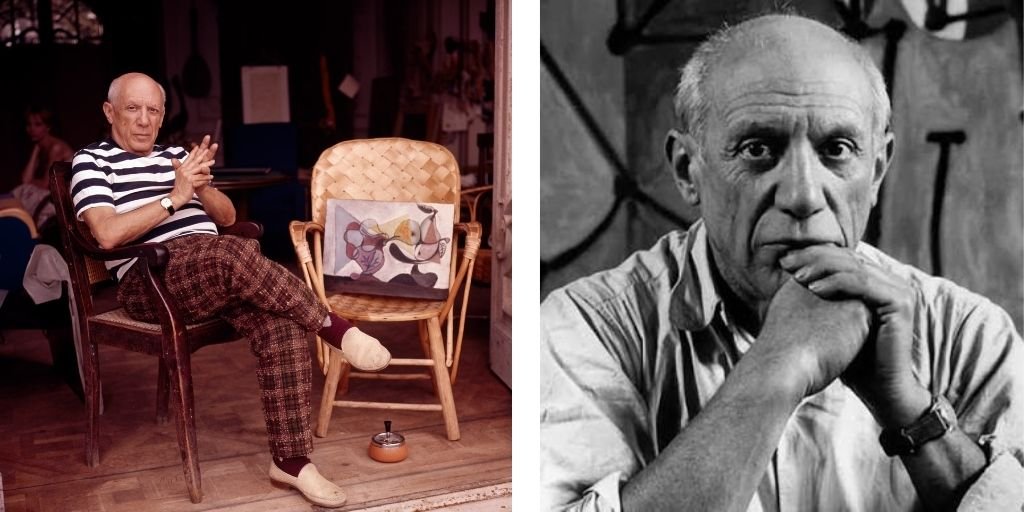
Pablo Picasso was more than a famous painter. He was an artist who constantly questioned how people should see the world. Over a career that lasted more than seven decades, he moved between painting, sculpture, drawing, printmaking, ceramics, and other creative forms. His name eventually became almost inseparable from modern art.
But what made Picasso so influential? Was it his unusual style, his enormous body of work, or his willingness to break rules that other artists followed?
The answer is a mixture of all three. Picasso’s life was filled with experimentation, personal relationships, political events, success, controversy, and remarkable artistic change. His work could look simple at first glance, yet many of his paintings carried complicated ideas about identity, emotion, conflict, and perception.
Early Life and Family Background
Pablo Ruiz Picasso was born on October 25, 1881, in Málaga, Spain. His father, José Ruiz Blasco, was an artist and art teacher who specialized in painting birds and other natural subjects. His mother was María Picasso López.
Art was therefore not a distant idea in Picasso’s childhood. It was part of his everyday environment.
A Childhood Surrounded by Art
Picasso showed an extraordinary interest in drawing from a young age. His father recognized his ability and encouraged him to develop his skills. Family life and education helped give the young artist a strong foundation in traditional drawing.
Unlike the idea that Picasso simply ignored artistic rules from the beginning, his early education was actually quite traditional. He learned to draw figures, study anatomy, and work with realistic forms.
This background became important later. Picasso could break artistic conventions because he first understood many of the conventions he was breaking.
His family moved several times during his childhood, including periods in northern Spain. His father eventually taught at art schools, giving Picasso opportunities to study art seriously.
By his teenage years, his talent was already attracting attention.
Picasso’s Education and Move Toward Paris
Picasso studied at art institutions in Spain, including the Royal Academy of San Fernando in Madrid. However, formal education did not completely satisfy his curiosity.
He wanted to see what was happening beyond the traditional academic world.
Barcelona and the Modern Art Scene
Barcelona became especially important to Picasso’s development. The city had an active artistic and intellectual community, and Picasso became connected with writers, artists, and other creative people.
He spent time at Els Quatre Gats, a famous café and meeting place for artists and intellectuals.
The atmosphere exposed him to new ideas and encouraged him to move beyond strict academic traditions.
Paris and a Larger World
Picasso eventually traveled to Paris, which was becoming one of the most important centers of European modern art.
Imagine an artist leaving a familiar classroom and suddenly walking into a giant laboratory filled with completely different experiments. Paris was something like that for Picasso.
He encountered new artistic movements, different cultures, changing social ideas, and fellow artists who were also searching for new ways to express modern life.
This environment helped transform his career.
The Blue Period: Emotion in Shades of Blue
One of the most recognizable stages of Picasso’s early career is his Blue Period, generally dated from around 1901 to 1904.
During these years, his paintings frequently used blue and blue-green tones. The subjects often included poverty, loneliness, sadness, and people living on the margins of society.
A Darker Emotional World
Picasso’s Blue Period followed the death of his close friend Carlos Casagemas in 1901. Casagemas’s death deeply affected him and contributed to the emotional atmosphere of his work.
Paintings from this period often feature thin figures, restrained colors, and quiet expressions.
One well-known example is The Old Guitarist, painted around 1903–1904.
The image of an elderly, poorly dressed musician holding a guitar communicates vulnerability without requiring a long explanation. The blue palette strengthens the sense of isolation.
Picasso was not simply painting sadness. He was exploring how color, posture, space, and human expression could communicate emotional experiences.
The Rose Period and a New Sense of Warmth
Around 1904, Picasso’s work began changing. His palette became warmer, and his subjects often included circus performers, acrobats, harlequins, and entertainers.
This phase became known as the Rose Period.
From Blue to Rose
Compared with the Blue Period, the paintings often feel warmer and more optimistic. However, they are not simply cheerful pictures.
Picasso remained interested in loneliness, identity, and the lives of people who existed outside conventional society.
Circus performers became particularly important subjects. Their lives could appear glamorous from the outside, yet their existence was often difficult and uncertain.
Picasso seemed fascinated by this contrast.
The Rose Period also demonstrated something that would become a defining characteristic of his career: he did not remain attached to one style merely because it was successful.
He changed.
Then he changed again.
And again.
That willingness to move forward became one of his greatest artistic strengths.
Cubism and the Transformation of Modern Art
When people hear the name Picasso, Cubism is often the first thing that comes to mind.
Cubism was developed in the early twentieth century by Picasso and Georges Braque. It challenged traditional ideas about how objects should be represented.
What Was Cubism?
Traditional European painting often attempted to create the illusion of three-dimensional objects on a flat surface.
Cubist artists approached the problem differently. Instead of showing an object from one fixed viewpoint, they could present different aspects of it at once.
A face might be shown with several perspectives. A guitar could be broken into geometric shapes. Objects could appear fragmented and rearranged.
Rather than asking, “What does this object look like from here?” Cubism could ask, “What do we know about this object from different viewpoints?”
This was a radical change.
Les Demoiselles d’Avignon
Picasso’s Les Demoiselles d’Avignon, painted in 1907, is frequently discussed as a landmark in the development of modern art.
The work presents five female figures with sharply simplified and angular forms. Its unusual composition challenged conventional approaches to the human body and influenced the development of Cubism.
The painting was not immediately embraced by everyone. Its strange forms and confrontational appearance made it very different from conventional European painting.
Yet its influence grew enormously.
Picasso and Georges Braque
Picasso’s relationship with Georges Braque was particularly important. The two artists worked closely together during the development of Cubism.
Their experiments led to what is often called Analytical Cubism, followed by Synthetic Cubism.
This collaboration showed that artistic innovation does not always happen in isolation. Sometimes creative progress comes from two people challenging each other’s ideas.
Picasso’s Artistic Experiments Beyond Painting
It would be a mistake to think of Picasso only as a painter.
He worked across many artistic forms throughout his long career.
Sculpture and Three-Dimensional Art
Picasso experimented with sculpture throughout his life. He used materials and techniques that allowed him to think about shape differently from traditional sculptors.
His sculpture Guitar from 1912 is an important example of his experimentation with constructed forms.
Instead of treating sculpture as a solid object that had to be carved from a block, Picasso explored assembled and constructed approaches.
This helped expand ideas about what sculpture could be.
Printmaking and Ceramics
Picasso also created prints and became deeply interested in ceramics later in his career.
Ceramics gave him another way to experiment with form, decoration, and everyday objects.
His ability to move between different media reflected his curiosity. He seemed to treat artistic materials almost like different languages. If one language could not express an idea, he tried another.
Guernica and Picasso’s Response to War
Among Picasso’s most famous works is Guernica, painted in 1937.
The enormous black-and-white painting was created in response to the bombing of the Basque town of Guernica during the Spanish Civil War.
A Painting About Human Suffering
Rather than showing a conventional battlefield scene, Picasso filled the composition with distorted human and animal forms.
A mother holds her dead child. A wounded figure struggles on the ground. A horse appears to scream. Sharp shapes and intense expressions create a powerful atmosphere of destruction.
The lack of bright color gives the work a newspaper-like quality, connecting it to the grim reality of wartime reporting.
Guernica became one of the most recognizable anti-war images in modern art.
Its power comes partly from its ambiguity. Picasso did not provide viewers with a simple story explaining every shape.
Instead, the viewer has to confront the suffering presented in front of them.
Why Guernica Still Matters
Why does a painting created in the 1930s continue to attract attention?
One reason is that its central subject is not limited to one historical event. It speaks to the broader human consequences of violence.
The work has therefore remained an important cultural symbol in discussions about war and civilian suffering.
Picasso’s Personal Life and Relationships
Picasso’s personal life was complex and often closely connected with his creative career.
He had several important relationships during his lifetime, including relationships with Fernande Olivier, Olga Khokhlova, Marie-Thérèse Walter, Dora Maar, Françoise Gilot, and Jacqueline Roque.
Relationships as Artistic Inspiration
Several of Picasso’s partners became subjects of his paintings, drawings, and sculptures.
His portraits of women changed significantly depending on the period and relationship. Some are realistic, while others are highly abstract or distorted.
This makes his personal life relevant to understanding his work, but it is important not to reduce his art entirely to biography.
A painting can be influenced by a personal relationship without being a simple record of it.
The Controversial Side of Picasso’s Legacy
Picasso’s relationships and treatment of women have been discussed critically by biographers, historians, and commentators.
His legacy is therefore not entirely comfortable or uncomplicated.
It is possible to recognize his enormous influence on modern art while also examining the difficult aspects of his private life. Looking at both sides gives us a fuller understanding of the person behind the famous name.
Picasso, Politics, and the Spanish Civil War
Picasso lived through some of the most turbulent political periods of the twentieth century.
The Spanish Civil War had a major impact on his work, most famously through Guernica.
During World War II, Picasso remained in Paris while the city was occupied by Nazi Germany.
Political Themes in His Art
Picasso’s political engagement became particularly visible through his artwork.
He later joined the French Communist Party in 1944. His political views influenced some aspects of his public identity and artistic output.
One of his well-known political images was the dove of peace, which became associated with peace movements after World War II.
However, Picasso’s political legacy, like his personal life, contains complexities and debates.
His art was used in different political contexts, while interpretations of his political commitments have varied over time.
The Later Years and Continued Creativity
One remarkable fact about Picasso is how long he remained creatively active.
He did not retire from art after achieving fame.
Instead, he continued painting, drawing, sculpting, printmaking, and experimenting well into old age.
An Artist Who Refused to Stand Still
Many artists become strongly associated with one particular style.
Picasso resisted that limitation.
His later work could revisit ideas from earlier periods while also introducing new approaches. He continued studying other artists and reinterpreting familiar subjects.
He created variations on works by masters such as Diego Velázquez and Eugène Delacroix.
This suggests that Picasso’s creativity was not simply about inventing something completely new every day. Sometimes it was about looking at something familiar and asking a new question.
That is a valuable lesson for anyone interested in creativity.
Innovation does not always mean throwing away the past. Sometimes it means seeing the past differently.
Picasso’s Major Works and Artistic Legacy
Picasso created an enormous number of artworks during his lifetime. Estimates often place his total production in the tens of thousands across paintings, drawings, prints, sculptures, ceramics, and other works.
Among the works most closely associated with his legacy are:
Important Works
- The Old Guitarist
- La Vie
- Les Demoiselles d’Avignon
- Girl with a Mandolin
- Ma Jolie
- Three Musicians
- Guernica
- The Weeping Woman
- Dora Maar au Chat
- Massacre in Korea
- The Dove of Peace
Each work belongs to a different moment in his development.
Together, they reveal an artist who was never satisfied with repeating the same visual formula.
Influence on Modern Art
Picasso helped change how artists thought about representation.
Before modernism, many viewers expected art to imitate the visible world. Picasso demonstrated that art could instead break reality apart, rearrange it, simplify it, exaggerate it, or represent several viewpoints simultaneously.
His influence reached painting, sculpture, design, illustration, architecture, and popular culture.
Even people who cannot name a Cubist artist can often recognize Cubist-inspired imagery.
That is part of Picasso’s extraordinary cultural reach.
Why Picasso Remains Famous Today
Picasso died on April 8, 1973, at his home in Mougins, France. He was 91 years old.
More than five decades after his death, his work remains central to discussions about modern art.
A Legacy Larger Than One Style
Picasso’s importance is not simply that he painted Cubist pictures.
His larger contribution was his attitude toward creativity.
He treated artistic rules as starting points rather than permanent boundaries.
He could move from realism to abstraction, from painting to sculpture, from serious political subjects to playful experiments.
His career was almost like a constantly changing map. Just when viewers thought they understood where he was going, he explored another direction.
Museums around the world continue to exhibit his work, while scholars continue to debate his techniques, relationships, politics, and influence.
That ongoing discussion is itself part of his legacy.
Conclusion
Pablo Picasso changed modern art by challenging people to look at reality differently. From his early realistic drawings to the Blue and Rose Periods, from Cubism to Guernica, and from painting to sculpture and ceramics, his career was defined by experimentation.
His story is not simply about fame or artistic genius. It is also about curiosity, reinvention, and the willingness to question familiar ideas.
Picasso’s legacy remains complicated. His enormous artistic influence exists alongside serious discussions about his personal relationships and behavior. Understanding both sides makes his history more complete.
Perhaps that is why Picasso continues to attract attention. He did not leave behind one simple answer to what art should be. Instead, he left behind thousands of questions.
Frequently Asked Questions
1. Who was Pablo Picasso?
Pablo Picasso was a Spanish-born artist who became one of the most influential figures in modern art. He worked in painting, sculpture, drawing, printmaking, ceramics, and other media.
2. What was Pablo Picasso famous for?
He was particularly famous for helping develop Cubism with Georges Braque. He was also known for major works such as Les Demoiselles d’Avignon and Guernica.
3. What is Picasso’s most famous painting?
Guernica is one of his most famous and widely discussed paintings. Created in 1937, it responds to the suffering associated with the bombing of Guernica during the Spanish Civil War.
4. What is Cubism?
Cubism was an influential modern art movement associated with Picasso and Georges Braque. It represented subjects through fragmented geometric forms and could suggest multiple viewpoints within the same composition.
5. When did Pablo Picasso die?
Pablo Picasso died on April 8, 1973, in Moug