
Marilyn Monroe: 10 Fascinating Chapters of Her Life, Career, Movies & Legacy
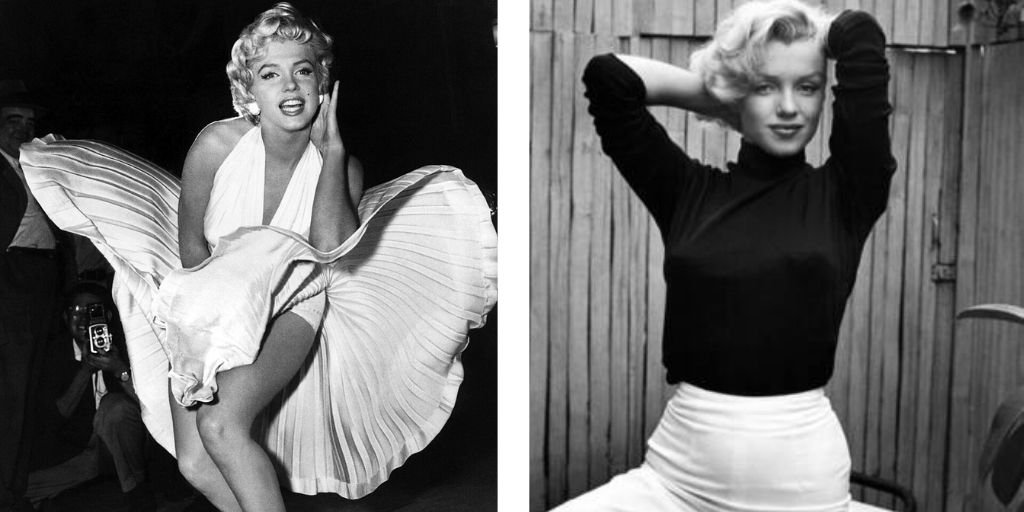
Marilyn Monroe remains one of the most recognizable names in entertainment history. Decades after her death, her photographs, films, voice, fashion, and personal story continue to attract audiences around the world. But who was the woman behind the famous image? Her life was much more complicated than the glamorous picture often associated with her name.
Born Norma Jeane Mortenson in 1926, she experienced an unsettled childhood before becoming a model, actress, singer, and international celebrity. Her rise from a difficult early life to Hollywood fame was remarkable, but her success came with enormous personal and professional pressure.
Her story is almost like a movie itself: an uncertain beginning, a dramatic transformation, worldwide fame, difficult relationships, career struggles, and a legacy that has lasted for generations.
Early Life and Childhood
Marilyn Monroe was born on June 1, 1926, in Los Angeles, California. She was originally named Norma Jeane Mortenson, although she was later baptized as Norma Jeane Baker.
Her childhood was far removed from the luxury and attention that would eventually surround her. Her mother, Gladys Pearl Baker, struggled with serious personal difficulties, and Norma Jeane spent much of her early life in foster homes and institutions.
A Childhood Without Stability
Growing up without a permanent family environment had a major effect on her early years. She experienced several different living arrangements and did not have the stable home life that many children take for granted.
At times, she lived with family friends or relatives. At other times, she stayed in foster care. This uncertainty meant that the young girl had to adapt to different surroundings repeatedly.
Yet difficult beginnings do not always determine how a person’s story ends. Norma Jeane eventually found opportunities that changed the direction of her life.
Her First Marriage
In 1942, at the age of 16, she married James Dougherty. The marriage was partly connected to her living circumstances because she faced the possibility of returning to foster care.
Dougherty later became a merchant marine, while Norma Jeane began exploring modeling. The marriage ended in divorce in 1946, around the same period when her modeling career was beginning to gain attention.
The Birth of Marilyn Monroe
The transformation from Norma Jeane to Marilyn Monroe was one of the most important changes in her career.
In 1946, she signed a contract with 20th Century Fox. The studio wanted a screen name that sounded memorable and suited the image it hoped to create. She initially became known as Marilyn Monroe, with the surname coming from her mother’s family.
From Model to Actress
Before becoming a major film star, Monroe worked successfully as a model. Her photographs appeared in magazines, calendars, and advertisements, helping her build public recognition.
Modeling gave her something extremely valuable: visibility.
Hollywood noticed her potential, but becoming a successful actress required much more than appearance. Monroe studied acting and worked hard to develop her abilities. She eventually became associated with a distinctive combination of comedy, vulnerability, glamour, and screen presence.
Her journey shows that celebrity can sometimes be carefully constructed, but lasting recognition usually depends on something deeper.
Hollywood Career and Rise to Fame
During the late 1940s and early 1950s, Monroe gradually moved from small film appearances toward larger roles.
Some of her early films included Dangerous Years and Scudda Hoo! Scudda Hay!. These roles were modest, but they gave her valuable experience in front of the camera.
Her breakthrough came as audiences began to notice her in films such as All About Eve and The Asphalt Jungle.
The Image of the Blonde Bombshell
Hollywood soon promoted Monroe as a glamorous blonde star. The description became closely associated with her public identity.
However, Monroe did not simply accept every part of the image created around her. She wanted more control over her career and hoped to demonstrate that she could handle serious dramatic material as well as comedy.
This conflict became one of the central themes of her professional life.
The studio system could treat stars almost like products. Monroe increasingly wanted to be treated as an artist.
The Movies That Made Her Famous
Monroe’s filmography includes several productions that remain popular today.
One of her best-known movies was Gentlemen Prefer Blondes, released in 1953. She played Lorelei Lee alongside Jane Russell. The film showcased Monroe’s comic timing, singing, dancing, and ability to command attention on screen.
She followed this with How to Marry a Millionaire, another commercially successful comedy.
The Seven Year Itch
In 1955, Monroe starred in The Seven Year Itch, directed by Billy Wilder. The movie became particularly famous because of a scene involving Monroe standing over a subway grate while air lifts her white dress.
That moment became one of the most famous images in popular culture.
But reducing the film to one photograph misses Monroe’s performance. She brought playful energy and comedic charm to the role, helping establish her as one of Hollywood’s major stars.
Some Like It Hot
In 1959, Monroe appeared in Some Like It Hot, again working with Billy Wilder. She played Sugar Kane Kowalczyk alongside Tony Curtis and Jack Lemmon.
The movie became a classic comedy and earned Monroe a Golden Globe Award for Best Actress in a Motion Picture – Comedy or Musical.
Her performance demonstrated why she could be much more than a glamorous screen presence. She had strong comedic instincts and an unusual ability to combine innocence, humor, and confidence.
Marilyn Monroe and Her Acting Ambitions
One of the most interesting parts of Monroe’s career was her desire to be taken seriously as an actress.
Studying the Craft
Monroe studied with acting teachers, including Lee Strasberg and Paula Strasberg. She became interested in methods of performance that encouraged actors to connect emotionally with their characters.
She also worked with the Actors Studio community in New York.
This period was important because it revealed a side of Monroe that was often hidden by publicity photographs. She was deeply interested in improving her craft.
She did not want audiences to see only a beautiful woman delivering lines. She wanted to become a better performer.
The Misunderstood Star
It is easy to look at old photographs and assume that Monroe’s life was effortless. Her public image suggested confidence and glamour, while her professional behavior sometimes reflected insecurity and intense preparation.
This contrast is one reason her story continues to fascinate people.
The famous image was only one layer. Behind it was a performer trying to control her career in an industry that frequently attempted to control her image.
Personal Life and Three Marriages
Monroe’s personal relationships attracted enormous public attention.
She married three times. Her husbands were James Dougherty, baseball legend Joe DiMaggio, and playwright Arthur Miller.
Joe DiMaggio
Monroe married Joe DiMaggio in 1954. Their marriage lasted only a short time, although the two remained connected after their divorce.
DiMaggio reportedly continued to care deeply about Monroe. After her death, he arranged for roses to be delivered to her crypt for many years.
Their relationship has become part of Hollywood history, although the reality of their private life was more complicated than the romantic stories often told about them.
Arthur Miller
In 1956, Monroe married playwright Arthur Miller.
The relationship brought together two very different worlds: Hollywood celebrity and serious American literature.
Miller wrote some of the most respected plays of the twentieth century, while Monroe was one of the most famous film stars in the world.
They eventually divorced in 1961.
Their marriage is still discussed because it represented an unusual connection between entertainment and literary culture.
The Businesswoman Behind the Celebrity
Monroe’s ambition extended beyond acting.
In 1955, she established Marilyn Monroe Productions with photographer Milton Greene. This was an important step because Hollywood studios traditionally held significant power over actors’ careers.
Seeking Greater Control
By creating her own production company, Monroe attempted to gain more control over the projects she made and the way she was represented.
This was a bold move for a major female star during the 1950s.
She successfully negotiated a new contract with 20th Century Fox that gave her greater control over aspects of her career.
This part of her story is sometimes overlooked. Monroe was not simply a celebrity waiting for studios to decide her future. She actively tried to reshape her professional position.
Marilyn Monroe’s Most Memorable Performances
Although Monroe’s public image often dominates discussions about her, her performances deserve attention on their own.
Her best-known films include Niagara, Gentlemen Prefer Blondes, How to Marry a Millionaire, The Seven Year Itch, Bus Stop, The Prince and the Showgirl, and Some Like It Hot.
Bus Stop
Released in 1956, Bus Stop gave Monroe an opportunity to move beyond the typical comedic blonde role.
She played Cherie, a nightclub singer who dreams of becoming a serious performer. Monroe received strong critical attention for the role, showing that she could handle more emotionally demanding material.
The Prince and the Showgirl
In 1957, Monroe starred opposite Laurence Olivier in The Prince and the Showgirl.
The production was challenging, and the relationship between Monroe and Olivier was reportedly complicated during filming.
Even so, the movie became an important part of her career because it allowed her to work on a project connected to her own production company.
Some Like It Hot
Among her films, Some Like It Hot remains particularly important.
Its humor has survived changing tastes, and Monroe’s performance remains one of the film’s central attractions.
Her delivery of songs such as “I Wanna Be Loved by You” also became closely connected with her public image.
The Final Years of Marilyn Monroe
The final years of Monroe’s life were marked by professional difficulties, personal pressures, and intense media attention.
She continued working, although her film projects sometimes faced delays and production problems.
In 1962, she began filming Something’s Got to Give for 20th Century Fox. The production became troubled, and Monroe was eventually dismissed from the project before negotiations brought her back.
She never completed the film.
A Career Interrupted
At the time of her death, Monroe was still only 36 years old. Her career had already produced several enduring movies, but she had potentially many more years of work ahead of her.
This makes her story particularly striking. Her career ended while she was still a relatively young actress.
What might she have achieved had she lived another twenty or thirty years? We can only speculate.
Marilyn Monroe’s Death and the Questions That Followed
Marilyn Monroe died on August 5, 1962, at her home in Los Angeles. She was 36.
Her death was officially ruled a probable suicide, with an overdose of barbiturates cited as the cause.
Why Her Death Remains Discussed
Monroe’s death attracted enormous media attention and has generated decades of speculation.
Various theories have been proposed about the circumstances surrounding her final hours. Some have suggested accidental overdose, while others have raised theories involving political figures or organized crime.
However, many of these claims remain unproven or disputed.
It is important to separate documented historical evidence from later speculation. The mystery surrounding Monroe’s death has become part of her cultural story, but it should not overshadow the life and career she actually lived.
Her death also highlighted the darker side of fame: intense public scrutiny can continue even after a person is gone.
Fashion, Beauty and Cultural Influence
Few celebrities have had an influence on fashion comparable to Monroe.
Her platinum-blonde hair, fitted dresses, makeup style, photographs, and glamorous evening looks became instantly recognizable.
The White Dress
The white dress from The Seven Year Itch became one of the most famous costumes in film history.
Photographs of Monroe wearing the dress helped turn a movie moment into a cultural symbol.
But her influence was not limited to clothing.
Her style has inspired designers, photographers, musicians, actors, and advertisers for decades.
A Changing Symbol
Different generations have interpreted Monroe in different ways.
For some people, she represents classic Hollywood glamour. For others, she represents the complicated relationship between women, celebrity, beauty, and media expectations.
She can simultaneously be seen as a movie star, fashion icon, cultural symbol, and ambitious performer.
That ability to carry different meanings is one reason her image remains powerful.
Marilyn Monroe’s Legacy in Popular Culture
More than six decades after her death, Monroe remains a global cultural figure.
Her image appears in paintings, books, documentaries, clothing, advertisements, exhibitions, and popular media.
Artists have repeatedly reinterpreted her face and photographs.
One of the most famous examples came from pop artist Andy Warhol, whose Marilyn portrait became a defining work of twentieth-century popular art.
Why People Still Remember Her
Why does someone who made most of her films more than half a century ago remain so recognizable?
Part of the answer is her distinctive screen presence. Part comes from her photographs and carefully created public image. Another part comes from the unfinished nature of her story.
Monroe’s life ended before audiences could see what her mature career might have become.
Her story therefore feels incomplete.
It is like finding the final pages of a novel missing. You know the characters, understand the journey, and remember the important chapters, but you cannot see how the story was supposed to end.
Marilyn Monroe’s Enduring Place in Film History
Marilyn Monroe’s career lasted only about sixteen years, but her impact has lasted much longer.
She appeared in relatively few major films compared with many modern stars, yet several of those movies remain widely known.
Her performances helped define the Hollywood comedy and glamour of the 1950s.
More importantly, she challenged the idea that an actress should simply accept the role assigned to her by a studio.
She sought acting training, negotiated for greater creative control, created a production company, and pursued more challenging roles.
These details provide a fuller picture of her professional ambitions.
A Legacy Beyond Glamour
Monroe is often remembered through photographs, but her legacy is bigger than a collection of famous images.
She represented the possibilities and pressures of becoming a modern celebrity. Her life showed how quickly fame can transform a person’s public identity while leaving the private person difficult to understand.
Today, audiences continue to watch her movies, study her photographs, read biographies about her life, and debate the meaning of her legacy.
That continued interest is perhaps the clearest sign of her lasting cultural importance.
Conclusion
Marilyn Monroe’s story was far more complex than the glamorous image that made her famous. From an unstable childhood, she built a career as a model and actress and eventually became one of the biggest stars of Hollywood’s golden era.
Her films demonstrated her talent for comedy, singing, and dramatic performance, while her efforts to control her career showed considerable ambition. Her marriages, professional struggles, and sudden death added further layers to a life that has fascinated the public for generations.
More than sixty years later, her name remains instantly recognizable. Her movies continue to be watched, her style continues to influence fashion, and her image continues to appear in art and popular culture.
Marilyn Monroe was not simply a Hollywood symbol. She was a performer who wanted to be understood as more than the image created around her—and that may be one of the most important parts of her enduring story.
Frequently Asked Questions
1. When was Marilyn Monroe born?
Marilyn Monroe was born on June 1, 1926, in Los Angeles, California. Her birth name was Norma Jeane Mortenson.
2. What was Marilyn Monroe’s most famous movie?
She starred in several famous films, including Gentlemen Prefer Blondes, The Seven Year Itch, and Some Like It Hot. The latter is widely regarded as one of her most memorable performances.
3. How many times was Marilyn Monroe married?
Marilyn Monroe was married three times. Her husbands were James Dougherty, Joe DiMaggio, and Arthur Miller.
4. How old was Marilyn Monroe when she died?
Monroe was 36 years old when she died on August 5, 1962.
5. Why is Marilyn Monroe still famous today?
Her enduring fame comes from a combination of memorable films, distinctive style, photography, cultural influence, and the continuing interest in her remarkable but short life.