
George Orwell: Amazing Life, Books, Ideas & Lasting Legacy
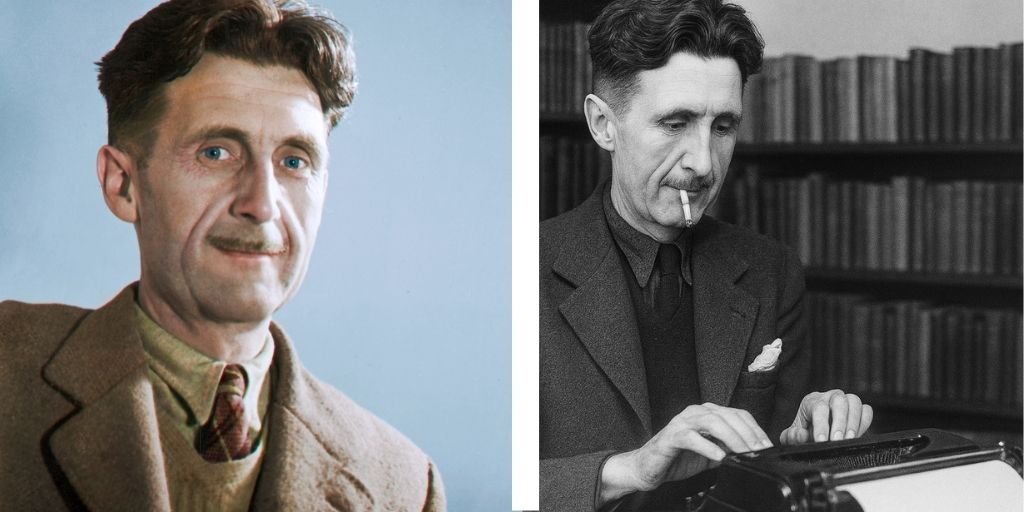
George Orwell remains one of the most influential writers of the 20th century. His name is closely connected with ideas such as political freedom, censorship, propaganda, surveillance, poverty, and the abuse of power. But who was the man behind some of the most famous books ever written?
Born Eric Arthur Blair, Orwell lived through a period of enormous political and social change. He experienced poverty, worked among people living on the margins of society, served in a war, became a journalist, and eventually produced novels that continue to shape the way people think about politics and society.
What makes his writing so powerful? Perhaps it is his ability to take complicated ideas and explain them through ordinary people, memorable stories, and simple language. His books are not just historical works. In many ways, they act like mirrors, encouraging readers to look at their own society and ask difficult questions.
From Animal Farm to Nineteen Eighty-Four, Orwell created stories that have remained relevant for generations. His life was just as fascinating as his fiction.
Early Life and Family Background
George Orwell was born Eric Arthur Blair on June 25, 1903, in Motihari, Bengal Presidency, British India. His father, Richard Walmesley Blair, worked in the Opium Department of the Indian Civil Service. His mother, Ida Mabel Limouzin Blair, came from a family with French connections.
Although Orwell was born in India, he spent much of his childhood in England. His family belonged to what he later described as the lower-upper-middle class. They were not wealthy in the traditional sense, but they had enough social status and education to give him opportunities that many people did not have.
As a child, Orwell attended school in England and eventually received a scholarship to Eton College, one of Britain’s most prestigious schools. Eton exposed him to literature, history, and the traditions of Britain’s educated class.
Yet Orwell never completely felt comfortable with the world around him.
That feeling became important later. He became increasingly interested in the lives of people who existed outside comfortable social circles. Instead of simply writing about society from a distance, he wanted to understand it from the ground level.
This curiosity became one of the foundations of his future career.
From Eric Blair to George Orwell
Why did Eric Blair become George Orwell?
After leaving Eton, Orwell joined the Indian Imperial Police in Burma, then part of the British Empire. His experience there had a profound effect on him.
Working as a colonial police officer placed him in a difficult position. He represented imperial authority, yet he increasingly questioned the system he was helping to enforce. He witnessed the tension between rulers and the people being ruled.
Eventually, he resigned from the police service.
This was more than a career change. It was a turning point in his life.
Orwell decided that he wanted to become a writer. He returned to Europe and deliberately moved toward a very different kind of life. He spent time among poor communities in Paris and London, working various jobs and experiencing hardship firsthand.
He later wrote about these experiences in Down and Out in Paris and London, published in 1933.
It was around this period that he adopted the pen name George Orwell. The name helped create a literary identity separate from Eric Blair.
The surname “Orwell” was inspired by the River Orwell in Suffolk, England. The first name “George” was simple and traditionally English.
The new name soon became famous around the world.
Experiences of Poverty and Social Inequality
Orwell did not believe that a writer should simply sit in a comfortable room and imagine how poor people lived.
He wanted to experience difficult conditions himself.
During his early years as a writer, he lived in inexpensive accommodations, worked low-paying jobs, washed dishes, and spent time with people experiencing poverty. These experiences gave him material for his writing, but they also changed his understanding of society.
His book Down and Out in Paris and London combined memoir, observation, and social criticism. It showed the uncertainty of life for people who had little money.
Orwell became especially interested in the way poverty affected dignity.
Imagine having the ability to work but still being unable to afford decent food or housing. How would that change your view of society? Orwell believed that poverty was not simply about lacking money. It could also mean losing freedom, confidence, and social respect.
His experiences later influenced works such as The Road to Wigan Pier, which examined poverty and working-class life in northern England.
Rather than treating poor people as statistics, Orwell tried to show them as individuals.
That approach became one of the most recognizable features of his writing.
Orwell and the Spanish Civil War
One of the most important chapters of Orwell’s life began in 1936, when he traveled to Spain during the Spanish Civil War.
He initially went as a journalist, but he eventually joined a militia fighting against Francisco Franco’s forces.
The experience changed him deeply.
Orwell was wounded by a bullet that passed through his neck. He survived, but his time in Spain also exposed him to something that would become central to his political thinking: propaganda.
Different political groups presented completely different versions of events. Facts could be manipulated, newspapers could distort reality, and political organizations could attempt to control what people believed.
Orwell became increasingly concerned about the relationship between political power and truth.
His experiences formed the basis of Homage to Catalonia, published in 1938.
The book was not simply a war memoir. It was also an attempt to explain what Orwell had seen and understood.
Spain taught him an important lesson: political language can be used not only to describe reality but also to hide it.
That idea would become extremely important in his later writing.
His Political Ideas and Search for Truth
Orwell is often described simply as a political writer, but his political thinking was more complicated than many labels suggest.
He identified himself as a democratic socialist and strongly opposed fascism. At the same time, he was deeply critical of authoritarian forms of communism and political systems that demanded absolute loyalty.
He believed ordinary people deserved political freedom, economic fairness, and the right to think independently.
For Orwell, socialism was not supposed to mean replacing one powerful ruling group with another. It was connected to equality, democracy, and human dignity.
His political views developed through experience rather than abstract theory.
The poverty he witnessed made him question economic inequality.
His experience in Burma made him question imperialism.
The Spanish Civil War made him deeply suspicious of propaganda and political manipulation.
The rise of fascism and totalitarianism made him increasingly concerned about the destruction of individual freedom.
Orwell’s political writing therefore focused on a basic question:
What happens when people surrender their ability to question power?
That question sits at the heart of much of his work.
Animal Farm and the Power of Allegory
One of Orwell’s most famous books is Animal Farm, published in 1945.
At first glance, it seems like a simple story about farm animals.
But beneath the surface lies a powerful political message.
The animals overthrow their human owner because they dream of creating a society where everyone is equal. At first, their revolution appears hopeful. However, the pigs gradually take control, and the new system begins to resemble the old one.
The famous slogan promising equality becomes increasingly distorted as the pigs gain more power.
Why did Orwell use animals instead of politicians and ordinary citizens?
The answer is partly the power of allegory. By using animals, Orwell could simplify complicated political events and make them understandable to a wide audience.
The farm becomes a miniature society.
The pigs represent political leaders who become increasingly authoritarian. Other animals represent different groups within society. The changing rules demonstrate how language and history can be manipulated.
The story is strongly connected with Orwell’s criticism of the Soviet political system under Joseph Stalin, particularly the betrayal of revolutionary ideals.
But the book’s message reaches beyond one country or one historical period.
It asks a broader question: What happens when leaders gain enough power that nobody can challenge them?
That question remains one reason Animal Farm continues to be widely read.
Nineteen Eighty-Four and a World Without Privacy
If Animal Farm introduced readers to Orwell’s political imagination through allegory, Nineteen Eighty-Four presented his darkest vision directly.
Published in 1949, the novel describes a future society dominated by the Party and its mysterious leader, Big Brother.
The central character, Winston Smith, lives in a world where the government attempts to control almost every part of life.
People are watched.
History is rewritten.
Language is manipulated.
Independent thought is dangerous.
Even personal relationships can become politically threatening.
The novel introduced expressions and concepts that have entered everyday language, including Big Brother, doublethink, Newspeak, and thoughtcrime.
The book’s most frightening idea is not simply that people are watched. It is that a government might attempt to control how people understand reality itself.
If yesterday’s newspaper says one thing and today’s newspaper says the opposite, what happens if nobody is allowed to remember the difference?
Orwell understood that controlling information could become a form of political power.
The novel therefore explores privacy, surveillance, censorship, language, fear, and psychological control.
Although Nineteen Eighty-Four describes a fictional society, readers have repeatedly returned to it whenever concerns about government surveillance, propaganda, censorship, or political extremism become important.
Orwell’s Writing Style and Why It Still Works
What makes Orwell’s writing so accessible?
One reason is his commitment to clear language.
Orwell disliked writing that used complicated words simply to sound intelligent. He believed that writers should communicate ideas as directly as possible.
This philosophy can be seen in his famous essay “Politics and the English Language.”
He argued that unclear political language could hide unpleasant truths. Instead of saying exactly what happened, people might use vague expressions that make harmful actions sound harmless.
For example, political language can turn violence into “security measures” or failure into “strategic adjustment.”
The exact terminology may change, but the problem remains recognizable.
Orwell’s writing often works like a clean window. The reader can see the idea without being distracted by unnecessary decoration.
His style usually combines:
- Clear sentences
- Strong imagery
- Direct arguments
- Ordinary vocabulary
- Political observation
- Human stories
- Memorable comparisons
This is one reason students, journalists, writers, and general readers continue to study his work.
His writing proves that simple language does not mean simple thinking.
Major Books and Essays by George Orwell
Orwell produced fiction, essays, journalism, memoir, and political commentary. His major works reveal different stages of his development as a writer.
Down and Out in Paris and London explored poverty and life among people struggling to survive.
Burmese Days examined British colonialism and the social structures of imperial Burma.
A Clergyman’s Daughter and Keep the Aspidistra Flying explored social class, money, work, and personal frustration.
The Road to Wigan Pier investigated working-class poverty and the conditions of industrial communities in northern England.
Homage to Catalonia documented his experiences during the Spanish Civil War and his growing awareness of political conflict and propaganda.
Animal Farm used a fictional farm to explore revolution, political corruption, and authoritarian power.
Nineteen Eighty-Four presented a frightening vision of totalitarian control, surveillance, censorship, and manipulated truth.
His essays are equally important. Works such as “Shooting an Elephant,” “Politics and the English Language,” “Why I Write,” and “The Lion and the Unicorn” demonstrate his ability to combine personal experience with wider political and social questions.
Together, these works create a portrait of a writer who constantly asked uncomfortable questions.
Personal Life, Marriage, and Family
Orwell’s personal life was marked by both happiness and hardship.
He married Eileen O’Shaughnessy in 1936. She was an intelligent and talented woman who shared many of his interests. Their relationship developed during a period of political uncertainty and personal struggle.
Eileen accompanied Orwell through some difficult years, including his time connected with the Spanish Civil War.
The couple later adopted a son, Richard.
Tragically, Eileen died in 1945 following complications from surgery.
Her death deeply affected Orwell.
In 1949, shortly before his own death, Orwell married Sonia Brownell.
His personal circumstances were often overshadowed by his health problems. He suffered from tuberculosis for many years, a serious illness during a time when effective treatment was limited.
Despite poor health, he continued writing.
His determination is remarkable. Even while dealing with illness, he worked on the ideas that would become his most famous novel.
Final Years and Death
George Orwell died on January 21, 1950, in London. He was only 46 years old.
His death came shortly after the publication of Nineteen Eighty-Four.
Although his life was relatively short, his literary influence became enormous.
Orwell’s career lasted only a few decades, yet his books continued to gain readers after his death. His work became part of school and university curricula, political discussions, journalism, and popular culture.
His grave carries the name Eric Arthur Blair, reminding visitors that the famous George Orwell was, after all, the writer’s chosen identity rather than his birth name.
It is difficult not to wonder what he might have written had he lived another twenty or thirty years.
The world was entering the age of television, nuclear weapons, mass communication, and increasingly powerful governments. Orwell’s interests would almost certainly have found new subjects.
George Orwell’s Lasting Influence
More than seven decades after his death, Orwell’s influence remains remarkably strong.
His name has become associated with ideas that are now part of everyday political discussion.
When people talk about “Orwellian” conditions, they generally mean a situation involving extreme surveillance, manipulation of information, suppression of individuality, or authoritarian control.
“Big Brother” has also become a familiar expression for intrusive monitoring.
But Orwell’s influence is not limited to vocabulary.
Journalists often return to his ideas about clear language. Teachers use Animal Farm to introduce students to political allegory. Readers turn to Nineteen Eighty-Four when thinking about privacy and freedom.
His work also reminds us that political freedom depends on more than elections.
A society may have institutions, laws, and governments, but individuals also need the ability to question information, criticize leaders, and express unpopular ideas.
Orwell’s greatest contribution may therefore be his insistence that truth matters.
Information is not neutral when powerful institutions control it.
Language is not harmless when it is deliberately designed to confuse.
And freedom can gradually disappear if people stop noticing its absence.
Why George Orwell Still Matters Today
Why should someone in the modern world read a writer who died in 1950?
Because many of the problems Orwell explored have not disappeared.
We live in a world filled with enormous amounts of information. News travels within seconds. Social media can spread both accurate information and false claims. Governments and companies collect large amounts of data. Political language can become increasingly complicated.
The technology has changed, but the human questions remain.
Who controls information?
Who decides what people see?
Can people recognize propaganda?
What happens when political loyalty becomes more important than truth?
How much privacy should individuals have?
Can a society remain free if citizens are afraid to speak honestly?
Orwell did not provide easy answers to every question. Instead, he gave readers tools for asking better ones.
That may be his greatest legacy.
His books are like warning lights on a dashboard. They do not necessarily tell us exactly where the road will lead, but they tell us when something deserves our attention.
Conclusion
George Orwell was far more than the author of Animal Farm and Nineteen Eighty-Four. He was a journalist, essayist, novelist, social observer, and political thinker whose experiences shaped his understanding of power and society.
From colonial Burma and the streets of Paris and London to the battlefields of Spain, Orwell repeatedly placed himself in situations that challenged his assumptions. Those experiences gave his writing a rare combination of personal observation and political insight.
His central concerns—truth, freedom, inequality, propaganda, censorship, and political power—remain important because they are not limited to one generation.
Orwell’s life ended far too early, but his questions survived.
Perhaps that is why his books continue to be read. They do not simply tell us what to think. They encourage us to think carefully for ourselves.
Frequently Asked Questions
1. Who was George Orwell?
George Orwell was the pen name of Eric Arthur Blair, an English novelist, essayist, journalist, and political writer. He is best known for Animal Farm and Nineteen Eighty-Four.
2. What is George Orwell most famous for?
He is most famous for Animal Farm and Nineteen Eighty-Four. Both books examine political power, propaganda, authoritarianism, and the manipulation of truth.
3. Why did George Orwell use a pen name?
Eric Blair adopted the name George Orwell when he began establishing his career as a writer. The name helped create a distinct literary identity.
4. What political beliefs did George Orwell have?
Orwell described himself as a democratic socialist. He supported social equality and democracy while strongly opposing fascism, imperialism, and authoritarian political systems.
5. Why is George Orwell still important today?
His writing continues to influence discussions about censorship, surveillance, propaganda, political language, privacy, freedom, and the importance of truth. His concepts have also become part of everyday language.