
Adolf Hitler: Life, Rise to Power, Nazi Germany, World War II & Legacy
Introduction
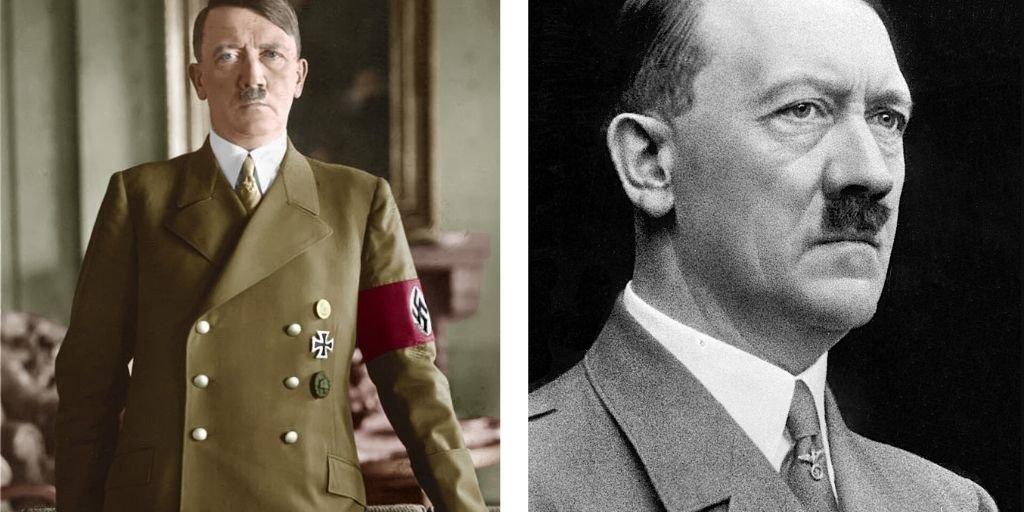
Adolf Hitler was one of the most destructive political leaders in modern history. His rise from a struggling young man to the dictator of Nazi Germany changed Europe and the wider world forever. His government promoted extreme nationalism, racism, antisemitism, dictatorship, and political violence, eventually leading to the Second World War and the Holocaust.
Understanding Hitler is not about admiring his power or repeating propaganda. It is about examining how political extremism, hatred, fear, propaganda, and the destruction of democratic institutions can lead to catastrophic consequences. His story is a warning about what can happen when prejudice becomes government policy and unchecked power is placed in the hands of one leader.
Early Life and Childhood
Adolf Hitler was born on April 20, 1889, in Braunau am Inn, a town in Austria-Hungary. His father, Alois Hitler, worked as a customs official, while his mother, Klara, was deeply devoted to her children.
Hitler’s childhood was shaped by a complicated relationship with his father. Alois was strict and expected his son to follow a practical career path. Hitler, however, dreamed of becoming an artist.
As a teenager, he became increasingly interested in art, architecture, and German nationalism. He eventually moved to Vienna, hoping to study at the Academy of Fine Arts. His application was rejected more than once.
This period was important in understanding his later development, although historians caution against treating his early hardships as a simple explanation for his future crimes. Millions of people experience poverty, rejection, or disappointment without becoming extremists.
Years in Vienna
Hitler spent several years in Vienna living in difficult circumstances. He struggled financially and supported himself partly by selling small paintings and postcards.
Vienna was also a city where antisemitism and nationalist political movements existed openly. Hitler encountered these ideas during this period, but his later worldview developed through many influences rather than one single experience.
His time in Vienna exposed him to political movements that used ethnic identity, conspiracy theories, and emotional propaganda to attract supporters.
World War I and the Birth of a Political Career
When the First World War began in 1914, Hitler joined the German army. He served as a dispatch runner and experienced some of the horrors of trench warfare.
He was wounded and received military decorations for his service. The war became one of the defining experiences of his life.
Germany’s defeat in 1918 deeply affected him. Like many German nationalists, Hitler rejected the new democratic government and blamed political enemies for the country’s problems.
The postwar period created fertile ground for radical politics. Germany faced economic difficulties, political violence, social divisions, and widespread anger over the Treaty of Versailles.
Hitler entered politics during this unstable period.
The Nazi Party and Hitler’s Rise
Hitler joined a small political organization that later became the National Socialist German Workers’ Party, commonly known as the Nazi Party.
He quickly discovered that he was a powerful public speaker. His speeches appealed to people’s anger, fears, and frustrations.
Propaganda and Political Messaging
The Nazi movement presented simple answers to complicated problems. Hitler promised national revival, economic recovery, and the restoration of German strength.
At the same time, Nazi propaganda blamed Jews, communists, political opponents, and other groups for Germany’s difficulties.
This was one of the most dangerous features of his political strategy. Instead of encouraging people to examine problems carefully, Nazi propaganda gave them enemies to blame.
Hitler’s message spread through newspapers, posters, rallies, speeches, and eventually radio and film.
The Failed Beer Hall Putsch
In 1923, Hitler and his supporters attempted to seize political power in Bavaria. The effort, known as the Beer Hall Putsch, failed.
Hitler was arrested and sentenced to prison.
During his imprisonment, he dictated Mein Kampf, a book that outlined many of his political ideas, including extreme nationalism, antisemitism, racial hierarchy, territorial expansion, and opposition to parliamentary democracy.
The failed coup taught Hitler an important political lesson: he needed to gain power through political and legal mechanisms rather than attempting another immediate armed takeover.
Hitler Becomes Chancellor
The Great Depression transformed Germany’s political situation.
Unemployment increased dramatically, businesses failed, and many people lost confidence in established political parties. Extremist movements gained support.
The Nazi Party benefited from this crisis.
Hitler did not simply march into government and take power overnight. His rise involved elections, political negotiations, elite support, propaganda, and the weakening of democratic institutions.
On January 30, 1933, President Paul von Hindenburg appointed Hitler Chancellor of Germany.
Once in government, Hitler moved rapidly to destroy democratic checks on his authority.
The Destruction of Democracy
The Reichstag Fire in February 1933 provided the Nazi government with an opportunity to suppress political opponents. Emergency measures restricted civil liberties.
The Enabling Act, passed in March 1933, gave Hitler’s government broad legislative powers.
Political parties were eliminated, trade unions were dismantled, and opponents were arrested.
Germany was transformed from a troubled democracy into a dictatorship.
Nazi Germany and Totalitarian Rule
Hitler’s government attempted to control nearly every part of public life.
Education, media, culture, youth organizations, and political activity were brought under Nazi influence.
The Hitler Youth trained young people in Nazi ideology and militaristic values. The League of German Girls promoted Nazi expectations for girls and young women.
Independent journalism was heavily restricted.
The Cult of Leadership
Hitler was presented as the unquestionable leader of Germany. Nazi propaganda portrayed him as a heroic figure who could rescue the country from its problems.
This personality cult was strengthened through enormous public rallies, carefully staged photographs, speeches, posters, and controlled media.
The message was simple: Germany’s future depended on loyalty to Hitler.
That idea was extremely dangerous because it discouraged criticism. Once a political system treats one person as beyond question, mistakes can become disasters.
Antisemitism and the Holocaust
Antisemitism was central to Nazi ideology.
German Jews were increasingly stripped of their rights through discriminatory laws. The Nuremberg Laws of 1935 formally deprived Jews of important citizenship rights and prohibited certain relationships between Jews and people classified by the Nazis as “German-blooded.”
Persecution became increasingly violent.
In November 1938, Kristallnacht saw synagogues, Jewish businesses, and homes attacked across Germany and territories under Nazi control. Thousands of Jewish men were arrested.
The persecution eventually developed into systematic mass murder.
The Holocaust
During the Holocaust, Nazi Germany and its collaborators murdered approximately six million Jews.
Other groups were also persecuted and murdered, including Roma, disabled people, Soviet prisoners of war, political opponents, homosexual men, and others targeted by the Nazi regime.
Mass shootings, ghettos, deportations, concentration camps, and extermination camps formed parts of a vast system of persecution and murder.
The Holocaust was not an accidental result of wartime chaos. It developed through increasingly radical policies, organized state violence, racial ideology, and deliberate decisions by Nazi authorities and their collaborators.
Remembering these victims is essential because statistics alone cannot communicate the human suffering involved. Behind every number was an individual with a family, hopes, memories, and a life that mattered.
Hitler’s Foreign Policy and World War II
Hitler wanted Germany to become a dominant European power.
His foreign policy involved rearmament, territorial expansion, and the destruction of the post-World War I settlement.
Germany reoccupied the Rhineland in 1936. In 1938, Germany annexed Austria, an event known as the Anschluss.
Later that year, Germany gained the Sudetenland following the Munich Agreement.
In March 1939, German forces occupied the rest of Czechoslovakia.
The next major step was Poland.
On September 1, 1939, Germany invaded Poland. Britain and France responded by declaring war on Germany.
World War II in Europe had begun.
The Early German Victories
Germany initially achieved remarkable military success.
German forces rapidly defeated Poland and later launched successful campaigns in Western Europe. France fell in 1940.
The German military used coordinated attacks involving tanks, aircraft, infantry, and rapid movement. This approach became associated with the term “blitzkrieg,” or lightning war.
Britain, however, remained in the war.
The Battle of Britain prevented Germany from achieving air superiority necessary for an invasion of Britain.
Operation Barbarossa and the Turning Point
In June 1941, Hitler launched Operation Barbarossa, the German invasion of the Soviet Union.
This decision opened an enormous eastern front.
The conflict in the East was particularly brutal. Nazi ideology portrayed the war against the Soviet Union as both a military and racial struggle.
German forces committed mass atrocities, while enormous numbers of soldiers and civilians died.
The invasion eventually became a disaster for Germany.
The Soviet Union possessed enormous resources and manpower, while the German army faced severe logistical challenges.
The Battle of Stalingrad became one of the most important turning points of the war.
German forces suffered catastrophic losses, and the strategic initiative increasingly shifted toward the Allies.
Hitler’s Final Years and the Collapse of Nazi Germany
By 1944, Germany was facing overwhelming pressure.
The Western Allies landed in Normandy in June 1944, while Soviet forces advanced from the east.
German cities were subjected to heavy bombing, and military resources became increasingly limited.
Hitler increasingly isolated himself from reality.
He continued issuing military orders even when Germany lacked the resources to carry them out.
The Final Days in Berlin
In April 1945, Soviet forces surrounded Berlin.
Hitler remained in an underground bunker beneath the Reich Chancellery.
On April 30, 1945, Hitler died by suicide.
Germany surrendered shortly afterward in May 1945.
The Nazi regime had collapsed, leaving much of Europe devastated.
Hitler’s Legacy and Historical Lessons
Hitler’s legacy is inseparable from dictatorship, war, genocide, and mass suffering.
The Second World War resulted in enormous human losses across Europe and beyond. Cities were destroyed, economies collapsed, and millions of families were affected.
The Holocaust remains one of the most extensively documented genocides in history.
Why Does His Story Still Matter?
You might ask why people continue to study someone responsible for such terrible crimes.
The answer is that history is not only about remembering famous individuals. It is also about understanding how societies can change.
Hitler’s rise demonstrates that democracy can be weakened gradually. Institutions can be attacked. Propaganda can normalize hatred. Minority groups can be blamed for social problems. Political opponents can be portrayed as enemies of the nation.
Think of democracy like a building. It does not collapse only when someone removes the roof. It can become unstable when one support after another is weakened.
Studying this history can help people recognize the warning signs of authoritarianism and political extremism.
Conclusion
Adolf Hitler’s life is one of the darkest chapters in modern history. His rise was connected to political instability, economic crisis, nationalism, propaganda, antisemitism, and the breakdown of democratic institutions. Once he gained power, his government transformed Germany into a dictatorship and pursued aggressive expansion that helped trigger World War II.
His regime was also responsible for the Holocaust and the murder of millions of people.
The most important lesson is not simply that Hitler was a uniquely evil individual. It is that destructive political systems can grow when hatred, misinformation, fear, and unchecked authority are allowed to flourish. Understanding that process remains important for every generation.
Frequently Asked Questions
1. Who was Adolf Hitler?
Adolf Hitler was the dictator of Nazi Germany from 1933 until his death in 1945. He led the Nazi Party and was responsible for aggressive expansion, World War II in Europe, and policies that resulted in the Holocaust.
2. How did Hitler become leader of Germany?
Hitler was appointed Chancellor by President Paul von Hindenburg in January 1933. After entering government, he rapidly dismantled democratic institutions and established a dictatorship.
3. What was the Holocaust?
The Holocaust was the systematic persecution and murder of approximately six million Jews by Nazi Germany and its collaborators. Millions of other people were also persecuted and murdered by the Nazi regime.
4. What caused World War II in Europe?
Germany’s aggressive expansion under Hitler was a major cause of the European war. The German invasion of Poland on September 1, 1939, led Britain and France to declare war on Germany.
5. How did Adolf Hitler die?
Hitler died by suicide on April 30, 1945, in his underground bunker in Berlin as Soviet forces closed in on the city.