
Steve Jobs: Amazing Life, Career, Apple, Innovation & Legacy
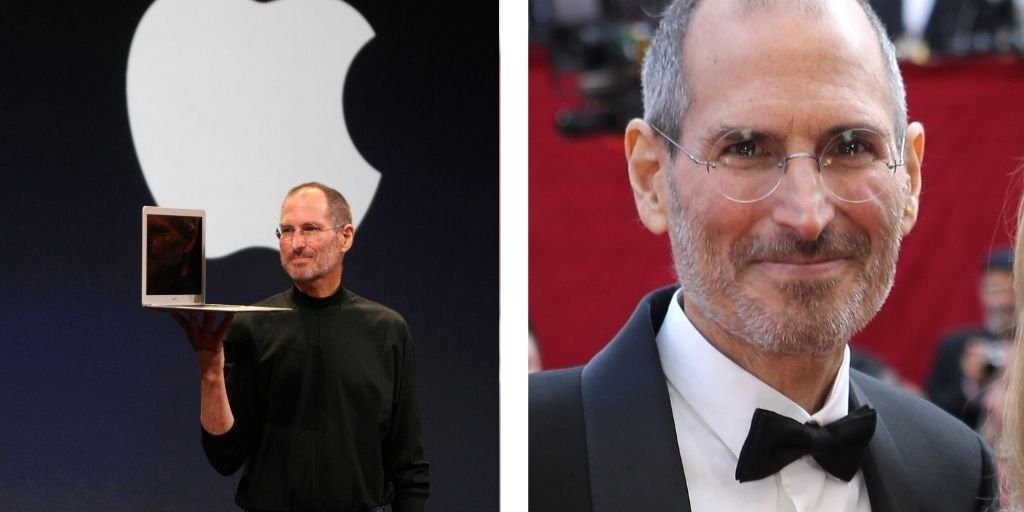
Steve Jobs remains one of the most recognized names in modern technology. He was not simply a businessman or a computer executive. He was a visionary who believed that technology could become more useful, beautiful, and understandable when it was designed with ordinary people in mind. His story included remarkable success, serious setbacks, dramatic comebacks, and ideas that changed the way millions of people work, communicate, listen to music, and enjoy entertainment.
How did a young man interested in electronics and ideas eventually become one of the most influential figures in technology? His journey was far from simple. It was filled with ambition, disagreements, risk-taking, creativity, and persistence.
Early Life and Family Background
Steve Jobs was born on February 24, 1955, in San Francisco, California. He was adopted by Paul and Clara Jobs, who raised him in the nearby area of Mountain View. His adoptive father worked with machinery and enjoyed repairing things, while his mother supported his education and encouraged his curiosity.
Growing up in Silicon Valley gave Jobs an unusual environment. The region was becoming an important center for electronics and engineering, and young people could encounter new ideas almost everywhere. Jobs developed an interest in electronics while still young.
A Curious Young Mind
Jobs was interested in understanding how things worked, but he was also interested in why people used them. That distinction became important later in his career.
He attended Homestead High School and eventually enrolled at Reed College in Oregon. However, traditional education did not hold his attention for long. He dropped out after a short period but continued attending classes that interested him.
One of those classes was calligraphy. At the time, it seemed unrelated to computers. Years later, however, Jobs explained that his exposure to typography and beautiful lettering influenced the design of Apple’s Macintosh computer.
This became an important lesson from his life: an experience does not always reveal its value immediately. Sometimes an idea sits quietly in your mind for years before becoming useful.
The Beginning of Apple
In the 1970s, personal computers were still a new and developing idea. Computers were often large, expensive machines used by businesses, universities, and specialists. Jobs and his friend Steve Wozniak imagined something different.
They believed computers could eventually become tools for ordinary people.
The Partnership With Steve Wozniak
Steve Wozniak was an outstanding engineer and computer designer. Jobs brought a different set of strengths, including enthusiasm for product presentation, business possibilities, and user experience.
Together, they founded Apple Computer in 1976, along with Ronald Wayne, who soon left the company.
The Apple I was an early product created largely by Wozniak. It was followed by the Apple II, which became a major success and helped establish Apple as an important personal-computer company.
The Apple II showed that a computer did not have to remain a mysterious machine for specialists. It could become something people could actually use at home, at school, or in an office.
Jobs increasingly understood that the future of computing would depend not only on technical capability but also on design and ease of use.
Macintosh and the Power of Design
The Macintosh arrived in 1984 and became one of the defining products of Jobs’ early career.
Its graphical interface, mouse-based interaction, typography, and emphasis on visual design helped make computing feel more approachable. Instead of requiring users to communicate with a machine primarily through complicated commands, the Macintosh offered a more visual experience.
Technology With a Human Face
Jobs strongly believed that technology should be designed around people.
Think about a kitchen appliance. It may contain complicated machinery inside, but you do not want to study its engineering before making breakfast. You simply want it to work.
Jobs applied a similar philosophy to computers.
He wanted the complicated technology hidden behind an experience that felt simple. This approach became one of the strongest characteristics associated with Apple’s products.
The Macintosh was commercially important, but its early sales were not as spectacular as some expectations suggested. Apple also faced internal disagreements, and Jobs’ demanding leadership style created conflicts.
Eventually, Jobs left the company he had helped create.
Leaving Apple and Starting NeXT
Being removed from Apple was one of the biggest setbacks of Jobs’ life. Imagine building something from the ground up and then being told that you no longer belong there. For many people, such an experience might end their ambition.
For Jobs, it became a new beginning.
The NeXT Chapter
In 1985, Jobs founded NeXT, a computer company focused on powerful machines for education and business.
NeXT computers were technologically sophisticated and visually distinctive. They were expensive, which limited their mass-market success, but the company developed valuable technology.
The NeXT operating system later became extremely important to Apple.
This period also gave Jobs time to develop his leadership approach. He continued to focus heavily on design, software, hardware integration, and the overall user experience.
Sometimes failure provides a person with something success cannot: perspective.
Pixar and the Rise of Computer Animation
While building NeXT, Jobs also became closely associated with Pixar.
Pixar originated from technology developed at Lucasfilm before Jobs acquired the computer graphics division in 1986. Under Jobs’ ownership and leadership, Pixar gradually transformed from a technology company into a major animation studio.
The turning point came with Toy Story, released in 1995.
Toy Story Changes Animation
Toy Story became the first fully computer-animated feature film and was a major cultural and commercial success.
The achievement demonstrated that computer-generated animation could tell emotionally engaging stories rather than simply showcase impressive technology.
Pixar went on to create successful films such as A Bug’s Life, Monsters, Inc., Finding Nemo, The Incredibles, and Cars.
Jobs eventually became a major shareholder in Disney after Disney acquired Pixar in 2006.
His Pixar experience reinforced an idea that also appeared in his technology work: great products and experiences require both technical skill and storytelling.
Steve Jobs Returns to Apple
Apple struggled during the 1990s as it faced intense competition and difficulties with its product strategy.
In 1997, Apple acquired NeXT, bringing Jobs back to the company.
His return marked the beginning of one of the most famous corporate turnarounds in modern business.
Simplifying the Product Line
Jobs believed Apple needed to stop trying to make too many products.
He focused the company on a smaller number of products that could be designed carefully. This decision helped create a clearer identity for Apple.
The company introduced the iMac in 1998. Its colorful design and friendly appearance made it stand out from traditional computers.
The iMac was more than a computer. It represented a new direction for Apple: technology could be practical while also being attractive and enjoyable.
The iPod and the Transformation of Music
In 2001, Apple introduced the iPod.
Portable music players already existed, so why did the iPod become such a cultural phenomenon?
The answer was not simply storage capacity. Apple combined the device with software and a convenient music ecosystem.
Putting Music in Your Pocket
The iPod offered a simple way to carry a large music collection. Its design, interface, and integration with Apple’s growing digital music strategy helped it become enormously popular.
The launch of the iTunes Store in 2003 further changed the music business by making individual songs easy to purchase digitally.
Apple was no longer only a computer company. It was becoming a consumer technology and media company.
Jobs understood something important: people do not necessarily buy technology because of its specifications. They buy it because of what it allows them to do.
The iPhone Changes the Mobile World
Few products had a greater impact on modern technology than the iPhone.
Apple introduced the original iPhone in 2007. It combined a phone, music player, internet device, and touchscreen interface in one product.
A New Kind of Smartphone
Before the iPhone, smartphones already existed. Devices from companies such as BlackBerry, Nokia, and others had strong positions in the market.
Apple approached the problem differently.
The iPhone emphasized a large touchscreen, simple navigation, web browsing, multimedia, and a software experience designed as one integrated product.
The App Store, introduced in 2008, expanded the device’s possibilities dramatically.
Suddenly, the phone could become almost anything: a camera, game console, navigation tool, banking device, communication platform, music player, or work assistant.
The smartphone had become a pocket-sized computer.
That transformation influenced competitors across the entire technology industry.
The iPad and the Post-PC Vision
In 2010, Apple introduced the iPad.
At first, some people questioned why they needed a tablet when they already had a laptop or phone.
Jobs presented the iPad as a device occupying a space between smartphones and traditional computers.
Making Computing More Accessible
The iPad offered a large touchscreen with a simple interface. It became popular for browsing, watching videos, reading, gaming, drawing, education, and many other activities.
The broader significance of the iPad was Apple’s belief that personal computing did not have to remain tied to a traditional desktop or laptop.
Jobs often focused on how technology should feel rather than simply what technical components it contained.
That philosophy became a defining part of Apple’s identity.
Leadership Style, Creativity, and Controversy
Steve Jobs was admired for his ability to create and market products, but his leadership style was also controversial.
People who worked with him often described him as demanding and intensely focused. He could push teams toward ambitious goals, but his expectations could also make working with him difficult.
The Pursuit of Excellence
Jobs was famously concerned with details.
He cared about the appearance of a product, the packaging, the software, the fonts, the sound, and even details that customers might never consciously notice.
His approach sometimes appeared unreasonable. Yet his supporters argued that this extreme attention helped Apple produce products with a strong sense of identity.
There was another important part of his philosophy: saying no.
Jobs believed that focusing on a few important things was often more valuable than trying to do everything.
That lesson applies beyond technology. Whether you are running a business, creating content, or learning a skill, attention is limited. Choosing what not to do can be as important as choosing what to do.
Steve Jobs and His Impact on Modern Technology
Jobs’ influence went far beyond Apple.
His work helped popularize the idea that hardware, software, and services should operate as a unified experience. He also helped make industrial design an important part of consumer technology.
Design Became a Competitive Advantage
Before Apple’s rise, many technology companies competed heavily around technical specifications.
Jobs helped demonstrate that design, simplicity, branding, and emotional connection could also determine whether a product succeeded.
The result can be seen throughout modern technology.
Smartphones became increasingly focused on touch interfaces. Computers became more visually polished. Digital music became easier to access. App ecosystems became central to mobile devices.
Even companies that competed directly with Apple were influenced by the standards Apple established.
Personal Life, Health, and Final Years
Jobs married Laurene Powell in 1991. They had three children together, and Jobs also had a daughter from an earlier relationship.
In 2003, Jobs was diagnosed with a rare form of pancreatic cancer known as a pancreatic neuroendocrine tumor.
He underwent surgery and received treatment over the following years. His health became an increasingly visible concern, particularly as Apple’s success continued.
Despite serious health challenges, Jobs remained involved in Apple’s major product launches for much of this period.
The Final Product Launches
Jobs introduced some of Apple’s most important products during his later years, including the iPhone and iPad.
His final public appearance as Apple’s chief executive came in 2011. He resigned as CEO in August of that year and became chairman of the company’s board.
Steve Jobs died on October 5, 2011, at the age of 56.
His death led to worldwide tributes from technology leaders, business figures, artists, and ordinary customers who had been influenced by Apple’s products.
Steve Jobs’ Lasting Legacy
What makes Steve Jobs’ story so fascinating is that his legacy cannot be reduced to one product.
He helped shape several industries, including personal computing, digital music, mobile phones, tablets, animation, and consumer technology.
A Legacy of Ideas
His greatest contribution may have been the belief that technology could be both powerful and simple.
Jobs showed that a product could appeal to the mind and the emotions at the same time. A device could solve a practical problem while also making people feel excited about using it.
His life also demonstrated the importance of returning after failure.
He left Apple, built NeXT, helped develop Pixar, and eventually returned to Apple to lead one of the most remarkable corporate transformations in history.
His journey was not a straight road to success. It was more like a winding mountain path, with steep climbs, unexpected turns, and difficult descents.
That may be why his story continues to attract people who have never worked in technology.
Steve Jobs’ career reminds us that innovation is not always about inventing something completely new. Sometimes it is about looking at an existing idea and asking a better question: How can this become simpler, more useful, and more meaningful?
Conclusion
Steve Jobs left an extraordinary mark on technology and popular culture. From the early days of Apple to the Macintosh, iPod, iPhone, and iPad, his career was built around the connection between technology and human experience.
He experienced failure, criticism, success, and personal challenges, yet continued pursuing his vision. His influence can still be seen in the way modern products are designed and presented.
Perhaps the most valuable lesson from his life is simple: great ideas need courage, focus, creativity, and persistence. Technology changes quickly, but the desire to create something people genuinely value never goes out of style.
FAQs About Steve Jobs
1. Who was Steve Jobs?
Steve Jobs was an American entrepreneur and technology pioneer best known as a co-founder and longtime leader of Apple. He played a major role in the development of products such as the Macintosh, iPod, iPhone, and iPad.
2. When was Steve Jobs born?
Steve Jobs was born on February 24, 1955, in San Francisco, California.
3. What was Steve Jobs famous for?
He was famous for helping transform personal computing and consumer technology through Apple. He was also closely associated with Pixar and played an important role in its development before Disney acquired the company.
4. Why did Steve Jobs leave Apple?
Jobs left Apple in 1985 following internal disagreements and changes in company leadership. He later founded NeXT and became involved with Pixar before returning to Apple after the company acquired NeXT in 1997.
5. When did Steve Jobs die?
Steve Jobs died on October 5, 2011, at the age of 56, after a long battle with pancreatic neuroendocrine cancer.