
Warren Buffett: Life, Investing Career, Wealth & Legacy
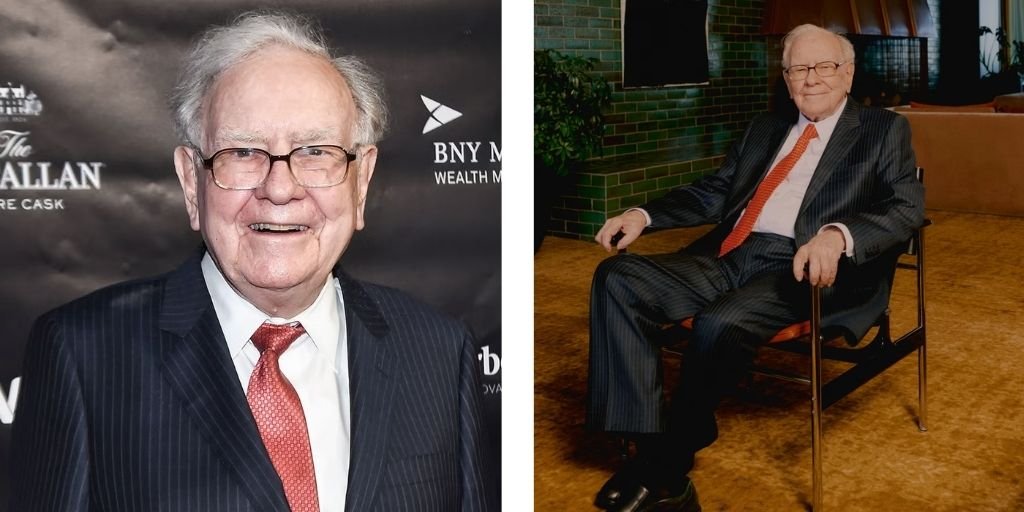
Warren Buffett is one of the most recognized names in the world of investing. For decades, people have followed his career to understand how an ordinary interest in business and money grew into extraordinary financial success. Yet Buffett’s story is not simply about becoming wealthy. It is also about patience, discipline, learning, good judgment, and understanding the difference between a valuable business and a popular one.
What makes his journey especially interesting is that he has often presented himself as a fairly ordinary person. He enjoys simple habits, prefers businesses he understands, and has repeatedly spoken about the importance of living below your means. His approach may sound straightforward, but following it consistently for decades is anything but easy.
So, how did Buffett build his fortune? What made his investment philosophy so influential? And what lessons can an everyday person take from his remarkable career?
Early Life and Childhood Interest in Business
Warren Edward Buffett was born on August 30, 1930, in Omaha, Nebraska. His father, Howard Buffett, was a stockbroker and later became a U.S. congressman. Growing up around financial conversations gave Warren an early introduction to business and investing.
But his interest went far beyond simply hearing adults discuss money.
As a child, Buffett showed an unusual curiosity about numbers, commerce, and making money. He sold chewing gum, Coca-Cola bottles, newspapers, and other small products. These activities taught him an important lesson early in life: money could be earned by providing something people wanted.
One of his most famous childhood investments came when he bought shares of Cities Service, an energy company, when he was just 11 years old. The experience was not entirely comfortable. The stock price fell after he purchased it, and he eventually sold for a small profit. Later, the shares rose considerably.
The experience helped teach him that emotional reactions could be costly.
Imagine planting an oak tree and digging it up every few days to see whether it is growing. You would never give it enough time to become strong. Buffett eventually developed a similar attitude toward investments: give good businesses time to grow.
Education and the Development of His Investment Philosophy
After finishing high school, Buffett attended the University of Nebraska, where he studied business. His intellectual interests eventually led him to Columbia Business School.
There he studied under Benjamin Graham, a highly influential figure in investment thinking. Graham’s ideas became extremely important to Buffett’s development.
The central idea was relatively simple: investors should focus on the underlying value of a business rather than allowing short-term market emotions to determine their decisions.
Learning to Think About Value
Instead of asking, “Is this stock going up?” Buffett learned to ask deeper questions.
What does the company actually own?
How does it make money?
Does it have a strong competitive position?
Can it continue producing profits?
Is the current price reasonable compared with the company’s underlying value?
This way of thinking helped Buffett move away from treating stocks as pieces of paper that constantly changed price. He began viewing them as ownership interests in real businesses.
That change in perspective became one of the foundations of his career.
The Buffett Partnership Years
After completing his education and working with Benjamin Graham, Buffett eventually returned to Omaha. In 1956, he established Buffett Partnership Ltd.
The partnership allowed Buffett to apply his investment ideas using money from other investors.
During these years, he developed a reputation for carefully examining businesses and searching for opportunities where he believed the market price did not reflect the underlying value.
He was not interested in buying something simply because everyone else was buying it.
Patience Became a Competitive Advantage
One of Buffett’s greatest strengths has always been patience.
Financial markets can be emotional places. Prices move because of economic news, political events, investor expectations, fear, excitement, and sometimes simple speculation.
Buffett’s approach was different. If he could not find an attractive opportunity, he was willing to wait.
That lesson is important for ordinary investors because doing nothing can sometimes be a better decision than making a poor investment.
The Berkshire Hathaway Transformation
Perhaps the most famous chapter of Buffett’s career began with Berkshire Hathaway.
Berkshire Hathaway was originally a struggling textile company. Buffett began buying shares of the company during the 1960s. His relationship with the business eventually changed from investor to controlling owner.
Rather than continuing to focus on textiles, Buffett and his partners transformed Berkshire into a diversified holding company.
Over time, Berkshire acquired or invested in businesses across many industries.
These included insurance, consumer products, transportation, energy, manufacturing, retail, and financial services.
Why Berkshire Became So Important
The company provided Buffett with something extremely valuable: a long-term vehicle for allocating capital.
Insurance became especially important because Berkshire’s insurance businesses generated large pools of money that could be invested.
Buffett became known for putting this capital into businesses that he believed had strong long-term prospects.
Berkshire Hathaway eventually became far more than a company. For many investors, it became a practical demonstration of Buffett’s investment philosophy.
Warren Buffett’s Famous Investing Principles
Buffett’s investment philosophy has changed and developed throughout his career. While some of his earliest strategies were strongly influenced by Benjamin Graham, his thinking later expanded toward buying excellent businesses that could compound value over long periods.
Several principles appear repeatedly in his letters and public discussions.
Invest in Businesses You Understand
Buffett has frequently emphasized the importance of staying within your circle of competence.
You do not need to understand every company in the world.
In fact, trying to understand everything may make investing more difficult.
If you understand how a company makes money, what its customers want, and what could threaten its future, you are in a stronger position to evaluate it.
Look for Strong Businesses
Buffett often prefers companies with durable advantages.
These advantages might come from a powerful brand, loyal customers, low costs, distribution networks, intellectual property, or another feature that makes competition difficult.
A strong business can sometimes continue performing well even when economic conditions become challenging.
Think Long Term
Buffett is famous for his long-term approach.
He has repeatedly argued that investors should be prepared to hold an investment for many years rather than constantly buying and selling.
This does not mean every company should be held forever. It means the decision should be based on the quality and value of the business rather than short-term price movements.
Pay Attention to Management
A good company can be damaged by poor leadership.
Buffett has therefore placed significant importance on management quality, honesty, capital allocation, and shareholder interests.
Trust matters because shareholders are effectively partners in the business.
Keep Emotions Under Control
Fear and greed can strongly influence financial decisions.
When markets rise rapidly, people may feel pressure to buy because they are afraid of missing out. When markets fall, fear can encourage people to sell at exactly the wrong time.
Buffett’s philosophy encourages investors to remain rational when others are becoming emotional.
Major Investments and Business Successes
Throughout his career, Buffett and Berkshire Hathaway have made numerous major investments.
Some of the best-known companies associated with Berkshire’s portfolio include Coca-Cola, American Express, Apple, and numerous other businesses.
The investment in Coca-Cola became particularly famous.
Berkshire began building its Coca-Cola position in the late 1980s. Buffett recognized the strength of the brand, its global reach, and the continuing demand for its products.
The Coca-Cola Lesson
The investment illustrates an important aspect of Buffett’s thinking.
He was not simply betting on whether Coca-Cola’s share price would rise next month. He was thinking about the company’s ability to generate cash and maintain a powerful consumer brand over many years.
The investment became an example of the power of compounding.
American Express
American Express also became an important Berkshire investment.
Buffett saw value in the company’s brand, customer relationships, and business model. The company had faced serious challenges, yet Buffett believed its underlying franchise remained strong.
This demonstrates another part of his philosophy: temporary problems do not necessarily destroy a great business.
Apple
Berkshire’s investment in Apple became one of its most important modern holdings.
Although Apple is a technology company, Buffett has often approached it partly as a consumer business because of its ecosystem, brand loyalty, products, and relationship with customers.
The investment showed that Buffett’s definition of a business he could understand was not limited to traditional industries.
Warren Buffett and the Power of Compounding
If there is one financial concept closely connected with Buffett’s success, it is compounding.
Compounding means that returns can generate additional returns over time.
Consider a snowball rolling down a long hill. At first, it may appear small. But as it continues moving, it collects more snow, and the process accelerates.
Money can behave similarly when profits are consistently reinvested.
Buffett began investing at a young age, giving his capital many decades to compound.
This is one reason starting early can be powerful. Someone does not necessarily need spectacular returns every year if they can achieve reasonable results over a very long period.
Time Is One of the Greatest Assets
People often concentrate on finding the next huge investment.
Buffett’s career suggests another possibility: give good investments enough time.
A modest advantage repeated over decades can become surprisingly large.
This is one of the most valuable lessons from his career because it applies beyond investing. Skills, businesses, relationships, education, and savings can all benefit from consistent effort over time.
Warren Buffett’s Lifestyle and Personal Philosophy
Despite becoming one of the world’s wealthiest individuals, Buffett has long been associated with a relatively modest lifestyle.
He has famously continued living in the Omaha house he purchased in 1958.
He has also been known for enjoying simple food and maintaining ordinary routines.
This does not mean Buffett avoids luxury altogether. Rather, his lifestyle has often reflected a belief that additional possessions do not automatically create additional happiness.
Money as a Tool
Buffett has frequently treated money as a means rather than the ultimate destination.
Wealth can provide freedom, security, opportunities, and the ability to help others.
But once basic needs and meaningful goals are met, simply accumulating more may not dramatically improve someone’s life.
That idea separates Buffett’s public philosophy from the image of wealth often promoted by popular culture.
Philanthropy and the Giving Pledge
Buffett has committed to giving away the overwhelming majority of his wealth to philanthropic causes.
He has also worked closely with the Bill & Melinda Gates Foundation and other charitable organizations.
In 2010, Buffett and Bill Gates launched the Giving Pledge, encouraging wealthy individuals and families to commit to donating most of their wealth to philanthropy.
Why His Giving Matters
Buffett’s approach to philanthropy reflects his belief that enormous fortunes can be used to address serious problems.
Rather than focusing only on personal wealth, he has encouraged other billionaires to think about the social value their resources could create.
His charitable commitments have made philanthropy another major part of his legacy.
Warren Buffett’s Annual Shareholder Meetings
Berkshire Hathaway’s annual shareholder meeting in Omaha has become one of the best-known events in the investing world.
Thousands of shareholders and visitors gather to listen to Buffett and Charlie Munger discuss business, investing, economics, and life.
The event has sometimes been described as a festival for investors.
Why does it attract so much attention?
Because Buffett has a rare ability to explain complicated subjects using everyday language.
Instead of hiding behind complicated financial terminology, he often uses stories, humor, historical examples, and simple comparisons.
The Importance of Charlie Munger
Charlie Munger was Buffett’s longtime business partner and vice chairman of Berkshire Hathaway.
Munger played a major role in influencing Buffett’s thinking.
While Buffett’s early approach was strongly associated with buying undervalued companies, Munger encouraged him to place greater emphasis on buying wonderful businesses at reasonable prices.
Their partnership became one of the most influential relationships in modern business.
Munger died in November 2023 at the age of 99. His intellectual influence on Berkshire and Buffett remained an important part of the company’s history.
Warren Buffett’s Net Worth and Financial Success
Buffett became one of the world’s wealthiest people through the long-term growth of his ownership in Berkshire Hathaway and other investments.
His fortune has reached an extraordinary level, although exact figures change constantly with Berkshire’s share price and charitable giving.
What is perhaps more interesting than the size of his wealth is how it was accumulated.
Buffett did not become successful through a single lucky investment.
His financial story developed through decades of disciplined capital allocation, ownership of productive businesses, reinvestment, and compounding.
That distinction matters.
Many people dream about finding one investment that will make them rich overnight. Buffett’s career demonstrates a very different model: build steadily, protect capital, reinvest intelligently, and allow time to do much of the heavy lifting.
What Ordinary People Can Learn From Warren Buffett
You do not need billions of dollars to learn from Buffett.
Some of his most useful lessons are surprisingly practical.
Save Consistently
Saving creates the capital needed for future opportunities.
Even small amounts can become meaningful when maintained over long periods.
Avoid Unnecessary Debt
High-interest debt can work against wealth building because money that could have been invested instead goes toward interest payments.
Learn Before You Invest
Understand what you are buying.
If you cannot explain how an investment works in simple language, it may be worth doing more research before committing money.
Ignore Short-Term Noise
Financial news can make every market movement feel like an emergency.
But not every headline requires action.
Choose Quality
Whether you are selecting an investment, business partner, employee, or product, quality often matters more than excitement.
Think About Your Reputation
Buffett has often emphasized the importance of reputation.
Money can be rebuilt. Reputation is much harder to restore.
For a business owner or professional, trust can become one of the most valuable assets of all.
Warren Buffett’s Lasting Legacy
Warren Buffett’s influence extends far beyond the companies he owns or the size of his fortune.
He changed how millions of people think about investing.
His message has generally been remarkably consistent: understand what you own, avoid unnecessary risks, remain patient, control your emotions, and focus on long-term value.
Perhaps his greatest lesson is that wealth is rarely created through constant excitement.
It is often created through boring but disciplined habits repeated for years.
That may sound less exciting than chasing the next big opportunity, but it is precisely what makes his story so powerful.
Buffett’s career is also a reminder that intelligence alone is not enough. Discipline matters. Temperament matters. Patience matters.
You can know everything about finance and still make poor decisions if fear and greed control you.
In that sense, Buffett’s greatest competitive advantage may not have been his ability to predict the future. It was his ability to remain rational while others were losing perspective.
Conclusion
Warren Buffett’s journey from a curious child in Omaha to one of the world’s most successful investors is a story about much more than money. His career demonstrates the power of patience, education, discipline, business ownership, and long-term thinking.
His investment philosophy has evolved over the decades, but several ideas remain central: understand businesses, seek quality, avoid emotional decisions, and give compounding enough time to work.
Perhaps the most useful lesson is also the simplest. You do not have to become Warren Buffett to benefit from the way he thinks. Whether you are saving money, building a business, investing for retirement, or simply trying to make better decisions, patience and good judgment can take you surprisingly far.
Frequently Asked Questions
1. Who is Warren Buffett?
Warren Buffett is an American investor, businessman, and philanthropist best known as the longtime chairman and CEO of Berkshire Hathaway. He is widely regarded as one of the most successful investors in history.
2. How did Warren Buffett become wealthy?
Buffett built his wealth primarily through investing and owning businesses. His fortune grew over many decades through Berkshire Hathaway, long-term investments, reinvestment, and the power of compounding.
3. What is Warren Buffett’s investment strategy?
His approach emphasizes understanding businesses, purchasing quality companies at sensible prices, maintaining a long-term perspective, and avoiding decisions driven by fear or excitement.
4. Why is Warren Buffett associated with value investing?
Buffett’s early investment philosophy was heavily influenced by Benjamin Graham’s value-investing principles. Over time, his approach evolved toward buying high-quality businesses with strong long-term prospects rather than simply looking for statistically cheap stocks.
5. What can beginners learn from Warren Buffett?
Beginners can learn to save consistently, understand investments before buying them, avoid emotional decisions, think long term, control unnecessary debt, and appreciate the importance of compounding.