
Lady Gaga: The Extraordinary Journey of a Global Pop Icon
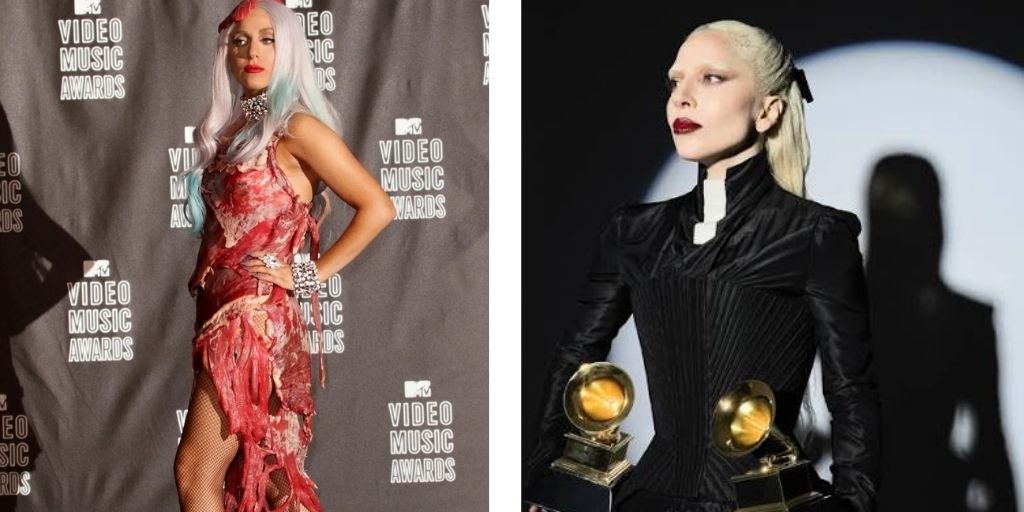
Lady Gaga is more than a singer with memorable songs and spectacular costumes. Over the years, she has become a cultural force whose career stretches across pop music, film, fashion, television, and philanthropy. From performing in small New York venues to standing on some of the world’s biggest stages, her story is one of ambition, reinvention, creativity, and persistence.
What makes her particularly fascinating is the way she has continued to evolve. She can create an energetic dance anthem one year and deliver a quiet jazz performance the next. She can appear in an outrageous outfit, then turn around and give an emotionally restrained performance on screen. Her career has never followed just one road.
Early Life and the Beginning of Her Musical Dream
Lady Gaga was born Stefani Joanne Angelina Germanotta on March 28, 1986, in New York City. She grew up in an Italian-American family and developed an interest in music at an early age. The piano became an important part of her childhood, and she began writing songs while she was still young.
Unlike artists who discover music later in life, Gaga’s relationship with performance developed gradually. She studied piano, performed in school productions, and became increasingly interested in songwriting and theater.
She attended the Convent of the Sacred Heart, a private school in Manhattan, and later enrolled at New York University’s Tisch School of the Arts. However, she left college to concentrate on developing her career.
That decision was risky. The music industry is filled with talented people who never receive their opportunity. Gaga spent years performing in clubs and small venues while trying to establish herself as a songwriter and performer.
She worked with other musicians and wrote material for artists before her own breakthrough arrived. Those early experiences helped her understand both the creative and commercial sides of popular music.
Her journey is a useful reminder that overnight success often has years of preparation hidden behind it. For Gaga, the spotlight came later, but the work had already begun.
The Breakthrough With The Fame
Lady Gaga’s major breakthrough came with her debut album, The Fame, released in 2008.
The album introduced a distinctive artist who combined electronic dance music, theatrical imagery, catchy songwriting, and a highly recognizable visual identity. Songs such as “Just Dance” and “Poker Face” quickly became international hits.
The success was enormous.
Instead of presenting herself simply as another pop vocalist, Gaga created an entire artistic world around her music. Her performances, clothing, videos, choreography, and public appearances all became part of the experience.
A New Kind of Pop Star
Gaga’s arrival was particularly significant because the internet was changing how musicians connected with audiences. Music videos, blogs, social media, and online fan communities helped artists build global audiences more quickly than ever.
She understood the value of creating a strong identity. Her appearance could change dramatically from one event to another, but there was usually a clear sense of intention behind it.
The name “Lady Gaga” itself became associated with theatricality, confidence, experimentation, and individuality.
The album earned major awards and established her as one of the defining pop performers of her generation.
The Fame Monster and an Expanding Creative Identity
Following the success of her debut, Gaga released The Fame Monster in 2009. Although it was initially presented as an extension of her first album, it developed its own identity and became an important part of her catalog.
The project included songs such as “Bad Romance,” “Telephone,” and “Alejandro.”
“Bad Romance” became particularly influential. Its dramatic production, memorable chorus, choreography, and striking music video demonstrated how Gaga could turn a pop single into a larger piece of visual art.
Fashion as Part of the Performance
Gaga’s fashion during this period became almost as recognizable as her music.
She appeared in unusual silhouettes, elaborate headpieces, dramatic makeup, and experimental designs. Her famous meat dress at the 2010 MTV Video Music Awards became one of the most discussed celebrity fashion moments of the era.
But reducing Gaga’s style to shock value misses the bigger picture.
For her, fashion often worked like another musical instrument. A costume could communicate an idea before she even sang a note. Her clothing became part of her storytelling.
In that sense, her career resembled a theater production in which the singer, stage, costume, lighting, and music all contributed to the same message.
Born This Way and the Message of Acceptance
In 2011, Gaga released Born This Way, an album that continued her exploration of identity, confidence, and acceptance.
The title track became one of her signature songs and was embraced by audiences around the world. Its message encouraged listeners to accept themselves rather than allowing social expectations to define their worth.
The album also showed Gaga becoming increasingly comfortable with ambitious songwriting and large-scale production.
More Than a Hit Record
At this stage, Gaga was no longer simply trying to become famous. She had become an artist with a recognizable philosophy.
Her music frequently addressed themes such as individuality, love, confidence, loneliness, fame, and social acceptance. These subjects helped create a strong connection between Gaga and her fans.
Her supporters, famously known as Little Monsters, developed a passionate community around her work.
The relationship between Gaga and her audience became one of the defining elements of her career. She often emphasized the idea that people who feel different or misunderstood can find belonging through music.
That emotional connection helped turn individual songs into something larger: a shared identity.
Reinvention Through ARTPOP and Joanne
One of the most interesting aspects of Gaga’s career is her willingness to change direction.
Her 2013 album ARTPOP explored a more experimental approach, mixing electronic music, visual art, performance, and provocative concepts. The project demonstrated her desire to push boundaries even when the results divided opinion.
Then came Joanne in 2016.
The album was notably different from some of her earlier work. Instead of relying primarily on futuristic dance-pop, Gaga incorporated country, rock, folk, and singer-songwriter influences.
The change surprised some listeners, but it also revealed something important about her artistic personality.
Why Reinvention Matters
Imagine an artist’s career as a large canvas. Some musicians repeatedly paint the same picture because audiences already love it. Gaga has often chosen to repaint the canvas.
That can be dangerous. Fans may resist change, and critics may question the new direction.
Yet reinvention has kept her career interesting.
Joanne also had a deeply personal dimension. Its title referred to her late aunt, Joanne Germanotta, whose life and death had a significant impact on Gaga’s family.
The album allowed Gaga to present a more stripped-back side of herself, particularly through songs such as “Million Reasons.”
This period demonstrated that the person behind the elaborate costumes could also succeed through vulnerability and simplicity.
Acting Success and A Star Is Born
Gaga’s move into acting became one of the biggest developments of her career.
She had already appeared in television projects, but her starring role in A Star Is Born in 2018 transformed perceptions of her abilities as an actress.
In the film, Gaga played Ally, an aspiring singer whose career develops as she becomes involved with established musician Jackson Maine, played by Bradley Cooper.
The movie combined music, romance, fame, addiction, ambition, and personal struggle.
A Career-Defining Performance
Gaga’s performance received widespread critical acclaim. She demonstrated that her talents extended beyond extravagant pop performances.
The film’s soundtrack was a major commercial success, and the song “Shallow” became one of the most recognizable songs associated with the movie.
At the Academy Awards, Gaga and Cooper performed “Shallow” together, creating one of the most memorable award-show performances of the decade.
Gaga won the Academy Award for Best Original Song for “Shallow,” adding an Oscar to an already impressive collection of music-industry honors.
Her acting success also helped change the public conversation around her. Audiences who primarily knew her as a pop star saw another side of her abilities.
Music, Jazz, and Her Work With Tony Bennett
Another important chapter in Gaga’s career came through her collaboration with legendary singer Tony Bennett.
The two artists recorded traditional pop and jazz material together, beginning with Cheek to Cheek in 2014.
For some listeners, the collaboration was unexpected. Gaga was famous for electronic pop, while Bennett represented a much older musical tradition.
Yet the partnership worked remarkably well.
Their chemistry demonstrated Gaga’s versatility as a vocalist. She was not dependent on electronic production or elaborate staging to hold an audience’s attention.
Respect for Musical Tradition
Gaga has frequently expressed admiration for classic American songwriting and performers from earlier generations.
Her jazz performances revealed her appreciation for phrasing, interpretation, and vocal control. Working with Bennett also connected her to a different generation of listeners.
Their second collaborative album, Love for Sale, arrived in 2021 and became another important part of their musical partnership.
The collaboration was especially meaningful because it showed Gaga treating different musical traditions with genuine respect rather than simply using them as a temporary experiment.
Lady Gaga’s Major Musical Achievements
Gaga’s career includes numerous awards, chart successes, and international performances.
She has won multiple Grammy Awards and has achieved major recognition from the Academy Awards, Golden Globes, and other institutions.
Her music has produced several enduring hits, including:
- “Just Dance”
- “Poker Face”
- “Paparazzi”
- “Bad Romance”
- “Telephone”
- “Born This Way”
- “The Edge of Glory”
- “Shallow”
- “Rain on Me”
- “Hold My Hand”
Her catalog demonstrates a remarkable range.
Some songs are designed for clubs and dance floors. Others focus on emotion and storytelling. Some are theatrical, while others are intimate.
This variety has helped her remain relevant across changing musical trends.
Lady Gaga’s Influence on Fashion and Popular Culture
It is difficult to discuss Gaga without discussing fashion.
She has treated clothing as a creative language throughout her career. Her appearances have ranged from elegant and traditional to surreal and provocative.
But her influence goes beyond individual outfits.
Gaga helped reinforce the idea that a mainstream pop artist could build an entire visual universe around music. Her videos often feel like short films, while her live performances combine choreography, costumes, lighting, staging, and narrative.
Breaking the Traditional Pop-Star Image
Before Gaga’s rise, pop stars certainly used fashion and visual presentation, but she pushed the concept to an extreme level.
Her image challenged the expectation that celebrities should always appear polished and predictable.
Instead, she embraced the unusual.
That approach influenced fashion designers, musicians, performers, and internet culture. It also encouraged fans to experiment with their own identities.
Her impact can be seen in the broader acceptance of theatrical styling within contemporary pop music.
Lady Gaga and Her Connection With Fans
Gaga’s relationship with her fans is one of the strongest parts of her public identity.
The Little Monsters community became famous for its enthusiasm and emotional connection with the singer.
Gaga has often spoken about people feeling like outsiders and finding confidence through self-expression.
This message became central to her public persona.
Creating a Sense of Belonging
Why do fans become so attached to certain artists?
Usually, it is not just about the music.
People may connect with an artist because they recognize their own experiences in the songs. They may feel understood by lyrics about heartbreak, insecurity, ambition, loneliness, or acceptance.
Gaga’s career has repeatedly offered that kind of connection.
Her message is essentially that being different does not have to be a weakness. In the right environment, difference can become a source of strength.
That idea has helped her maintain a loyal audience even when her musical style changes.
Philanthropy, Advocacy, and Public Work
Gaga has also used her public platform for charitable and social causes.
She and her mother, Cynthia Germanotta, co-founded the Born This Way Foundation in 2012. The organization focuses on supporting young people and encouraging kindness, mental wellness, and healthier communities.
Her philanthropic efforts have added another dimension to her career.
Instead of treating fame only as a personal advantage, she has repeatedly used her visibility to bring attention to causes she considers important.
She has also participated in major benefit performances and charitable initiatives.
The Importance of Her Public Platform
Celebrity influence can be complicated. Fame provides enormous visibility, but it also brings scrutiny.
Gaga has attempted to use that visibility constructively.
Her advocacy is particularly connected to her broader message of compassion and acceptance. Whether through music, interviews, performances, or charitable organizations, she has often encouraged people to treat one another with greater understanding.
Las Vegas, Touring, and the Evolution of Her Live Performances
Live performance has always been central to Gaga’s career.
Her tours have combined elaborate production with demanding vocal performances. She has built shows around choreography, costumes, visual effects, musicianship, and storytelling.
Her Las Vegas residency further demonstrated her ability to adapt her performance style.
From Spectacle to Sophistication
One of Gaga’s strengths as a live performer is that she can operate in very different settings.
She can perform a massive pop production for thousands of fans, then appear in a smaller jazz setting with a microphone and piano.
That flexibility is rare.
It also reflects the broader evolution of her career. The young performer who once relied heavily on spectacle has grown into an entertainer who can use spectacle when appropriate without depending on it.
Her concerts increasingly demonstrate musicianship alongside theatrical presentation.
Lady Gaga’s Continuing Evolution
Gaga’s career has never been completely predictable.
That may be one of the reasons she remains interesting to the public.
She has moved through dance-pop, experimental electronic music, singer-songwriter material, jazz, film soundtracks, and acting.
Her work has also moved between glamorous celebrity culture and deeply personal storytelling.
A Career Built on Change
There is a valuable lesson in Gaga’s evolution.
An artist does not necessarily need to choose one identity and remain there forever.
People change. Interests change. Audiences change. The world changes.
Gaga has allowed those changes to become part of her career rather than treating them as problems.
Her ability to reinvent herself while maintaining a recognizable emotional connection with audiences has become one of her greatest professional strengths.
Lady Gaga’s Legacy and Cultural Impact
Lady Gaga’s legacy is still developing, but her influence is already clear.
She helped redefine what a modern pop performer could be. She demonstrated that music, fashion, acting, theater, performance art, and advocacy could coexist within one career.
Her achievements also demonstrate the value of taking creative risks.
Not every experiment has been equally successful, but experimentation itself has remained a major part of her identity.
Why Her Story Still Matters
Gaga’s story resonates because it is not simply about fame.
It is about persistence.
She performed before she became famous. She experienced criticism after becoming famous. She changed direction despite expectations. She entered acting despite already having a successful music career. She explored jazz even though her identity was strongly associated with contemporary pop.
In many ways, her career is like a constantly changing stage: the scenery moves, the lights change, and the music evolves, but the performer keeps moving forward.
For audiences, that may be her most lasting lesson.
Success does not have to mean staying exactly the same.
Conclusion
Lady Gaga has built an extraordinary career by combining musical ability, theatrical creativity, emotional honesty, and a willingness to take risks. From her early days as a struggling New York performer to her achievements in music and film, she has repeatedly shown that reinvention can be a strength.
Her influence reaches beyond chart positions and awards. She has encouraged millions of people to embrace individuality, challenged traditional ideas about celebrity fashion, and demonstrated that a successful artist can explore completely different creative worlds.
Whether performing a dance anthem, singing jazz, acting in a major film, or standing before an audience with nothing more than a piano and her voice, Gaga continues to show why she remains one of the most distinctive entertainers of her generation.
FAQs About Lady Gaga
1. Who is Lady Gaga?
Lady Gaga is the professional name of Stefani Joanne Angelina Germanotta, an American singer, songwriter, actress, and performer known for her music, fashion, acting, and theatrical performances.
2. What is Lady Gaga’s most famous song?
She has many famous songs, including “Poker Face,” “Bad Romance,” “Born This Way,” “Shallow,” and “Just Dance.” “Bad Romance” is often regarded as one of her defining pop hits.
3. Did Lady Gaga win an Oscar?
Yes. Gaga won the Academy Award for Best Original Song for “Shallow,” from A Star Is Born.
4. What movie made Lady Gaga especially famous as an actress?
A Star Is Born significantly expanded her reputation as an actress. Her performance as Ally received widespread acclaim, and the movie’s soundtrack became a major success.
5. Why is Lady Gaga influential?
Gaga is influential because she has combined music, fashion, performance, acting, and advocacy while consistently challenging expectations. Her message of individuality and acceptance has also created a powerful connection with her fans.