
Pelé: The Incredible Life, Career, Records and Legacy of Football’s King
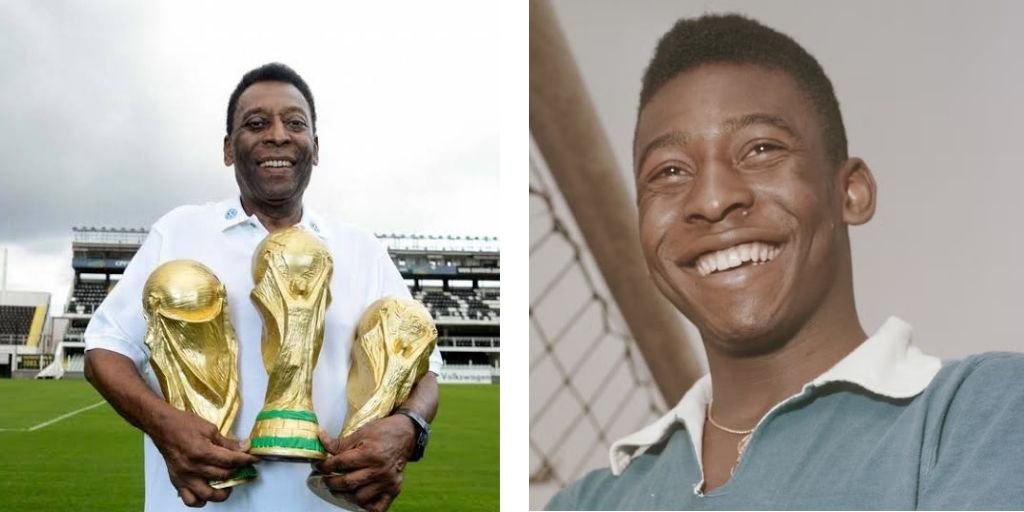
Pelé was more than a footballer. For millions of people around the world, he became a symbol of joy, creativity, ambition, and the beautiful side of sport. Born Edson Arantes do Nascimento in Brazil in 1940, he rose from a modest childhood to become one of the most famous athletes in history. FIFA records that he died on December 29, 2022, at the age of 82.
His story is remarkable because his rise happened so quickly. As a teenager, he stepped onto the world’s biggest football stage and helped Brazil win the 1958 FIFA World Cup. He would later win the tournament again in 1962 and 1970, becoming the only player to win three World Cups.
But what made Pelé special was not simply the number of trophies he collected. His speed, finishing, passing, movement, balance, and imagination made him an extraordinary player to watch. His career was like a bridge between generations: older fans remembered his performances, while younger fans discovered his highlights and stories long after he had retired.
Early Life and the Boy Behind the Legend
Pelé was born on October 23, 1940, in the Brazilian state of Minas Gerais. His parents were Celeste Arantes and João Ramos do Nascimento, better known as Dondinho, who was himself a footballer. FIFA notes that Edson was named after the famous inventor Thomas Edison.
His family did not live a life of luxury. Like many talented children, Pelé had to develop his ability with whatever was available. Football became part of his everyday life, and his natural talent soon became impossible to ignore.
One of the most emotional stories from his childhood came after the 1950 World Cup. Brazil lost to Uruguay, and the young Pelé saw his father crying after the defeat. Pelé later recalled promising his father that he would someday win the World Cup for him. At only nine years old, he could not have known how important that promise would become.
His nickname also has an unusual story. FIFA explains that he had been called “Dico” by his family, while the name Pelé became associated with his childhood and a mispronunciation involving Brazilian goalkeeper Bile.
It is easy to look at Pelé’s later success and imagine that greatness was guaranteed from the beginning. It was not. Talent opened the door, but discipline, opportunity, confidence, and years of practice carried him through it.
Discovering Football Talent in Brazil
Pelé’s abilities became obvious while he was still very young. Former Brazil striker Waldemar de Brito discovered him while coaching in Bauru and helped arrange a trial at Santos. According to FIFA, Pelé joined Santos and made his first-team debut in 1956 as a 15-year-old, scoring in that appearance.
Imagine being 15 years old and walking into a professional dressing room surrounded by experienced players. Most teenagers would feel overwhelmed. Pelé, however, quickly demonstrated that he belonged.
His game had a rare combination of qualities. He could strike the ball with either foot, control difficult passes, move through crowded areas, and finish from different positions. His athleticism allowed him to compete physically, while his awareness helped him find spaces before defenders realized what was happening.
That combination made him difficult to predict.
A defender might expect him to shoot, only for him to pass. Another might expect a pass, only for him to accelerate toward goal. He could also change direction quickly and use his body to create space.
This was one reason spectators were fascinated by him. Football was not simply something Pelé played. He seemed to understand it instinctively.
The Rise of Pelé at Santos
Santos became the club most closely associated with Pelé. He spent the majority of his club career there, and his achievements helped turn Santos into an internationally recognized football power.
FIFA reports that during his 18-year Santos career, Pelé inspired the club to numerous titles, including six Brazilian championships, two Copa Libertadores crowns, and two Intercontinental Cups.
His partnership with talented teammates created a team capable of entertaining crowds and competing at the highest level.
Pelé’s reputation also expanded beyond Brazil. International clubs reportedly showed interest in signing him, but his status in Brazil became so important that the Brazilian government declared him an official national treasure, helping prevent him from moving overseas during his prime.
For Santos supporters, he was not merely a famous player. He represented an era.
His performances helped establish the idea that Brazilian football could combine results with creativity. Skill, imagination, rhythm, and attacking football became central parts of the image associated with Brazil.
The 1958 World Cup: A Teenager Changes History
The 1958 World Cup transformed Pelé from a Brazilian sensation into an international superstar.
He was only 17 when he traveled to Sweden with Brazil. FIFA records that he scored six goals during the tournament, including two in the final as Brazil defeated Sweden 5–2.
His age made the achievement even more remarkable.
Pelé scored his first World Cup goal against Wales in the quarter-final. FIFA describes how he controlled the ball with his chest, turned away from his marker, and finished with his left foot. He then scored a hat-trick against France in the semi-final.
In the final, he scored twice.
The teenager had helped Brazil win its first World Cup, and suddenly the football world knew his name.
He also established several World Cup age records. FIFA identifies Pelé as the youngest scorer, youngest hat-trick scorer, youngest finalist, and youngest player to score in a World Cup final.
For Pelé, however, the tournament was about more than records. It was the fulfillment of the promise he had made to his father years earlier.
World Cups in 1962 and 1970
Pelé’s World Cup journey did not end in Sweden.
In 1962, Brazil successfully defended its title in Chile. Pelé played in the tournament but suffered an injury during the group stage and was unable to play most of the competition. His teammates continued without him and Brazil lifted the trophy again.
The 1966 World Cup in England was far more difficult. Pelé scored, but Brazil exited during the group stage after defeats, and there were questions about whether the great forward could return to his best on the international stage.
Then came Mexico 1970.
The 1970 Brazilian team is remembered as one of the most celebrated international sides in football history. Pelé was at the center of it, playing alongside stars such as Jairzinho, Tostão, Gérson, and Carlos Alberto.
Brazil won all seven of its matches. Pelé scored four goals, including one in the final against Italy, as Brazil won 4–1 and claimed its third World Cup.
That victory gave Pelé something no other men’s player has matched: three World Cup titles.
His 1970 campaign also demonstrated that his value was not limited to scoring. FIFA records six assists for Pelé at Mexico 1970, a record for a single World Cup.
What Made Pelé Such a Special Player?
What exactly separated Pelé from other great footballers?
There was no single answer.
Finishing
Pelé could score with either foot and was dangerous inside and around the penalty area. His ability to strike accurately while moving at speed made him extremely difficult for defenders to contain.
Ball Control
His first touch allowed him to control difficult balls and immediately prepare his next action. This was particularly valuable when defenders were closing him down.
Dribbling
Pelé could move past opponents using changes of direction, body movement, acceleration, and close control. He did not always need complicated tricks. Sometimes a simple shift of balance was enough.
Heading
He was also excellent in the air. Despite not being the biggest player on the field, his timing and jumping ability made him a serious aerial threat.
Passing
Perhaps one of the most overlooked parts of his game was his creativity as a passer. He could see attacking opportunities and create chances for teammates rather than always attempting to finish himself.
Movement
Pelé understood where space would appear. He could move away from defenders, receive the ball, and attack the opening before opponents had time to react.
Put these qualities together and you get a player who could influence nearly every part of an attacking move.
It was like having a chess player on a football pitch—except the board was constantly moving and the opponent was trying to stop every decision.
Pelé’s Most Memorable Football Moments
Pelé’s career contains countless famous moments, but some have become part of football history.
His 1958 hat-trick against France announced his arrival to the world. His two goals in the final against Sweden established him as a teenage World Cup champion.
The 1970 World Cup provided another collection of unforgettable scenes.
One famous moment came against Uruguay. Pelé received a pass and raced toward goalkeeper Ladislao Mazurkiewicz. Instead of touching the ball around the goalkeeper in the conventional way, he allowed it to continue past him before running around the other side. The attempt narrowly missed, but the move became legendary.
Another famous moment came in the final against Italy when Pelé scored Brazil’s opening goal with a powerful header.
The final goal of the match was also iconic. Pelé helped create the move before Carlos Alberto finished it, producing one of the most memorable team goals in World Cup history.
These moments explain why statistics alone cannot fully describe his influence. Some of his most famous plays were not even goals.
Life Beyond Santos and International Football
After many extraordinary years with Santos, Pelé eventually moved to the New York Cosmos in the North American Soccer League.
His arrival in the United States was important because football had not yet reached the cultural position it enjoys in many countries today. Pelé brought worldwide attention with him.
His presence helped introduce American audiences to a football superstar who was already known across much of the planet.
He officially retired from competitive football in 1977. By then, his playing career had crossed nearly two decades and included success at club and international level.
His final years as a professional player were very different from the environment in which he had begun. The teenager who had emerged from Brazil had become an international celebrity.
Pelé as a Global Icon
Pelé’s influence extended far beyond the football pitch.
He became an ambassador for the sport and represented football around the world. Politicians, entertainers, athletes, and ordinary fans recognized him.
FIFA described him as the first global icon of football and noted that his fame extended beyond sport itself.
That global recognition mattered because Pelé helped make football feel universal.
A child in one country could watch footage of him and understand what made the performance special even without speaking Portuguese. A fan who had never visited Brazil could recognize the famous number 10 shirt.
His image became connected with Brazilian football, creativity, and joy.
He also appeared in films, commercials, interviews, and international events. In retirement, he continued to speak about football and remained one of the most recognizable sporting figures on Earth.
Records, Achievements and World Cup Legacy
Pelé’s record book is extensive.
His most important achievement remains his three World Cup victories in 1958, 1962, and 1970. He remains the only player to have won the men’s FIFA World Cup three times.
He scored 12 World Cup goals during his career.
He also scored 77 goals for Brazil during his international career, a total that stood as Brazil’s men’s record for many years before Neymar moved ahead of him.
At club level, his Santos career produced numerous domestic and international honors. FIFA credits him with helping Santos win 24 titles, including two Copa Libertadores and two Intercontinental Cups, in one account of his club achievements.
There are also statistics that depend on how different competitions and unofficial matches are counted. That is why claims about his total career goals sometimes vary.
Nevertheless, the broader picture remains clear: Pelé was extraordinarily prolific over a remarkably long career.
Personal Life, Later Years and Passing
After retirement, Pelé remained active in public life. He worked in various ambassadorial and public roles and continued to be associated with football.
His fame never disappeared.
Even decades after his retirement, younger generations recognized the name Pelé. His highlights continued circulating, and documentaries and historical programs introduced his story to new audiences.
Pelé died on December 29, 2022, in São Paulo at the age of 82 following a lengthy battle with cancer, according to FIFA.
His death produced tributes from across the sporting world and beyond.
The reaction reflected the unusual scale of his influence. He had not played professionally for decades, yet his passing became a global event.
That tells us something important about his legacy. Some athletes are remembered for their statistics. Others are remembered for their personality. A very small number become symbols of an entire sport.
Pelé belonged to that last group.
The Lasting Legacy of Pelé
Why does Pelé still matter?
For one reason, his football achievements are extraordinary. Three World Cups alone place him in a category of his own.
But his legacy is larger than trophies.
Pelé helped define what people imagined when they heard the phrase “beautiful game.” His style combined athletic ability with creativity. He showed that football could be competitive while still being expressive and entertaining.
He also helped turn the footballer into a global celebrity.
Today’s international stars operate in a world of social media, streaming platforms, global sponsorships, and instant highlights. Pelé became globally famous before those technologies existed. His reputation traveled through newspapers, radio, television, photographs, and word of mouth.
That makes his rise even more remarkable.
His story also remains inspirational. He came from a relatively modest background, developed his talent, entered professional football as a teenager, and eventually became one of the most recognizable people in the world.
Pelé’s career is therefore not simply a story about winning. It is a story about possibility.
A young boy playing football in Brazil could eventually become a global symbol of the sport.
And perhaps that is the most powerful part of his legacy.
Conclusion
Pelé’s life was extraordinary from beginning to end. From his childhood in Brazil to his breakthrough with Santos, from his teenage World Cup triumph in 1958 to his third world title in 1970, he continually changed what people believed a footballer could achieve.
His three World Cups, international goals, Santos titles, unforgettable skills, and global influence created a legacy that remains deeply connected with football history. FIFA continues to recognize him as the only player to win the World Cup three times.
But numbers can only tell part of the story.
Pelé made people watch football differently. He brought excitement to the pitch, inspired generations of players, and became an ambassador for the sport long after his playing career ended.
For many fans, Pelé will always be remembered simply as The King.
FAQs About Pelé
1. Who was Pelé?
Pelé, whose full name was Edson Arantes do Nascimento, was a Brazilian footballer widely regarded as one of the most influential and successful players in football history. He played primarily for Santos and the Brazil national team.
2. How many World Cups did Pelé win?
Pelé won three FIFA World Cups with Brazil: 1958, 1962, and 1970. He remains the only player to have won the men’s World Cup three times.
3. How many goals did Pelé score for Brazil?
Pelé scored 77 goals for Brazil in international football. Neymar later surpassed that total to become Brazil’s men’s leading international scorer.
4. Which club did Pelé play for the longest?
Pelé spent most of his professional career with Santos in Brazil. He played there for approximately 18 years and helped the club win numerous domestic and international honors.
5. When did Pelé die?
Pelé died on December 29, 2022, in São Paulo, Brazil, at the age of 82.