Sean Connery: The Amazing Life, Career, Movies & Legacy
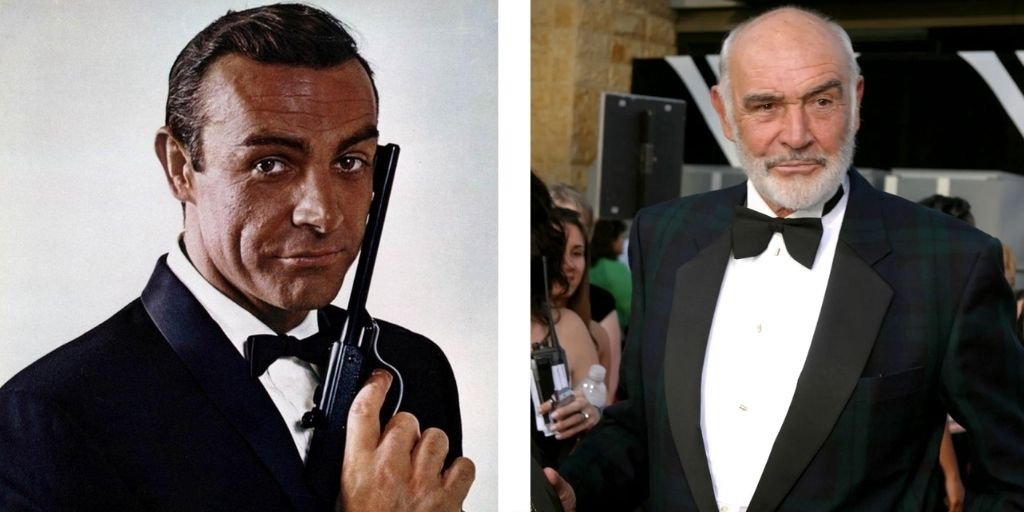
Sean Connery was more than the first actor to bring James Bond to the big screen. He was a performer whose deep voice, confident presence, and natural charm helped shape the image of the modern action hero. From humble beginnings in Scotland to becoming an international movie star, his story was filled with ambition, hard work, memorable performances, and remarkable success.
But what made Connery so fascinating? Was it simply his appearance and screen presence, or was there something deeper behind his fame? His career suggests that both talent and persistence played a major role.
Over several decades, he moved beyond the Bond franchise and demonstrated that he could handle historical dramas, thrillers, adventures, comedies, and serious character roles. His career became like a long journey with several different chapters, each revealing another side of the actor.
Early Life and Childhood in Scotland
Thomas Sean Connery was born on August 25, 1930, in Fountainbridge, Edinburgh, Scotland. His family did not belong to the world of entertainment or wealth. His father, Joseph Connery, worked as a truck driver and factory worker, while his mother, Euphemia, was a cleaner.
Growing up in a working-class neighborhood gave Connery an early understanding of responsibility. Life was not always comfortable, and he left school at a relatively young age.
As a teenager, Connery took on different jobs to support himself. He worked as a milkman and later served in the Royal Navy. These experiences helped shape the discipline and toughness that audiences would eventually recognize in his performances.
A Young Man Searching for Direction
Before acting became his profession, Connery explored several paths. He worked as a laborer and even competed in bodybuilding. His physical strength eventually helped him attract attention in the entertainment industry.
He also developed an interest in theater and performance. What began as an uncertain career gradually turned into something much bigger.
That transformation is one of the most interesting parts of his story. Connery did not begin with the advantages that many aspiring stars might dream about. He built his career step by step.
How Sean Connery Entered Acting
Connery’s entry into acting was not an overnight success. He initially appeared in small theater productions and minor screen roles. During the 1950s, he worked steadily while trying to establish himself.
He appeared in television productions and films, slowly gaining experience. His physical appearance helped him stand out, but his growing confidence in front of the camera became equally important.
From Small Roles to Bigger Opportunities
Connery understood that every role could become an opportunity to learn. He continued accepting work and developing his abilities.
His breakthrough came when he was selected to play a fictional British secret agent named James Bond. At the time, nobody could know just how important that decision would become.
The role would eventually turn him into one of the most recognizable actors in cinema history.
Becoming James Bond
In 1962, Connery appeared as James Bond in Dr. No, the first film in the original Bond film series produced by Eon Productions.
The character was different from many traditional screen heroes. Bond was intelligent, confident, physically capable, stylish, and sometimes dangerous. Connery brought all of these qualities together.
The Birth of a Screen Icon
Connery’s performance established many elements that later became associated with Bond: the sharp suits, dry humor, cool confidence, action sequences, and sophisticated lifestyle.
His Bond was not simply a man who fought villains. He was a character who appeared completely comfortable under pressure.
The success of Dr. No led to From Russia with Love in 1963, followed by Goldfinger in 1964. The latter became especially influential and helped turn Bond into a global cultural phenomenon.
Connery continued with Thunderball, You Only Live Twice, and Diamonds Are Forever. He also appeared in On Her Majesty’s Secret Service? No—Connery did not play Bond in that 1969 film; George Lazenby took the role. Connery returned as Bond for Diamonds Are Forever in 1971.
This distinction is important because Connery’s Bond career is sometimes simplified into one continuous run.
The Bond Films That Defined an Era
Connery’s Bond movies helped establish a formula that audiences would recognize for decades.
There were exotic locations, sophisticated cars, inventive gadgets, glamorous characters, dangerous villains, and large-scale action. Yet the films also relied heavily on Connery’s personality.
From Russia with Love
Released in 1963, From Russia with Love was more grounded than some later Bond adventures. It combined espionage, romance, suspense, and action.
Connery’s performance showed that Bond could be serious while still maintaining humor and confidence.
Goldfinger
Goldfinger became one of the defining entries of the early franchise. The movie introduced memorable elements that became closely associated with Bond, including the Aston Martin DB5 and the villain Auric Goldfinger.
The film demonstrated how effectively Connery could carry a major commercial production.
Thunderball and You Only Live Twice
Thunderball expanded the scale of the series with underwater sequences and international intrigue. You Only Live Twice moved the story to Japan and added an even larger sense of adventure.
By this stage, Connery had become almost inseparable from the character.
However, being identified so strongly with one role could also create a problem. How could an actor convince audiences that he was more than Bond?
Moving Beyond James Bond
Connery eventually sought opportunities outside the franchise. This was an important decision because playing such a famous character could easily dominate an actor’s entire career.
Rather than allowing Bond to define everything he did, Connery explored different genres and characters.
He appeared in films such as Marnie, directed by Alfred Hitchcock, and The Hill, a serious drama set in a military prison.
A Wider Range of Performances
Connery’s post-Bond work showed that his abilities went beyond action and espionage. He could play authority figures, criminals, historical characters, mentors, and emotionally complicated personalities.
In The Man Who Would Be King, he starred alongside Michael Caine in an adventure based on Rudyard Kipling’s story.
In The Name of the Rose, he played William of Baskerville, a Franciscan friar investigating mysterious deaths at a medieval monastery.
These performances helped demonstrate his range.
The Untouchables and an Academy Award
One of Connery’s most celebrated performances came in The Untouchables, released in 1987.
He played Jim Malone, an experienced Irish-American police officer who helps Eliot Ness fight organized crime in Prohibition-era Chicago.
A Career-Defining Supporting Performance
Connery’s role was not simply about action. Malone was experienced, practical, and willing to confront criminals directly.
His performance earned him the Academy Award for Best Supporting Actor.
For Connery, the Oscar represented an important moment because it confirmed something his broader career had already demonstrated: he was capable of succeeding outside the Bond formula.
The award also showed that his career could continue developing decades after his first major breakthrough.
Indiana Jones, Adventure Films, and Popular Success
Connery later appeared in another famous adventure franchise when he played Professor Henry Jones in Indiana Jones and the Last Crusade in 1989.
He played Indiana Jones’s father, opposite Harrison Ford.
A Different Kind of Hero
The role allowed Connery to use humor in a way that audiences had not always seen in his earlier action performances.
Professor Henry Jones was intelligent and serious, but his relationship with his son created much of the movie’s comedy and emotional warmth.
The film became a major commercial success, and Connery’s presence added another memorable chapter to his career.
He later appeared in The Hunt for Red October, The Rock, and other major productions.
Later Career and Memorable Roles
During the 1990s, Connery remained a recognizable presence in Hollywood.
He appeared in The Hunt for Red October as submarine commander Marko Ramius. His performance brought authority and restraint to the character.
In 1996, he starred opposite Nicolas Cage in The Rock, playing John Mason, a former British intelligence agent imprisoned on Alcatraz.
Why His Presence Mattered
Even when Connery was not the youngest person on screen, his presence could immediately establish credibility.
Think of a great piece of music: sometimes the power comes not from how loudly it is played, but from the confidence behind every note. Connery’s performances often worked in a similar way.
He did not always need to dominate a scene physically. His voice, expression, posture, and timing could do much of the work.
Sean Connery’s Personal Life
Connery married actress Diane Cilento in 1962. They had one son, Jason Connery, before divorcing in 1973.
In 1975, Connery married Micheline Roquebrune, an artist. They remained married until his death.
Family and Private Interests
Away from filmmaking, Connery maintained interests that reflected his Scottish roots. Golf became one of his favorite activities, and he was known for his passion for the sport.
He also remained connected to Scotland throughout his life.
Although his career made him a global celebrity, he continued to speak proudly about his Scottish background.
Awards, Honors, and Achievements
Connery received numerous awards during his career.
His Academy Award for The Untouchables was one of his most important competitive honors. He also won BAFTA and Golden Globe awards during his career.
In 2000, he was knighted by Queen Elizabeth II, becoming Sir Sean Connery.
The honor recognized his contribution to drama and the arts.
A Career That Lasted for Decades
Connery’s achievements were not limited to individual awards. His larger accomplishment was his ability to remain culturally important for many decades.
He successfully moved from television and small productions to international blockbusters, prestigious dramas, and major franchises.
That kind of longevity is difficult to achieve.
Sean Connery’s Influence on Cinema
Connery changed the way audiences viewed James Bond and helped establish a template for future action heroes.
Before him, leading men in action films often fit more traditional heroic patterns. Connery’s Bond combined sophistication with physical danger and humor.
The Legacy of His Bond
Actors who later played Bond had to work within a character image that Connery helped create.
Yet his influence extended beyond Bond.
His career demonstrated that an actor could become famous for one iconic role and still reinvent himself through different projects.
His performances also influenced the image of the confident, mature action star.
Final Years and Death
Connery largely retired from acting after appearing in The League of Extraordinary Gentlemen in 2003, although he continued to participate in selected projects and public activities.
He spent much of his later life away from the constant demands of Hollywood.
Sean Connery died on October 31, 2020, at the age of 90, in the Bahamas.
His death marked the end of an extraordinary chapter in cinema history.
News of his passing led to tributes from actors, filmmakers, public figures, and fans around the world.
For many people, his death was not simply the loss of an actor. It felt like the passing of one of the defining faces of classic popular cinema.
Sean Connery’s Lasting Legacy
What remains after an actor has left the screen?
In Connery’s case, the answer is remarkably clear: performances.
His James Bond remains one of the most recognizable characters in film history. His work in The Untouchables, The Name of the Rose, The Hunt for Red October, Indiana Jones and the Last Crusade, and The Rock continues to attract viewers.
His career also carries an important lesson. Success does not always begin with perfect circumstances. Connery came from a modest background, worked several jobs, and gradually found his way into acting.
He became a movie star, but his greatest achievement may have been proving that he was more than one character.
His journey from Edinburgh to international fame resembles a long road rather than a sudden leap. Every small role, difficult decision, and new challenge helped lead him toward the next stage.
That is why Sean Connery remains important to cinema. He was James Bond, but he was also much more.
Conclusion
Sean Connery’s life and career tell the story of a Scottish working-class boy who became one of the world’s most famous actors. His portrayal of James Bond established a cinematic icon, while his later performances proved that his talent reached far beyond the spy genre.
From Dr. No to The Untouchables, Indiana Jones and the Last Crusade, The Hunt for Red October, and The Rock, Connery created characters that audiences continued to remember.
His voice, confidence, humor, and screen presence became part of movie history. Even years after his death, his work continues to introduce new generations to one of cinema’s most distinctive performers.
Frequently Asked Questions
1. Who was Sean Connery?
Sean Connery was a Scottish actor best known for originating the role of James Bond in the first major series of Bond films produced by Eon Productions. He also appeared in numerous successful films outside the franchise.
2. How many James Bond films did Sean Connery make?
Connery officially played James Bond in six Eon-produced films: Dr. No, From Russia with Love, Goldfinger, Thunderball, You Only Live Twice, and Diamonds Are Forever. He also appeared in the independently produced Never Say Never Again in 1983.
3. Did Sean Connery win an Academy Award?
Yes. Connery won the Academy Award for Best Supporting Actor for his performance as Jim Malone in The Untouchables.
4. What was Sean Connery’s most famous role?
His most famous role was James Bond, the British secret agent created by novelist Ian Fleming. Connery’s portrayal established many of the characteristics later associated with the character.
5. When did Sean Connery die?
Sean Connery died on October 31, 2020, at the age of 90. He died in the Bahamas.