Barack Obama: Inspiring Life, Presidency & Legacy
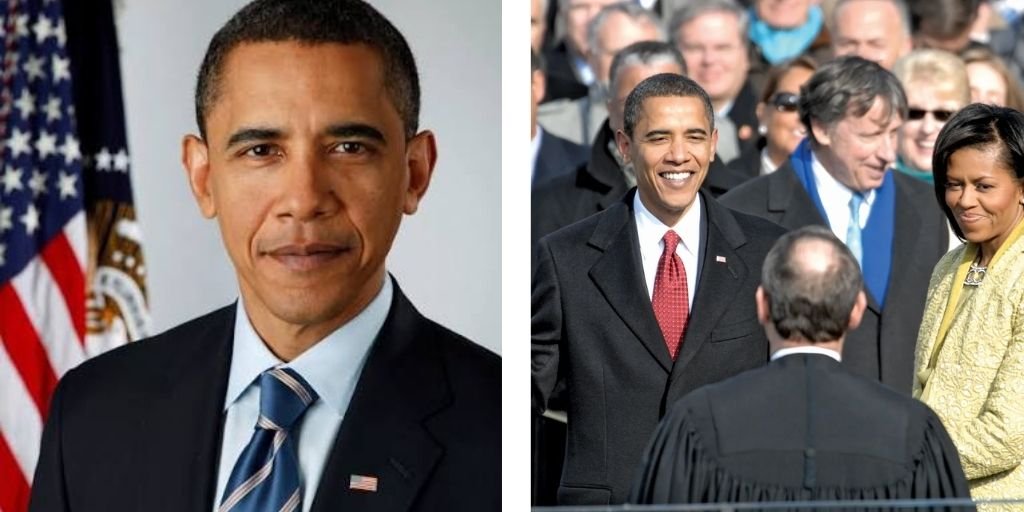
Barack Obama’s journey from a childhood in Hawaii and Indonesia to the White House is one of the most widely followed political stories of the modern era. Born on August 4, 1961, in Honolulu, Hawaii, he became the 44th president of the United States after winning the 2008 presidential election and was re-elected in 2012.
But what makes his story interesting is not simply the office he held. His life includes community organizing in Chicago, legal education at Harvard, years in Illinois politics, service in the U.S. Senate, two presidential campaigns, and a continuing public role after leaving office. His career can be viewed like a long bridge: each stage connected to the next and eventually carried him from local community work to the highest elected office in America.
Early Life and Family Background
Barack Hussein Obama was born in Honolulu, Hawaii, on August 4, 1961. His father, Barack Obama Sr., was from Kenya, while his mother, Stanley Ann Dunham, was from Kansas. His early family story therefore crossed cultures and continents from the beginning.
Obama spent part of his childhood in Indonesia before returning to Hawaii. He was raised with significant support from his maternal grandparents. His grandfather had served in the U.S. Army during World War II, while his grandmother built a career in banking. These family experiences exposed him to different social environments and shaped the way he later described his understanding of American identity.
Growing up in Hawaii also gave him a perspective that was somewhat different from that of many mainland Americans. The islands brought together people from different ethnic, cultural, and religious backgrounds. That multicultural environment became an important part of his personal story.
For many readers, his childhood demonstrates that a person’s future is not always obvious from their starting point. Obama did not begin life surrounded by the institutions of Washington. His path developed gradually through education, community work, law, and public service.
Education and the Road to Chicago
Education became an important part of Obama’s development. He attended Occidental College in Los Angeles before transferring to Columbia University in New York, where he completed his undergraduate education.
After college, he moved to Chicago. Rather than immediately pursuing a conventional legal or political career, he worked as a community organizer on the city’s South Side. His work involved communities affected by the closure of steel plants and the resulting economic difficulties. The White House’s historical biography describes his work with churches to help rebuild communities affected by those closures.
That experience mattered because it placed him close to ordinary residents dealing with unemployment, declining neighborhoods, and limited opportunities.
Have you ever wondered why some politicians talk so much about communities? In Obama’s case, community organizing was not simply a campaign slogan. It was part of his professional experience before he became a national political figure.
Eventually, he decided to study law. He attended Harvard Law School and became the first African-American president of the Harvard Law Review. After graduating, he returned to Chicago, where he worked in public service, taught constitutional law at the University of Chicago, and remained involved in community affairs.
Rise Through Illinois Politics
Obama entered electoral politics in Illinois, winning a seat in the Illinois State Senate in 1996. His political career began at the state level rather than in Washington, giving him experience with legislation, negotiations, and the practical difficulties of governing.
During his time in the Illinois Senate, he worked on ethics reform, tax issues, and health care legislation. The historical White House biography says he helped pass major ethics reform, reduced taxes for working families, and expanded health coverage for children and parents.
His approach to politics increasingly attracted attention beyond Illinois. He developed a reputation as a politician who could speak about political differences while also emphasizing cooperation.
His national profile grew dramatically after his 2004 keynote address at the Democratic National Convention. The speech introduced him to a much larger American audience and helped establish him as a rising national figure.
In 2004, he was elected to the U.S. Senate from Illinois. His time in the Senate was relatively short, but it provided a national platform from which he could build a presidential campaign.
The 2008 Presidential Campaign
Obama announced his campaign for president in 2007. The Democratic primary became a major contest, particularly because Hillary Clinton was also seeking the nomination.
Obama’s campaign emphasized themes of change, participation, hope, and political engagement. His ability to connect with younger voters and his use of digital organizing became important elements of the campaign.
The 2008 election took place during a major financial crisis. The American economy was experiencing severe turmoil, and economic security became one of the central concerns of voters.
Obama defeated Republican nominee John McCain in the general election and was elected the 44th president of the United States on November 4, 2008. He took the oath of office on January 20, 2009.
His election was also historically significant because he became the first African-American president of the United States.
For many Americans, the moment represented a major development in the country’s long and complicated history of race and citizenship. At the same time, his presidency remained subject to the same political debates, disagreements, and scrutiny that accompany any administration.
Presidency and Domestic Policy
Obama entered the White House facing several major domestic challenges. The economy was recovering from the financial crisis, unemployment was high, and debates over health care were intense.
One of the central achievements of his administration was the Affordable Care Act, commonly known as the ACA or Obamacare. The law significantly changed the American health insurance system and expanded access to coverage.
The administration also pursued financial regulation following the economic crisis. The Dodd-Frank Wall Street Reform and Consumer Protection Act became another major piece of legislation associated with the period.
Obama’s domestic agenda also included education, energy, technology, infrastructure, and economic policy. His administration promoted increased use of digital government and public data. Historical White House records show that his administration publicly released government datasets and staff information as part of its transparency efforts.
Of course, major legislation rarely exists without controversy. Supporters and opponents disagreed strongly over the size and role of government, taxation, health care, regulation, and spending.
That disagreement is an important part of understanding his presidency. A presidency is not simply a list of accomplishments; it is also a record of arguments over what government should do and how it should do it.
Foreign Policy and International Relations
Foreign policy became another defining part of Obama’s presidency. His administration emphasized diplomacy, international partnerships, and negotiations alongside traditional national security policies.
One of the most notable examples was the agreement reached with Iran in 2015 concerning its nuclear program. The United States negotiated with Iran alongside the United Kingdom, France, Germany, Russia, China, and the European Union. The agreement placed restrictions and monitoring requirements on Iran’s nuclear activities.
The Obama administration also worked toward the Paris climate agreement, which brought countries together around a global framework for addressing climate change. His administration later described the agreement as one of its major international achievements.
His foreign policy record also included the winding down of U.S. military involvement in Iraq, efforts concerning Afghanistan, relations with Russia and China, and negotiations involving international allies.
Foreign policy, however, remained highly contested. Supporters and critics interpreted the administration’s military decisions, diplomacy, and responses to international crises differently.
This is one reason Obama’s international record continues to receive substantial attention from historians, journalists, scholars, and political observers.
Nobel Peace Prize and Global Recognition
In 2009, Obama received the Nobel Peace Prize. The Norwegian Nobel Committee awarded him the prize for his efforts to strengthen international diplomacy and cooperation between peoples. The committee also highlighted his vision concerning nuclear weapons and his emphasis on dialogue and multilateral diplomacy.
The award came less than eight months after he became president, which made it an unusual moment in his political career.
The Nobel Committee’s decision itself became a subject of discussion because Obama was still early in his presidency. The committee explained that it was recognizing his international diplomacy, his stated vision, and the direction he represented in world affairs.
The prize became one of the most recognizable honors associated with his public life.
It also illustrates an important point about historical figures: recognition and criticism can exist at the same time. Different audiences can look at the same event and interpret its importance differently.
Michelle Obama and Family Life
Behind Obama’s political career was his family life with Michelle Obama. The couple met while working at a Chicago law firm, married in 1992, and later became parents to two daughters, Malia and Sasha.
Michelle Obama became an important public figure in her own right during her years as First Lady. Her initiatives included work connected to children’s health, education, military families, and healthy living.
The Obama family attracted enormous public attention, but they also tried to maintain a degree of privacy for their daughters.
Family life provided a different side of Obama’s public image. Presidential campaigns often focus heavily on speeches, policies, debates, and political strategy. Yet for the Obamas, everyday family experiences remained part of the story.
The family also became known for moments of humor and informality, helping create a more personal connection with the public.
Re-Election and the Second Term
Obama ran for re-election in 2012 and defeated Republican nominee Mitt Romney. He began his second term in January 2013.
His second term brought new challenges. The administration dealt with debates over immigration, gun violence, climate policy, health care, racial tensions, and foreign affairs.
The Supreme Court also played an important role during this period. One major development was the Court’s decision in Obergefell v. Hodges in 2015, which established a constitutional right to same-sex marriage nationwide.
Obama’s administration also continued to emphasize climate policy. Internationally, the Paris Agreement represented a significant diplomatic effort involving more than 190 countries.
The final years of his presidency included a mixture of policy achievements, political conflicts, and debates about the direction of the country.
In January 2017, after two terms, Obama left the White House and Donald Trump became president.
Books, Speeches and Public Influence
Obama’s influence has never depended entirely on political office. He is also a writer and speaker.
His books include Dreams from My Father, The Audacity of Hope, and A Promised Land. These works provide readers with insight into his childhood, political development, family background, and experiences in public life.
Writing gave him a different way to communicate than political speeches. A campaign speech has to reach thousands or millions of people quickly. A book allows a person to slow down and explain experiences in greater detail.
His speaking style has also been widely recognized. He often uses storytelling, pauses, repetition, and references to ordinary people’s experiences.
This communication style became one of the defining features of his public career.
Life After the White House
Leaving the presidency did not end Obama’s public work. He and Michelle Obama established the Obama Foundation, which focuses on leadership development, civic engagement, and work with communities.
The foundation’s activities include the Obama Leaders program and projects connected with the future Obama Presidential Center.
Obama has also remained involved in public discussions through speeches, interviews, books, charitable activities, and civic initiatives.
Former presidents often continue to influence public life after leaving office, but their roles are different from those of sitting presidents. They no longer control federal policy, yet they can still use their public platforms to discuss issues and support organizations.
Obama’s post-presidential years have therefore become another chapter in his larger story.
Legacy and Historical Significance
How should Barack Obama’s legacy be understood? The answer depends partly on which part of his career someone studies.
Historically, his presidency marked the election of the first African-American president of the United States. His administration also produced major legislation and international agreements, including the Affordable Care Act and the 2015 Iran nuclear agreement.
His presidency also generated substantial disagreement. Questions about health care, military intervention, immigration, surveillance, economic policy, climate change, and executive authority produced debates that continued after he left office.
That complexity is important. Historical figures are rarely just one thing. Obama’s political career can be compared to a large book: one chapter cannot explain the entire story.
His life before politics, his presidency, his family, his writing, and his continuing civic activities all contribute to the broader picture.
For younger generations, his career also became an example of how someone from a multicultural background could rise through education, community service, law, state politics, national politics, and eventually the presidency.
Whatever conclusions readers draw about individual policies, the historical significance of his election and presidency remains an important part of modern American history.
Conclusion
Barack Obama’s life is a story of education, community work, politics, family, leadership, and public service. From Hawaii and Indonesia to Chicago, Illinois politics, the U.S. Senate, and the White House, his career developed through several distinct stages.
His presidency included major domestic legislation, international diplomacy, climate initiatives, and intense political disagreements. His 2009 Nobel Peace Prize added another remarkable chapter to his public career.
After leaving office, Obama continued his work through writing, speaking, philanthropy, and the Obama Foundation. His story remains a significant part of contemporary American political and cultural history.
Frequently Asked Questions
1. Who is Barack Obama?
Barack Obama is an American politician, author, and former president who served as the 44th president of the United States from 2009 to 2017. He was elected in 2008 and re-elected in 2012.
2. When was Barack Obama born?
Barack Obama was born on August 4, 1961, in Honolulu, Hawaii. His father was from Kenya and his mother was from Kansas.
3. What was Barack Obama known for as president?
His presidency included the Affordable Care Act, financial regulation following the economic crisis, climate diplomacy, the Iran nuclear agreement, and other domestic and international initiatives.
4. Did Barack Obama win the Nobel Peace Prize?
Yes. Obama received the 2009 Nobel Peace Prize. The Norwegian Nobel Committee cited his efforts to strengthen international diplomacy and cooperation between peoples.
5. What did Barack Obama do after leaving the presidency?
After leaving office in January 2017, Obama continued writing, speaking, participating in civic activities, and working through the Obama Foundation alongside Michelle Obama.