
Neil Armstrong: Life, Career, Moon Landing & Legacy
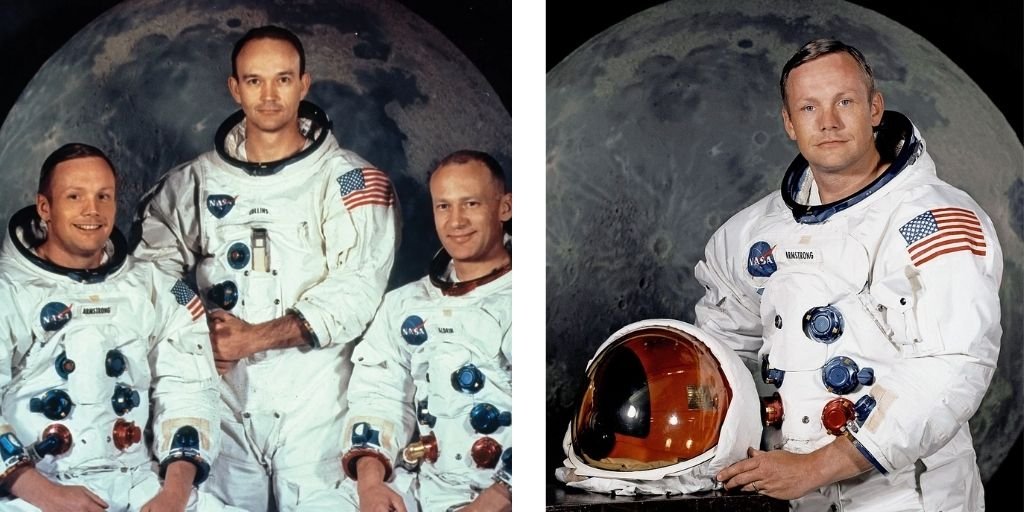
Neil Armstrong is remembered around the world as the first person to walk on the Moon. His name became permanently connected with one of humanity’s greatest achievements, but there was much more to his story than a few historic minutes on the lunar surface. He was a pilot, engineer, astronaut, naval aviator, university professor, and a remarkably private person who often preferred his work to the attention that followed it.
What made Armstrong’s journey so fascinating? He did not begin life knowing that he would someday step onto another world. His path was built through curiosity, education, discipline, flying experience, and years of preparation. His story is almost like a long flight: every stage of his life added another piece needed for the next destination.
Early Life and Childhood of Neil Armstrong
Neil Armstrong was born on August 5, 1930, near Wapakoneta, Ohio, in the United States. His full name was Neil Alden Armstrong. His father, Stephen Armstrong, worked as an auditor for the state of Ohio, and because of his job, the family moved to different parts of the state during Armstrong’s childhood.
From an early age, Armstrong developed a strong interest in aviation. He reportedly became fascinated by airplanes after experiencing his first airplane ride as a young child. That experience stayed with him and helped shape a lifelong passion.
A Childhood Fascination With Flight
Armstrong built model airplanes and spent time learning about aviation. Rather than seeing flying as simply an exciting adventure, he became interested in how aircraft worked.
At the age of 16, he earned his student pilot certificate, even before he had a driver’s license. This was an early indication that aviation was not merely a childhood hobby for him. It was becoming part of his identity.
His teenage years also showed another important quality: persistence. Armstrong was interested in technical subjects and gradually developed the skills that would later help him become a test pilot and astronaut.
Education and the Beginning of His Aviation Career
Armstrong attended Blume High School in Wapakoneta before studying aeronautical engineering at Purdue University. His education was interrupted when he entered military service, but he eventually returned to university and completed his degree.
His studies were particularly valuable because aerospace technology was changing rapidly during this period. Engineers and pilots were working with increasingly sophisticated aircraft, and the knowledge Armstrong gained would become important throughout his career.
Service in the United States Navy
In 1949, Armstrong entered the U.S. Navy’s aviation program. He became a naval aviator and flew combat missions during the Korean War.
His military flying experience was demanding. Armstrong flew the Grumman F9F Panther, a jet aircraft used by the Navy and Marine Corps during the conflict. During one mission, his aircraft was damaged after striking a cable while flying at low altitude. Armstrong successfully escaped the aircraft and returned to friendly territory.
Experiences like this taught him how to remain focused during dangerous situations. Years later, that ability would be extremely important during the Apollo program.
After completing his military service, Armstrong returned to Purdue University and graduated in 1955 with a degree in aeronautical engineering.
Becoming a Test Pilot
After university, Armstrong joined the National Advisory Committee for Aeronautics, or NACA, which later became part of NASA. He worked as a research pilot at what became known as NASA’s Armstrong Flight Research Center in California.
The work was very different from ordinary commercial flying. Test pilots were expected to push aircraft toward their limits while carefully collecting information about how they behaved.
Flying Experimental Aircraft
Armstrong flew many experimental aircraft, including the famous North American X-15. The X-15 was a rocket-powered aircraft designed to investigate high-speed and high-altitude flight.
Armstrong made several X-15 flights and reached extraordinary speeds and altitudes. His experience with experimental aircraft helped him develop a deep understanding of flight dynamics.
He also participated in research involving aircraft that simulated conditions relevant to future spaceflight. These experiences gave him valuable knowledge about controlling vehicles that behaved very differently from conventional airplanes.
For Armstrong, becoming an astronaut was not a sudden change of career. It was more like climbing a staircase. Each flight, engineering lesson, and difficult test prepared him for the next step.
Joining NASA and Becoming an Astronaut
Armstrong was selected as part of NASA’s second group of astronauts in 1962. At that time, America’s space program was developing rapidly.
The United States and Soviet Union were competing in space exploration, and human spaceflight was still extremely dangerous. Astronauts were entering an environment where even small technical problems could have fatal consequences.
The Gemini Program
Armstrong’s first spaceflight came with Gemini 8 in March 1966. He served as commander, with David Scott as pilot.
The mission had an important objective: docking two spacecraft in orbit. Armstrong successfully guided Gemini 8 into a docking with an uncrewed Agena target vehicle.
However, the mission quickly became a serious emergency.
After docking, the spacecraft began spinning rapidly. Armstrong and Scott struggled to regain control. Armstrong eventually undocked from the Agena and used the spacecraft’s reentry control system to stop the rotation.
The situation demonstrated Armstrong’s ability to remain calm and make difficult decisions under pressure. The mission was cut short, but his performance became an important part of his reputation within NASA.
Apollo 11 and the Journey to the Moon
The Apollo program represented an enormous technological challenge. NASA’s goal was not simply to send astronauts into space. It wanted to send humans to the Moon, land them there, and bring them safely back to Earth.
Armstrong was selected as commander of Apollo 11, with Buzz Aldrin as lunar module pilot and Michael Collins as command module pilot.
The three astronauts launched from Kennedy Space Center in Florida on July 16, 1969.
The Historic Voyage
The Saturn V rocket carried Apollo 11 away from Earth. After reaching space, the spacecraft began its journey toward the Moon.
For Armstrong, Aldrin, and Collins, the trip involved constant preparation and monitoring. The mission was not a simple ride through space. Every stage had procedures, calculations, communications, and possible emergencies.
As Apollo 11 approached the Moon, the astronauts entered lunar orbit. Armstrong and Aldrin then moved into the lunar module, named Eagle, while Collins remained in the command module, Columbia.
The landing phase became one of the most famous moments in the history of exploration.
The First Moon Landing
On July 20, 1969, Armstrong and Aldrin began their descent toward the lunar surface.
The lunar module was supposed to follow a planned landing path, but Armstrong noticed that the computer was directing the spacecraft toward an area containing large rocks and craters. He took manual control and searched for a safer landing location.
“The Eagle Has Landed”
Fuel was limited, and there was little room for error. Armstrong guided the lunar module toward a safer area.
Finally, the spacecraft touched down.
Armstrong reported that the lunar module had landed. Millions of people on Earth followed the event through television and radio broadcasts.
Several hours later, Armstrong climbed down the ladder from the lunar module and stepped onto the Moon.
His first words after stepping onto the lunar surface became among the most recognizable words ever spoken during an exploration mission.
The moment was bigger than one individual. Armstrong later emphasized that the achievement represented the work of thousands of people who designed, built, tested, monitored, and supported the mission.
What Neil Armstrong Did on the Moon
Armstrong and Aldrin spent about two and a half hours outside the lunar module during their surface activity.
They collected lunar rock and soil samples, photographed the landscape, deployed scientific equipment, and carried out several experiments.
Working With Buzz Aldrin
Armstrong and Aldrin worked together throughout their time on the surface. They needed to complete their tasks efficiently because their time, oxygen, and other resources were limited.
The Moon looked dramatically different from Earth. There was no atmosphere like ours, the sky appeared black, and the surface was covered with fine dust and rocks.
Armstrong later described the lunar landscape as stark and beautiful.
The astronauts also planted the American flag and left a plaque commemorating the mission and its significance.
Meanwhile, Michael Collins continued orbiting above them in Columbia. His role was equally important because he was responsible for remaining with the command module and later reuniting with Armstrong and Aldrin.
Returning Safely to Earth
After completing their work, Armstrong and Aldrin returned to the lunar module. They launched from the Moon and joined Collins in lunar orbit.
The astronauts then began their journey back to Earth.
On July 24, 1969, Apollo 11 splashed down in the Pacific Ocean. Armstrong, Aldrin, and Collins had completed a mission that changed the history of space exploration.
A Global Celebration
The Apollo 11 landing was watched by an enormous worldwide audience. People gathered in homes, public places, and community centers to watch the broadcast.
The event demonstrated what could happen when scientists, engineers, pilots, technicians, and astronauts worked toward a common technical goal.
For many people, the Moon landing represented more than an American achievement. It was evidence that humans could accomplish something that had previously existed largely in imagination.
Life After the Moon Landing
After Apollo 11, Armstrong became one of the most famous people on Earth. Yet fame did not seem to be his main interest.
He continued working in education, engineering, and aviation rather than pursuing a permanent career as a celebrity.
Teaching and Engineering
Armstrong accepted a teaching position at the University of Cincinnati, where he became a professor of aerospace engineering. He taught students and remained involved in technical subjects.
He also served on corporate boards and participated in aviation-related projects.
His knowledge was valuable because he had experienced aerospace development from several perspectives: engineer, military pilot, test pilot, and astronaut.
Rather than simply talking about his historic mission, Armstrong continued exploring how technology could improve aviation and spaceflight.
Neil Armstrong’s Personality and Private Life
One of the most interesting things about Armstrong was his attitude toward fame.
Many people who become internationally famous seek publicity, but Armstrong generally preferred privacy. He gave interviews and attended important events, but he did not seem interested in turning his Moon landing into a constant public spectacle.
A Quiet Approach to an Extraordinary Achievement
Imagine becoming one of the most recognizable people in history and then trying to live an ordinary life. That was essentially the challenge Armstrong faced.
He often redirected attention away from himself and toward the larger teams behind space exploration.
This attitude helped shape the public image of Armstrong as a thoughtful and reserved individual.
He also enjoyed activities outside spaceflight, including aviation and hobbies connected with engineering and craftsmanship.
Awards, Recognition and Historical Importance
Armstrong received numerous honors throughout his lifetime.
Among them were the Presidential Medal of Freedom, the Congressional Space Medal of Honor, and the Congressional Gold Medal, which he shared with other Apollo 11 astronauts.
Universities and institutions around the world also recognized his contributions.
A Symbol of Exploration
Armstrong’s importance goes beyond the fact that he was the first person to walk on the Moon.
His career represents several major developments in twentieth-century history: aviation, engineering, military flight, experimental aircraft, human spaceflight, and lunar exploration.
His journey also illustrates how exploration depends on preparation. The famous photograph of Armstrong on the Moon captures only a few seconds of a much longer story.
Behind that moment were years of education, training, testing, engineering, and teamwork.
Neil Armstrong’s Death and Enduring Legacy
Neil Armstrong died on August 25, 2012, at the age of 82, following complications from cardiovascular procedures.
News of his death was reported around the world, and tributes came from astronauts, scientists, political leaders, educators, and members of the public.
His family asked that people honor his memory by looking at the Moon and thinking about the possibilities of exploration.
Why His Story Still Matters
Why does Armstrong remain so important decades after Apollo 11?
Part of the answer is simple: he crossed a boundary that humans had never crossed before.
But his story also matters because it shows that historic achievements rarely happen overnight. The Moon landing was the result of countless people solving thousands of difficult problems.
Armstrong became the person who physically stepped onto the lunar surface, but Apollo 11 was built by a much larger community.
His legacy can therefore be understood as both personal and collective.
For young people interested in science, aviation, engineering, or exploration, his career offers a powerful example of how curiosity can develop into expertise.
For the wider public, his story remains a reminder that ideas that seem impossible can become achievable through knowledge, patience, cooperation, and courage.
Conclusion
Neil Armstrong’s life was far larger than his famous first step on the Moon. From a curious child in Ohio to a naval aviator, test pilot, astronaut, engineer, and professor, his career was shaped by learning and perseverance. Apollo 11 transformed him into a global historical figure, yet he continued to emphasize the contributions of the thousands of people who made the mission possible.
His footprints on the Moon became a lasting symbol of human exploration. More importantly, his life showed that extraordinary achievements are often built one careful step at a time.
FAQs About Neil Armstrong
1. Who was Neil Armstrong?
Neil Armstrong was an American astronaut, aerospace engineer, naval aviator, and test pilot. He became the first person to walk on the Moon during NASA’s Apollo 11 mission in 1969.
2. When did Neil Armstrong walk on the Moon?
Armstrong walked on the lunar surface on July 20, 1969, during the Apollo 11 mission.
3. Who went to the Moon with Neil Armstrong?
Buzz Aldrin walked on the Moon with Armstrong, while Michael Collins remained in lunar orbit aboard the command module.
4. What did Neil Armstrong do before becoming an astronaut?
Before becoming an astronaut, Armstrong served as a naval aviator, studied aeronautical engineering, and worked as a research and test pilot. He also flew the experimental X-15 aircraft.
5. When did Neil Armstrong die?
Neil Armstrong died on August 25, 2012, at the age of 82, following complications related to cardiovascular procedures.