
Andy Warhol: Amazing Life, Art, Career & Pop Culture Legacy
Introduction
What happens when an ordinary object becomes a work of art? A soup can, a celebrity photograph, or a simple newspaper image might seem like something we barely notice. Yet Andy Warhol had a remarkable ability to make people stop and look again.
Born in Pittsburgh in 1928, Warhol became one of the most recognizable figures in modern art. He was a painter, filmmaker, publisher, collector, and cultural personality whose work changed the way people thought about art and popular culture. His bright colors, repeated images, celebrity portraits, and fascination with everyday products helped define the Pop Art movement.
But Warhol’s story was about much more than famous paintings. His career explored fame, advertising, consumer culture, technology, fashion, music, and the strange relationship between ordinary life and celebrity.
Early Life and Family Background
Andy Warhol was born Andrew Warhola on August 6, 1928, in Pittsburgh, Pennsylvania. His parents, Julia and Ondrej Warhola, were immigrants from what is now Slovakia. The family lived a modest working-class life, and his parents placed importance on education and creativity.
Warhol was a quiet child who spent much of his early life drawing and collecting pictures. He was particularly interested in images from magazines, newspapers, movies, and popular culture.
His childhood was also affected by health problems. During his early teenage years, he suffered from an illness that kept him at home for long periods. This period of isolation gave him more time to draw, listen to music, read, and develop his imagination.
Could those quiet years have influenced the artist he later became? It is difficult to know for certain, but his early fascination with images clearly remained important throughout his life.
After graduating from high school, Warhol attended Carnegie Institute of Technology, now Carnegie Mellon University. He studied commercial art and developed skills that would later become extremely valuable.
From Commercial Artist to New York Creative
After college, Warhol moved to New York City in 1949. At the time, the city was becoming an important center for advertising, publishing, fashion, and entertainment.
Warhol began working as a commercial illustrator. He created artwork for magazines, advertisements, department stores, and other clients. His unusual drawing style quickly attracted attention.
Commercial art taught him something important: images could communicate ideas quickly.
Think about the advertisements you see every day. A picture can tell you what to want before you have even read a sentence. Warhol understood this visual language extremely well.
During the 1950s, he became a successful commercial artist and developed a reputation for his distinctive illustrations. His work appeared in publications and advertising campaigns, giving him financial stability and professional recognition.
However, commercial success was not enough. Warhol wanted to move into fine art.
That transition became one of the most important turning points in his life.
Andy Warhol and the Rise of Pop Art
By the early 1960s, Warhol was beginning to create artwork based on familiar images from American life.
Instead of focusing only on traditional subjects, he looked toward supermarkets, advertisements, newspapers, movies, and famous people.
This approach became central to Pop Art.
Pop Art challenged the traditional idea that serious art had to show historical events, landscapes, religious subjects, or classical figures. Why couldn’t a supermarket product become art? Why couldn’t a comic-book image deserve attention?
Warhol’s answer was simple: popular images were already part of people’s lives.
His famous Campbell’s Soup Cans series became one of the defining works of his career. The repeated soup-can images transformed an everyday grocery item into something worthy of a gallery.
His use of repetition was especially powerful. One soup can might look ordinary. Dozens of them together created something completely different.
The technique was almost like turning a supermarket shelf into a museum wall.
Warhol’s art also reflected the growing influence of mass production. Products were being manufactured in huge quantities, advertisements were everywhere, and television was becoming increasingly important.
His artwork captured that changing world.
Famous Works and Artistic Style
Warhol created many works that later became cultural icons.
Among his best-known subjects were Campbell’s Soup Cans, Coca-Cola bottles, dollar signs, flowers, electric chairs, and portraits of celebrities.
His Marilyn Monroe images are particularly famous. Following Monroe’s death in 1962, Warhol created a series of portraits based on a publicity photograph of the actress. He repeated and recolored her face in different combinations.
The result was more than a portrait. It became a meditation on beauty, fame, reproduction, and mortality.
Warhol also created memorable portraits of people such as Elvis Presley, Elizabeth Taylor, and other major public figures.
Repetition was one of his trademarks.
He often used silkscreen printing, a method that allowed an image to be reproduced multiple times. This fit perfectly with his interest in mass production.
Rather than hiding the mechanical quality of the process, Warhol made it part of the artwork.
Sometimes the images were perfectly aligned. At other times, slight changes, overlaps, or imperfections appeared. Those variations reminded viewers that even mass-produced images could contain individuality.
The Factory and Warhol’s Creative World
Warhol’s New York studio became known as The Factory.
The name was appropriate. It suggested production, teamwork, and a place where ideas were constantly being transformed into objects.
The Factory became a meeting point for artists, musicians, actors, models, writers, filmmakers, and other creative personalities. Warhol surrounded himself with people who helped create an atmosphere that was energetic, unpredictable, and experimental.
The Factory was not simply a traditional artist’s studio.
It became part workplace, part social gathering place, and part cultural laboratory.
People came to see what was happening, participate in projects, meet other creative figures, or simply become part of Warhol’s world.
Warhol himself often remained quiet and observant. He was not always the loudest person in the room. Instead, he seemed fascinated by watching people and understanding how personalities could become images.
That fascination with people would eventually influence nearly everything he did.
Warhol’s Movies and Experimental Projects
Warhol was not satisfied with painting.
He became deeply interested in filmmaking and produced a large number of experimental movies during the 1960s and later years.
Some of his films were intentionally slow and unconventional. One famous example, Empire, consists largely of a prolonged view of the Empire State Building.
Why would anyone watch the same building for such a long time?
That was partly the point.
Warhol challenged audiences to think differently about time, attention, and cinema. His films did not always provide the traditional story structure people expected from movies.
He also created films featuring people from his social and artistic circle.
These projects reflected his belief that everyday moments could be interesting when presented differently.
His filmmaking also connected with his fascination with celebrity culture. People who might otherwise have remained unknown could suddenly become part of a larger artistic world simply by appearing in one of his projects.
Music, Fashion, and Cultural Influence
Warhol’s influence extended far beyond galleries.
He became closely associated with music and helped support and promote the Velvet Underground, a New York rock band known for its experimental sound.
Warhol became the band’s manager and designed the famous banana artwork associated with its debut album.
This connection showed how naturally his artistic interests moved between different forms of culture.
Painting, music, fashion, photography, film, and publishing were not separate worlds to him. They were connected pieces of a larger cultural picture.
Warhol also became involved with fashion and worked with designers, photographers, models, and magazines.
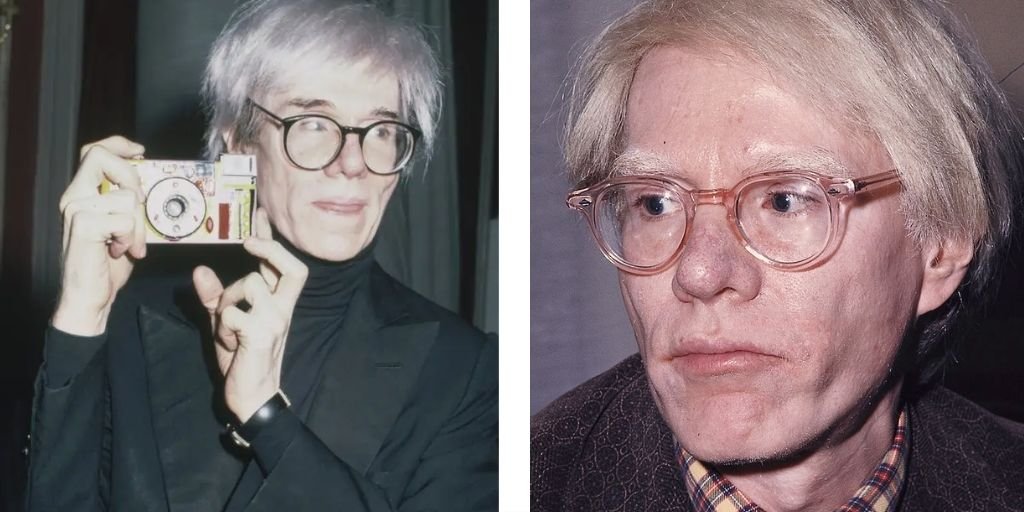
His personal appearance became recognizable as well. The silver-white hair, glasses, and reserved personality created a visual identity almost as memorable as his artwork.
In today’s world of personal branding, Warhol’s approach feels surprisingly modern.
He understood that an artist could become a public image as well as a creator.
Celebrity, Fame, and the Idea of Being Famous
Few subjects fascinated Warhol more than fame.
He once became associated with the idea that in the future, everyone might experience a brief period of celebrity. That observation has become one of the most frequently discussed aspects of his legacy.
Look at modern social media. People can become famous because of a short video, photograph, post, or unexpected moment.
Warhol could not have predicted today’s platforms in detail, but he clearly understood something important: images can create fame, and fame can create more images.
His celebrity portraits explored this cycle.
A famous person appears in newspapers and magazines. The public recognizes the face. An artist reproduces the image. The artwork makes the celebrity even more visible.
It becomes a loop.
Warhol’s work therefore feels remarkably relevant in an age of influencers, viral content, entertainment websites, and constant photography.
Publishing and Interview Magazine
Warhol’s creative interests also led him into publishing.
In 1969, he co-founded Interview magazine, which became known for conversations with celebrities, artists, musicians, actors, and other notable personalities.
The publication reflected Warhol’s interest in people and popular culture.
Instead of treating celebrities as distant figures, the magazine presented conversations and personalities as forms of entertainment and cultural storytelling.
Over the years, Interview became closely associated with fashion, film, music, and art.
This part of Warhol’s career demonstrates that his influence was never limited to individual artworks. He helped create platforms through which culture could be discussed, photographed, and distributed.
He was interested in the entire system surrounding images—not just the finished picture.
Personal Life, Challenges, and Later Career
Warhol was a private person despite being deeply involved in public culture.
He rarely explained everything about himself directly, and that mystery became part of his public image.
He continued producing artwork and exploring new forms throughout the 1970s and 1980s. His later career included portraits of celebrities, athletes, political figures, and wealthy clients.
He also developed an interest in collecting objects, documenting everyday life, and recording conversations.
In 1968, Warhol was seriously wounded when Valerie Solanas shot him at The Factory. He survived but suffered lasting physical consequences from the attack.
The event had a major impact on his life.
Despite the difficulties, he continued working.
During the 1980s, Warhol became increasingly recognized as a major international artist. His work appeared in important exhibitions, and his reputation continued to grow.
He remained productive until the final years of his life.
Death and Lasting Legacy
Andy Warhol died on February 22, 1987, in New York City, following complications after gallbladder surgery. He was 58 years old.
His death marked the end of a career that had transformed the relationship between art and popular culture.
But his influence did not disappear.
In fact, his ideas became even more relevant as technology changed the way people created and shared images.
Today, Warhol’s work can be found in major museums and private collections around the world. His paintings continue to attract enormous public attention, and some of his works have sold for extraordinary prices.
His influence can also be seen in advertising, fashion photography, music videos, graphic design, branding, and digital culture.
Perhaps his greatest achievement was making people reconsider what art could be.
Before Warhol, many people thought of commercial products and celebrity photographs as separate from serious art. He challenged that boundary.
He showed that a soup can could tell us something about consumer society. A celebrity portrait could tell us something about fame. A repeated image could make us question originality.
His work was like a mirror held up to modern life. We saw products, stars, advertisements, money, and images—but after looking through Warhol’s eyes, we noticed them differently.
Why Andy Warhol Still Matters Today
Why does an artist who died decades ago still matter?
One reason is that the world he observed has become even more image-driven.
We live surrounded by photographs, advertisements, logos, celebrity news, short videos, and social media posts. Images are created, copied, edited, and shared at an incredible speed.
Warhol’s art anticipated many of these ideas.
He understood that repetition could make something familiar feel strange. He understood that fame could become a product. He understood that commercial images could influence how people thought and behaved.
Most importantly, he understood that popular culture deserved serious attention.
His legacy is therefore not limited to paintings hanging in museums.
It lives in the way brands use celebrities, the way artists borrow popular imagery, the way people build public identities, and the way ordinary objects can become cultural symbols.
Warhol did not simply paint popular culture.
He helped people see how powerful it could be.
Conclusion
Andy Warhol remains one of the most influential figures in modern American art. From his early work as a commercial illustrator to his famous Pop Art images, experimental films, music connections, publishing projects, and celebrity portraits, he continually challenged traditional ideas.
His career demonstrated that art could exist almost anywhere—in a grocery store, a magazine, a movie theater, a record cover, or a celebrity photograph.
His greatest strength may have been his ability to notice what everyone else was already looking at and make people look at it again.
That is why his work continues to attract attention. The world has changed since Warhol’s time, but our fascination with fame, products, images, and popular culture has only grown.
Frequently Asked Questions
1. Who was Andy Warhol?
Andy Warhol was an American artist, filmmaker, publisher, and cultural figure best known for his role in the Pop Art movement. His work featured celebrities, consumer products, advertisements, and other familiar images.
2. What is Andy Warhol most famous for?
He is especially famous for his Campbell’s Soup Cans, Marilyn Monroe portraits, celebrity images, and other works that transformed everyday commercial imagery into fine art.
3. What was The Factory?
The Factory was the name commonly associated with Warhol’s New York studio. It became a gathering place for artists, musicians, actors, models, filmmakers, and other creative personalities.
4. Why did Andy Warhol use celebrities in his art?
Warhol was fascinated by fame and mass media. By repeatedly presenting famous faces, he explored ideas about celebrity, beauty, publicity, consumer culture, and the reproduction of images.
5. When did Andy Warhol die?
Andy Warhol died on February 22, 1987, in New York Cit