Thomas Jefferson: Amazing Life, Presidency, Ideas & Legacy
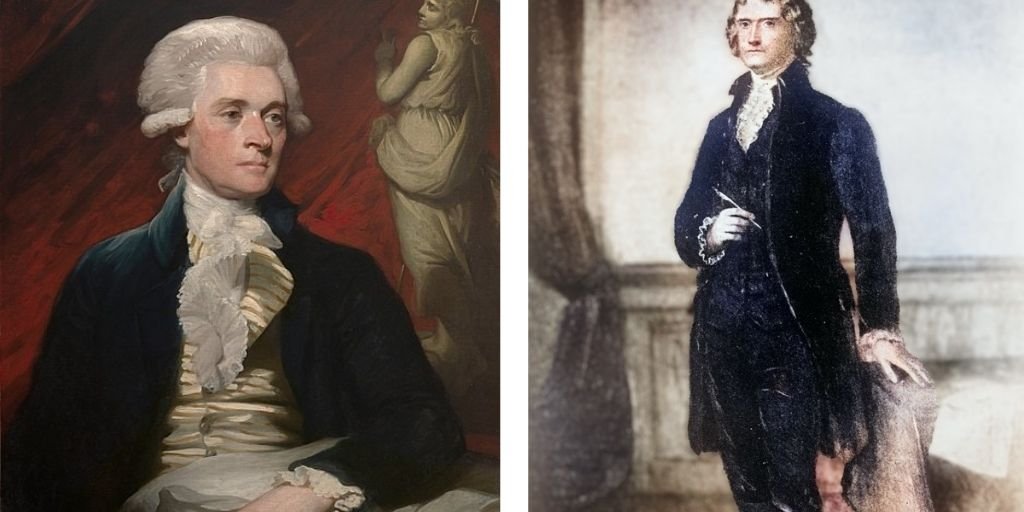
Thomas Jefferson remains one of the most discussed figures in American history. He was a writer, political thinker, statesman, diplomat, architect, farmer, and the third president of the United States. His name is closely connected with the Declaration of Independence and the ideas of liberty that helped shape the young nation.
But who was Jefferson beyond the famous words written in 1776? What did he believe, and how did his decisions influence the United States?
His life was filled with both remarkable achievements and serious contradictions. He spoke powerfully about freedom while enslaving hundreds of people. He supported political equality in principle but lived in a society where women, enslaved people, and many others had few rights. Understanding Jefferson therefore requires more than celebrating his accomplishments. It means looking honestly at the complete person and the world in which he lived.
Early Life and Family Background
Thomas Jefferson was born on April 13, 1743, at Shadwell, a plantation in the Virginia colony. His father, Peter Jefferson, was a surveyor, planter, and landowner. His mother, Jane Randolph Jefferson, came from a prominent Virginia family.
Jefferson grew up in a wealthy environment that gave him access to education and opportunities unavailable to most people at the time. From an early age, he developed a strong interest in books, science, nature, music, and learning.
His education played an important role in shaping his future. He attended the College of William & Mary in Williamsburg, where he studied subjects including history, philosophy, mathematics, and classical languages.
Jefferson was an unusually curious person. He did not seem satisfied with knowing only one subject. Instead, he wanted to understand how different areas of knowledge connected. His interests would eventually range from government and philosophy to architecture, agriculture, astronomy, and fossils.
In 1772, Jefferson married Martha Wayles Skelton. Their marriage lasted until her death in 1782. They had six children, although only two daughters survived to adulthood.
The loss of his wife deeply affected Jefferson. He never remarried.
Jefferson and the American Revolution
During the 1770s, tensions between Britain and the American colonies grew rapidly. Jefferson became increasingly involved in the movement for colonial rights.
He served in Virginia’s colonial legislature and later became a member of the Continental Congress. Although he was relatively young, his writing ability made him an important political voice.
Jefferson believed that government should protect the rights of individuals. He was influenced by Enlightenment thinkers who argued that people possessed natural rights and that political authority should have limits.
Imagine a government as a contract between the people and their leaders. Jefferson believed that leaders could not simply do whatever they wanted. Their authority existed because people had granted it to them.
These ideas became central to the American Revolution.
Writing the Declaration of Independence
Perhaps the most famous achievement of Thomas Jefferson was writing the Declaration of Independence.
In 1776, the Continental Congress appointed a committee to prepare a document explaining why the American colonies were separating from Britain. Jefferson was selected as the principal writer.
The document presented a powerful argument. It stated that people possessed fundamental rights and that governments existed to protect those rights.
The Declaration also argued that when a government repeatedly violated the rights of its people, the people could change or replace that government.
The final document was edited by the committee and Congress before being adopted on July 4, 1776.
The Declaration did not immediately create the modern system of American democracy. Its promises were not applied equally to everyone. Enslaved people remained in bondage, women lacked political rights, and Native American communities faced increasing pressure from colonial expansion.
Yet the language of the document became enormously influential.
Its ideas provided Americans with a powerful standard against which government could be judged. Over time, activists and reformers would use Jefferson’s language to challenge slavery, racial inequality, and the denial of political rights.
In this sense, the Declaration became bigger than its original author.
Life as a Diplomat and Political Leader
After the Revolution, Jefferson continued serving the new country.
He became governor of Virginia and later represented the United States in Europe. In 1785, he succeeded Benjamin Franklin as American minister to France.
His years in France were important for both his political development and his personal interests. Jefferson admired European art, architecture, books, food, wine, gardens, and scientific developments.
He also watched the beginning of the French Revolution with great interest.
Jefferson eventually became the first secretary of state under President George Washington. His political disagreements with Alexander Hamilton helped create an early divide in American politics.
Hamilton favored a stronger central government and a financial system designed to strengthen federal authority. Jefferson was more suspicious of concentrated power and preferred a smaller federal government with strong states and an agricultural society.
These disagreements helped lead to the development of America’s first major political parties.
Jefferson became associated with the Democratic-Republican Party, while Hamilton became a leading figure among the Federalists.
Thomas Jefferson as President
Thomas Jefferson became the third president of the United States in 1801 after defeating John Adams in a bitter election.
His victory represented a major political transition. Jefferson believed that the federal government should be more limited and less centered on elite power.
He called his election a “revolution” because power had changed hands peacefully through the political system.
As president, Jefferson attempted to reduce government spending and the national debt. He also supported a less formal style of leadership than his predecessors.
However, Jefferson’s presidency was not simply about reducing government.
One of his most important achievements was the Louisiana Purchase.
The Louisiana Purchase and Expansion
In 1803, the United States purchased the Louisiana Territory from France for approximately $15 million.
The deal dramatically increased the size of the United States, adding territory west of the Mississippi River and opening the way for future expansion.
Jefferson saw the purchase as an enormous opportunity. He believed that western lands could support farming and help create a nation of independent agricultural communities.
He then supported the Lewis and Clark expedition to explore the newly acquired territory.
Meriwether Lewis and William Clark led the expedition from 1804 to 1806. They traveled across large parts of the continent, gathering information about geography, plants, animals, and Native American communities.
The expedition expanded American knowledge of the West, but the larger story of expansion also had a darker side. As the United States grew, Native American nations faced increasing displacement, conflict, and pressure from settlers.
The Louisiana Purchase therefore represents both opportunity and the beginning of difficult consequences.
Jefferson’s Ideas About Government and Freedom
Jefferson’s political philosophy continues to influence American political debates.
He strongly valued individual liberty, representative government, religious freedom, and education.
He believed that citizens needed access to knowledge if democracy was going to survive. An educated public, in his view, was better prepared to make decisions about government.
His ideas about religion were also significant.
Jefferson supported religious freedom and opposed government control over religious belief. He helped promote the Virginia Statute for Religious Freedom, which became an important foundation for the principle that government should not force people to follow a particular religion.
He also believed that political power should not become permanently concentrated.
Yet Jefferson’s ideas contained contradictions.
He defended liberty while owning enslaved people. He spoke about equality while living within a society built around racial hierarchy. He imagined a nation of independent farmers while American expansion increasingly displaced Native communities.
These contradictions are essential when studying his life.
Thomas Jefferson and Slavery
One of the most difficult parts of Jefferson’s history is his relationship with slavery.
Jefferson enslaved hundreds of people over the course of his lifetime, primarily at his plantation, Monticello. Enslaved workers grew tobacco, wheat, and other crops, performed household labor, built structures, cared for livestock, and carried out countless other tasks.
Jefferson sometimes described slavery as morally wrong and recognized that the institution created serious problems. He also expressed concern about the future consequences of slavery.
However, he did not free most of the people he enslaved during his lifetime.
His relationship with Sally Hemings, an enslaved woman at Monticello, is another important part of this history. Modern historical and genetic evidence strongly supports the conclusion that Jefferson fathered children with Hemings.
The relationship cannot be separated from the reality of slavery. Hemings was legally enslaved, while Jefferson held power over her.
This history demonstrates why Jefferson cannot be understood through inspirational quotations alone.
His commitment to liberty and his participation in slavery existed side by side. That contradiction remains one of the central questions surrounding his legacy.
Monticello: Jefferson’s Home and Personal World
Monticello was Jefferson’s plantation home in Virginia and one of the clearest expressions of his personality.
He designed and redesigned the house over many years. Its architecture reflected his interest in classical European ideas.
The building included unusual features for its time, and Jefferson paid close attention to design, gardens, books, furniture, and technology.
Monticello was more than a private residence. It was also the center of a plantation community where enslaved people performed much of the labor necessary to operate the estate.
Today, Monticello is an important historic site because it allows visitors to examine both sides of Jefferson’s life.
The beautiful architecture tells one story. The lives of the enslaved people who lived and worked there tell another.
Together, those stories provide a more complete picture.
Jefferson and the University of Virginia
Education remained one of Jefferson’s strongest interests throughout his life.
After leaving the presidency, he devoted considerable energy to creating an institution of higher learning in Virginia.
The result was the University of Virginia, founded in 1819.
Jefferson helped design the university’s buildings and campus. He wanted education to encourage independent thought rather than simply train students to memorize information.
The university represented his belief that education could strengthen a democratic society.
The famous Rotunda became the architectural centerpiece of the campus. Jefferson’s design reflected his admiration for classical architecture.
The University of Virginia eventually became one of America’s leading universities and remains an important part of Jefferson’s educational legacy.
Jefferson’s Final Years
After his presidency, Jefferson returned to Monticello.
Although he no longer held national office, he continued writing letters, discussing politics, reading, and thinking about education.
He also remained interested in scientific and agricultural subjects.
Jefferson experienced serious financial difficulties during his later years. His large household, plantation expenses, debts, and other financial pressures placed him in a difficult position.
Despite his challenges, he continued to correspond with political figures and old friends.
One of the most remarkable details about Jefferson’s death is its timing.
Thomas Jefferson died on July 4, 1826, exactly 50 years after the Declaration of Independence was adopted.
On the same day, another former president and fellow revolutionary, John Adams, also died.
Jefferson was 83 years old.
His death on Independence Day created a powerful symbolic moment in American history. The man who had written the Declaration of Independence died half a century after the country declared its independence.
Thomas Jefferson’s Lasting Legacy
How should we remember Thomas Jefferson today?
There is no single answer.
His words helped define American ideals about liberty and government. His role in the Declaration of Independence made him one of the most influential political writers in American history.
His presidency expanded the country’s territory dramatically. His support for education contributed to the creation of the University of Virginia. His architectural work remains visible at Monticello and elsewhere.
At the same time, his history contains serious moral contradictions.
His ownership of enslaved people cannot be separated from his biography. Neither can the consequences of American expansion for Native American nations.
This makes Jefferson an important historical figure precisely because his story is complicated.
History is not always a clean portrait painted in black and white. Sometimes it is more like a mirror with cracks: it reflects extraordinary achievements while also showing painful failures.
Jefferson’s life encourages us to ask difficult questions about freedom, power, equality, and responsibility.
His words about liberty inspired generations, including people who later challenged the very inequalities that Jefferson himself had participated in.
That may be one of the most important parts of his legacy.
Conclusion
Thomas Jefferson was one of the most influential figures in early American history. From writing the Declaration of Independence to serving as president and supporting the creation of the University of Virginia, his ideas and actions left a lasting mark on the United States.
Yet his story cannot be reduced to achievements alone. His relationship with slavery, his ownership of enslaved people, his relationship with Sally Hemings, and the consequences of American expansion reveal deep contradictions.
Studying Jefferson honestly means recognizing both his contributions and his failures. His life shows us that historical figures can influence the world in powerful ways while still carrying serious contradictions.
Perhaps that is why his story remains relevant. Jefferson’s life asks a question that still matters today: how do we turn powerful ideas about freedom and equality into reality for everyone?
FAQs About Thomas Jefferson
1. Who was Thomas Jefferson?
Thomas Jefferson was an American statesman, writer, political thinker, diplomat, and the third president of the United States. He was the principal author of the Declaration of Independence.
2. What is Thomas Jefferson best known for?
He is best known for writing the Declaration of Independence, serving as the third U.S. president, completing the Louisiana Purchase, and helping establish the University of Virginia.
3. When was Thomas Jefferson president?
Thomas Jefferson served as the third president of the United States from March 4, 1801, to March 4, 1809.
4. Did Thomas Jefferson own enslaved people?
Yes. Jefferson enslaved hundreds of people during his lifetime, particularly at Monticello. His ownership of enslaved people remains one of the most important and controversial aspects of his history.
5. When did Thomas Jefferson die?
Thomas Jefferson died on July 4, 1826, at Monticello in Virginia. His death occurred exactly 50 years after the adoption of the Declaration