
Ludwig Beethoven: Life, Music, Struggles, Masterpieces & Lasting Legacy
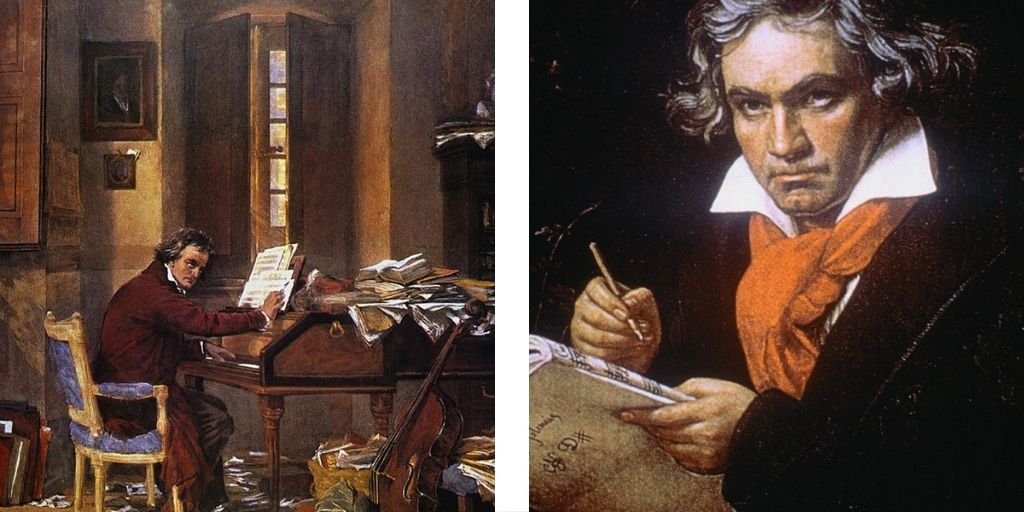
Ludwig van Beethoven remains one of the most recognizable names in classical music. Even people who do not regularly listen to orchestral music have probably heard the opening notes of his Fifth Symphony or the beautiful melody associated with Für Elise. But who was the man behind these unforgettable compositions?
His life was filled with remarkable achievements, personal struggles, family difficulties, financial uncertainty, and one devastating challenge: losing much of his hearing. Yet instead of allowing that hardship to silence him, he continued to create music that changed the course of Western music.
What makes his story so fascinating? Beethoven was not simply a talented composer. He was a determined individual who constantly pushed against limitations. His music often sounds like a conversation between struggle and hope, which may explain why it continues to speak to listeners centuries later.
Early Life and Family Background
Ludwig van Beethoven was born in Bonn, Germany, in December 1770. The exact date of his birth is uncertain because the surviving baptismal record gives December 17, 1770, while his family traditionally regarded December 16 as his birthday.
Music was already part of his family life. His father, Johann van Beethoven, worked as a musician and singer at the court in Bonn. His grandfather, also named Ludwig, had been a respected musician and held an important position in the same musical establishment.
Young Ludwig grew up in an environment where music was both a profession and a family expectation. His father quickly recognized his son’s unusual musical ability. However, the training Beethoven received at home was not always gentle.
Johann hoped that Ludwig would become a child prodigy similar to Wolfgang Amadeus Mozart. He pushed his son to practice intensely and perform publicly while he was still very young. Some accounts describe harsh treatment during these lessons.
Despite the difficult circumstances, Beethoven developed extraordinary skills on the piano and other instruments.
A Childhood Shaped by Music
Beethoven’s early education was not limited to playing notes. He learned composition, keyboard performance, and musical theory from several teachers. Christian Gottlob Neefe was particularly important in his development.
Neefe encouraged the young musician and introduced him to the works of important composers. Beethoven’s abilities became increasingly obvious as he grew older.
At only his teenage years, he was already working professionally as a musician. He eventually traveled to Vienna, the great musical center of Europe, where he hoped to study and develop his career.
That move would become one of the most important turning points in his life.
Beethoven’s Move to Vienna
Beethoven first visited Vienna in 1787, where he is traditionally said to have met Wolfgang Amadeus Mozart. However, historians debate the details of this meeting, and the popular story surrounding it may contain elements that cannot be confirmed.
Beethoven returned permanently to Vienna in 1792 after the death of his mother and the decline of his father’s ability to support the family.
Vienna offered something Bonn could not: an enormous musical world filled with performers, composers, wealthy patrons, theaters, publishers, and opportunities.
He studied with Joseph Haydn for a period, although their relationship was not always smooth. Beethoven was also influenced by other teachers and musicians, including Antonio Salieri and Johann Georg Albrechtsberger.
Building a Reputation
During his early years in Vienna, Beethoven became especially famous as a pianist.
His performances were known for their intensity and emotional power. He did not always play in the restrained manner expected by traditional musical conventions. Instead, he brought energy, contrast, and personality to his performances.
We can think of his career at this stage like a young artist discovering the size of his canvas. Beethoven had inherited many traditions from earlier composers, but he was already searching for ways to make those traditions his own.
His growing reputation brought him support from aristocratic patrons. These relationships helped him earn money and gave him greater freedom to compose.
Unlike many musicians who worked directly for a court or church, Beethoven increasingly wanted independence. He wanted to create music according to his own artistic vision.
That desire for independence became a defining feature of his personality and career.
Beethoven’s Musical Style
Beethoven lived during a period of major cultural change. He inherited the classical traditions associated with composers such as Haydn and Mozart, but he helped move music toward the Romantic era.
His compositions often featured powerful contrasts, dramatic development, unexpected changes, and strong emotional expression.
From Classical Balance to Romantic Emotion
Earlier classical music often emphasized balance, clarity, proportion, and formal structure. Beethoven retained these qualities but expanded their possibilities.
His music could be gentle one moment and explosive the next. A simple musical idea might grow into something much larger.
This approach made his compositions feel almost like stories without words.
He frequently took a small musical theme and developed it through repetition, variation, transformation, and contrast. Instead of treating a melody as a decorative feature, he could turn it into the engine that drove an entire movement.
This is one reason his symphonies can feel so powerful.
A Personal Musical Voice
Beethoven’s compositions often sound intensely personal, although we should be careful about assuming that every musical passage directly represents an event in his life.
Still, listeners frequently hear determination, conflict, tenderness, humor, grief, and triumph in his work.
His music demonstrated that instrumental composition could communicate profound human emotion without requiring lyrics.
That idea became enormously influential for later composers.
The Tragedy of His Hearing Loss
Perhaps the most famous struggle of Beethoven’s life was his deteriorating hearing.
His hearing problems appear to have begun in his twenties and became progressively worse. For a musician whose career depended on listening, performing, and communicating through sound, this was devastating.
Imagine being a professional painter gradually losing your sight. Beethoven faced a similarly terrifying possibility: the world of sound that defined his life was becoming harder and harder for him to access.
The Heiligenstadt Testament
In 1802, Beethoven wrote a deeply personal document known as the Heiligenstadt Testament.
He described his despair and isolation caused by his hearing difficulties. He also expressed his struggle with thoughts of death.
Yet the document reveals something equally important: he decided to continue living and creating.
His artistic purpose became stronger than his despair.
The hearing loss never completely stopped him from composing. In fact, some of his greatest works came during periods when his hearing was severely impaired.
He eventually became profoundly deaf.
How Did He Compose While Deaf?
This question continues to fascinate people.
Beethoven had spent decades developing an extraordinary internal understanding of music. He understood harmony, rhythm, melody, structure, and instrumental color at a very deep level.
He could imagine musical sounds internally even when his ears could no longer hear them normally.
He also used various aids and methods to communicate, including writing conversations in conversation books during his later years.
His ability to compose under these circumstances remains one of the most remarkable aspects of his life.
The Heroic Period and Major Masterpieces
Beethoven’s middle period is sometimes called his “heroic” period. During these years, his music became increasingly ambitious and dramatic.
The Eroica Symphony, originally associated with Napoleon Bonaparte before Beethoven rejected the dedication, was particularly revolutionary.
Symphony No. 3, “Eroica”
The Third Symphony represented a major expansion of the symphonic form.
It was longer, more dramatic, and more emotionally ambitious than many earlier symphonies.
Beethoven initially admired Napoleon because he believed the French leader represented ideals connected with liberty and political change. When Napoleon declared himself emperor, Beethoven reportedly became deeply disappointed and changed the dedication.
The story reflects Beethoven’s complicated relationship with politics, freedom, and individual greatness.
Symphony No. 5
Few pieces of classical music are as instantly recognizable as the opening of the Fifth Symphony.
Those four famous notes became a musical symbol of drama and determination.
The work develops this short idea in remarkable ways, creating a powerful sense of movement and tension.
Why has it remained so popular?
Perhaps because its emotional message feels direct. It sounds as if something is approaching, challenging the listener, demanding attention.
Symphony No. 6, “Pastoral”
The Sixth Symphony offers a very different experience.
Known as the Pastoral Symphony, it reflects Beethoven’s affection for nature and rural surroundings.
Rather than focusing primarily on struggle and confrontation, the work creates an atmosphere of peaceful landscapes, countryside life, and natural beauty.
The contrast between the Fifth and Sixth Symphonies demonstrates Beethoven’s range. He could write music that felt like a storm and music that felt like a walk through the countryside.
Symphony No. 7
The Seventh Symphony is celebrated for its powerful rhythms and energetic movements.
Its second movement became particularly famous, with its steady rhythmic pattern creating a serious and almost hypnotic atmosphere.
The symphony shows how rhythm itself could become a central emotional force.
Piano Works and “Für Elise”
Beethoven’s piano music remains among his most accessible work.
Pieces such as the Moonlight Sonata, Pathetique Sonata, and Für Elise continue to attract beginners, professional musicians, and casual listeners.
The Moonlight Sonata
The Piano Sonata No. 14 became widely known as the Moonlight Sonata, although that nickname came after Beethoven’s lifetime.
Its opening movement is quiet, mysterious, and deeply reflective.
The contrast between its calm surface and emotional intensity has made it one of Beethoven’s most popular compositions.
Für Elise
Für Elise is perhaps his most recognizable short piano piece.
Its opening melody is simple enough to remember after hearing it only a few times. Yet the complete composition contains more complexity than the famous opening suggests.
Interestingly, the identity of “Elise” remains uncertain.
The manuscript connected with the work was not available to later researchers, leaving historians to debate whether the title was copied incorrectly or whether it referred to a particular person.
That mystery has only increased the fascination surrounding the piece.
Beethoven’s Ninth Symphony and “Ode to Joy”
Beethoven’s Ninth Symphony is arguably his most celebrated large-scale composition.
Completed when he was already profoundly deaf, the work was premiered in Vienna in 1824.
The final movement introduces voices into a symphonic structure, using words from Friedrich Schiller’s poem “Ode to Joy.”
This was a bold decision.
A Symphony That Changed Expectations
Before Beethoven, the symphony was primarily an instrumental form. By adding solo singers and a chorus in the final movement, he expanded the possibilities of what a symphony could become.
The famous melody associated with “Ode to Joy” has since become one of the world’s best-known pieces of music.
Its message of fellowship and universal brotherhood has given it a life far beyond the concert hall.
The melody was later adopted as the anthem of the European institutions that eventually became the European Union.
Yet the Ninth Symphony is much more than its famous final melody.
Its earlier movements contain enormous emotional and structural depth. The complete work moves through contrasting moods before reaching its famous vocal conclusion.
Beethoven’s Personal Life and Relationships
Beethoven never married, although he developed close relationships with several women.
His romantic life has produced endless speculation, partly because of a mysterious letter known as the “Immortal Beloved” letter.
The identity of the woman Beethoven addressed remains uncertain.
Who Was the Immortal Beloved?
Several women have been proposed as possible candidates, including women from Beethoven’s social and musical circles.
However, no universally accepted answer exists.
This uncertainty has created a fascinating historical puzzle.
Beethoven’s personal relationships were often complicated by social differences, financial considerations, and his own difficult personality.
He could be warm and generous, but he could also be stubborn, impatient, and argumentative.
His character reminds us that historical figures were not perfect heroes. They were complicated human beings with strengths and weaknesses.
Beethoven’s Family Struggles
Another major part of Beethoven’s life involved his relationship with his nephew, Karl.
After the death of Karl’s father, Beethoven became heavily involved in the boy’s upbringing.
The relationship became increasingly difficult.
Beethoven was intensely concerned about Karl’s education and future, but his controlling behavior contributed to conflict between them.
Karl eventually attempted suicide in 1826.
The incident deeply affected Beethoven.
Their relationship shows another side of the composer. Behind the public image of the great musician was a man who could become emotionally overwhelmed by family responsibilities.
Beethoven’s Later Years
Beethoven’s final years were marked by serious health problems, financial difficulties, family concerns, and almost complete deafness.
Yet these years also produced some of his most intellectually demanding compositions.
His late string quartets are especially admired by musicians and scholars.
The Late String Quartets
The late quartets can sound very different from the works that made him famous.
They contain unusual structures, sudden changes, intimate passages, and moments of extraordinary depth.
They were not necessarily written to provide easy entertainment.
Instead, they represent Beethoven exploring musical ideas with remarkable freedom.
For some listeners, these compositions take time to understand. For others, they are among his most profound works.
Beethoven’s Final Illness and Death
Beethoven’s health declined significantly during his final years.
He suffered from several illnesses, and the exact causes of his health problems remain a subject of historical and medical investigation.
He died in Vienna on March 26, 1827, at the age of 56.
His funeral attracted a large crowd, demonstrating the extraordinary reputation he had built during his lifetime.
Beethoven was buried in Vienna, where his grave became a place of remembrance.
His death marked the end of one life, but it certainly did not mark the end of his influence.
In many ways, his artistic journey was only beginning to reveal its full importance.
Beethoven’s Influence on Music and Culture
Beethoven transformed expectations about what a composer could be.
He helped move music away from the idea that a composer simply served a patron, court, or institution.
Instead, the composer increasingly became viewed as an individual artist with a personal creative voice.
Later composers such as Johannes Brahms, Richard Wagner, Anton Bruckner, Gustav Mahler, and many others were influenced by his achievements.
His symphonic works expanded the scale and ambition of orchestral composition.
His piano sonatas demonstrated that a relatively small musical form could contain enormous emotional and intellectual depth.
His string quartets showed that chamber music could become a deeply personal form of artistic exploration.
A Legacy Beyond Classical Music
You do not have to attend a classical concert to encounter Beethoven.
His music has appeared in films, television programs, advertisements, video games, documentaries, and popular culture.
The opening of the Fifth Symphony is so familiar that it has become almost part of the world’s shared musical vocabulary.
The Ninth Symphony’s “Ode to Joy” has been performed at political ceremonies, public celebrations, and international events.
This widespread presence demonstrates something important: Beethoven’s music escaped its original historical setting.
It belongs not only to concert halls but also to the wider cultural imagination.
Why Beethoven Still Matters Today
Why should a person living centuries after Beethoven care about his life?
The answer is not simply that he wrote famous music.
His story represents persistence.
He faced one of the cruelest possible challenges for a composer and performer: severe hearing loss. Yet he continued creating.
His life also demonstrates that artistic progress often comes from challenging expectations.
Beethoven did not simply copy the composers who came before him. He learned from them, respected their achievements, and then pushed musical forms into new territory.
His compositions remind us that difficulty does not automatically destroy creativity.
Sometimes, struggle changes the way a person sees the world.
That does not mean hardship is necessary for great art. Rather, Beethoven’s story shows what can happen when determination survives difficult circumstances.
His music is like a bridge between two worlds. One side represents the elegance and order of the Classical period; the other points toward the emotional freedom of Romantic music.
He stood in the middle and helped connect them.
Conclusion
Ludwig van Beethoven’s life was far more complicated than the image of a stern composer sitting at a piano. He was a gifted child, ambitious performer, independent artist, troubled family member, passionate individual, and determined creator.
His hearing loss could have ended his musical career, yet he continued to compose some of his most influential works after his hearing had severely deteriorated.
From the Moonlight Sonata and Für Elise to the Fifth, Sixth, Seventh, and Ninth Symphonies, his music continues to reach people across generations.
Perhaps that is his greatest achievement. Beethoven did not create music only for his own time. He created works that continue to make listeners feel something.
Centuries later, his melodies still speak. And perhaps that is the clearest sign of a lasting artistic legacy.
Frequently Asked Questions
1. Who was Ludwig van Beethoven?
Ludwig van Beethoven was a German composer and pianist who became one of the most influential figures in Western classical music. He was born in Bonn in 1770 and spent much of his professional life in Vienna.
2. Did Beethoven become completely deaf?
Beethoven experienced progressive hearing loss and became profoundly deaf later in life. Despite this, he continued composing major works, including his Ninth Symphony.
3. What is Beethoven’s most famous composition?
There is no single answer because several works are exceptionally famous. His Fifth Symphony, Ninth Symphony, Für Elise, and Moonlight Sonata are among his best-known compositions.
4. Why is Beethoven important in music history?
Beethoven expanded traditional musical forms and placed greater emphasis on personal expression, dramatic development, and emotional intensity. His work strongly influenced the development of Romantic-era music.
5. When did Beethoven die?
Beethoven died in Vienna on March 26, 1827, at the age of 56. His funeral attracted a large public gathering and reflected the reputation he had achieved during his lifetime.