Roger Federer: Legendary Career, Grand Slam Triumphs & Lasting Legacy
Introduction
Roger Federer is widely regarded as one of the greatest tennis players in history. His elegant style, calm personality, powerful serve, and remarkable consistency turned him into a global sporting icon. But what made his story special was not simply the number of trophies he won. Federer connected with fans because he played tennis with an unusual combination of skill, intelligence, grace, and creativity.
From a young boy in Switzerland to a record-setting champion and respected elder statesman of sport, his journey is filled with memorable victories, difficult defeats, comebacks, and moments of extraordinary brilliance. His career is almost like a beautifully written book: every chapter brought something different, yet the overall story remained remarkably consistent.
Early Life and Childhood in Switzerland
Roger Federer was born on August 8, 1981, in Basel, Switzerland. He grew up in nearby Münchstein, where tennis became an important part of his childhood. His father, Robert Federer, worked in business, while his mother, Lynette, was born in South Africa. Federer therefore grew up with connections to both Switzerland and South Africa.
As a child, Federer showed enormous enthusiasm for sports. Tennis eventually became his main passion, but he also enjoyed football. In fact, he once considered becoming a professional footballer. His competitive personality was visible from an early age.
A Young Player With Big Ambitions
Federer’s talent became increasingly obvious as he entered junior competitions. However, talent alone was not enough. He had to learn how to control his emotions and turn natural ability into reliable performance.
This was one of the most important parts of his development. Federer could be emotional on court when he was young. Over time, he learned to become calmer and more focused. That transformation became one of the defining characteristics of his professional career.
The Beginning of a Professional Tennis Career
Federer turned professional in 1999. At first, he was simply a promising young player trying to establish himself on the demanding professional circuit. He was not immediately the dominant champion fans would later know.
His breakthrough came gradually.
In 2001, Federer defeated the legendary Pete Sampras at Wimbledon in an important fourth-round match. Sampras had dominated Wimbledon for years, and many people saw him as one of the defining players of his generation. Federer’s victory announced that a new talent had arrived.
The young Swiss player was still learning, but his combination of movement, touch, anticipation, and attacking ability was already special.
The First Major Breakthrough
Federer won his first Grand Slam title at Wimbledon in 2003. That victory was more than another trophy. It represented the beginning of an extraordinary era.
Wimbledon suited his game beautifully. The grass rewarded his quick reactions, accurate serving, and attacking instincts. His movement around the court looked effortless, while his one-handed backhand gave him an elegant weapon that became one of the most recognizable shots in tennis.
Federer and the Golden Era of Tennis
The period from the mid-2000s onward established Federer as a sporting superstar. He became incredibly difficult to beat across different surfaces and developed an almost complete game.
From 2004 through 2007, he enjoyed one of the most dominant stretches in men’s tennis. He won numerous tournaments and regularly reached the latter stages of major events.
His success was not based on one overwhelming weapon. Instead, he could hurt opponents in many different ways.
An Almost Complete Tennis Game
Federer’s serve was accurate and difficult to read. His forehand could produce devastating winners. His backhand allowed him to change direction and defend. His movement helped him reach difficult balls, while his anticipation often allowed him to arrive at the ball before an opponent expected it.
He could attack from the baseline, come toward the net, use a drop shot, or patiently construct a point.
That variety made him difficult to predict.
Grand Slam Achievements and Historic Records
Federer finished his career with 20 Grand Slam singles titles. His major victories included eight Wimbledon championships, six Australian Open titles, five US Open titles, and one French Open championship.
For many years, his Grand Slam record stood as the benchmark for men’s tennis.
Wimbledon Dominance
Wimbledon became especially associated with Federer. His eight titles remain one of the most remarkable achievements in the tournament’s history.
He won his first Wimbledon championship in 2003 and continued to dominate the event throughout the decade. His graceful movement on grass seemed almost natural, and his attacking tennis made him a perfect fit for the surface.
Success at the Australian Open and US Open
Federer also enjoyed tremendous success at the Australian Open. His six championships demonstrated that his abilities extended far beyond grass courts.
At the US Open, he won five consecutive titles from 2004 through 2008. That achievement demonstrated his extraordinary consistency under pressure.
The French Open Victory
One of the missing pieces in Federer’s collection was the French Open title. Clay courts presented a different challenge, especially because Rafael Nadal became the dominant force at Roland-Garros.
Federer finally won the French Open in 2009. The victory was especially meaningful because it completed his career Grand Slam.
The Rivalry With Rafael Nadal
Could Federer have become as famous without Rafael Nadal? Perhaps. But their rivalry undoubtedly added another extraordinary dimension to his career.
Federer and Nadal represented contrasting approaches to tennis. Federer often appeared smooth, attacking, and economical. Nadal was famous for his incredible intensity, physical strength, topspin, and fighting spirit.
Their matches became some of the most anticipated contests in sports.
A Rivalry Built on Respect
Their rivalry was highly competitive, but it eventually developed into genuine mutual respect. Federer struggled particularly against Nadal on clay, where Nadal’s heavy topspin and movement created enormous problems.
Their 2008 Wimbledon final is widely remembered as one of the greatest matches ever played. Nadal eventually won the contest after an epic battle.
Instead of destroying Federer’s reputation, such defeats often made his story more compelling. Great champions are not defined only by victories. Sometimes their ability to respond to disappointment reveals even more about them.
Novak Djokovic and the Changing Tennis Landscape
Federer’s career also overlapped with Novak Djokovic, creating another major rivalry.
Djokovic’s rise changed the balance of men’s tennis. Like Federer and Nadal, he possessed extraordinary consistency and mental strength, but his playing style presented different challenges.
Together, Federer, Nadal, and Djokovic became known as the Big Three.
Three Different Champions
Federer represented elegance and versatility. Nadal became famous for intensity and relentless determination. Djokovic developed a reputation for flexibility, defensive skill, and exceptional returning.
Their careers overlapped for many years, producing countless historic matches.
Federer’s presence in this era was remarkable because he continued competing against younger generations even after reaching an age when many professional athletes would have retired.
Playing Style and What Made Federer Special
One of the easiest ways to understand Federer’s greatness is to watch how he moved around a tennis court.
He rarely seemed rushed. Even when an opponent hit a powerful shot, Federer often appeared to have extra time.
The One-Handed Backhand
His one-handed backhand became one of his signature characteristics. It allowed him to hit beautiful winners and create variety.
The shot was not always his strongest weapon against heavy topspin, particularly against Nadal, but its elegance and versatility made it unforgettable.
The Forehand
Federer’s forehand was perhaps his most dangerous shot. He could hit it with speed, angle, and precision. He could also use it to open the court before finishing a point.
His ability to turn defense into attack was exceptional.
Movement and Anticipation
Federer’s movement was another major strength. Instead of relying purely on speed, he often anticipated where his opponent would hit the ball.
It was like watching a chess player who already understood the next move.
Injuries, Challenges, and the Later Years
No athlete can compete at the highest level forever without facing physical challenges. Federer experienced injuries throughout his career, particularly as he became older.
His knee problems became especially significant.
In 2020, he underwent knee surgery and faced a difficult recovery period. He returned to competition but later required additional treatment.
The Struggle to Return
Federer’s determination to return showed how deeply he loved the sport. However, the body eventually placed limits on what even a player of his ability could accomplish.
His final competitive match came at the Laver Cup in September 2022. Federer partnered with his longtime rival and friend Rafael Nadal in doubles.
They lost their match, but the result became secondary to the emotion surrounding the occasion.
Family Life and Personal Character
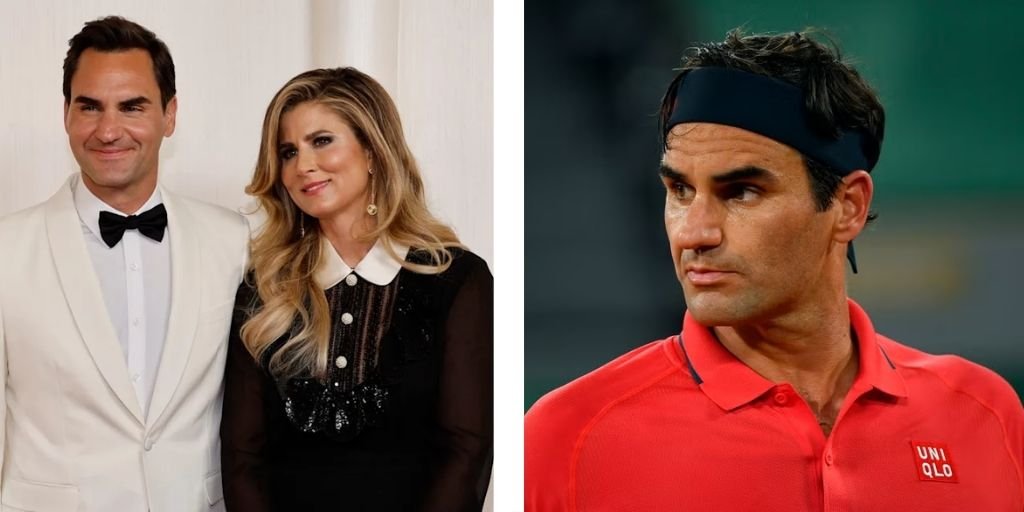
Away from tennis, Federer has generally maintained a private family life. He married former professional tennis player Mirka Vavrinec in 2009.
The couple has four children.
Federer has often spoken positively about the importance of family and the support he received throughout his career. His success was never a one-person story. Behind the champion was a large network of coaches, family members, friends, trainers, and supporters.
A Different Kind of Sporting Celebrity
Federer’s public image has also been important to his legacy. He became known for being polite, composed, and respectful toward opponents.
Of course, no athlete is perfect, and Federer experienced emotional moments during matches. But as his career progressed, he became increasingly recognized for his professionalism.
That image helped him appeal beyond tennis.
Roger Federer and His Impact Beyond Tennis
Federer’s influence extends beyond trophies and rankings. He became an international ambassador for tennis.
His popularity helped introduce the sport to audiences who may not have followed professional tennis closely.
He also became involved in charitable work through the Roger Federer Foundation, which focuses on educational opportunities for children in parts of Africa and Switzerland.
The Federer Foundation
The foundation has supported educational initiatives designed to improve opportunities for children. This part of his work demonstrates another side of his legacy.
A sporting career eventually ends, but charitable and educational work can continue affecting lives for generations.
Retirement and the End of an Extraordinary Career
Federer announced his retirement from professional tennis in September 2022.
His announcement was emotional because fans understood what they were losing. For more than two decades, Federer had been a familiar presence at the biggest tournaments in the world.
His final competitive appearance at the Laver Cup became a celebration of his career.
A Powerful Farewell
Perhaps the most memorable aspect of his retirement was the relationship between Federer and his rivals. Nadal was sitting beside him. Djokovic and Andy Murray were also part of the emotional atmosphere surrounding the event.
Federer did not simply leave as a champion. He left as someone whose career had influenced an entire generation of players and fans.
Federer’s Legacy and Lasting Influence
What exactly is Federer’s legacy?
It is tempting to measure greatness only through statistics. Twenty Grand Slam titles, 103 ATP singles titles, 310 weeks as world No. 1, and eight Wimbledon championships provide powerful evidence.
But numbers tell only part of the story.
More Than Statistics
Federer’s greatest contribution may have been the way he made tennis look.
His style encouraged countless young players to appreciate creativity, balance, precision, and variety. Many aspiring athletes tried to imitate his forehand, backhand, serve, movement, or calm behavior.
He also helped demonstrate that elite sport could combine competitiveness with elegance.
His influence can still be seen whenever young players step onto a tennis court and attempt a one-handed backhand.
Why Roger Federer Remains an Icon
Federer’s career offers something for almost everyone.
Fans can admire his records. Young athletes can learn from his discipline. Tennis players can study his technique. Sports lovers can appreciate his rivalries. And ordinary people can relate to his struggles with injuries, pressure, disappointment, and aging.
His story reminds us that greatness is not simply about being unbeatable.
It is about continually improving, accepting setbacks, respecting competitors, and finding the courage to keep moving forward.
Federer’s career was like a long tennis rally. There were spectacular winners, difficult returns, unexpected changes of direction, and moments when the point seemed almost lost. Yet he kept finding another way to respond.
Conclusion
Roger Federer left professional tennis with one of the most impressive records in sporting history, but his legacy reaches much further than his 20 Grand Slam titles. His elegant technique, competitive spirit, sportsmanship, and commitment to excellence helped redefine what a modern tennis champion could look like.
He competed against some of the greatest players ever, survived difficult periods, returned from injuries, and remained relevant across multiple generations. Most importantly, he inspired millions of people to watch, play, and appreciate tennis.
The trophies will remain in the record books, but Federer’s influence will live in the players who learned from him and the fans who never forgot the way he played the game.
FAQs About Roger Federer
1. How many Grand Slam titles did Roger Federer win?
Roger Federer won 20 Grand Slam singles titles during his professional career.
2. How many Wimbledon titles did Roger Federer win?
He won eight Wimbledon singles championships, making Wimbledon one of the defining tournaments of his career.
3. When did Roger Federer retire from professional tennis?
Federer announced his retirement in September 2022 and played his final professional match at the Laver Cup that same month.
4. Who were Roger Federer’s biggest rivals?
His most famous rivals included Rafael Nadal and Novak Djokovic. Together with Federer, they formed tennis’s celebrated “Big Three.” Andy Murray was another major rival during the same era.
5. Why is Roger Federer considered one of the greatest tennis players ever?
Federer combined major tournament success with exceptional technique, consistency, longevity, versatility, and sportsmanship. His 20 Grand Slam titles and eight Wimbledon championships are among the achievements that support his place in tennis history.