Jack Nicholson: Life, Career, Movies & Lasting Legacy
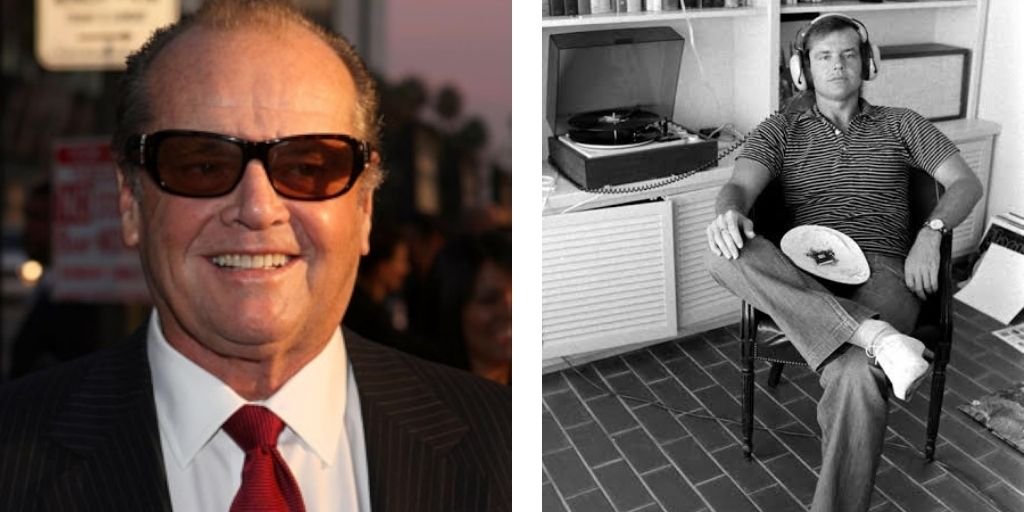
Jack Nicholson is one of the most recognizable actors in American cinema. With his distinctive smile, unforgettable voice, expressive eyes, and fearless performances, he built a career that lasted for more than six decades. From intense dramas to dark comedies and psychological thrillers, he repeatedly showed that he could make complicated characters feel real.
But what made him so special? It was not simply fame or talent. Nicholson had a rare ability to make audiences curious about what his characters were thinking, even when those characters were difficult, dangerous, funny, or deeply flawed. His performances often felt unpredictable, like watching a storm that could change direction at any moment.
Over the years, he became associated with some of Hollywood’s most memorable films, including Easy Rider, Five Easy Pieces, Chinatown, One Flew Over the Cuckoo’s Nest, The Shining, Terms of Endearment, Batman, A Few Good Men, and As Good as It Gets. His career also earned him three Academy Awards and made him a lasting figure in popular culture.
Early Life and Childhood
Jack Nicholson was born on April 22, 1937, in Neptune City, New Jersey. His early family circumstances were unusual, and he grew up believing that his grandparents were his parents and that his mother was his sister. He did not learn the full truth about his family background until he was an adult.
Growing up in New Jersey, Nicholson developed an interest in entertainment and popular culture. Like many young people who eventually move toward Hollywood, he did not begin with a guaranteed path to stardom. His journey was built gradually through determination, opportunity, and a willingness to take on different kinds of work.
As a young man, he moved toward California and eventually found opportunities in the film industry. The entertainment world was very different from what it is today. There was no social media and no easy way for an unknown performer to build a public following. Actors often had to prove themselves one small role at a time.
Nicholson’s early experiences helped him develop the confidence that later became one of his trademarks.
The Beginning of His Acting Career
Nicholson entered the movie business during the 1950s. His early work included low-budget productions, where he gained practical experience in front of the camera.
Some of his first films were made with producer Roger Corman, a major figure in independent American cinema. Nicholson appeared in movies such as The Cry Baby Killer, The Little Shop of Horrors, and The Wild Ride.
These projects were not the glamorous Hollywood productions that would later define his career, but they gave him something extremely valuable: experience.
Learning Through Small Roles
Early actors often have to accept roles that do not immediately make them famous. Nicholson followed that path. He worked steadily and learned how to communicate emotion through small parts.
His career at this stage was like building a house brick by brick. No single early performance created his legendary status, but every role added another piece to the foundation.
During the 1960s, he began working with more ambitious filmmakers and gradually developed a reputation as an actor capable of handling complex material.
Breakthrough With Easy Rider
A major turning point came with Easy Rider in 1969.
The film, starring Peter Fonda and Dennis Hopper, became an important part of American film history. Nicholson played George Hanson, a lawyer who joins the motorcycle journey and brings humor, vulnerability, and unexpected warmth to the story.
The role changed how many people viewed him.
Nicholson’s performance earned him his first Academy Award nomination for Best Supporting Actor. More importantly, audiences began to recognize that he was capable of much more than conventional supporting roles.
A New Hollywood Star
Easy Rider arrived during a period when American filmmaking was changing. Younger directors and actors were experimenting with stories that felt more realistic, rebellious, and socially aware.
Nicholson fit naturally into this new cinematic environment.
His performance demonstrated an important quality that would remain throughout his career: he could be charismatic without appearing perfectly polished. His characters often seemed like real people rather than traditional movie heroes.
Rise to Stardom in the 1970s
The 1970s were arguably the most important decade of Nicholson’s career.
He appeared in a series of highly respected films and became one of the leading actors of the New Hollywood era. His performances were often emotionally complicated, and filmmakers trusted him with challenging characters.
One of his most celebrated movies was Five Easy Pieces, released in 1970.
Nicholson played Robert Dupea, a talented but frustrated man struggling with his identity and direction in life. The performance earned him another Academy Award nomination.
The movie helped establish Nicholson as an actor who could portray ordinary human frustration with unusual intensity.
Chinatown
In 1974, Nicholson starred as private investigator J. J. Gittes in Roman Polanski’s Chinatown.
The role became one of the defining performances of his career. Gittes is intelligent, confident, sarcastic, and persistent, but he gradually discovers that he is dealing with forces much larger than himself.
Nicholson’s performance balanced humor with seriousness. His facial expressions, voice, and body language made the character memorable.
Chinatown remains one of the most respected films in American cinema, and Nicholson’s portrayal of Gittes is often considered one of the finest detective performances on screen.
One Flew Over the Cuckoo’s Nest and Oscar Success
Nicholson reached another major milestone with One Flew Over the Cuckoo’s Nest in 1975.
He played Randle P. McMurphy, a rebellious man who enters a psychiatric hospital and challenges its rigid system.
The character was energetic, funny, confrontational, and emotionally complicated. Nicholson made McMurphy entertaining while also giving the character a deeper sense of humanity.
The performance earned him the Academy Award for Best Actor.
The movie itself won the major Academy Awards, becoming one of the most celebrated films of its era.
Why the Performance Worked
Nicholson did not play McMurphy as a simple hero. He gave him flaws and contradictions. That made the character believable.
McMurphy could make you laugh one moment and make you uncomfortable the next. Nicholson understood that interesting characters are rarely completely good or completely bad.
That approach became one of the defining characteristics of his career.
The Shining and His Most Famous Performance
When people think of Jack Nicholson, one image often comes immediately to mind: Jack Torrance in The Shining.
Directed by Stanley Kubrick and released in 1980, the film was based on Stephen King’s novel. Nicholson played a writer who takes a winter job at an isolated hotel with his wife and young son.
As the story develops, his character becomes increasingly unstable.
A Performance Built on Psychological Tension
Nicholson’s performance is famous for its intensity. His expressions, voice, movements, and sudden changes in behavior create a sense of danger.
Rather than relying only on physical horror, the film builds fear through psychological tension.
The character’s transformation is central to the movie. At the beginning, Jack Torrance appears troubled but recognizable. As isolation and supernatural forces affect him, his behavior becomes increasingly frightening.
Nicholson’s performance helped turn the character into one of the most recognizable figures in horror cinema.
Oscar Wins and Major Career Achievements
Nicholson’s success was not limited to one genre. He continued moving between drama, comedy, romance, crime, and psychological stories.
He won three Academy Awards during his career.
His second acting Oscar came for Terms of Endearment in 1983, where he played retired astronaut Garrett Breedlove.
The role showed another side of his personality as a performer. Nicholson could be charming, humorous, romantic, and emotionally vulnerable.
His third Oscar came for As Good as It Gets in 1997.
He played Melvin Udall, a difficult and obsessive novelist whose behavior pushes people away. Despite his unpleasant personality, the character gradually reveals emotional depth.
Nicholson’s ability to make an unlikeable character fascinating was one of his greatest strengths.
Jack Nicholson in Batman
Nicholson took on one of his most commercially significant roles in Tim Burton’s Batman in 1989.
He played the Joker opposite Michael Keaton’s Batman.
The role required something different from the grounded dramatic performances that had made Nicholson famous. He embraced the character’s theatrical personality and dark humor.
The Joker as a Cultural Icon
Nicholson’s Joker became a major part of the film’s identity.
His performance was colorful, unpredictable, and deliberately exaggerated. He brought a distinctive personality to the villain rather than simply portraying him as a conventional criminal.
The success of Batman also introduced Nicholson’s work to a new generation of moviegoers.
His portrayal remains an important chapter in the history of comic-book movies.
A Few Good Men and the Power of His Screen Presence
In 1992, Nicholson appeared in A Few Good Men, directed by Rob Reiner.
He played Colonel Nathan R. Jessup, a powerful military officer involved in a courtroom conflict.
The character is confident and intimidating. Nicholson uses his voice and posture to establish authority, making even relatively simple exchanges feel dramatic.
The courtroom scenes became especially memorable because of the tension between Nicholson and Tom Cruise.
Why His Presence Was So Powerful
Nicholson understood that acting is not only about speaking lines. A pause, a look, a change in volume, or a small movement can communicate enormous amounts of information.
That is why his performances often remain memorable long after viewers have forgotten smaller details of a film.
Comedy, Romance, and His Versatility
Although Nicholson became famous for intense characters, comedy was another important part of his career.
Films such as The Witches of Eastwick, As Good as It Gets, Something’s Gotta Give, and Anger Management demonstrated his comic timing.
He could deliver a serious line with complete sincerity and then turn it into something funny simply through his expression.
Something’s Gotta Give
In the 2003 romantic comedy Something’s Gotta Give, Nicholson played Harry Sanborn, an older man whose lifestyle changes after an unexpected relationship develops.
The film paired him with Diane Keaton.
Nicholson’s performance demonstrated that he could remain charismatic and entertaining even in a lighter romantic setting.
This versatility helped him avoid being trapped in one particular type of role.
Personal Life and Public Image
Nicholson has always maintained a fascinating relationship with celebrity culture.
Unlike many modern stars, he became famous during a period when actors were not constantly followed by social media cameras. Nevertheless, he developed a strong public persona.
His sunglasses, relaxed style, famous smile, love of basketball, and appearances at major events became recognizable parts of his image.
He was also frequently associated with the Los Angeles Lakers and became one of the most famous courtside celebrity fans in professional sports.
A Private Person Behind a Public Image
Despite being one of Hollywood’s most recognizable personalities, Nicholson has generally kept much of his private life away from the public spotlight.
He has had several high-profile relationships and has children, but his family life has remained separate from much of his professional identity.
This contrast is interesting. On screen, Nicholson often played characters who demanded attention. Away from the camera, he has largely chosen when and where to appear.
Jack Nicholson’s Later Career
Nicholson continued acting into the 2000s.
One of his later major films was The Departed, directed by Martin Scorsese and released in 2006.
He played Frank Costello, a dangerous Boston crime boss. The movie featured an impressive ensemble cast, including Leonardo DiCaprio, Matt Damon, and Mark Wahlberg.
Nicholson’s performance was unpredictable and menacing, showing that he could still command attention even when surrounded by younger stars.
His final credited film role came in How Do You Know, released in 2010.
After that, he largely stepped away from acting.
Why His Retirement Felt Different
For many actors, retirement is accompanied by an official announcement or a carefully planned farewell.
Nicholson’s withdrawal from acting was much quieter.
He simply appeared less frequently and stopped taking new movie roles. His absence became noticeable because he had been such a familiar presence in American cinema for so long.
Legacy in American Cinema
Jack Nicholson’s influence extends far beyond his list of films.
He helped redefine what a leading man could look like and how a movie character could behave. His heroes were not always noble, his villains were not always straightforward, and his comic characters could still carry emotional weight.
He also demonstrated the value of taking risks.
Rather than repeating the same performance, Nicholson moved between independent films, major Hollywood productions, dramas, horror movies, comedies, and blockbusters.
A Career With Many Faces
Think of his career as a large library. Each film represents a different book, but together they tell a much bigger story.
There is the rebellious Nicholson of Easy Rider, the troubled man of Five Easy Pieces, the detective of Chinatown, the rebel of One Flew Over the Cuckoo’s Nest, the terrifying Jack Torrance of The Shining, the Joker of Batman, and the difficult romantic lead of As Good as It Gets.
These characters are dramatically different, yet Nicholson made each one recognizable.
Awards, Recognition, and Cultural Impact
Throughout his career, Nicholson received numerous awards and nominations.
His three Academy Awards placed him among the most decorated actors in Oscar history. He also received many additional nominations for performances across several decades.
But awards only tell part of the story.
His real impact can be seen in the way audiences continue to discuss his performances. Quotes, scenes, expressions, and characters from his movies remain part of popular culture.
Actors who came after him have also been influenced by his willingness to embrace unusual characters and strong personalities.
Nicholson showed that a performer does not have to make every character pleasant. Sometimes the most memorable person in a movie is the one who makes viewers uncomfortable.
Why Jack Nicholson Remains Relevant
Why do audiences continue watching Nicholson’s movies decades after their original release?
One reason is that his performances rarely feel flat. His characters usually contain contradictions.
They may be confident but insecure, funny but cruel, charming but selfish, or powerful but vulnerable.
That complexity gives his work lasting appeal.
His films also cover themes that remain relevant: ambition, loneliness, power, rebellion, relationships, identity, fear, and human weakness.
Modern audiences may encounter his movies through streaming platforms, television, film discussions, or recommendations from older generations. When they do, they often discover that his performances still have energy.
Conclusion
Jack Nicholson’s career represents one of the great journeys in American acting. From small productions in the 1950s to some of the most influential films of the following decades, he built a legacy through bold choices, memorable characters, and an unmistakable screen presence.
His work in Easy Rider, Five Easy Pieces, Chinatown, One Flew Over the Cuckoo’s Nest, The Shining, Batman, A Few Good Men, and As Good as It Gets demonstrates an extraordinary range.
Perhaps the greatest lesson from his career is that unforgettable acting is not always about being perfect. Nicholson understood the power of flaws, contradictions, humor, fear, and unpredictability. He brought those qualities together in ways that made audiences look twice.
Even after stepping away from acting, his influence remains. For generations of movie fans, Jack Nicholson is more than a famous actor. He is a symbol of a particular era of Hollywood and one of the performers who helped make American cinema feel bigger, stranger, and more human.
FAQs About Jack Nicholson
1. How many Academy Awards has Jack Nicholson won?
Jack Nicholson has won three Academy Awards. His wins include Best Actor for One Flew Over the Cuckoo’s Nest and As Good as It Gets, along with Best Supporting Actor for Terms of Endearment.
2. What is Jack Nicholson’s most famous movie?
There is no single universally accepted answer, but The Shining, One Flew Over the Cuckoo’s Nest, Chinatown, Batman, and A Few Good Men are among his most widely recognized films.
3. Did Jack Nicholson play the Joker?
Yes. Nicholson played the Joker in Tim Burton’s Batman in 1989, opposite Michael Keaton.
4. Why did Jack Nicholson stop acting?
Nicholson largely stepped away from acting after his 2010 film How Do You Know. He has kept a relatively private life since then and has not returned to regular movie acting.
5. What makes Jack Nicholson such an influential actor?
His versatility, distinctive screen presence, emotional range, comic timing, and willingness to play complicated characters helped make him one of the most influential actors in American film history